
New book traces the deep connections between the Qur’an and Torah
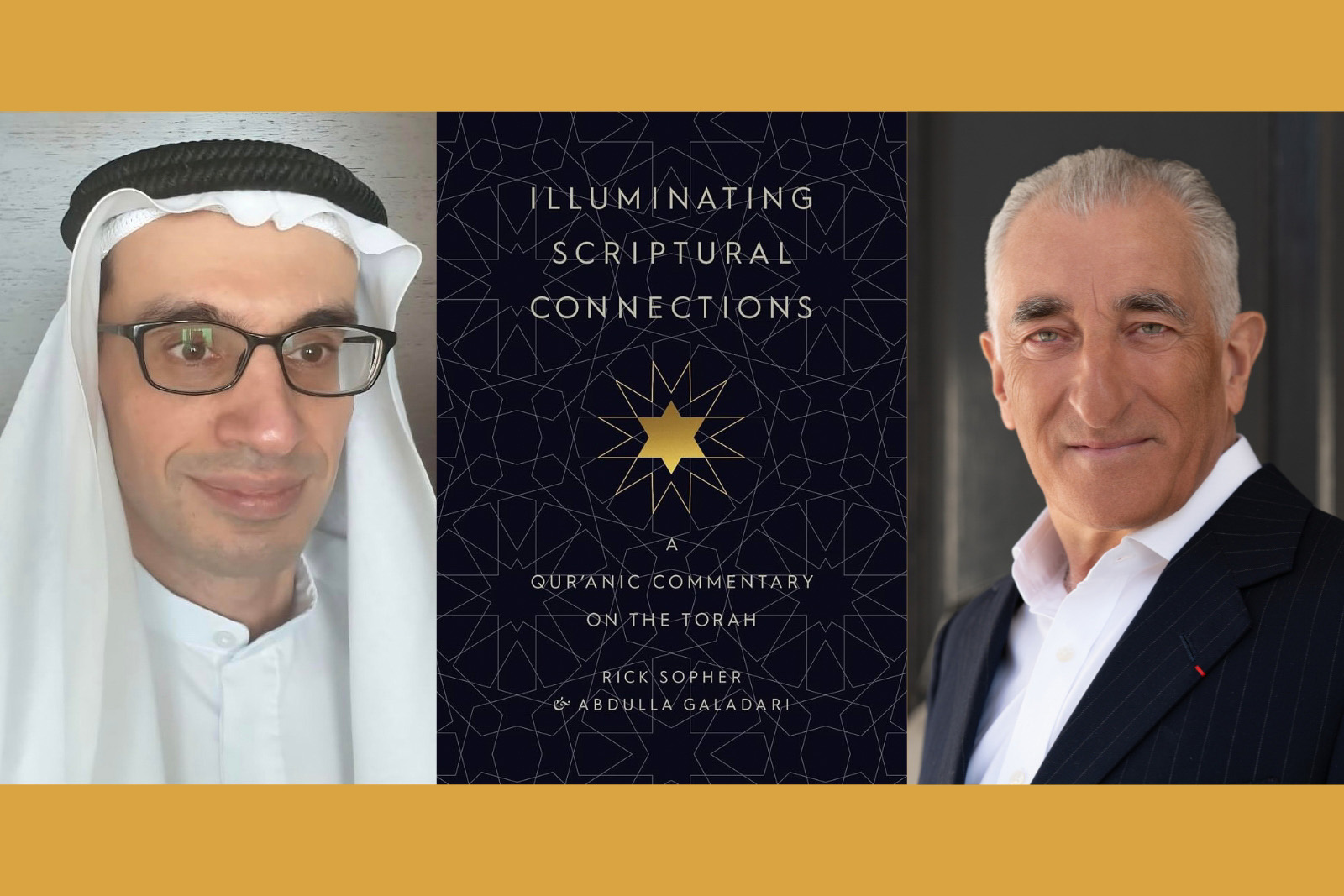
The authors hope their work will help to dispel misconceptions and build better relationships between both Muslims and Jewish people

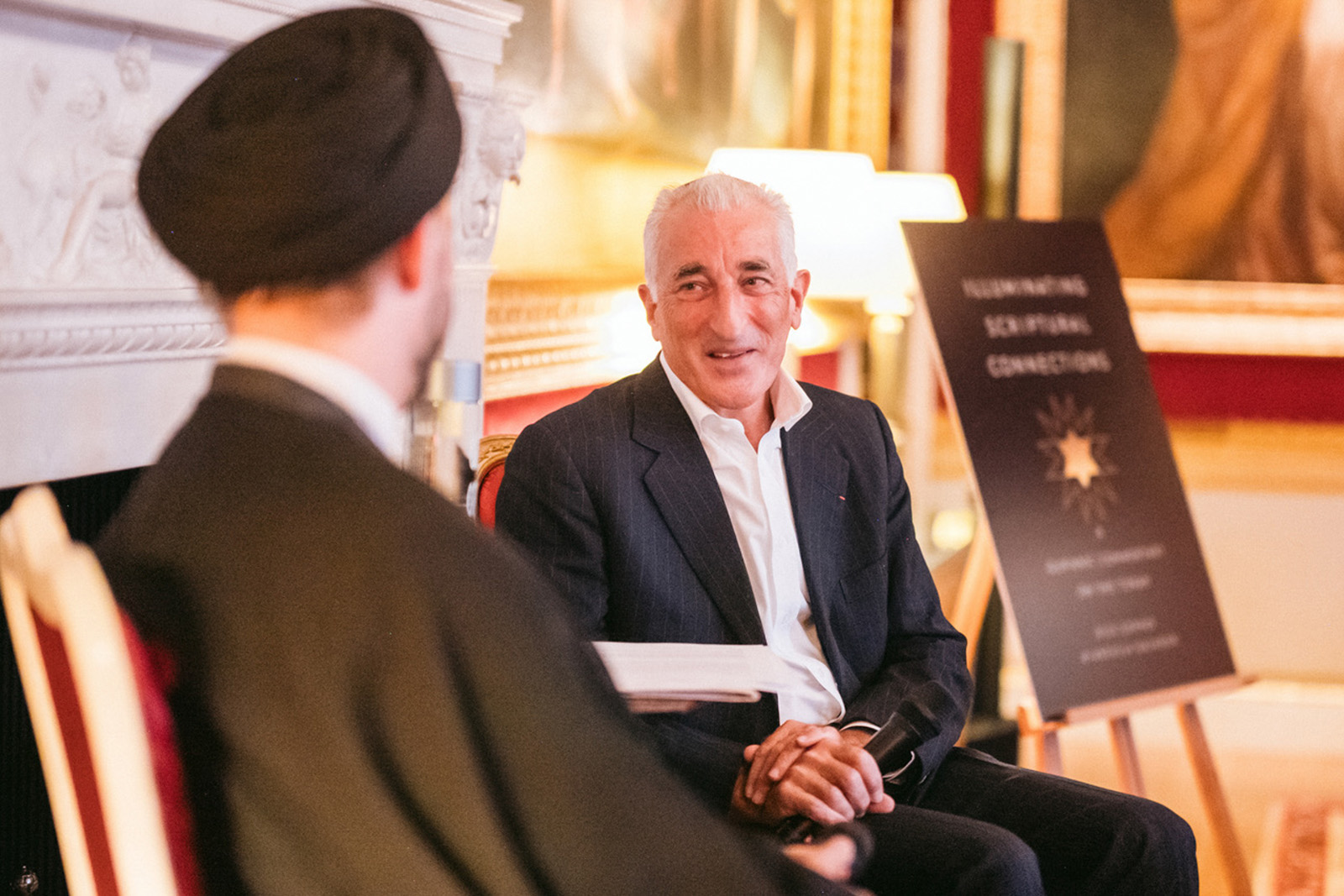
On a rainy September evening, around 100 Jewish and Muslim academics, religious leaders and policymakers convened at Spencer House in central London for the official launch of a new book, Illuminating Scriptural Connections: A Qur’anic Commentary on the Torah by Rick Sopher and Abdulla Galadari.
The book, published by University of Nebraska Press on 28 September, explores the 54 portions of the Torah through the lens of the Qur’an. Speaking to a packed room at the launch event, Sopher, chief executive of private banking institution Edmond de Rothschild Capital Holdings , said the book aimed to showcase “the deep connections” between the two holy books.
“If you take the 6,236 verses of the Qur’an, you could find at least a third that relate to something that you could find in the Hebrew bible,” he said.
Sopher came up with the idea for the book in 2019 and, in 2022, enlisted the help of Galadari, a professor of Islamic studies at Khalifa University in Abu Dhabi, while they were both on a trip to Istanbul organised by Cambridge University’s Woolf Institute.
Sopher’s family line hails from Baghdad, Iraq, where they lived for 2,000 years before being driven out by growing persecution and violence against Jews. By 1971, all members of his family had left. It is, in part, that heritage that inspired his interest in the Qur’an.
“Our families were pretty Middle Eastern. They spoke Arabic, and they acted in Middle Eastern ways,” he says.
“So, I have been trying to find the real reason we had to leave and if theology and the Qur’an have anything to do with it. Reading the Qur’an, I found that, far from being a war manual against Jewish people, which some of my friends seem to think it is, it had all these connections.”
The cover of the book references both religions, as well as Sopher’s family background. It features the six-pointed star of David, flanked by a 12-pointed Islamic star. The star “is the type you would find in the Abbasid Palace in Baghdad”, Sopher told the audience at the launch.
“The point of it is that the Islamic pattern does not come and erase the star of David, but it is connected to it in many, many different places, and that really is the theme of our book,” he added. “The Qur’an did not come and wipe out the Torah; it connected to it, it worked on it, and produced its own form.”
Speaking to Hyphen ahead of the book’s launch, Sopher and Galadari said there seems to be a “reticence” to pick up each other’s scriptures among Muslim and Jewish communities.
Galadari says it is particularly important for Muslims to study the Torah, which was completed 1,000-1,900 years before the first revelation of the Qur’an, if they want a comprehensive understanding of their holy text. In his own study, Galadari adds, he had been surprised by how “the Qur’an is very much aware of the detail within the Torah”.
“You cannot truly be a scholar of the Qur’an without also engaging with the earlier scriptures, because the Qur’an frequently refers back to the Torah,” he says. “It even asks its audience, ‘If you don’t know about those stories, then ask the people of the book.’”
Sopher adds: “Sometimes, the Qur’an doesn’t even give the story you need to know to understand what it is talking about. It’s a bit like when you’re at university, if you read a paper and it keeps referring to a source book, you probably would go to the library and pick up the source book and see what it says, but people don’t.”
According to Sopher, not engaging with the Qur’an has also allowed misinformation to spread among Jewish communities. This includes the view that the Qur’an is hateful towards Jewish people, a term Sopher and Galadari both refer to as “Qur’anophobia”.
“There are verses in the Qur’an that seem to be critical of Jews,” Sopher says. “They can seem really quite nasty if you take just a part of the verse, but if you educate yourself and understand the context in which those verses were given, they become much tamer and much less hateful.”
Sopher and Galadari have compared those verses to the Torah, finding that in “every case”, the criticism of Jews found in the Qur’an was also found there. “Then we started assessing the severity, and in nearly every case we found the Hebrew Bible criticised Jews much more severely than the Qur’an did,” Sopher says.
Related content
What surprised him most when reading the Qur’an was the extent of references to words or characters that he was already familiar with. “I was amazed by how much the Qur’an seemed to relate to the same material in the Torah,” he says. “The character of Moses is mentioned 136 times, Abraham is mentioned 69 times, or there is the story of Yusuf in Surah Yusuf, which closely parallels the Joseph part of the Torah.”
Sopher and Galadari hope that their work will challenge other misconceptions about both the Qur’an and Torah. “There is often a perception among non-Muslims that the Qur’an is hostile or demeaning towards women,” says Sopher.
“But both the Torah and the Qur’an instituted protective legislation for women that wasn’t really available at the time, for example, on inheritance. So, I see both books as advancing protections for women in an environment where protections were not as great as they are today.”
The authors have dedicated their book to peace between people of different faiths. It comes as a time when “Jewish and Muslim relations are in a really bad place”, Sopher says.
“The ultimate aim of this book is to improve Jewish-Muslim relations. I think it provides a really good, solid, literary basis for showing people the connections between Jews and Muslims and Islam and Judaism.”