
A grand tour of the world’s Islamic history — in a 20-year-old Toyota Yaris
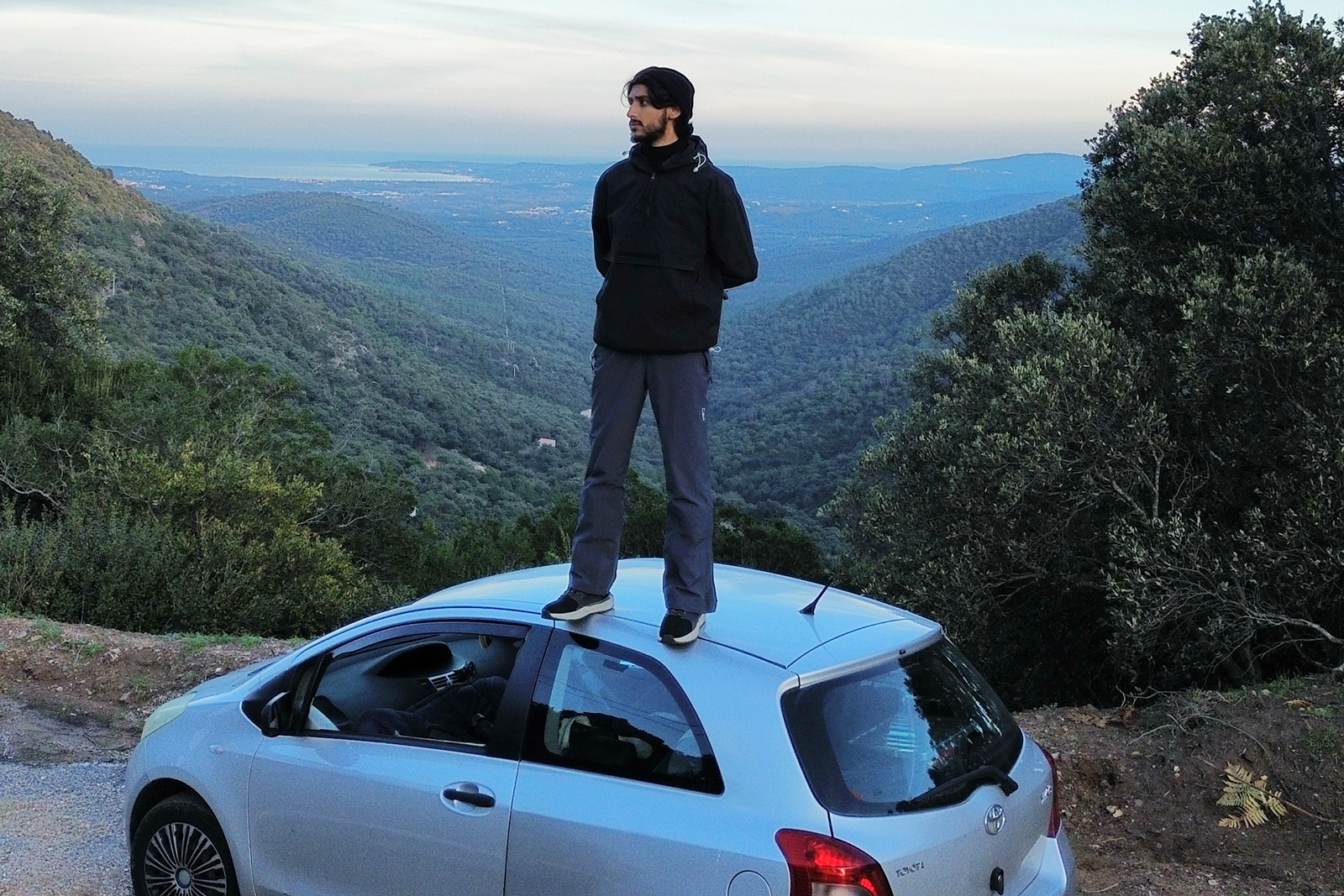
Haris Tagari spent three months driving across Europe in 2025. Now, he’s setting off on his biggest journey yet, tracing the Silk Road to Mongolia while living in his car

Two days before setting off on a journey of a lifetime, Haris Tagari is still figuring out what to pack.
“I’ve emptied everything from the wardrobe on the floor,” he says. “It’s taken months of waking up at 3am and writing things I remember on my packing list.”
It’s a daunting task, because Tagari, 23, is preparing to spend the next year travelling across the world in a 20-year-old Toyota Yaris, which he has converted into a tiny mobile home.
Related content

It isn’t this first experience of living and travelling from his car. In 2025, Tagari spent three months driving across Europe and uncovering lost Islamic history in Europe. The journey, which was originally only supposed to take 20 days, included exploring isolated mountain mosques in Serbia to visiting memorial sites for Ottoman soldiers hidden in plain sight in Vienna.
This time, however, his tour is on a much grander scale. Tagari plans to trace the Silk Road, following the remnants of the Ottoman railway that once transported pilgrims towards Mecca, before eventually making his way to Mongolia.
“My parents used to take me to Mecca quite a lot,” he says. “We always used to hear the stories of how there was once a railway. You can still see vestiges of the Ottomans… they were there for 500 years.”
Tagari expects the journey to take him more than a year, passing through Syria, Iraq and the Balkans. “I don’t just want to plough through important historical cities,” he says. “I want to investigate.”
He has always been curious about the world. That was the main reason he studied history at Lancaster University. He gained a first-class degree, but recalls having to study subjects that felt far removed from his own experiences.
“I ended up just learning about Roman roads and aristocrats living in the 10th century,” Tagari says. “For me, that disconnect actually pushed me elsewhere. I began to write lists of places that I wanted to see and questions that I had.”
That curiosity eventually took him to Bosnia, but the trip had a more personal motivation. His two friends, Adam Bodi and Hafidh Umar Mahmood, had dared him to drive his Yaris there, promising him £20 if he did. After they were killed in a car accident in 2024, the journey became a way of honouring their memory, while also giving him the chance to explore the history he had become captivated by.

Tagari speaks of how moving his trip to Bosnia became in sparking his curiosity to learn more about the world. “I spoke with locals and survivors [of the 1990s war],” he says. “No longer was I reading about it in a book or speaking to a lecturer who studied it – it was personal and it was real to me.”
Documenting his travels online has won Tagari an impressive following of more than 270,000 on Instagram and seen him appear on national TV in Bosnia. The announcement of his latest trip has, he says, brought even more attention.
“I went out at 3am the other day to get a burger dressed up so scruffily, and there’ll be a guy asking me ‘Yo, are you Haris the Yaris?’” he says.
Tagari’s car was a gift from his late grandfather, so has great sentimental value. It allows him to come and go on his own terms.
“You can drive anywhere and if you’re tired, you just sleep,” he says. “A lot of people do it in something much more comfortable than a 20-year-old Yaris. I want to show that you can do it even in the cheapest city car possible and that you don’t need to wait for all the conditions to be perfect.”
That freedom allows Tagari to follow historical threads wherever they lead him — and some of his favourite discoveries have come in places he didn’t expect.
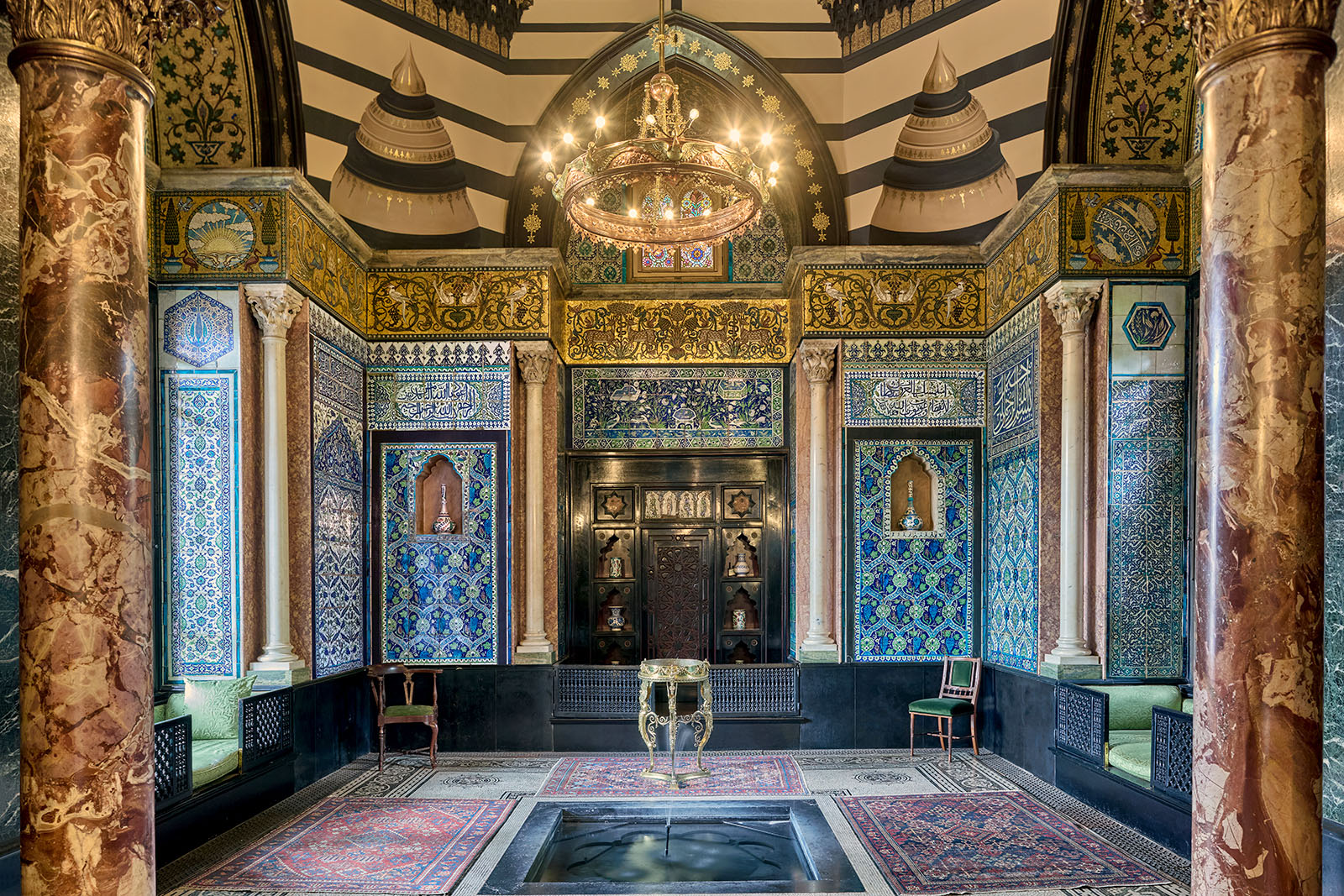
“So, I’m in the middle of Germany, surrounded by non-Muslim architecture, non-Muslim people and I’m seeing a mosque designed as if it was taken straight from the Ottoman empire,” he says, describing the Schwetzingen Mosque, built between 1779 and 1795 by order of the nobleman Charles Theodore.
Related content
“It goes to show that history and the landscape of Europe hasn’t always been Islam versus Christianity, non-Muslims versus Muslims,” he explains. “There’s actually been a fusion of ideas and cultures.”
Tagari’s discoveries don’t always come so easily, though. He explains that an obsessive dedication to research tends to drive his expeditions. He also credits local people, online communities and his own audience for the tips he receives.
“You’d be surprised that a whole leg of the journey can be influenced by just reading one line of a random pdf by some guy who wrote his dissertation in 1980,” he says,
That approach can result in weeks of digging and more than a few dead ends, but for Tagari, there is excitement in the uncertainty, and it’s all part of a much bigger goal.
“I want to unite people,” he says. “I want to present each country and its culture, from the smallest moments to someone giving me something out of kindness, to the history of the people and the landscape. I feel like I have a responsibility to tell those stories.”