10 of the most important Islamic heritage sites in Britain and Ireland
Historian and travel writer Tharik Hussain picks his favourite sites from his new guidebook Muslim Britain & Ireland

From Britain’s first purpose-built mosque and the spoils of empire hidden in a Welsh castle to bustling Muslim bazaars, these sites reveal a fascinating and often overlooked side of the British Isles.
Offa’s Dinar at the British Museum, London
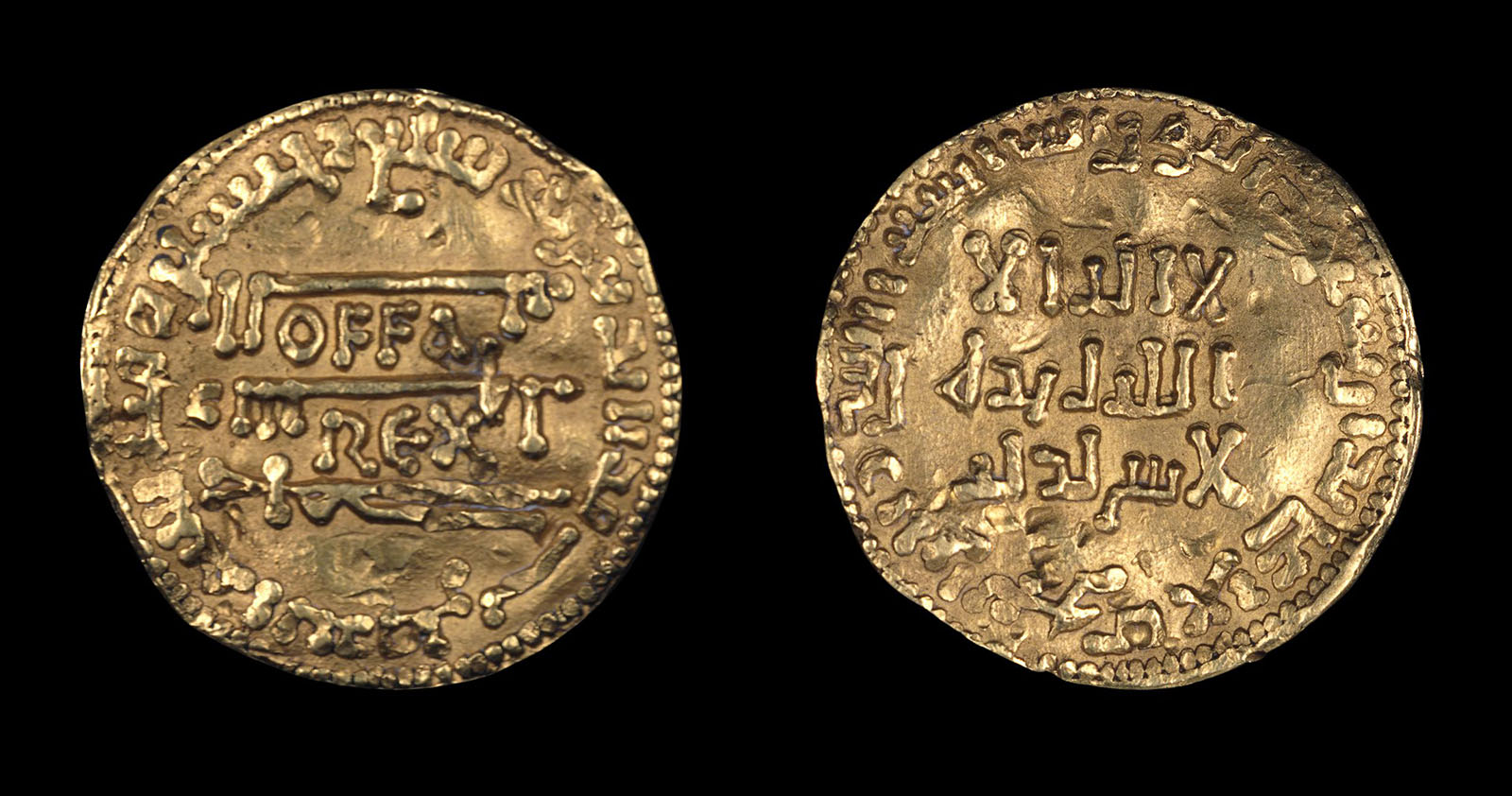
Inside cabinet six in Room 41 at the British Museum’s Early Medieval Europe gallery sits a little gold coin that is possibly the most important artefact in the story of Islam and Britain.
Minted in the eighth-century reign of Offa, the Anglo-Saxon king of Mercia, the coin features a crude Arabic inscription of the Islamic declaration of faith, the Shahadah. It is Britain’s oldest indigenous Islamic artefact.
Powis Castle, Welshpool, Wales
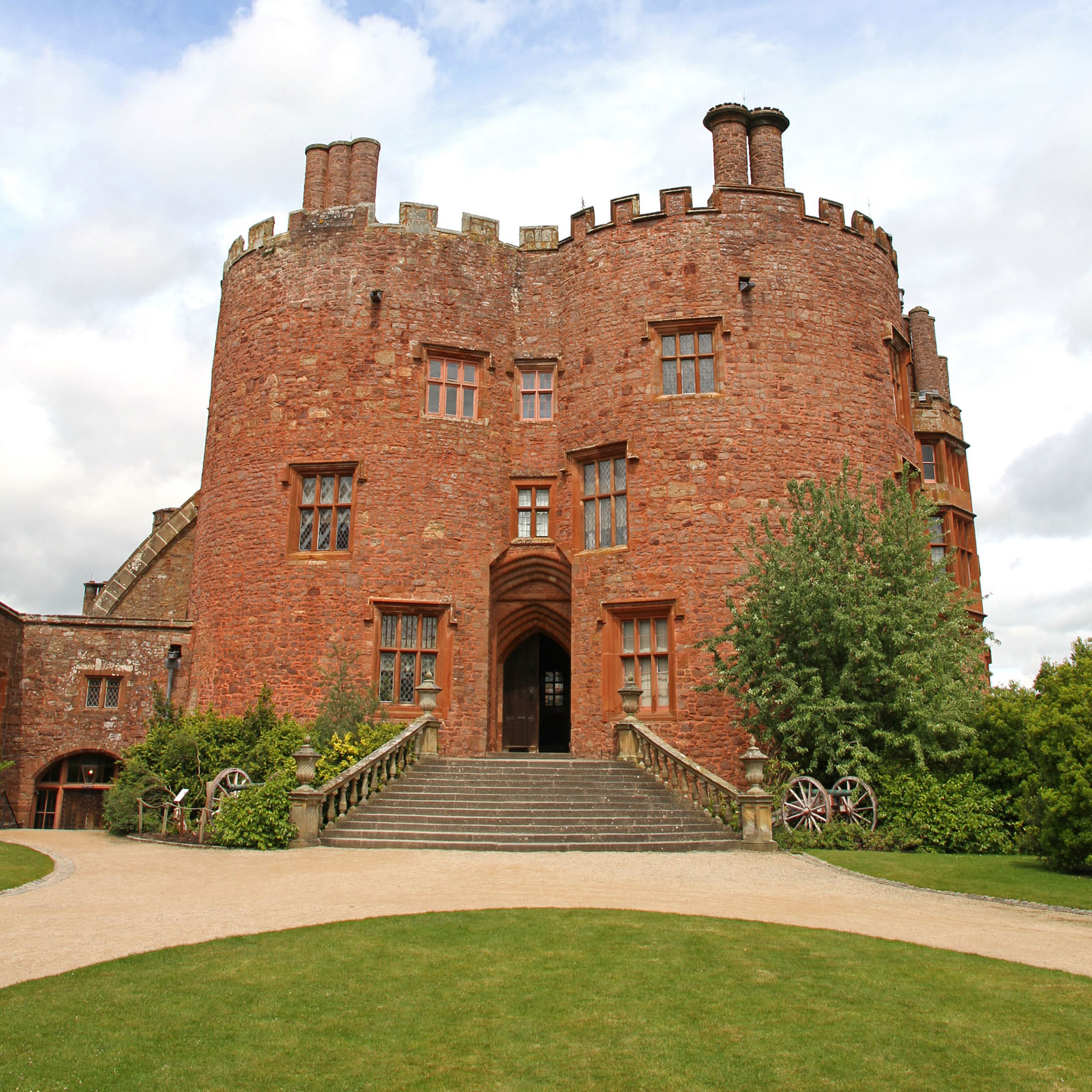
The Clive Museum at Powis Castle holds the ornate palanquin of Siraj ud-Daulah, the last independent Nawab of Bengal. On it sat the man whose defeat by Robert Clive at the battle of Plassey in 1757 marked the beginning of Britain’s brutal colonisation of India. The museum also houses the campaign tent, sword and jewel-encrusted tiger finial of Tipu Sultan, the Indian freedom fighter who resisted British rule.
Burton Mausoleum, Richmond, London
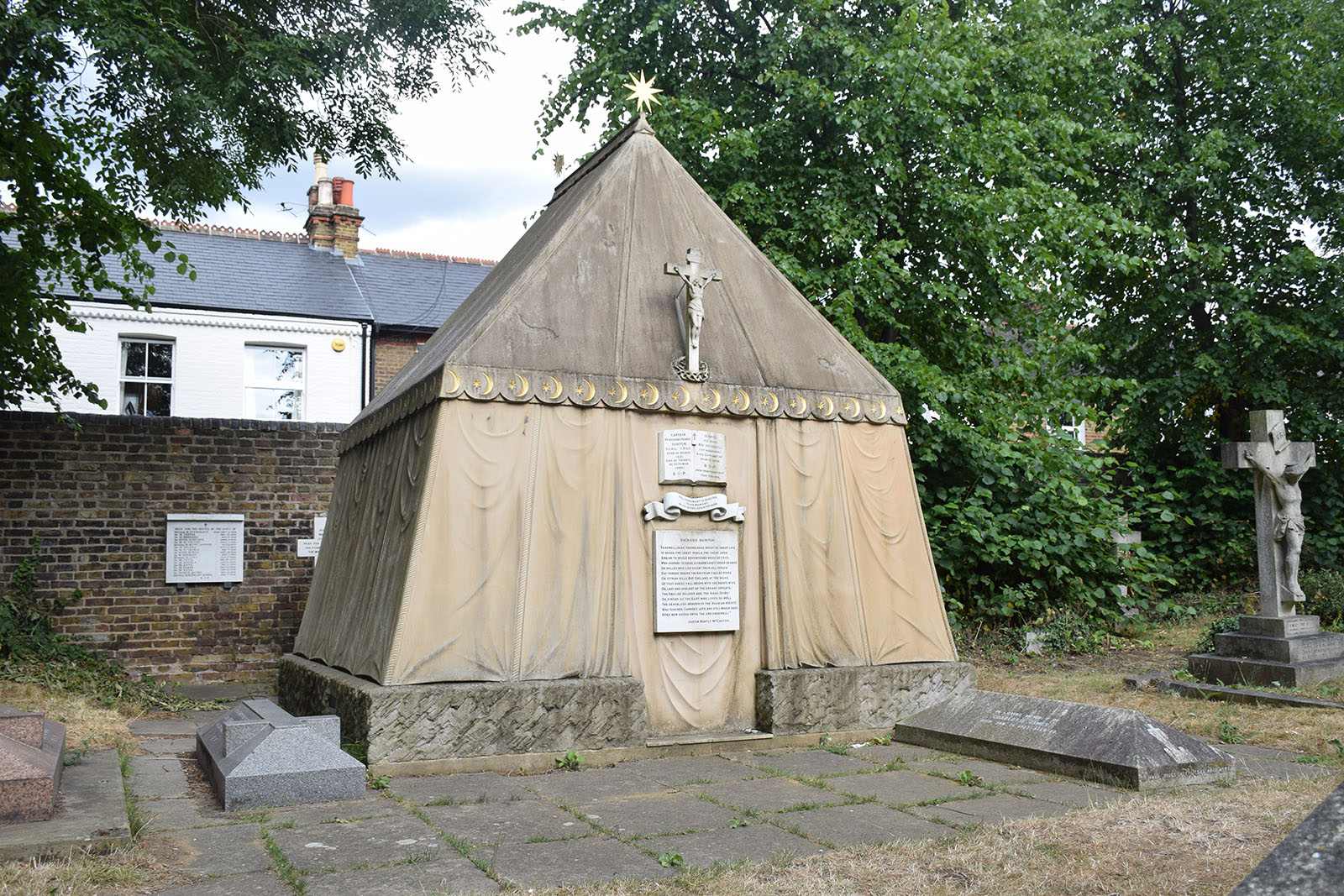
Tucked away in a Roman Catholic churchyard in Mortlake, Richmond, is one of London’s most extraordinary tombs. A stone Bedouin-style tent decorated by a gold crescent and star pattern houses the remains of Victorian explorer Sir Richard Francis Burton and his wife Isabel. Here lies an astonishing collection of Christian and Islamic artefacts, from crucifixes to Maghrebi lanterns, tinkling camel bells and a Hand of Fatima.
Burton was a soldier, spy and explorer who famously “performed” the Hajj in 1853 disguised as a Muslim, covertly supported by the Royal Geographical Society seeking intelligence on Arabian trade routes. An agent of empire, his controversial adaptations of The Arabian Nights and The Perfumed Garden helped shape western perceptions of Muslim cultures through a distorting Victorian orientalist lens that persists today.
Manchester Jewish Museum, Cheetham Hill, Manchester
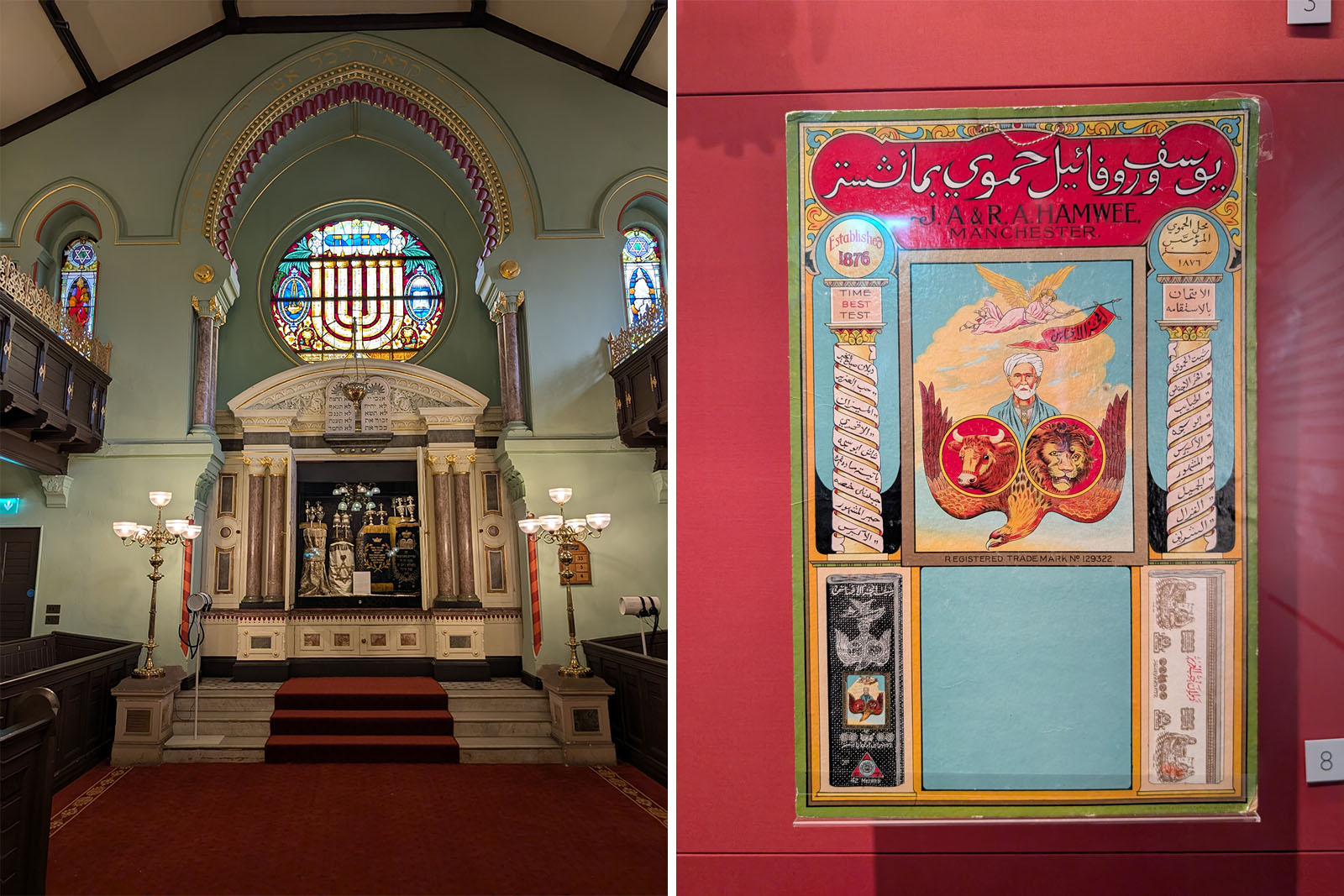
The museum opened in 1984 in a former Spanish and Portuguese synagogue dating back to 1874. The synagogue’s ark is framed by a giant Almohad-style horseshoe arch while Andalusian geometry decorates the stained-glass windows and the bimah.
In the museum you’ll see how Arabic-speaking Jews once worshipped, including Abraham Btesh, whose Arabic business logo is on display, and the textile-trading Hamwee family. These merchants were once part of the “Millet of Manchester”, the community of Jews, Muslims and Christian traders, mostly from Ottoman lands, who lived side by side in the north of England.
The Arab Room at Cardiff Castle, Wales
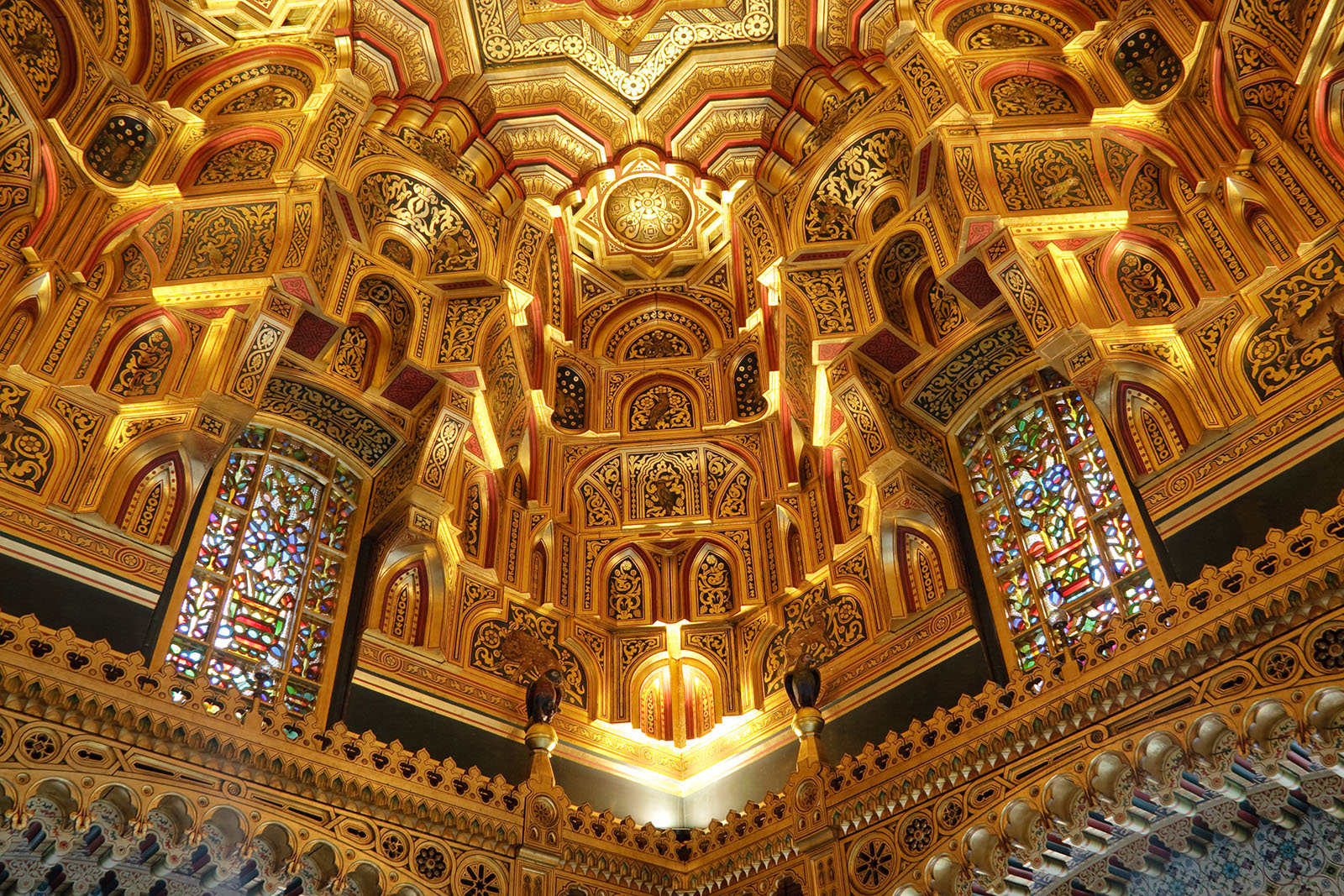
Inside Cardiff Castle is one of Britain’s most breathtaking homages to Muslim art and architecture. Completed in 1881 by the flamboyant architect William Burges for the third Marquess of Bute, the Arab Room is a riot of rich reds, golds, blues and greens.
The muqarnas ceiling has hand-carved wooden stalactites lavishly gilded in 22-carat gold leaf, rising towards an eight-pointed star inspired by the great mosque of Córdoba in Muslim Spain.
This extraordinary chamber is one of several across Britain, including Leighton House in London and Rhinefield House in Hampshire, where wealthy Victorian non-Muslims became so enamoured with Muslim aesthetics that they recreated their own versions of Islamic architectural splendour in Britain.
Muhammadan Cemetery, Woking, Surrey
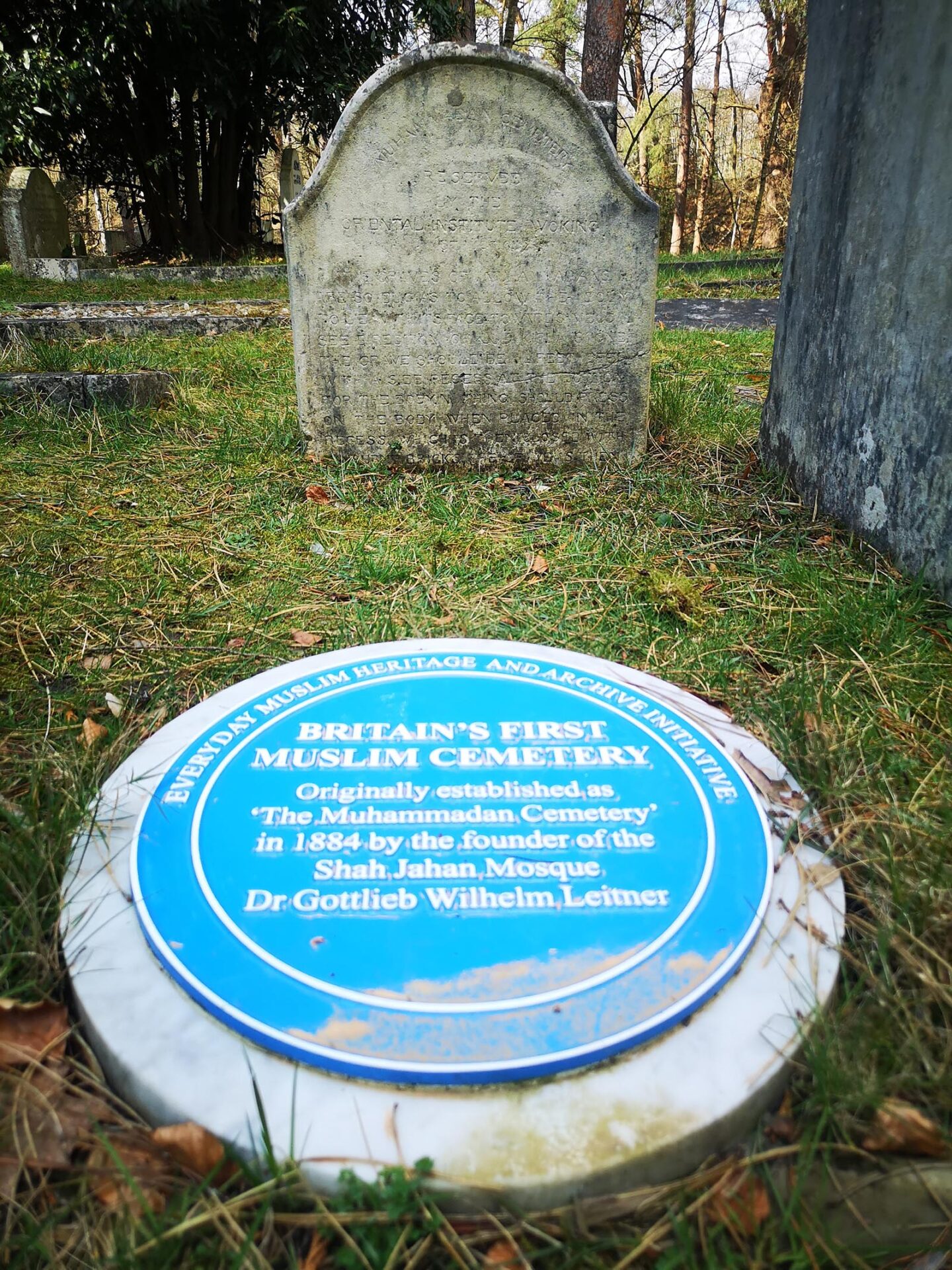
Set aside for the exclusive burial of Muslims in 1884, the Muhammadan Cemetery is the oldest continuously used Muslim burial site in the country. Established by Gottlieb Wilhelm Leitner (builder of the Shah Jahan Mosque), it became the final resting place of some of the most fascinating early British Muslims.
Among them are two of the most important English translators of the Qur’an, Marmaduke Pickthall and Abdullah Yusuf Ali. The most magnificent grave belongs to the co-founder of the Woking Muslim Mission and president of the British Muslim Society, Lord Headley. Close to him is the first female president of the British Muslim Society, Helen Morton Buchanan Hamilton, and somewhere here also lies Abdullah Quilliam, though the location of his grave remains a mystery.
Shah Jahan Mosque, Woking
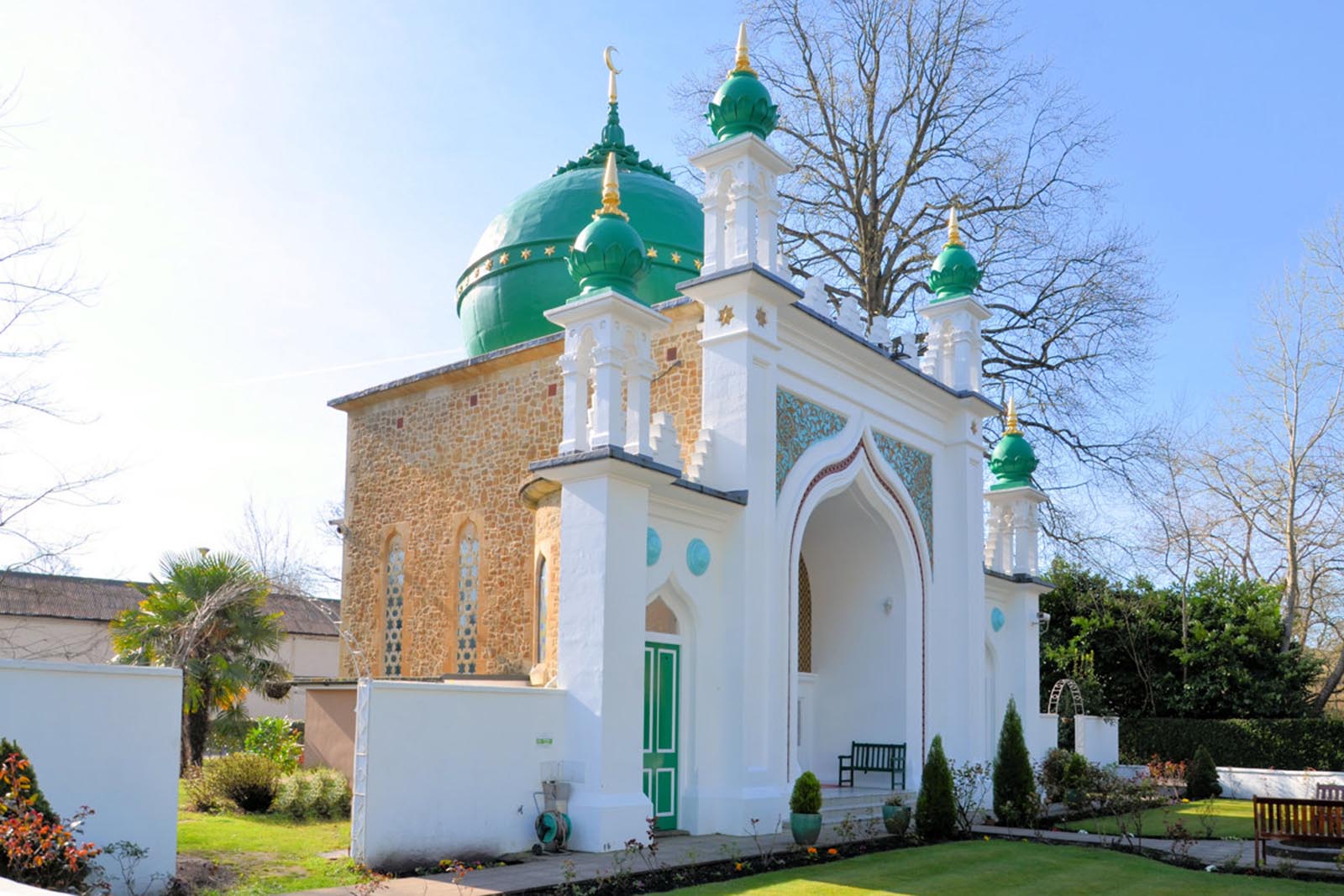
Dubbed the “Mecca of Europe” in the early 20th century, the Shah Jahan Mosque in Woking is Britain’s first purpose-built mosque and the first in north-western Europe. Completed in 1889 by the Jewish-born orientalist Gottlieb Wilhelm Leitner and designed by the Christian architect William Isaac Chambers, the mosque was financed by Muslim rulers from Bhopal and Hyderabad. This neo-Mughal snow-white mirage is the most important mosque in Britain and Ireland and the only one with Grade I-listed status.
Chester Beatty, Dublin, Ireland
The museum and library at Dublin Castle houses one of the world’s finest collections of Islamic manuscripts and art, amassed by the American-Irish mining magnate Sir Alfred Chester Beatty and bequeathed to the Irish state in 1968. Of the museum’s more than 20,000 treasures, an astonishing 6,000 are Islamic, including 260 complete or fragmentary Qur’ans dating from the 8th to the 19th centuries, making this one of Europe’s finest collection of Qur’anic manuscripts. (NB: Chester Beatty is closed until the end of 2026.)
Edinburgh Central Mosque, Scotland
Edinburgh Central Mosque, in the south of the city’s Old Town, was completed in 1998. Iraqi-born architect Basil Al-Bayati ingeniously wove Scottish and Islamic architectural traditions together. For example, the castle-like corner towers have angular Kufic calligraphy spelling “Allah” arranged to evoke the geometric patterns of Scottish tartan.
Hazrat Muhammad Abdul Wahab Siddiqi Shrine, Warwickshire
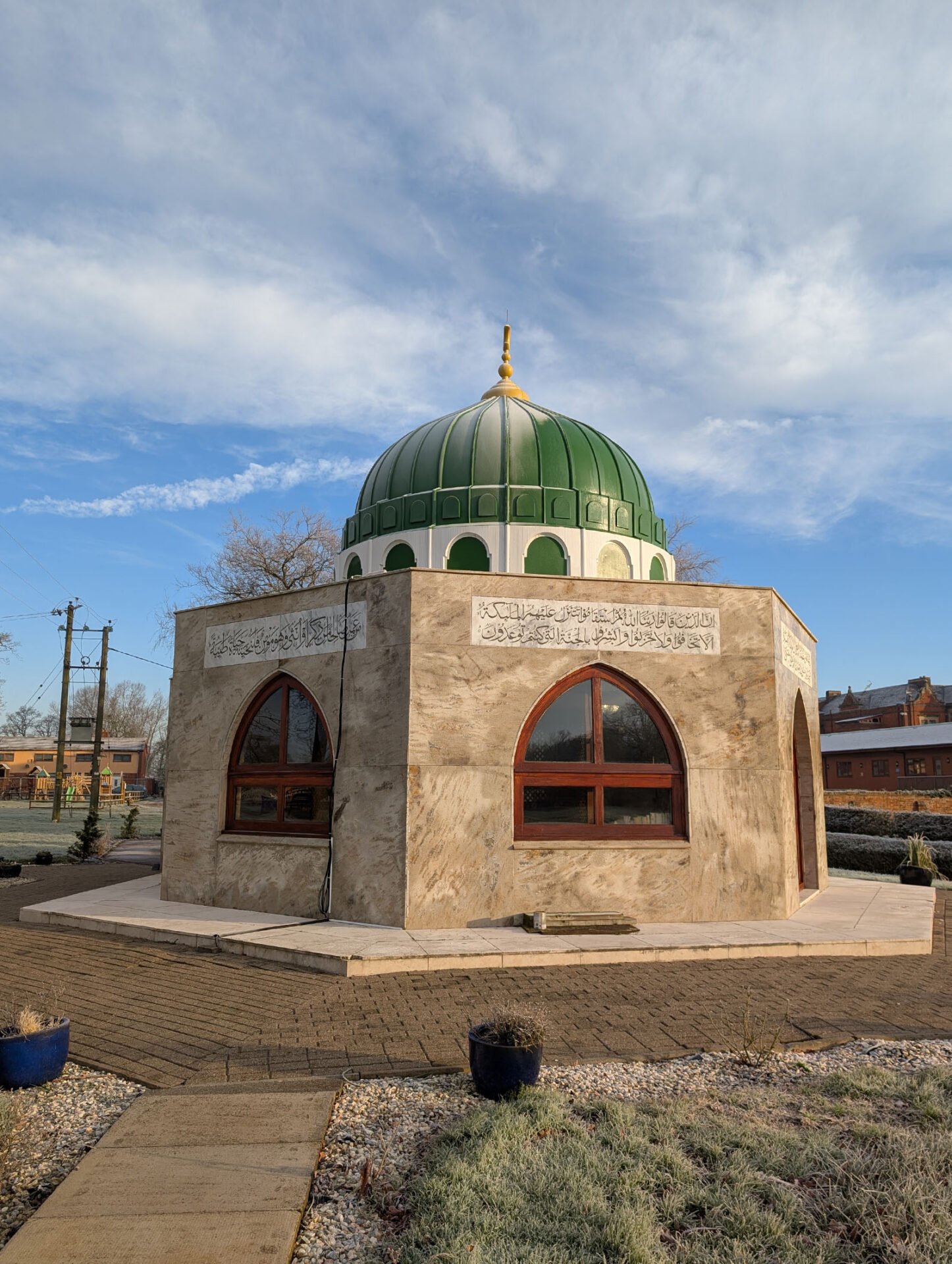
In rural Warwickshire close to Higham on the Hill sits Britain’s first Sufi shrine. It is one of the country’s most important sites of ziyarah, dedicated to the influential Sufi Sheikh Muhammad Abdul Wahab Siddiqi, who arrived from Pakistan in 1972.
Stepping inside the heptagonal mausoleum you’ll be greeted by Qur’anic recitation as incense and fresh flowers fill the air around the Sheikh’s tomb, beneath a dazzling chandelier.
Cannon Mill Market, Bradford
Few places in Britain transport you to South Asia quite like Cannon Mill Market on the south-western edge of Bradford. Housed in a Grade II-listed Victorian mill, this Sunday market brings together northern English and South Asian hospitality — filled with the smell of fresh chapli kebab. This is Britain’s truly Muslim bazaar.
Muslim Britain & Ireland is published by Bradt Guides.