A walk along Surrey’s Islamic heritage trail
The self-guided Muslim history trail in Woking includes the UK’s first dedicated burial space for Muslims and the first purpose-built mosque

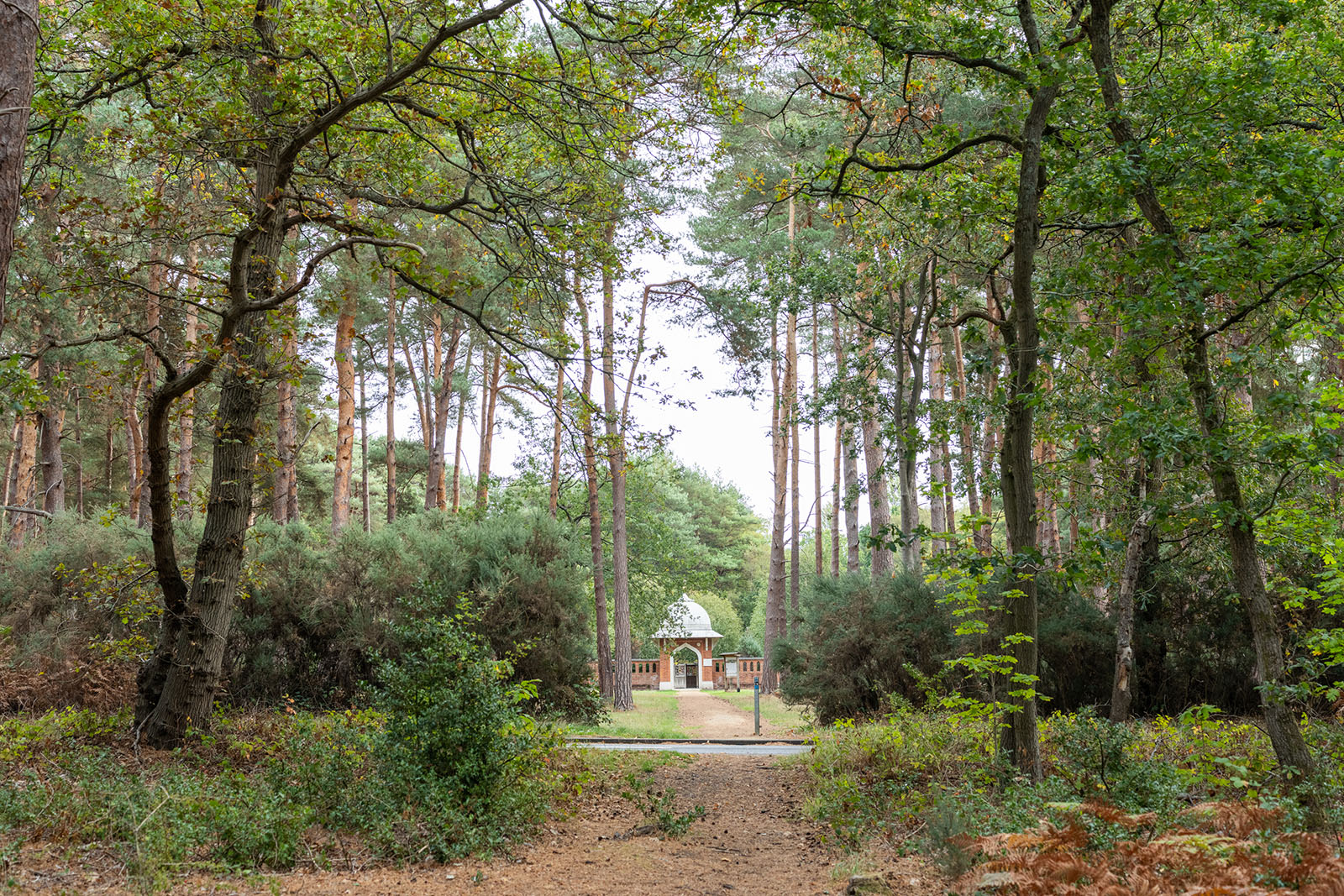
Britain’s first self-guided Muslim heritage trail begins in the towering pine woodland of Woking’s Horsell Common in Surrey. Amber and red leaves line the path as I begin the trail on a crisp autumnal morning. The route, designed by historian Tharik Hussain, aims to give visitors an insight into key landmarks in Britain’s Islamic history, including the first dedicated burial space for Muslims and the UK’s first purpose-built mosque.
The first stop, the Woking Muslim War Cemetery, also known as the Peace Garden, was commissioned in 1915 to provide a resting place for Muslim soldiers who had served Britain. Its creation was spearheaded by Maulana Sadr-ud-Din, a missionary from Lahore who was based at the UK’s only mosque at the time, and who insisted that the British should acknowledge the soldiers’ service.
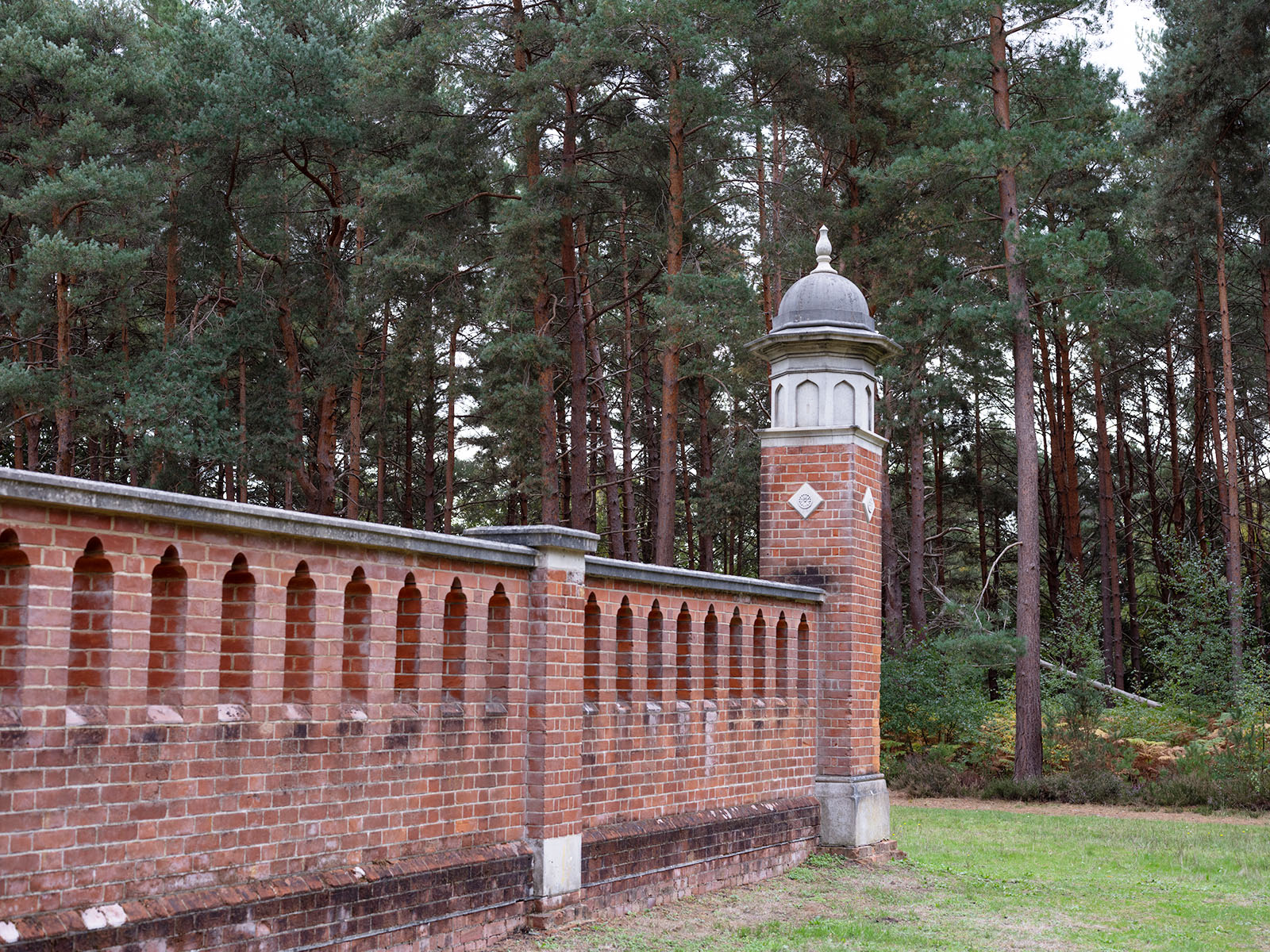
The entrance to the cemetery features a striking domed pavilion, which is visible from the main road that runs along the common. Designed by the British architect Thomas Herbert Winny and completed in 1917, the cemetery is surrounded by a red-brick wall, which is decorated with ornamental minarets on each of its four corners. Among those buried there were 18 soldiers who served in the first world war and eight soldiers from the second world war.
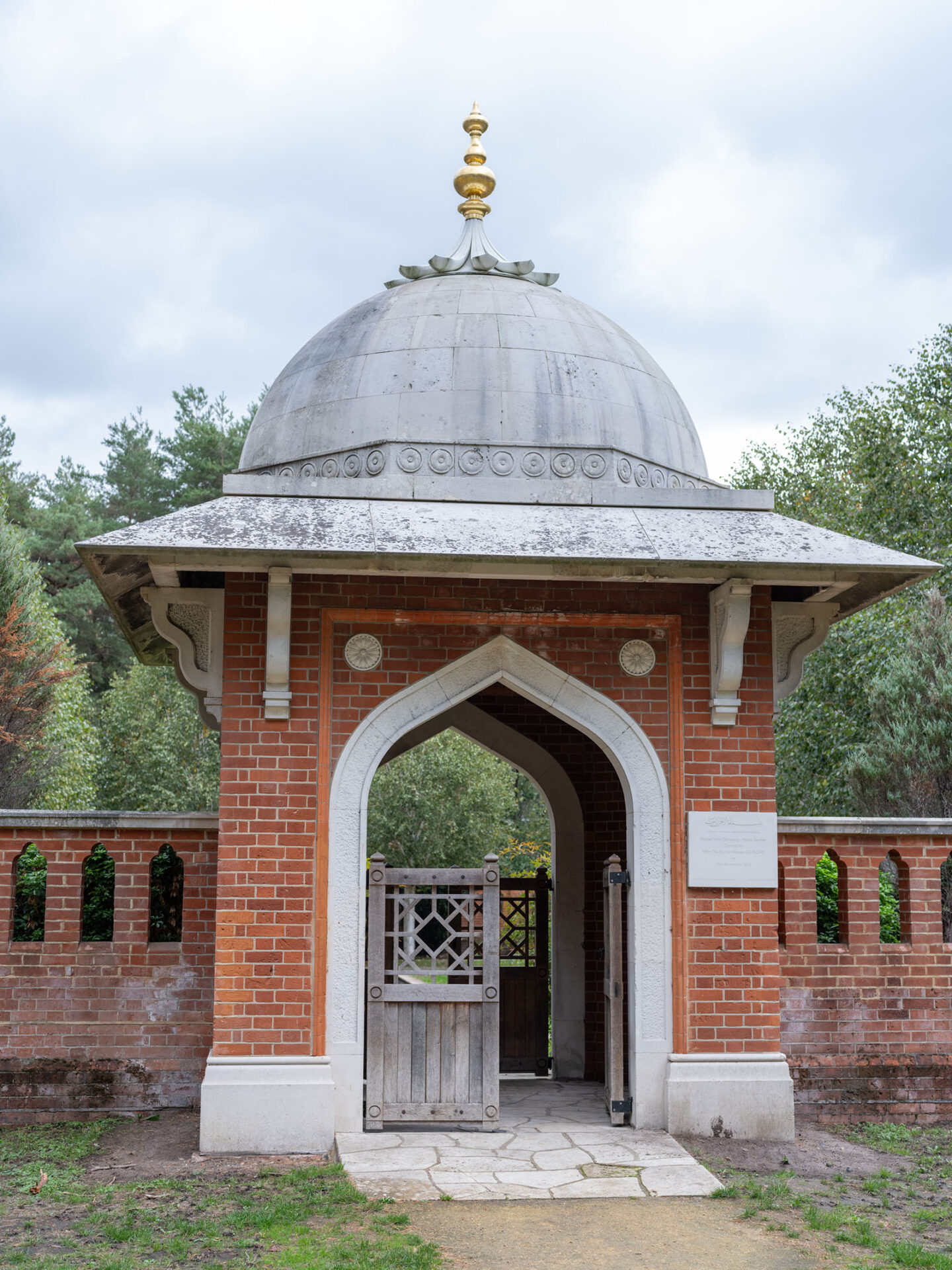
By 1969, the Commonwealth War Graves Commission, which was in charge of looking after the cemetery at the time, decided to move the graves to the nearby Brookwood Cemetery. “The Brookwood Cemetery has a huge military cemetery that the Commission looked after all the time anyway, so I think they felt it was more practical to have them all in one space where they could oversee them and protect them,” says Hussain.
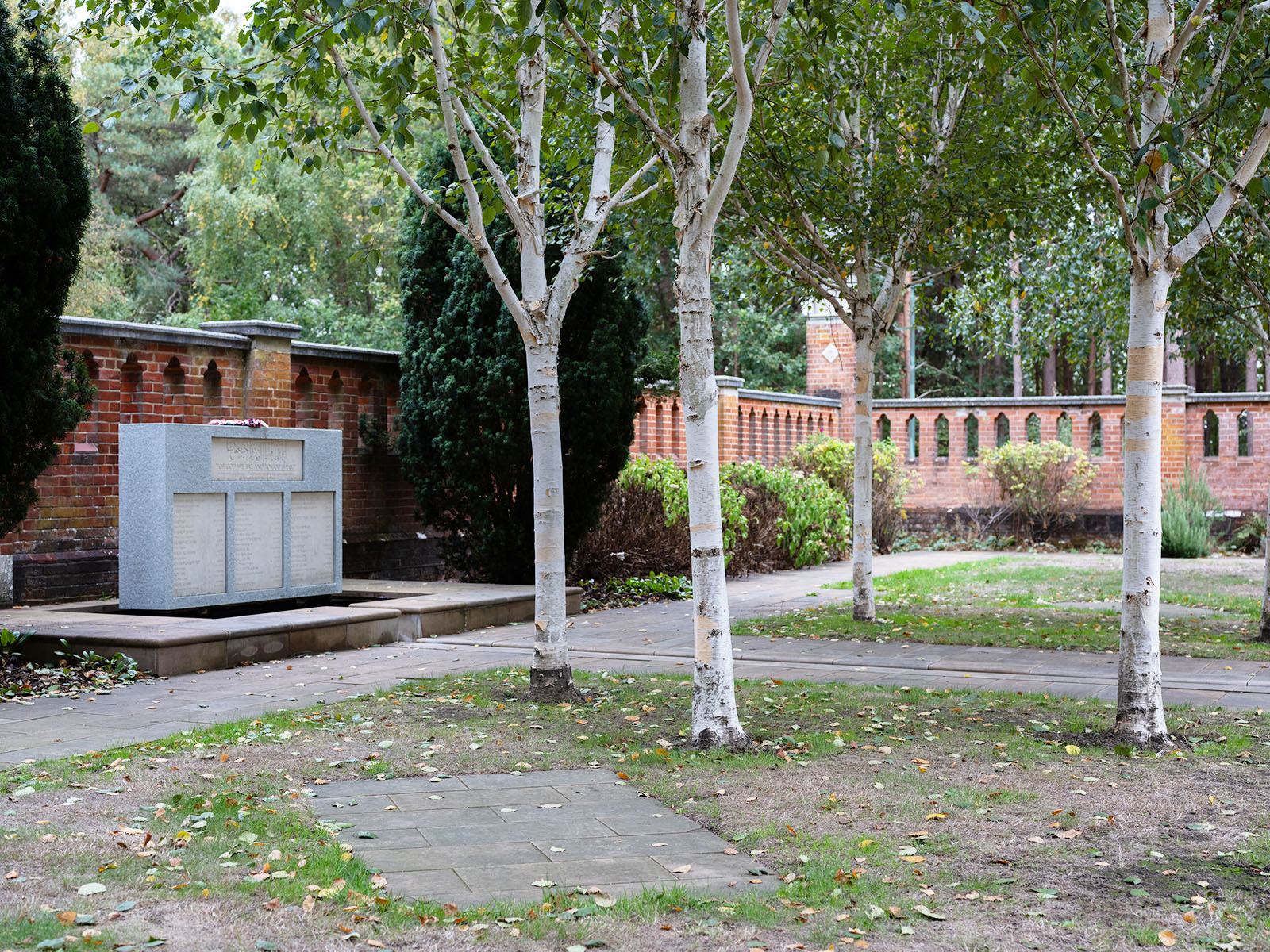
The site later fell into disrepair in the 1980s, before being renovated to include elements from traditional Islamic gardens, and was reopened as the Peace Garden in 2015. As you step through the doors of the garden today, you’re met with a large water feature at its centre, lined with 27 Indian silver birch trees in memory of the soldiers that were once buried there. It also features two large stone prayer mats, both facing the Kaaba. At the top of the garden sits a large stone carved with the names of the soldiers.
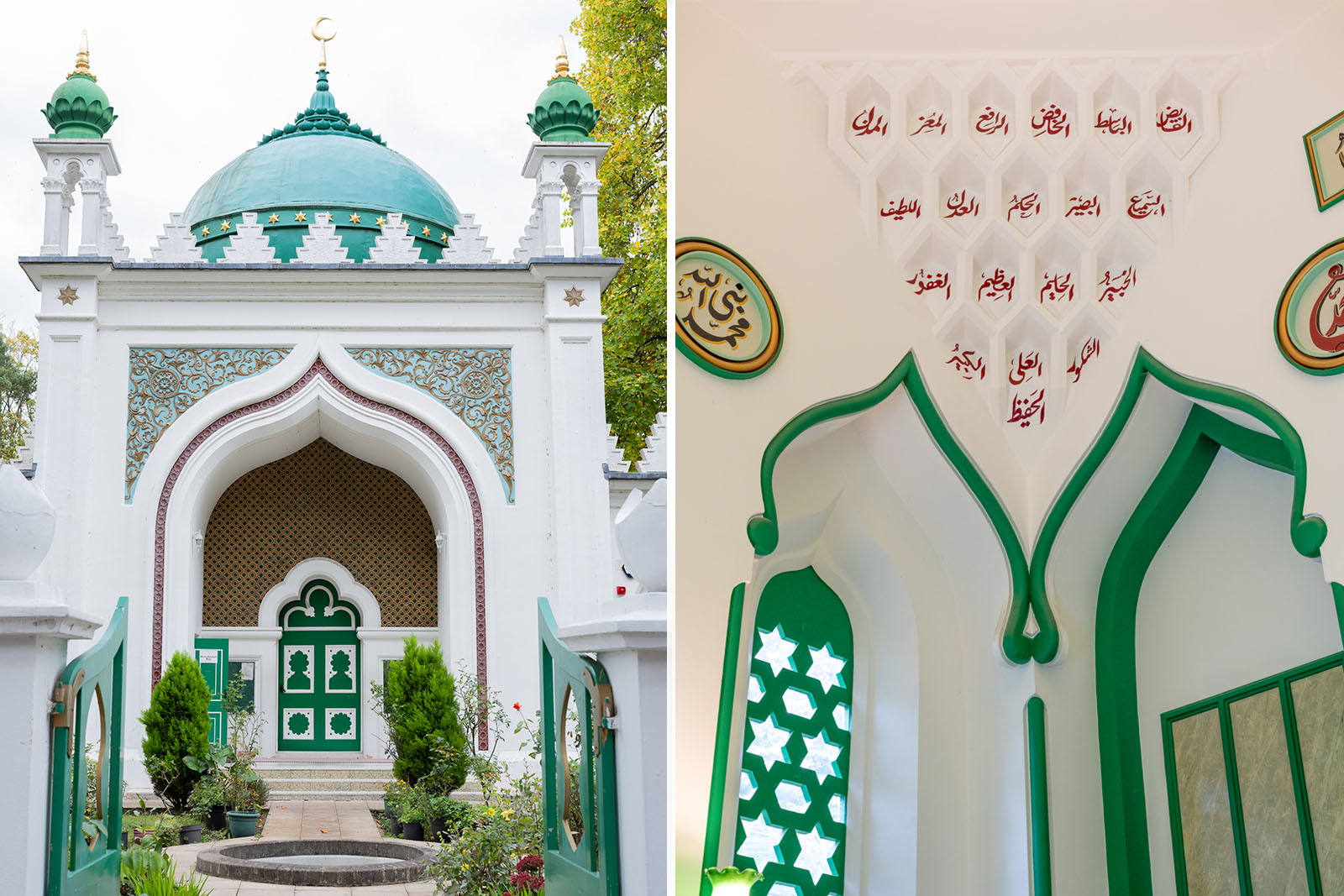
The next stop on the trail is Shah Jahan Mosque, which is the first purpose-built mosque in the UK. Here, I meet Yahya Carlos, a local guide who gives tours of the mosque. “So the history is that it was built in 1889 by a Hungarian by a Jewish British-Hungarian professor named Gottlieb William Leitner,” Carlos says.
A linguist, Leitner used to teach in a building near the mosque, then known as the Oriental Institute of Learning.
“He had Muslim students who didn’t have a space to pray, so he came up with this idea to build a mosque in the area,” Carlos says. Leitner obtained funding from the Princess of Bhopal, Begum Shah Jahan, to carry out the project. The result was a small yet grand building designed by local architect William Isaac Chambers to echo Indian Mughal architecture. The most prominent features include a large central dome, an arched portico and four faux minarets. Leitner also had ambitions to build a church and a synagogue, but he died shortly after the mosque was completed.
Over the years, the mosque has been visited by many famous figures. Hussain says one of the most “tantalising” tales surrounding the mosque is that it was once visited by the late boxer, Muhammad Ali.
“We couldn’t prove it because the trail goes cold. What we know for sure is that he visited the house of the then-treasurer John Farmer,” Hussain says. He points to a letter, archived at the Lightbox Museum in Woking, in which Farmer’s daughter wrote that a man named Cassius Clay had visited her father.
“This happens at the very time that we know Muhammad Ali had converted to Islam and was trying to drop the name Cassius Clay,” says Hussain. “There is no other reason for Muhammad Ali to visit John Farmer other than the fact there is a mosque there. While we can’t say 100% he prayed there, any Muslim knows that if he’s coming to visit the treasurer, in all likelihood he first prayed in the mosque, or they went and prayed in a mosque.”
The last stop on the tour is Brookwood Cemetery. Here, I find the graves of Muslim soldiers that had been relocated from the Peace Garden to a carefully maintained garden. The cemetery is particularly significant because it is also where for “the very first time, as far as we’re aware, that a piece of land was set aside from the exclusive burial of Muslims”, says Hussain.
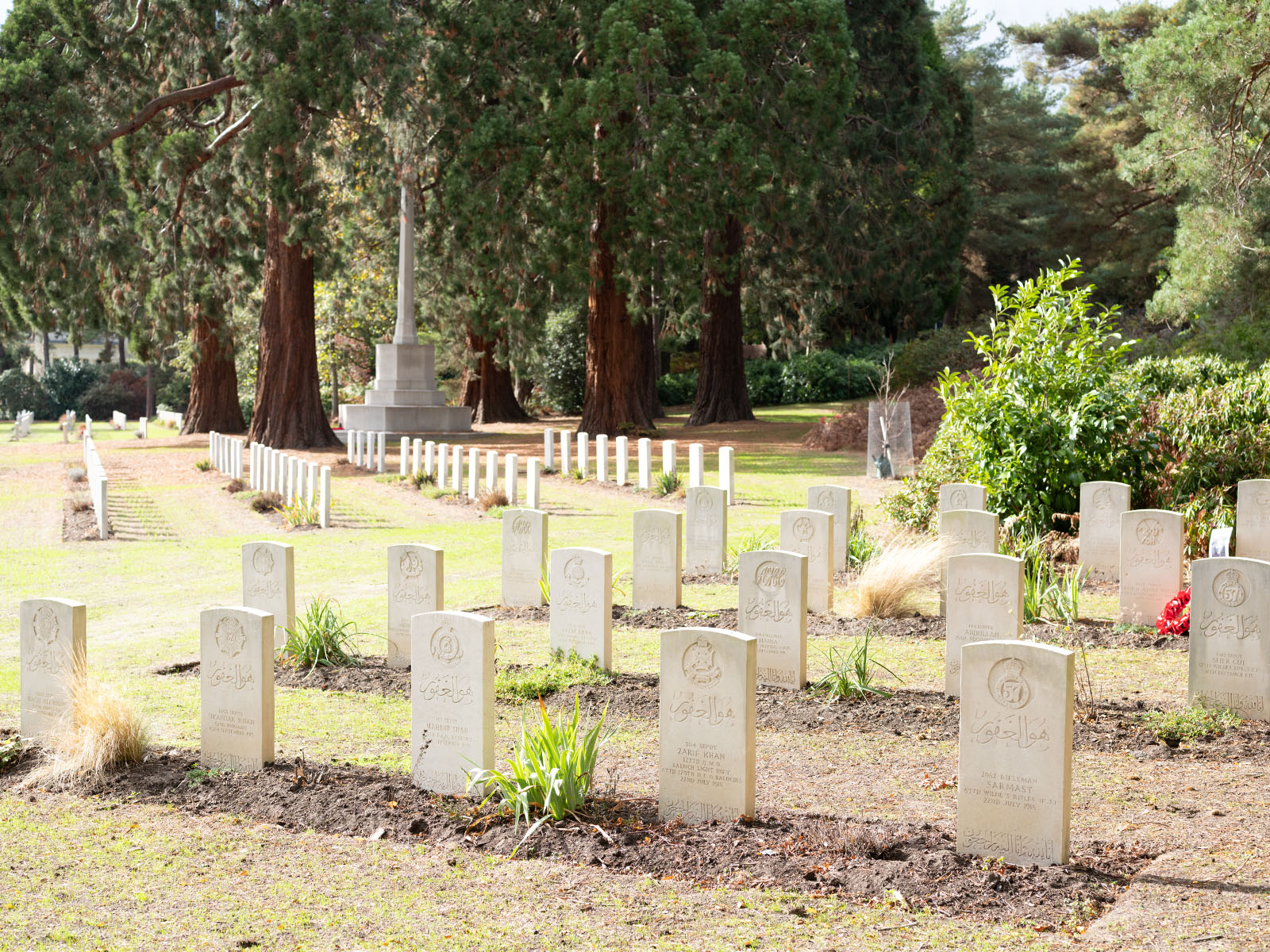
The first known recorded Muslim to be buried here was Sheik Nubie, an Indian juggler who travelled to London in 1895 to perform at Queen Victoria’s Empire of India Exhibition. Other famous Muslims buried here include Abdullah Quilliam, who founded Britain’s first non-purpose-built mosque and Marmaduke Pickthall, a famous Quran translator.
While the trail provides meaningful insights into early Muslim life in the UK, Hussain says research about the history of Muslims in the UK is largely still in its infancy.
“The research is so poor because this area has been so badly neglected by traditional historians of both Britain and Europe. A lot of the work being done is being done by grassroots organisations, and it’s in its infancy,” Hussain says.