
Researchers find a way to get more Muslim women to take up cancer screening
The Imcan study found that faith-based interventions almost doubled participants’ willingness to undergo tests for common cancers
Low takeup of cancer screening appointments among Muslim women could be reversed by religiously tailored cancer workshops, the first evaluation of a groundbreaking pilot project in the UK has concluded.
The Imcan (Improving Muslim Women’s Cancer Screening Uptake) study was conducted over a period of six years by researchers at the University of Sunderland. As part of the project, Muslim women across Scotland and northern England who were overdue routine cancer checks were invited to a peer-led workshop where they had the opportunity to share concerns and access advice and information about their health.
The pilot saw their willingness to attend screening for breast, cervical and colorectal cancers greatly increase. Before taking part, 55% of the participants said that they were planning to attend a breast cancer screening appointment that they had been offered, while only 43% and 35% said they would show up to cervical and bowel cancer screening respectively.
Related content
A year after the intervention, those numbers had increased to 92%, 83% and 85%, respectively, for the same group of people.
Breast and bowel cancers are among the three most common causes of cancer deaths among women in the UK. Between them, they are responsible for more than 40% of all cancer cases in women.
According to the researchers — who launched the project six years ago with funding from the Scottish government — Muslim women are less likely to participate in screening than the general population and thus less likely to benefit from earlier diagnosis.
Data on screening uptake by religious identity is scarce but analysis by Hyphen in 2023 found that areas with the largest Muslim populations had, on average, a 12% lower uptake of cervical screening compared with areas with the smallest Muslim populations.
“The reasons why people dislike cancer screenings are very complex,” said Floor Christie-de Jong, public health professor at the University of Sunderland and co-lead of the project. “A worry that many women have, particularly Muslim women, is around having a male healthcare provider and staying modest. People also have practical worries about things like collecting stool samples.”
Many of the women who took part in the project were not aware that they could request a female practitioner, Christie-de Jong added.
Potential participants who were overdue routine cancer screening were recruited via mosques and through online advertisements.
Related content
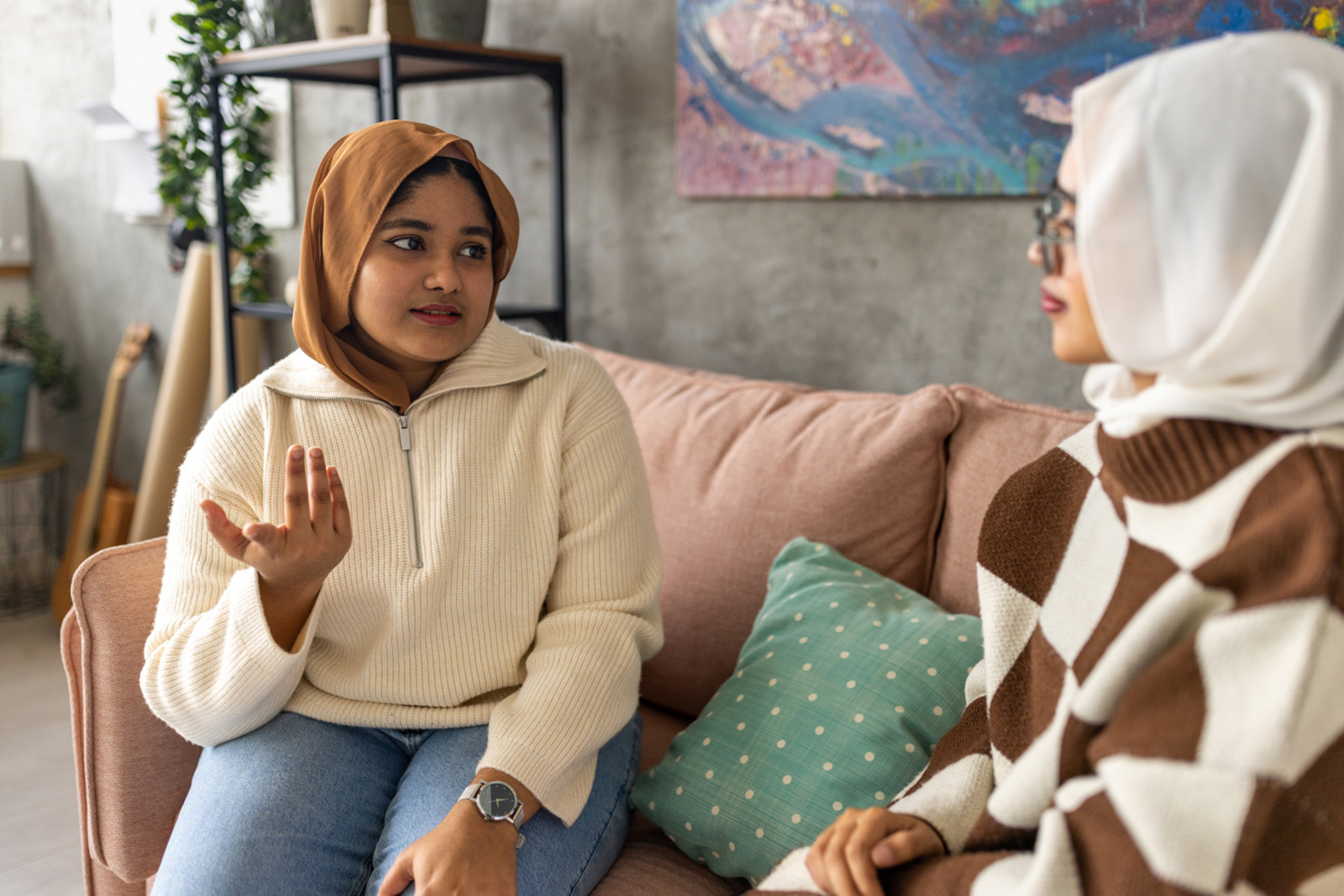
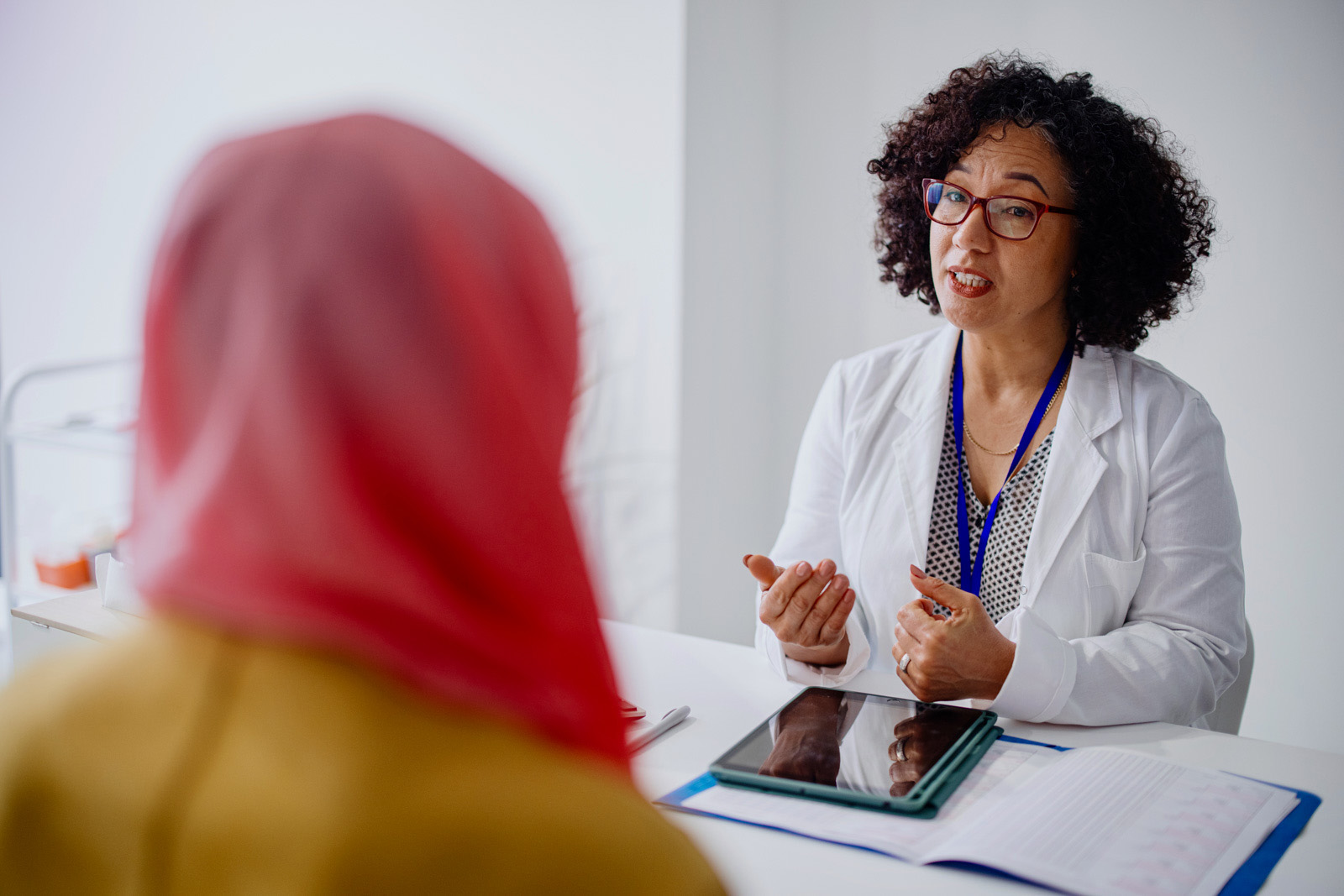
“We worked in partnership with 10 Muslim women to create something that was relevant to them,” said Christie-de Jong. “Together, we designed a two-hour session which begins with a peer-led discussion delivered by a trained Muslim woman. Then there is a workshop with a GP, testimonials from cancer survivors and a session with Cerysh Sadiq, an alimah [a female Islamic scholar] and a research assistant at the University of Sunderland.
“Cerysh speaks from an Islamic perspective and explains why cancer screenings are encouraged. The way we work is to use faith in a positive way to tackle some of the barriers.”
Thanks to another grant from Cancer Research UK, more than 240 women took part in the project over the last three years, 169 of whom were overdue for cancer screening and therefore eligible to be included in the study.
Christie de-Jong would now like to see the project scaled up to include a sample large enough to gain statistically significant results. The promising early findings, she said, suggest that the intervention could help inform health policy across the UK.
“Interventions that are delivered and driven by the communities whose health we want to improve are an equitable solution,” she said. “We want to make sure everyone has information that is understandable and accessible so that they can make an informed decision that is right for them.”