
‘My story is faith’: para powerlifter Doaa Shayea ahead of her Commonwealth Games debut
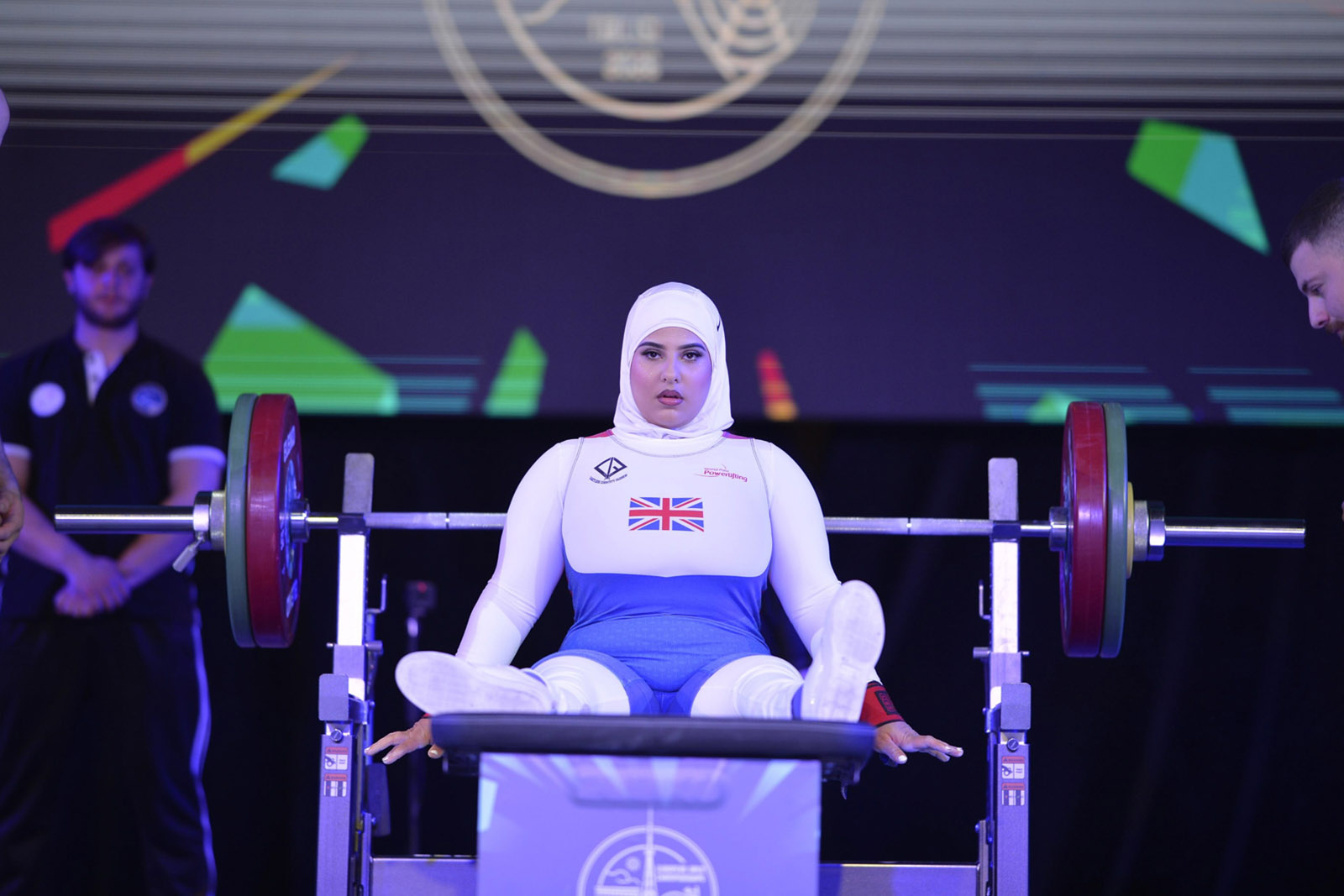
The athlete hopes her performance in the Glasgow competition will challenge assumptions about who belongs in elite sport and what strength looks like
In January, Doaa Shayea was at home in Plymouth, sitting in her family’s living room when an email notification popped up on her phone. It came from Tom Whittaker, the performance director for England’s para powerlifting team.
“Congratulations,” it read. She had been selected to represent Team England in para powerlifting at the Glasgow 2026 Commonwealth Games, which run from 23 July to 2 August. For a moment, Shayea had to stop and read it again. The message was short, formal, life-changing. “I got emotional for sure,” she says. “I told Mum. It was such a special moment.”
Related content
This month, the 28-year-old will make her debut in one of the biggest competitions of her career after less than three years in the sport.
Shayea moved to Britain from Yemen aged five, and has just finished her second year studying sociology at the University of Plymouth. Shayea cleared her summer schedule as much as possible to prepare for the games. “My time really consists of training,” she says. “That’s all I ever do… and studying. But now university is done, I can completely just focus on training and being the best that I can be.”
She was born with spina bifida, a condition that can affect the nerves controlling movement and sensation in the lower body, and uses a wheelchair. She says her disability has shaped “everything” — from how she sees the world to how she understands her place in it. “When you are born with any sort of difference, you kind of want to prove the world wrong, and prove to yourself and others that you’re capable.”
Sport became one way of testing that instinct. For Shayea, the drive was not simply to compete, but to push against what she saw as the narrow expectations placed on disabled people. “The driver for me has been being in a wheelchair and the negative stereotypes and attitudes towards people with disabilities and what they can and cannot do,” she says. “My aim has always been to far surpass that.”
Growing up in Plymouth, Shayea’s route into disability sport began at a school sports day, where she was talent-spotted for wheelchair tennis. The sport was accessible locally, but only with support — she relied on a teaching assistant to take her to training sessions. Around the age of 12, she was scouted for wheelchair racing and began training at her local athletics track.
Her relationship with racing ended after 12 years in what Shayea describes as a painful selection experience while trying to qualify for her GB debut in the sport.
“From that moment on, I knew I’m just not going to be picked, for whatever reason it is,” she says. “I felt like racing, in my experience at the time, involved things outside of performance that shouldn’t really come into sport. After that call, I didn’t go back to that sport.”
By 2022, another opening appeared. Her gym was looking for an adaptive athlete to attend a CrossFit event in London. Shayea competed and won the women’s division. A coach spotted her there and introduced her to para powerlifting, but Shayea was not immediately convinced.
Powerlifting meant entering a gym-based, male-dominated strength sport, a very different world from the track life she was familiar with. “I got into the sport with a lot of doubts but wanted to give it a go either way,” she reflects.
Within three months, Shayea was selected to represent Great Britain at the European Championships, where she finished fourth. Less than a year later, she competed at the World Championships in Dubai. “It just took off,” she says.
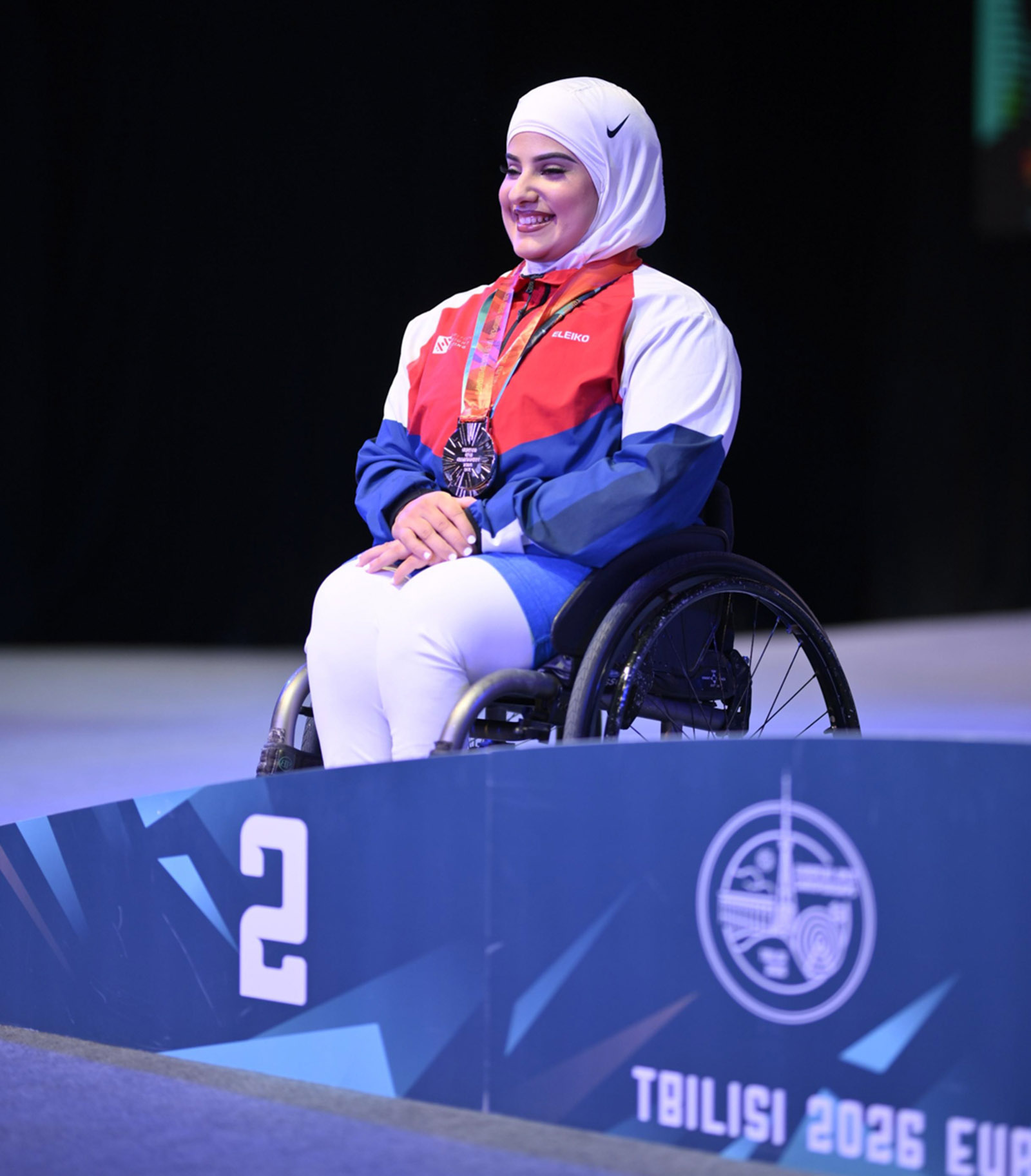
In March Shayea competed again in the European Championships, this time in Georgia, and won silver in the women’s up to 67kg category.
Around the same time Shayea began powerlifting, she also started wearing the hijab. The two changes are connected in how she understands this stage of her career: one making her physically stronger, the other making her more visibly Muslim.
Although she was born Muslim, faith became something she came to understand more deeply for herself. “You can be born a Muslim, which I am,” she says, “but you don’t fully truly find Islam until you find it in your heart.” That visibility has followed her into her Commonwealth debut.
Since her selection was announced, Shayea says she has faced online abuse about her faith and identity. For an athlete preparing to represent England, the reaction has been difficult to ignore. “No matter what I do, or what I say, the pure fact that I’m a woman in a hijab, that doesn’t fit the narrative,” she says.
“There are even comments online like, ‘Oh, how is she even British?’. The level of bigotry and Islamophobia and all those sorts of things that I’ve just been thrown into, I wasn’t quite ready for.”
Related content
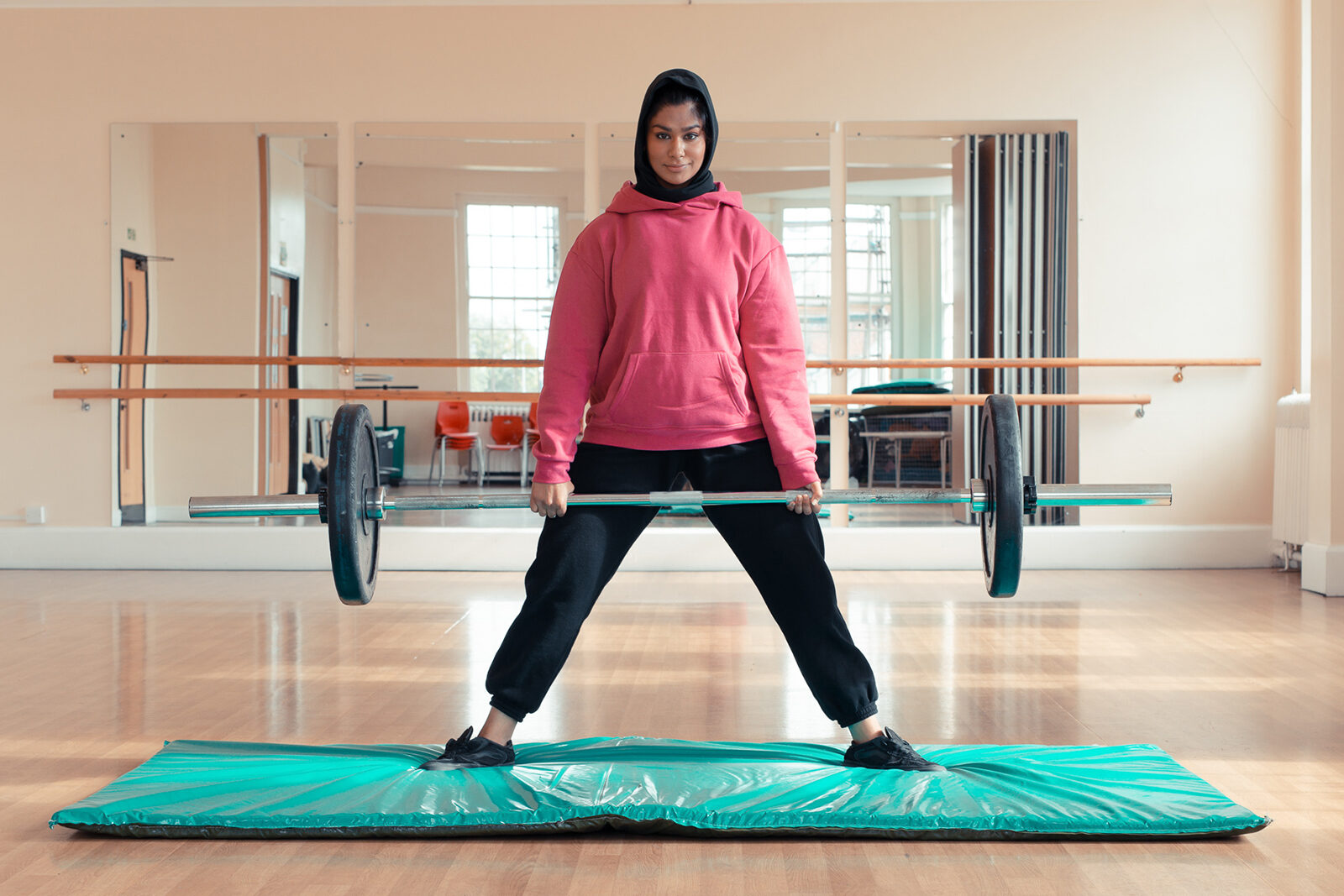
Shayea says her team has been supportive, reminding her to focus on what she can control. “They encourage me to prioritise my wellbeing, concentrate on my performance and not let negativity distract me from my goals.”
But for Shayea, faith is not an accessory to the story. It is part of how she has reached this point as an athlete. “My story is faith,” she says. “It’s so frustrating that I have to water down my Commonwealth journey so that it’s more acceptable or palatable.”
Shayea hopes her debut will challenge assumptions about who belongs in elite sports and what strength is allowed to look like. “People think disability, or being Muslim, or looking different somehow limits what you’re capable of. But why? We’re all human beings. We all deserve the opportunity to flourish.”
The point is not only to compete, but to make the path feel possible for someone else. “If even one person sees my story and believes they can achieve something they once thought was impossible, then that’s something I’m incredibly proud of. Inspiring others and challenging perceptions is a huge part of why I do what I do,” she says.
“It’s always an honour to represent England. I just really want to enjoy every moment, and I really want to do myself and the opportunity justice.”