
Sisters on the Water is on a mission to get Muslim women kayaking
The group was launched to open up the sport to a whole new demographic. Hyphen joins in for an afternoon on the Thames

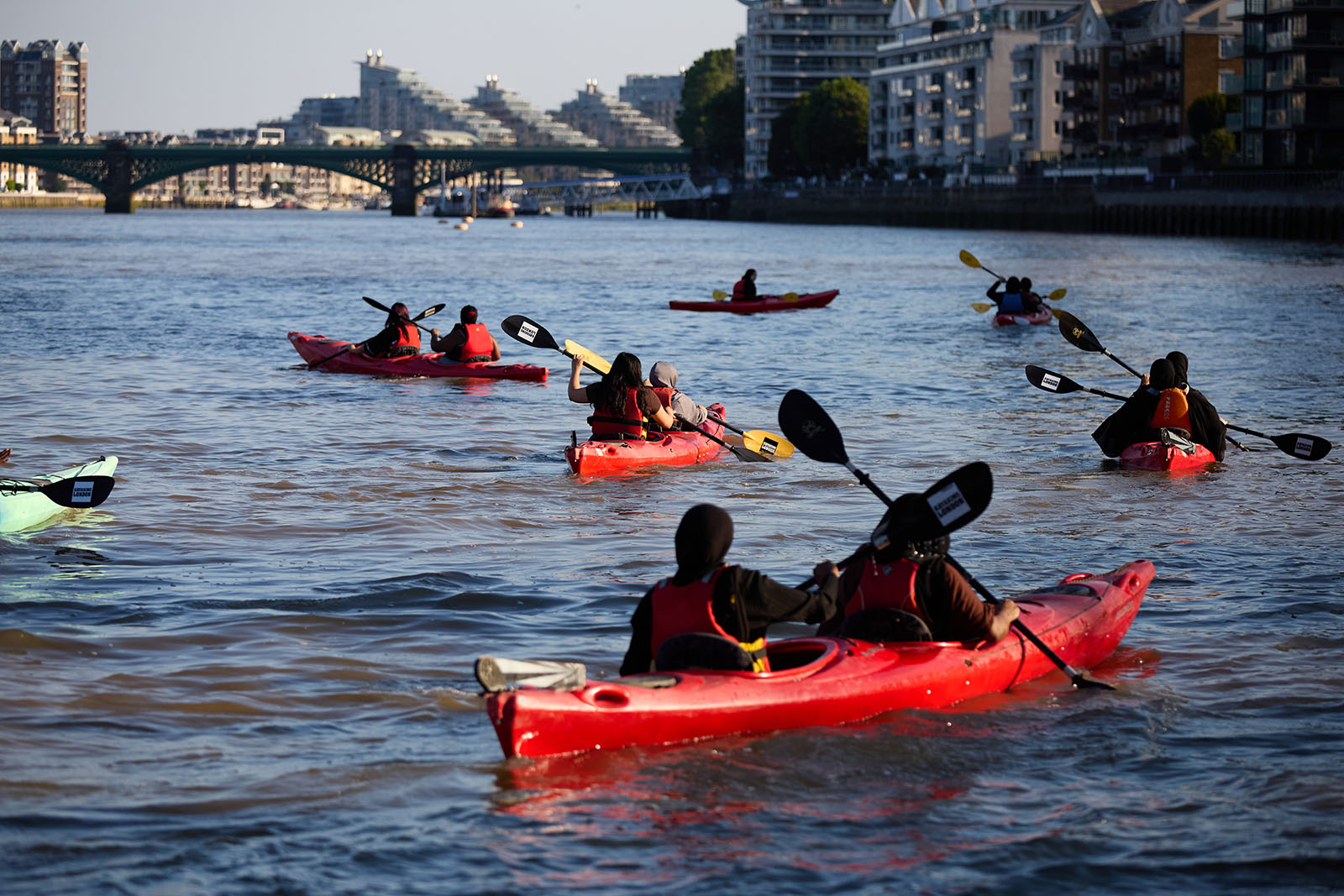
It’s a scorching July afternoon and 12 girls are gathered on the bank of the Thames outside Cremorne Riverside Centre in south-west London. As they pull on lifejackets, their excited chatter makes it hard to believe many of them have never met before today.
They’re all here for Sisters on the Water, a free weekly kayaking session designed to encourage Muslim women and girls to get on the water. The initiative, which is part of the London Sports Trust, started in March 2026 after kayaking coach Sicida Muse decided she wanted to make the pastime more accessible to Muslim women in her local area.
Related content
“There’s a particular sort of class of people that experiences water sports,” says Muse, who leads the weekly sessions. “I wish there were more casual opportunities to try stuff like this for people from different backgrounds.”
Muse, who has played sports from a young age and enjoys running, tells me how easy it is to feel out of place at activities aimed at the wider community. “Sometimes it’s just me in modest attire and, on days where your confidence might not be the best, it’s hard to feel like you fit in,” she says. “Sisters on the Water is a place where you can’t say you don’t belong.”
What began as a local initiative has quickly grown into something much bigger. “We’re now getting girls from east, west and north London coming every week,” says kayaking coach and London Sports Trust operations manager Joao Pires. “It’s great to see, especially with something as niche as kayaking.”
But getting women on to the water is only one part of the challenge. Research from Sport England shows that women remain underrepresented in coaching roles. In paddlesports, however, the extent of any gap is particularly hard to measure because of limited data.
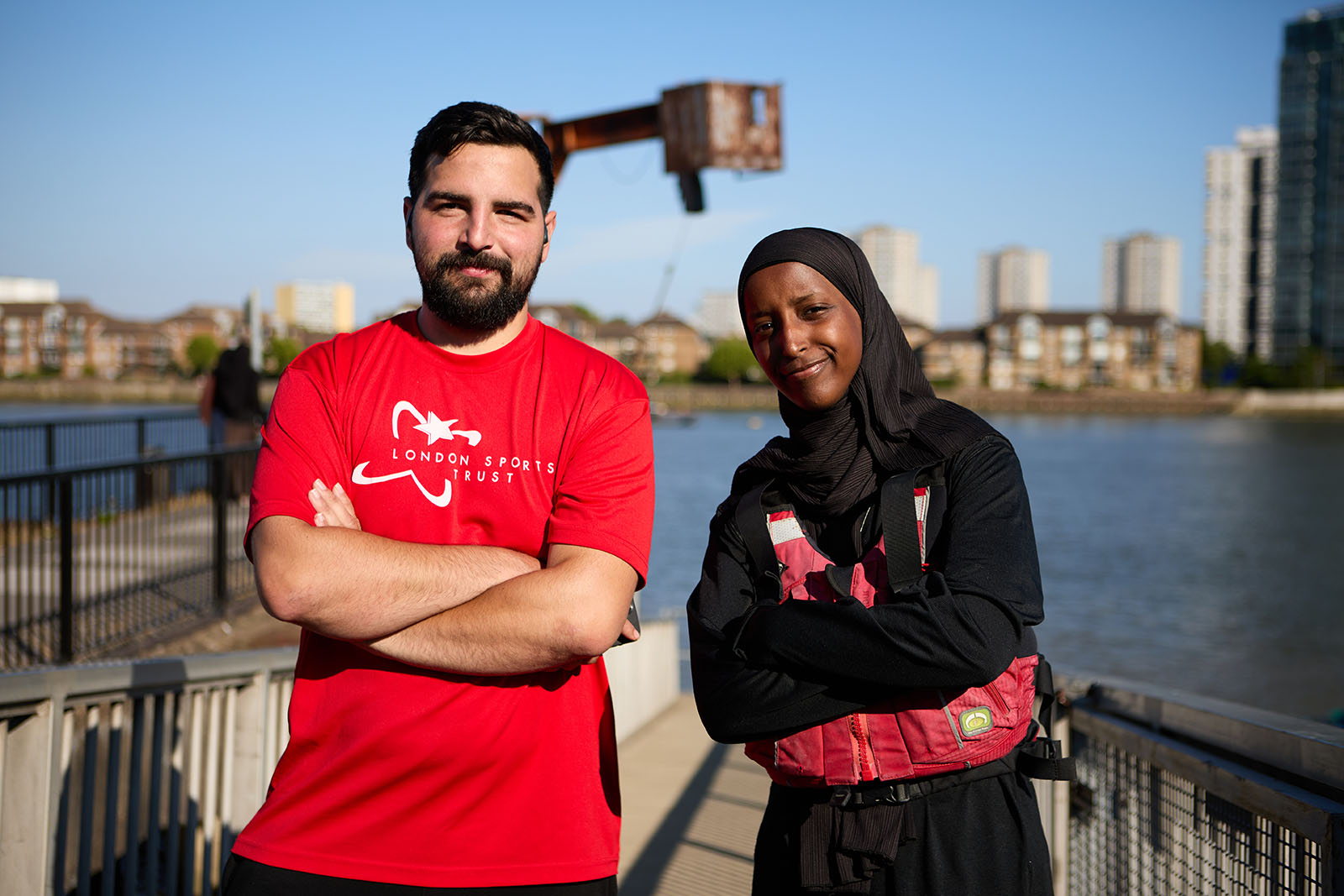
“Part of this initiative is to combat that problem,” Pires explains. “The funding we get for these sessions will also cover three girls to become level 1 instructors.”
One of the three girls aiming to get her qualification is 14-year-old Ayesha Hussain. From speaking to her for a few minutes, it’s clear she has developed a passion for kayaking thanks to the sessions. Later, Pires tells me that Hussain has already co-led a kayaking session.
For Muse and Pires, watching the girls grow in confidence has been one of the most rewarding parts of the project.
“It’s a cycle,” says Pires. “You get confident and then you’re teaching the others.”
As well as the regular attendees, many of the girls attending Sisters on the Water are trying kayaking for the first time. Farah Sheikh, 26, says she has travelled alone from east London to join in.
“I’m so glad it was free because I wouldn’t have come all this way if it wasn’t,” she adds.
That sentiment is echoed by many girls who say they may not have been able to afford the cost of other sessions on the Thames which, on average, can cost upwards of £30 a time.
The Cremorne Riverside Centre is one of two sites managed by the London Sports Trust providing free and affordable watersports for young people. A stone’s throw from the high-end shops and boutiques of Sloane Square in Chelsea, it’s not the first place many would associate with serving underprivileged communities. But Pires says the reality is more complex than the local reputation.
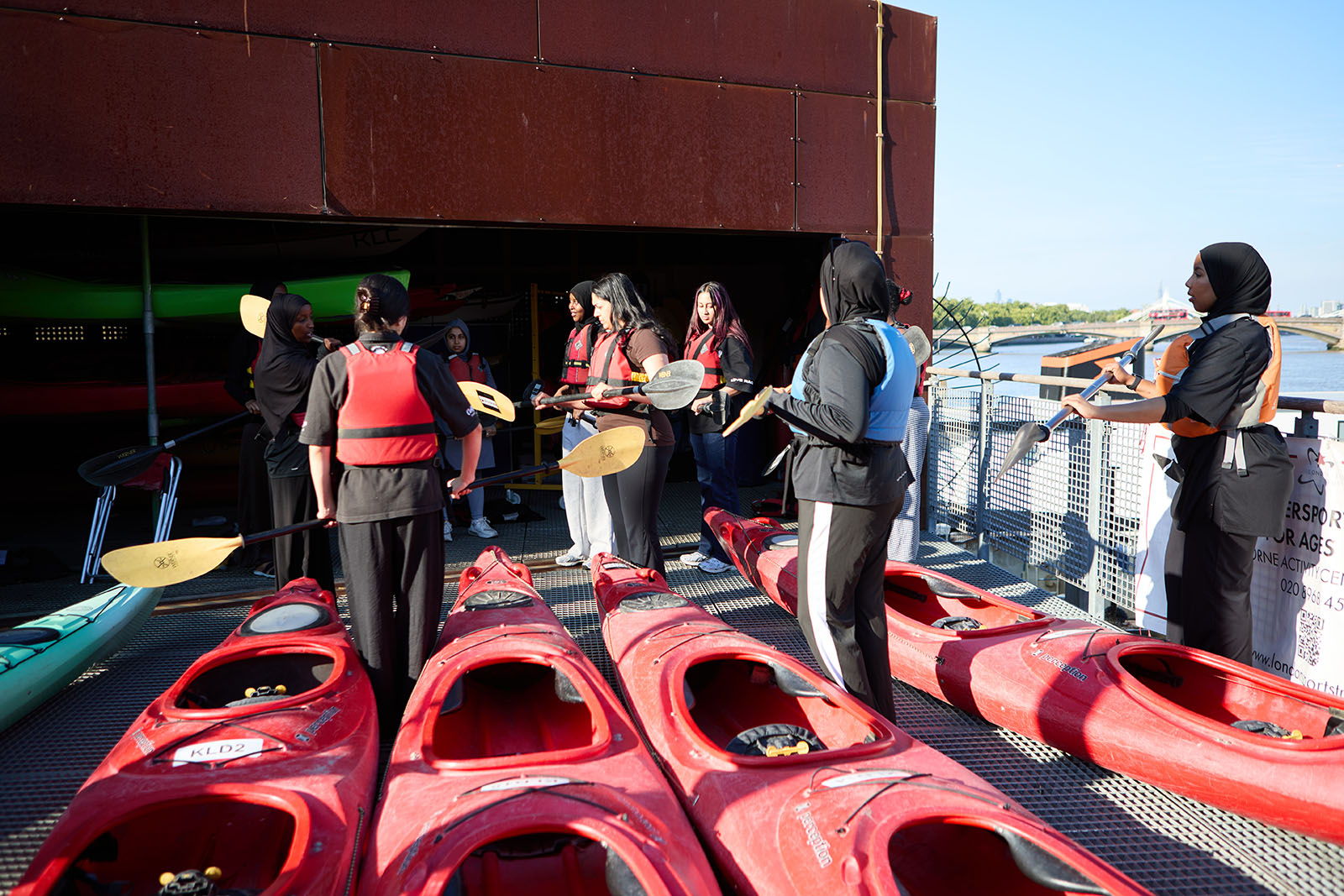
“When you mention Chelsea, you think of wealthy areas like Sloane Square, South Kensington and the Royal Albert Hall,” he says. “You don’t think about Chelsea World’s End, which is one of the largest estates within London. You don’t think about Ladbroke Grove or Latimer Road. A lot of the families living there are in council housing or don’t have a lot of money.”
Related content

Despite the popularity of Sisters on the Water, maintaining free access remains a challenge. Funding from the Port of London Authority, which previously supported the programme, has now come to an end.
“We’re continuing the free sessions until August, and we’re looking to find other funding or charging a cheap price if we can,” says Pires. “The only issue with that is a lot of people might not have the spare money to use on sport.”
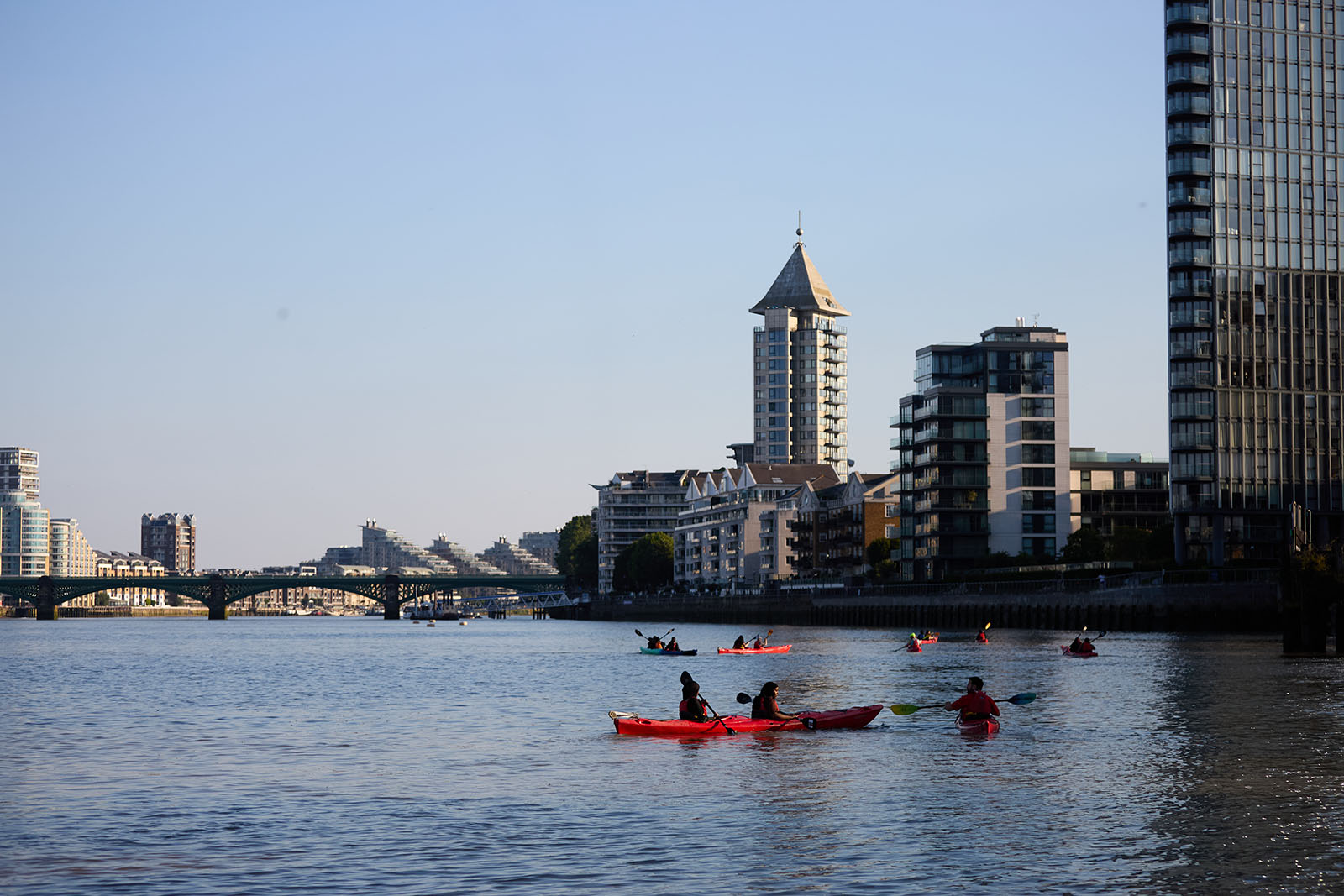
Once we get on the kayaks, the noise from the city fades away, replaced by the lapping of water and laughs from the girls. It’s peaceful and feels a world away from one of the busiest parts of London.
For Pires, that’s exactly the point. “It’s important that people build a connection, first of all, with their local community and, second of all, with their local environment. We’re trying to get people to utilise these spaces as much as possible while they’re available.”
It seems to have worked. Despite many of the girls being new to kayaking, several are already planning to return.
From ticketed clubs to the growing commercialisation of third spaces, community spaces are increasingly becoming locked behind a paywall, but this initiative resists that trend.
Pires tells me he first learnt how to kayak aged 14 at a local youth club, taught by a coach he now works alongside at the London Sports Trust. Muse’s own story mirrors that full-circle journey. She was introduced to the sport as a child through free lessons with the trust.
“There are times in my life when I wouldn’t have been able to pay for sessions like these,” she says. “Joining free communities changed my life. I like the idea of passing that on to a little version of me.”