
The Muslim Golf Association’s drive to prove the sport is not an exclusive club
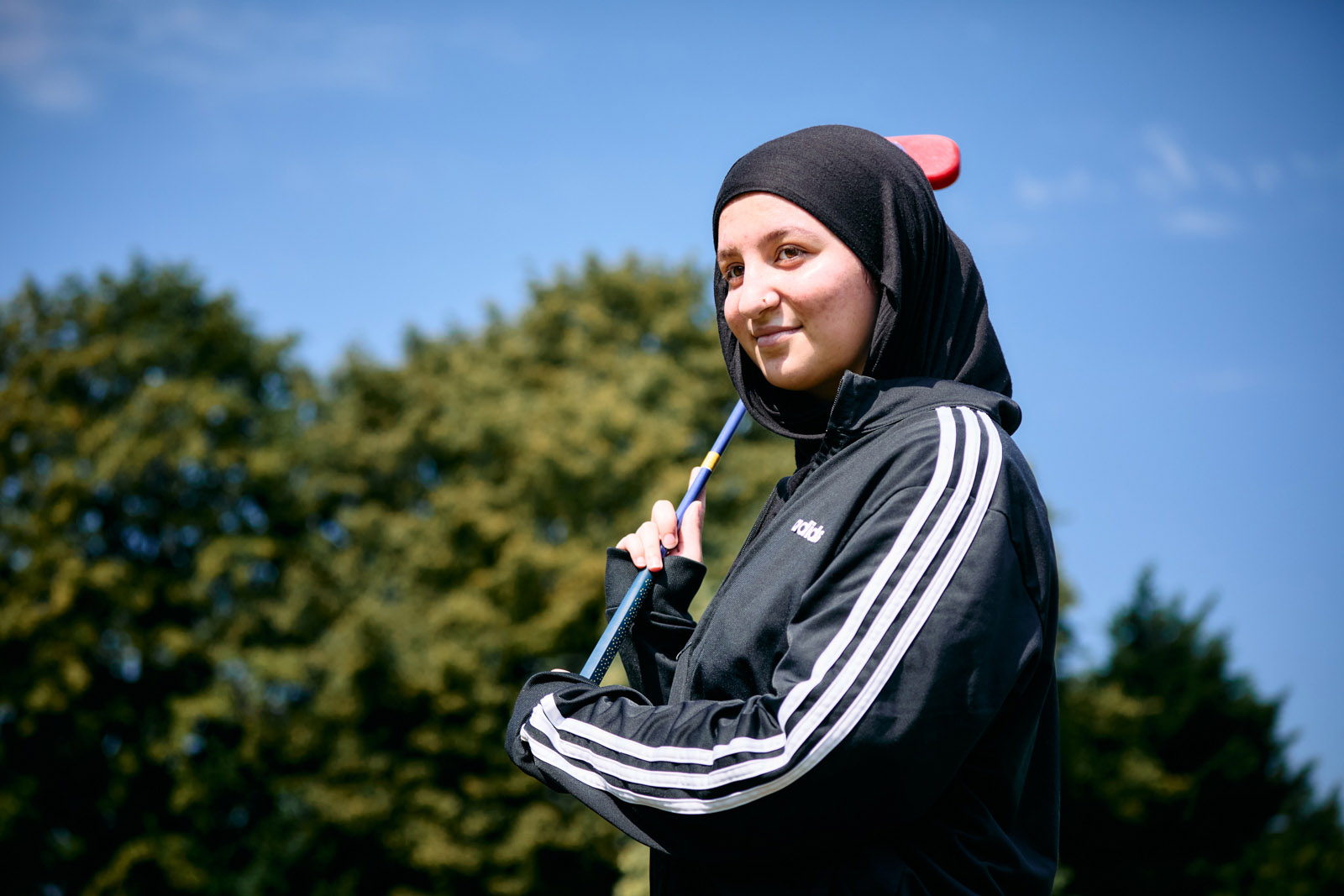
It’s often viewed as the sole preserve of middle-class, middle-aged white men, but Amir Malik is opening up the fairways to a more diverse cast of players

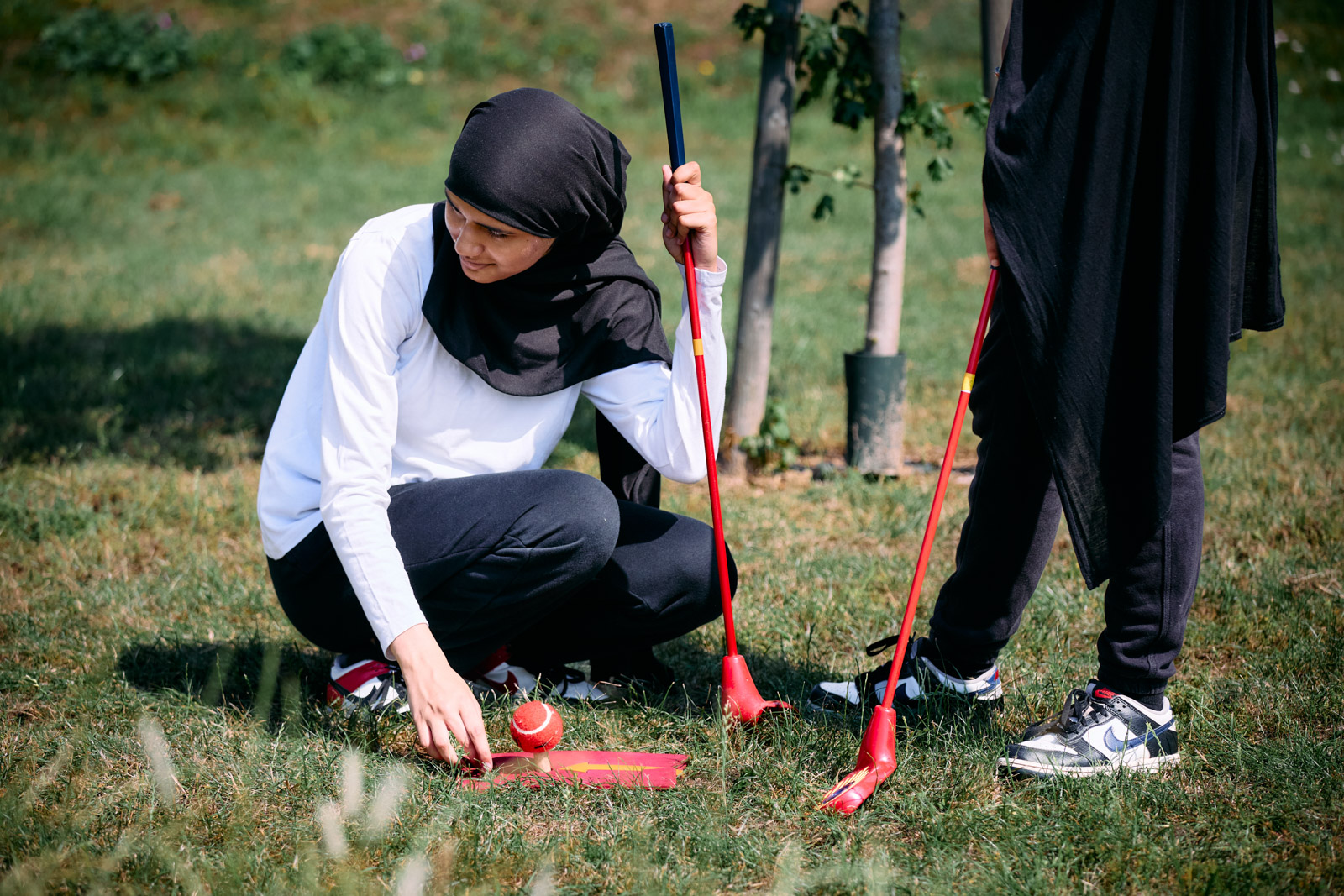
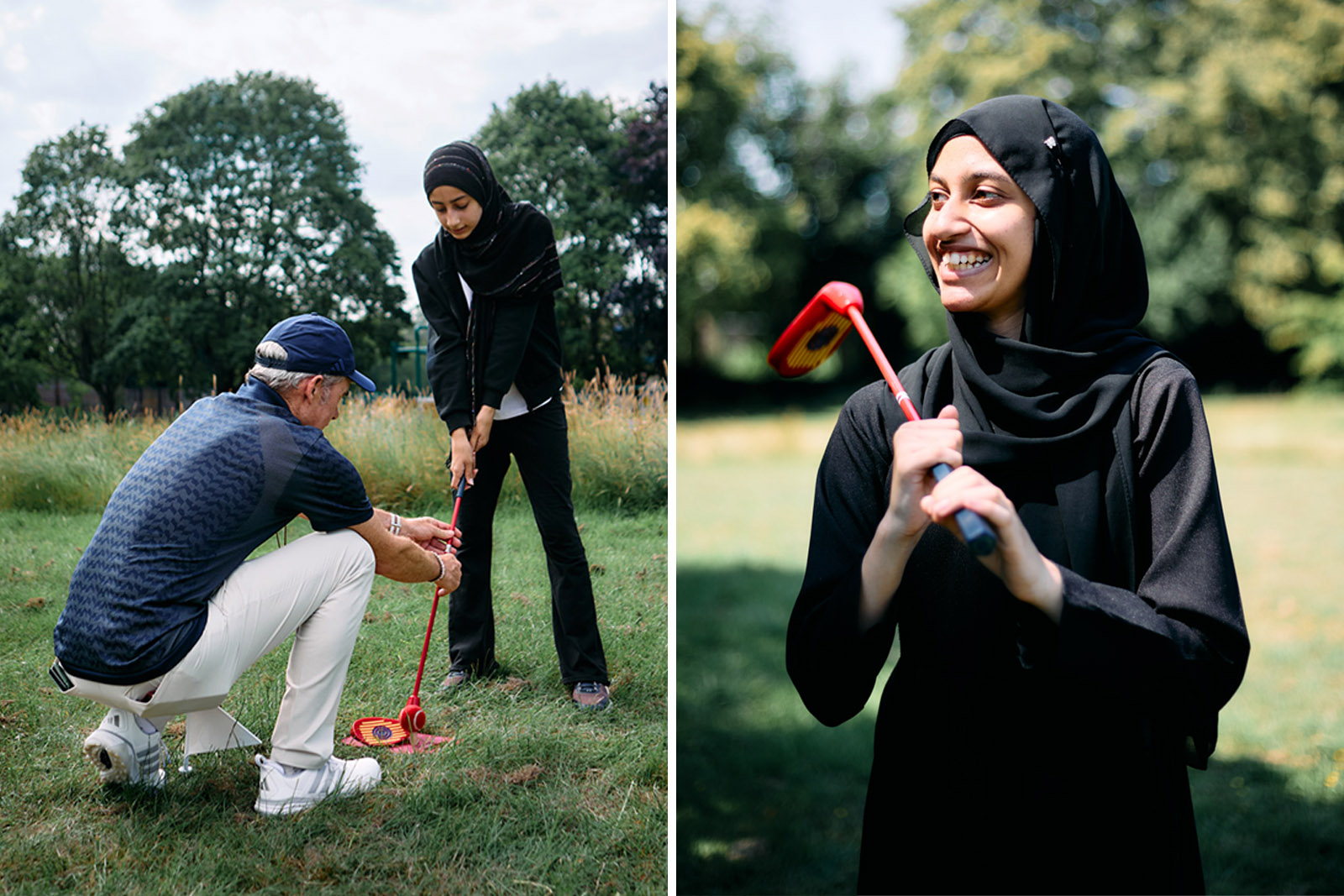
It’s a warm summer morning in the Cambridgeshire cathedral city of Peterborough. As the country faces a rare extreme heat warning and schools cut the day short due to rising classroom temperatures, girls at Iqra Academy are outside making the most of the cooler morning air and taking turns putting balls across the grass.
“We’ve had to come to a public park today, just so that these girls can play on some green space,” says Amir Malik, who is watching the group complete the final session of a month-long course that teaches the basics of golf.
Related content
The Iqra Academy’s programme is one of a growing number of initiatives organised by the Muslim Golf Association (MGA). Malik, 42, founded the organisation in 2019 with the aim of making the sport more accessible, particularly for Muslim women and girls. Through school visits, community coaching sessions and partnerships with mosques, the MGA is challenging the perception that golf is the sole preserve of middle-aged and determinedly middle-class white men.
According to figures published by England Golf, women’s participation in the sport is on an upward trend, with women and girls now accounting for around one in three new players in the UK. Despite that progress, Muslim women remain far less visible.
The MGA programme comes at a time when wider research has highlighted inequalities in access to sport for girls. A new report commissioned by Sky and published by the consultancy group Public First has found that girls aged 11 to 18 play an average of 84 minutes less sport each week than boys of the same age. Even wider gaps in participation exist among girls from minority ethnic backgrounds and those who live in areas that lack sports facilities.
The session I am attending is taking place in a park opposite the academy, across a busy road, because the school has no suitable green space of its own.
“This is right next to a car dealership. You wouldn’t think there’s an Islamic school here and their facilities aren’t the best in the world,” says Malik. “You can only look across the road where there’s a state school. They have so much space.”
For Malik, bringing golf to underrepresented communities is a personal mission. As a child, he had played football, cricket and other sports but never considered golf until his late 20s, when a former boss persuaded him to give it a try.
Everything changed the first time he struck a clean shot. “I went out to my first ever golf course and hit a shot that came right out of the middle. I got a really tingly feeling. I fell in love with the game,” says Malik.
After noticing how few Muslims were playing and how unwelcoming some clubs could feel, he founded the MGA in December 2019.
“When you start playing at club level, you realise that there is a lot of alcohol, a lot of gambling and, actually, a lot of covert racism,” he says. “When you go to some golf clubs, you know immediately when you’re not welcome, or when you are made to feel different. That didn’t sit right with me.”
Determined to find out whether there was any appetite for golf among British Muslims, Malik started by hosting a charity golf day at The Grove course in Chandler’s Cross, Hertfordshire. The event sold out all 72 places within 24 hours and brought together players from across the country. Now, the MGA runs school coaching programmes, women’s taster sessions and the Race to Makkah, an international men’s tournament spanning South Africa, the UK and the US, where players compete for a place in the final in Saudi Arabia.
Malik estimates the MGA has introduced around 4,000 to 5,000 Muslims to golf, including more than 2,500 women, and worked with around 10 boys’ and girls’ schools around the country. At Iqra Academy, perceptions of golf are already changing.
When Mehr Amzan, 12, first tried the sport in primary school, she quickly wrote it off as something that wasn’t for her. “I just didn’t get the hang of it,” she says. “I wasn’t able to hit the ball properly at the beginning. I didn’t think I had the ability to do it.”
She says the school programme has given her confidence in her own ability. She even enjoys playing with her brothers now. But when asked if she knows any famous female Muslim golf players, she pauses, then answers “no”.
Mehr’s friend Maleeha Rehman, 12, explains. “If you only see people who aren’t from your ethnicity, they’re not the same colour as you, they don’t wear the hijab, then in your mind, even when you’re young, you think: ‘This sport isn’t for me. Nobody like me plays it.’
“But if you see more people doing it, then you feel like, ‘OK, yeah, this is a really open sport, anybody can do it.’ You just get this feeling that you can 100% do it and no one’s going to judge you.”
Much like Maleeha, Mehr admits she had initially dismissed golf as “an old people’s sport”.
“I was surprised I was able to do it,” she says. “Before, I thought it’s boring, it’s hard, it takes a lot of skill but it’s mainly just more about the fun of it.”
As the girls pause for a water break before making their way back to school, coach Darren Game resets the makeshift course, rearranging the plastic golf clubs and balls for the next year group’s session.
Game, 54, has been playing golf since the age of four and has spent the past 14 years coaching children. Living with no focal vision has shaped the way he approaches inclusivity in the sport.
“I would actually class myself as disabled, so I’m very passionate in that I know golf is for all. I want to make sure that every child has the opportunity to share my passion for the game,” he says. “You’re a human being like me. Why would I treat you any differently?”
Related content
During a previous visit to the local Burghley Park golf club, Game showed the girls the club’s handwritten minute book from its first meeting more than 130 years ago after noticing similarities between the copperplate writing and Arabic calligraphy.
He says he was “blown away” by the girls’ interest in the old book: “It was almost the highlight of the day, just to see the connection. It shows how we need to get golf out into the communities. There’s so many different ways of connecting with the youngsters.”
Malik echoes Game’s thoughts, adding that programmes such as those run by the MGA are about reaching young people before they’re alienated from the sport.
“We can’t wait for a Muslim celebrity or superstar to get there. What we can do is start putting golf clubs into young girls’ and young boys’ hands and saying, ‘Go have a swing’. Hopefully they’ll get that tingly feeling that I did.”