
Artificial intelligence needs to be one of Burnham’s biggest priorities

The UK’s new leader will have to rise to the challenges of a rapidly changing world

In a recent interview with the Economist Elon Musk, the world’s first and only trillionaire, delivered a typical Silicon Valley sermon, claiming that in five years’ time artificial intelligence will surpass that of human beings.
“The most likely outcome is an age of amazing abundance where anyone can have anything they can think of,” he said.
“There really won’t be anything that AI can’t do better than humans… apart from being human, perhaps.”
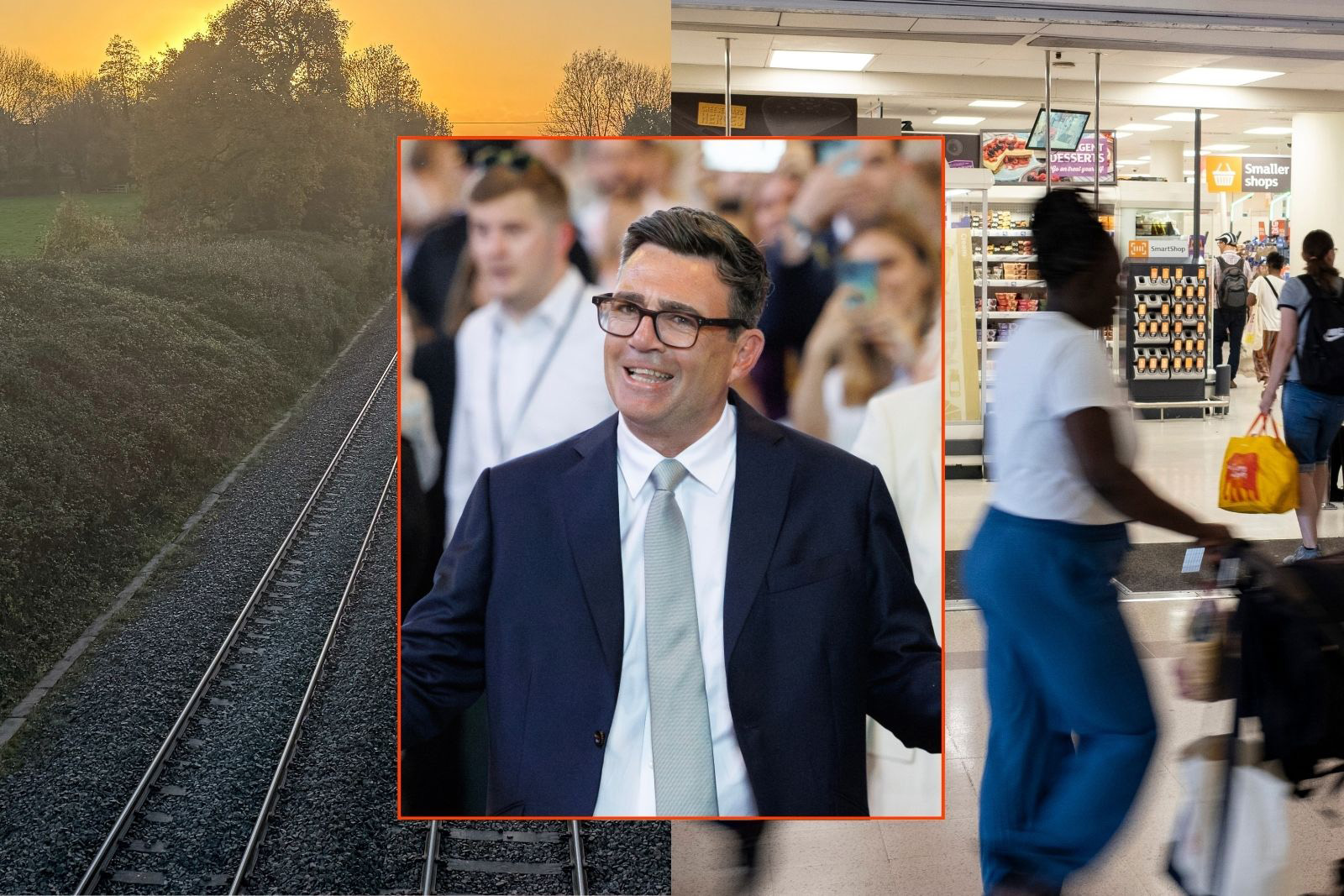
Andy Burnham, the UK’s newly installed prime minister, takes a more nuanced view, with his team reportedly expressing scepticism about courting US tech companies and the roll-out of self-driving cars on UK streets.
Related content

Technology appears to be a key policy issue for Burnham. He has recently appointed Kanishka Narayan, who will attend cabinet meetings as minister for AI. Narayan told the Financial Times that the government rejects “tech boosterism” and will implement regulation and other measures to deal with the “material risks” posed by AI to jobs and national security.
Those most enthusiastic about the potential of AI say that the technology will take care of boring, repetitive tasks, freeing people to concentrate on more creative and meaningful work.
The reality, as Financial Times journalist Sarah O’Connor details in her excellent new book, We Are Not Machines, is often quite different. By way of example, she offers up the story of Petr Cermoch, a freelance translator specialising in subtitles for TV and films.
For years, Cermoch’s job depended on deep cultural knowledge, a strong understanding of context and the ability to make careful judgments about language and meaning.
In 2022, when Open AI introduced Chat GPT, job openings and pay for translators suddenly cratered. Cermoch found himself being asked to correct the output of a machine for 70% less money than he used to earn.
Clearly, the age of abundance and creative fulfillment that Musk anticipates is highly dependent on who you are and what you do for a living.
Consider the taxi trade. A recent US-based study found that in the year to July 2025, drivers in cities where self-driving vehicles operated in significant numbers experienced substantial wage erosion compared with those in places where autonomous vehicles had not yet taken hold.
In May 2026, former prime minister Keir Starmer’s government opened applications for operators to run self-driving taxis across the UK, stating that their introduction would create thousands of jobs and allow billions to flow into the economy by 2035. Notably absent from the press release — which quoted companies such as Uber, Wayve and Waymo — were the voices of drivers and other workers who sit at the sharp end of such industry disruptions.
Many white-collar professions, including administrators and payroll staff, could be rendered obsolete by AI. The technology’s fiercest champions paint critics as fear-mongering luddites. The nature of work, they say, is always changing and these developments are no different.
In one sense, they’re right. The world of work has altered vastly over the past half-century or so. Owing to a combination of offshoring and advancements in technology, the UK has lost 6 million manufacturing jobs since the 1960s. The statistics are stark, but the biggest question is what has happened to the communities that once depended on those jobs and industries.
Back in the 60s, my grandad worked on the assembly line at Vauxhall Motors in Luton. He was just one of the tens of thousands of local people employed by the company. And Vauxhall wasn’t the only large industry in town. Recalling that period, my grandad said you could quit your job in one factory and find another six opportunities elsewhere in the same day.
Related content

That changed rapidly. In 2002, my dad was one of 2,000 workers made redundant by Vauxhall. And in 2025 the company’s van plant closed down, ending 120 years of industrial history in Luton. Other large employers, including water meter manufacturer George Kent and the SKF ball bearing company, have also shut shop.
Many of those made redundant, particularly South Asians like my dad, sought employment as taxi drivers. Almost every time people fall victim to automation and deindustrialisation, they end up taking jobs that are less skilled and more precarious, but readily available and that pay enough to get by on. What happens when even those opportunities no longer exist or are in much shorter supply?
Technological innovations can make life easier. AI can help doctors analyse scans. Self-driving cars could, in an ideal world, reduce the number of accidents and make life easier for disabled people. But it would be false to claim there aren’t winners and losers.
Who will be responsible for the reskilling, retraining or the financial compensation of workers affected by AI? And what happens when communities that once had stable, decently paid employment lose the industries that have long held them together.
You only have to look at the fortunes of the UK’s former mining and coastal communities to know where we could be headed. Across the country, towns and villages have been thrown on the scrapheap. For years, political parties — first the Tories and then Labour — have acted as if they were powerless to offer any support.
Today, once-affluent tourist destinations such as Clacton and Blackpool are among the poorest in the country. The former pit villages of County Durham and south Wales have suffered a similar fate. Such areas have lower life expectancies, higher rates of long-term illness and serious issues of substance abuse. They have also become fertile ground for the far right.
During his Economist interview, Musk inadvertently hit on another important point. Technology will never be as good at being human as humans are.
Think of the cabbies we casually chat to. The postal workers who know you and your neighbours. The supermarket checkout worker you grumble to about the weather.
Perhaps there are more efficient ways to run businesses and public services, but the answer isn’t to remove human beings from the picture. We are naturally social animals and AI has the potential to deprive us of everyday interaction with one another and further atomise society.
So what is to be done? At a bare minimum, the multi-billion-pound companies that stand to benefit from AI should be responsible for either reskilling, training or compensating the people who stand to lose the most.
Related content
Workers, who will often understand the potential effects of technology on their lives far better than politicians and consultants, should also have a say when it comes to legislation and regulation. The Trades Union Congress has already called for an AI workforce strategy assessing impact in different sectors and greater investment in skills from both government and employers — including training to help workers adapt to new technologies and retraining should AI lead to job losses — and greater social security provisions for those facing redundancy.
We have experienced major shifts in the nature of work before and movements have emerged in response. When the industrial revolution created an urban working class, forced into long and difficult shifts in factories and mills, it took factory acts, labour laws and an assertive trade union movement to ensure workers were not treated as disposable.
Very soon, Britain could see self-driving cars, delivery robots and data centres everywhere. Instead of having to play catch-up years down the line, Burnham’s government needs to live up to its promises and treat regulation and forward planning to deal with the consequences of those changes as urgent priorities. Most importantly, though, it must ensure that we are not leaving our future in the hands of corporations that will be quite happy to sacrifice it in the name of profit.