If we want a better world, we need to build it for ourselves
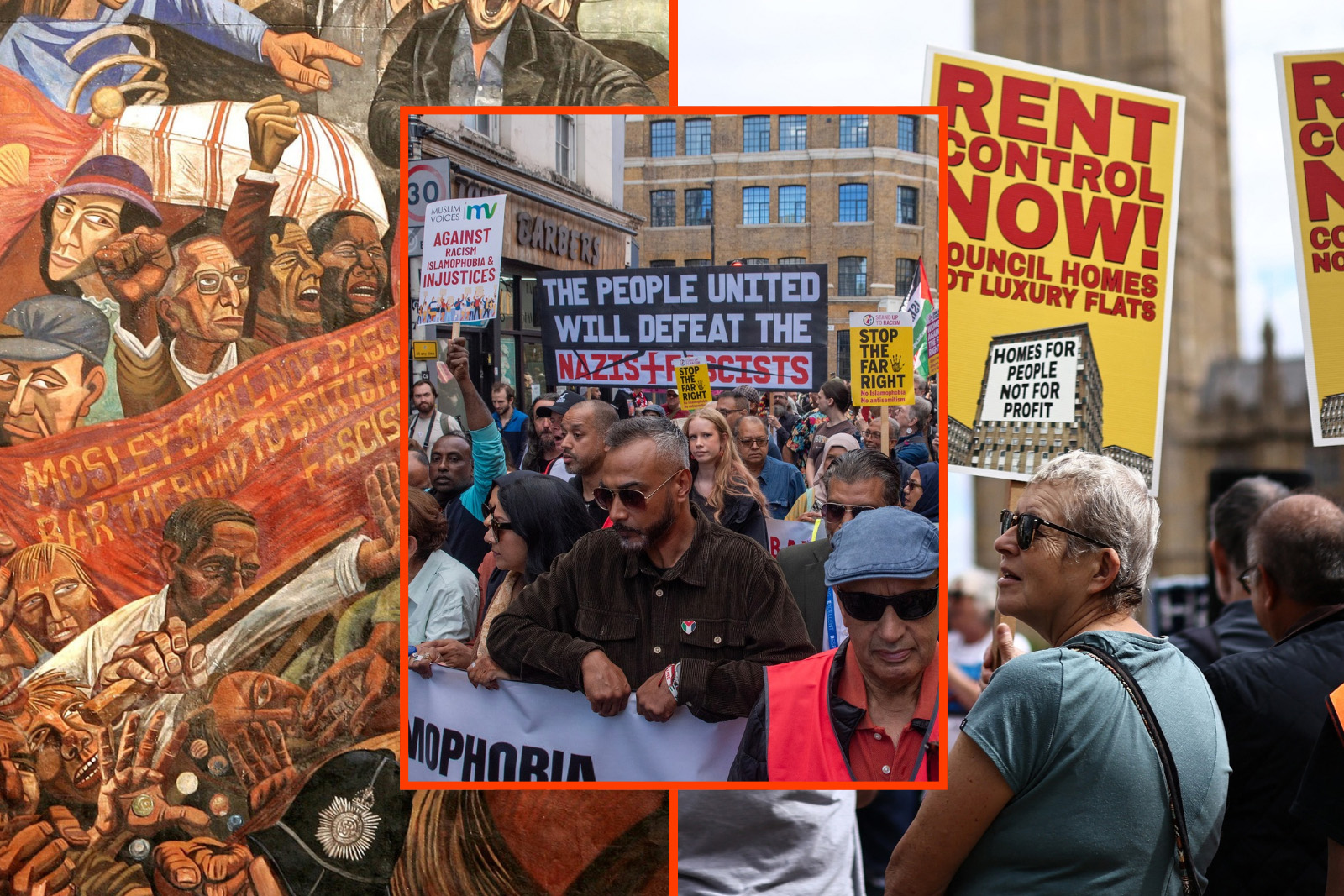
The far right is organised and talking directly to the people it wants to reach. It’s time to follow the example of our elders and create a powerful and united anti-racist movement

Picture the scene. A mob dressed head to toe in black marches through the streets, blaming immigrants for their problems. They move in military formation, disciplined and organised. “Send them back,” they chant. They consider themselves a Christian patriotic army, defending Great Britain from a “foreign invasion”.
A few years ago, you’d immediately have thought that I was describing a scene from the 1930s, when Oswald Mosley’s Blackshirts marched through the East End of London, terrorising Jews and scapegoating them for the country’s economic woes.
Sadly, I’m not. In September the far-right activist group Patriot Platform marshalled a crowd of balaclava-clad men to Dover as part of its ongoing crusade against small boat arrivals. Patriot Platform is led by Daniel Thomas, a privately educated associate of Stephen Yaxley-Lennon (AKA Tommy Robinson). He was convicted of attempted kidnapping in 2016 and prefers to be known as Danny Tommo. The organisation, which mounted a recruitment drive in June, claims to have more than 40,000 members across the country.
While the threat such groups pose is very much in the present, there are numerous parallels with the past. Then, as now, the views and actions of racist street movements were reinforced by the inflammatory rhetoric of mainstream politicians and the press. Then, as now, the far right sought to exploit economic insecurity, blaming minority communities for society’s wider problems. And then, as now, they spread their ideology using fear and violence.
Between 1880 and 1914, more than 150,000 Jewish refugees fled pogroms in Russia and eastern Europe for Britain. Many settled in the east London districts of Whitechapel and Spitalfields. In April 1887, the St James’s Gazette warned that a “vast colony of foreign Jews” was being established.
In 1901, Conservative MPs representing east London helped establish the British Brothers’ League, dedicated to restricting Jewish immigration. One of the organisation’s founders, William Evans-Gordon, condemned what he described as “the settlement of large aggregations of Hebrews in a Christian land”. He complained that, east of Aldgate, lay “a foreign town”. The group’s campaign found support not only in the press but also among influential public figures.
By the 1930s, that hostility had taken on an openly fascist character. Across Europe, Jews were held responsible by establishment politicians for the many hardships facing working people. Oswald Mosley’s British Union of Fascists (BUF) gave organised expression to those prejudices. By 1934, one year after Adolf Hitler took power in Germany, the party claimed around 40,000 members and maintained hundreds of branches across Britain.
The BUF was banned shortly after the outbreak of the second world war. With the defeat of Nazi Germany and its allies, fascism declined as a political force across Europe but racism was still embedded in British society. As a growing number of Commonwealth immigrants arrived from the Caribbean and the Indian subcontinent to rebuild the nation’s shattered economy, the far right found new targets.
In 1968, Conservative MP Enoch Powell’s “rivers of blood” speech emboldened gangs who attacked and abused Black and Asian people on the streets. When South Asians expelled from Uganda arrived as refugees in the early 1970s, they too were described as an invading force by the newspapers of the day.
In some ways, not much has changed. The rhetoric about Muslims living in Whitechapel is eerily reminiscent of the narratives about Jewish communities in the area a century ago. A recent YouGov poll found that 34% of the British public believe that sharia-run zones, where non-Muslims cannot enter, exist in the UK.
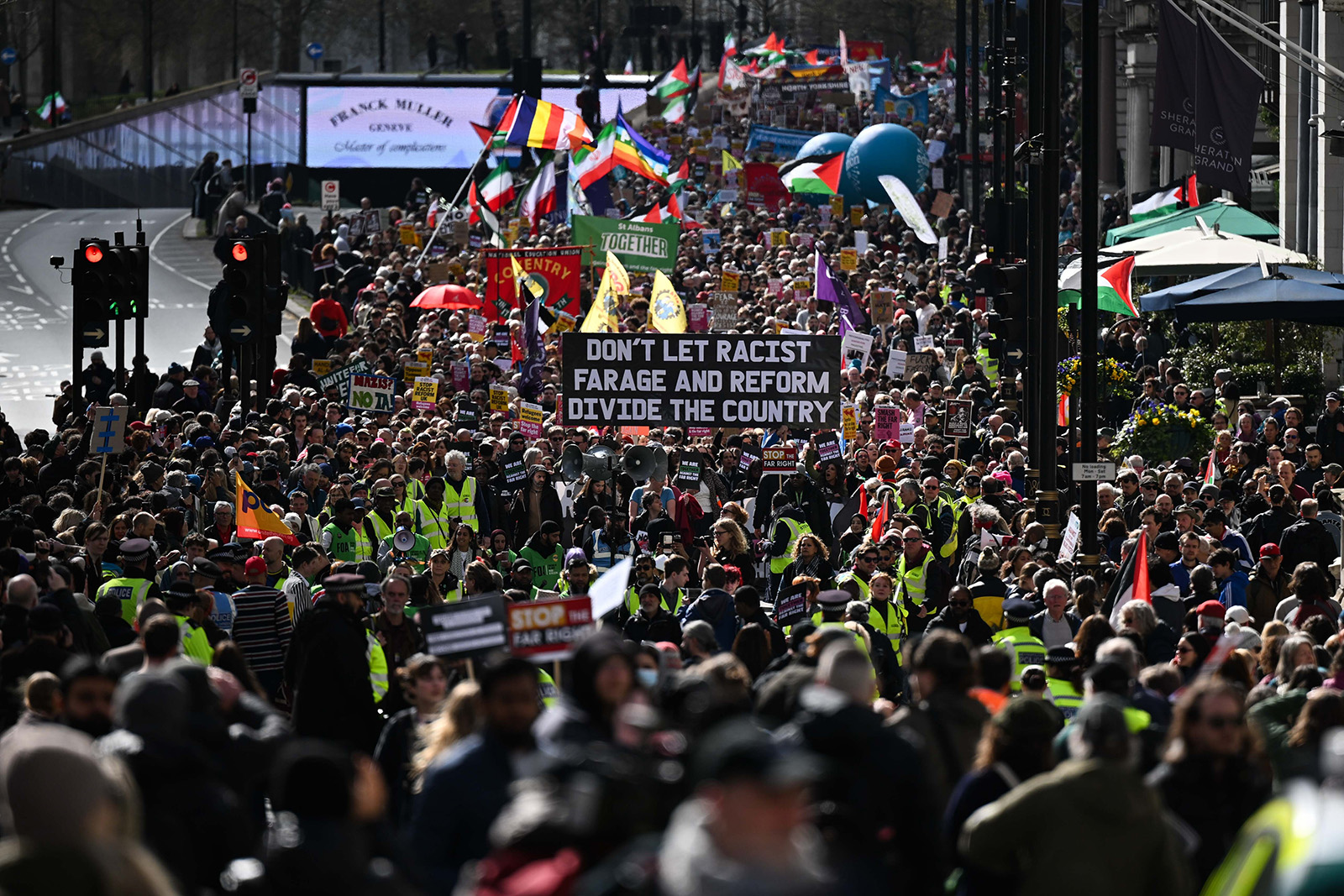
Years ago, immigrant communities understood that they couldn’t wait around to be saved. They had to organise themselves. Mosley’s Blackshirts were routed on many occasions by British Jews and their allies. Most famously, at the Battle of Cable Street in October 1936, an estimated 100,000 Jews, Irish dockers, trade unionists and communists halted a BUF march into the East End, erecting barricades and fighting with police, who tried to facilitate the fascists’ entry.
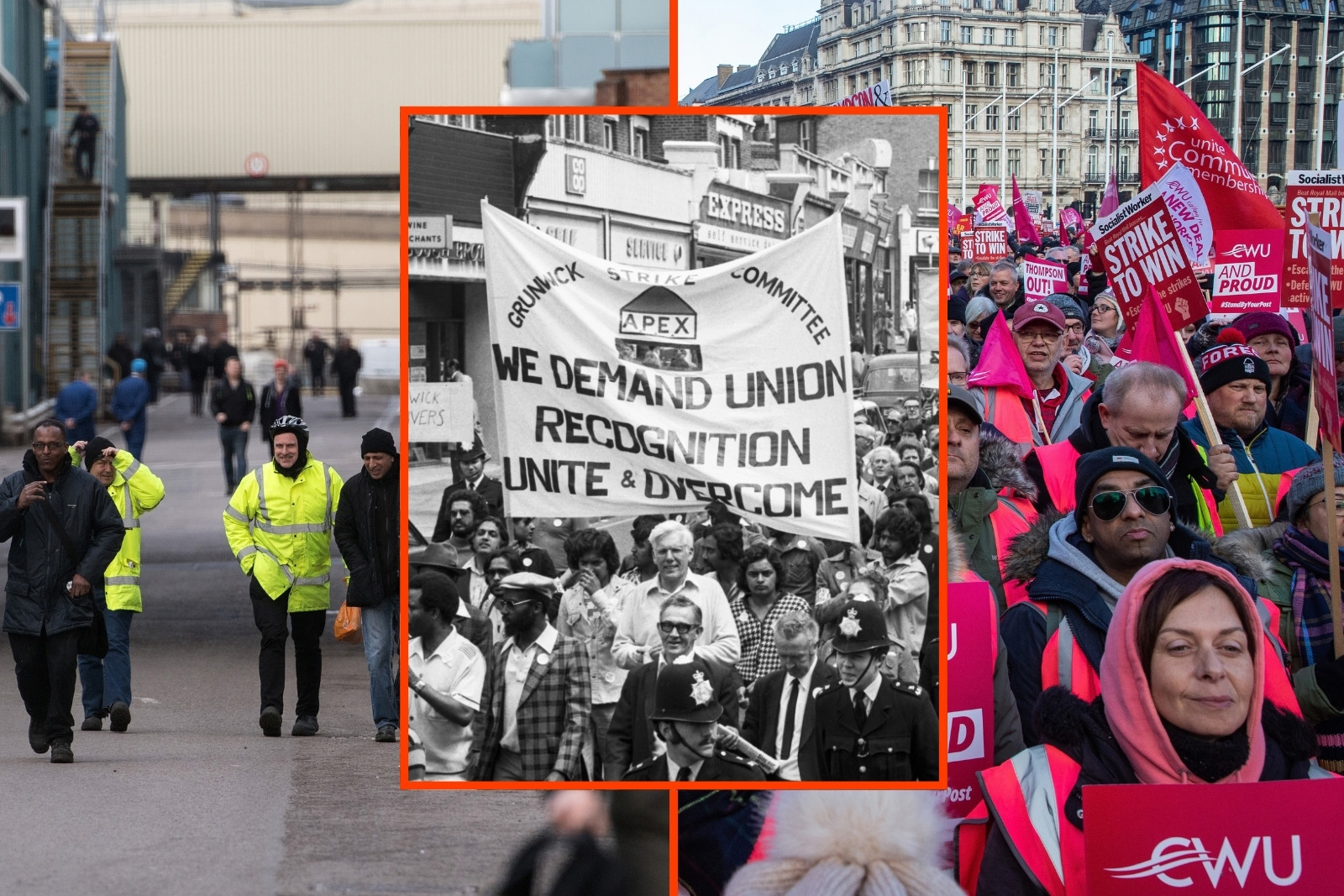
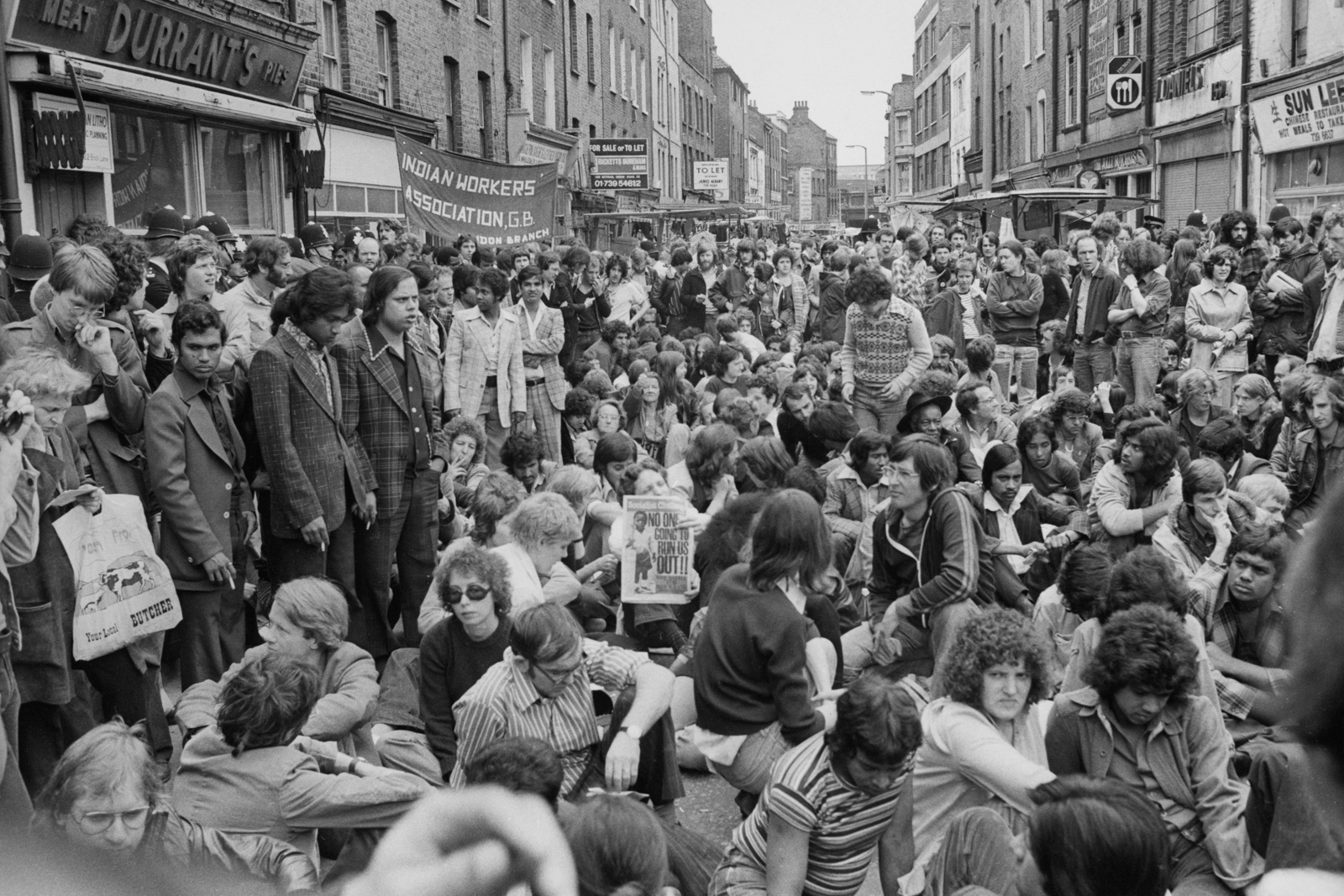
Further battles were fought in the postwar period by Jewish anti-fascist organisations such as the 43 Group and the 62 Group. As I’ve documented in my recently published book Come What May, We’re Here to Stay: The Story of South Asian Resistance in Britain, South Asians and other communities also mobilised to defend their communities against racism from both street gangs and the state.
While there are many similarities between the past and present, there are crucial differences too. Groups and individuals such as Patriot Platform and Yaxley-Lennon go to considerable lengths to persuade us that they are not racist. They even feature multiracial lineups at their rallies. In contrast to the sweeping prejudices of the 1970s far right, they take aim at specific demographics: Muslims and asylum seekers arriving on small boats. By honing down their targets, they have made the pursuit of political legitimacy and mainstream respectability easier for themselves.
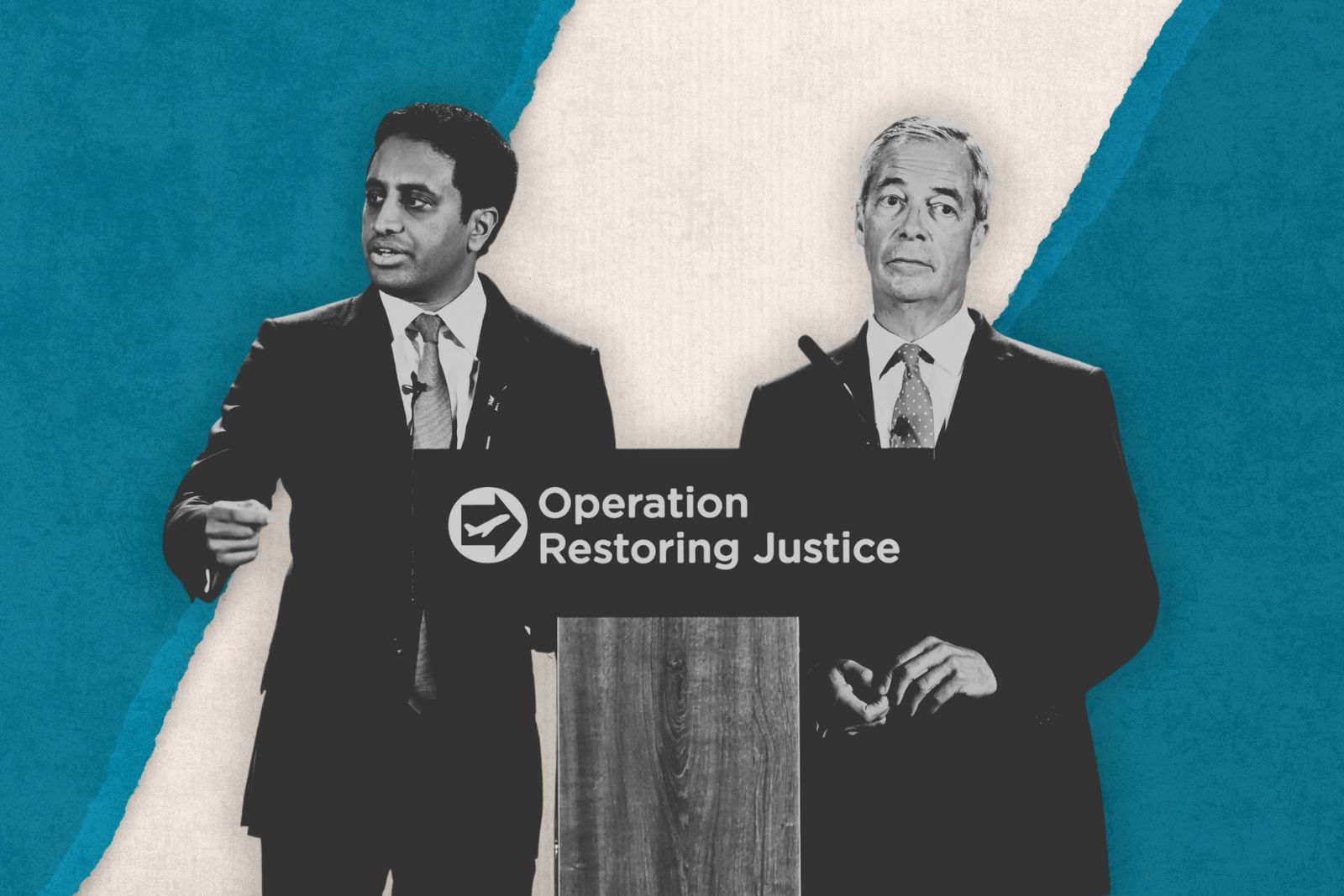
Now, a significant number of the far right’s arguments have entered establishment politics. Nigel Farage’s Reform UK has more than 2,000 councillors and eight MPs. The party has, at times, topped UK polls, but it now faces competition from the right in the shape of Restore Britain, led by Rupert Lowe.
Labour has shifted to the right on immigration and the Tories have gone further. In March, shadow justice secretary Nick Timothy described an Open Iftar at Trafalgar Square as an “act of domination” and, earlier in October, shadow home office minister Blake Stephenson proclaimed my hometown of Luton a no-go zone for white people.
The far right also has new weapons in its arsenal. In the 1930s and the 1980s, anti-fascists blocked marches and stopped racist propaganda being sold in the streets. Today, hate and disinformation can be accessed anywhere on your mobile phone. People can get radicalised without ever leaving their bedrooms.
In short, the contemporary far right is organised, widespread and uses the tools at its disposal to communicate directly with the people it wants to reach. The anti-racist movement, however, is too often disconnected from working-class communities and lacks a strong national presence.
Since September, when my book came out, I have spoken at more than 20 events from Luton to Glasgow. The crowds have been mixed. Young and old. Black, Asian and white. While many people are fascinated by the South Asian community’s rich tradition of political activism, the most common questions have focused on the here and now.
How do we confront racism? What do we do next? The lesson from history is that most campaigns, whether focused on anti-racism or the fight for dignity in the workplace, often come from a few people deciding enough is enough and starting something for themselves.
Related content
I’ve seen inspiring examples of this across the country. The Muslim women behind Edaar (East Dunbartonshire Action Against Racism). Greater Manchester Workers and Tenants Union, which brings trade unions and renters’ groups together to combat far-right propaganda. Football Lads and Lasses against Fascism, who spread their message on the terraces.
We need to follow the example of our elders by building infrastructure to defend homes, people and places of worship at a local level. Now, though, we have greater potential to map out who is most vulnerable, identify where the far right is strongest and coordinate through national networks. In the 70s and 80s, anti-racist groups regularly monitored the far right and kept each other updated. In 2026, we can use social media to connect movements across the country and share information and resources.
It’s also important to remember that political education remains one of our most powerful tools. It is no coincidence that Reform is doing particularly well in post-industrial areas such as Durham, Doncaster and south Wales, and fading coastal towns like Clacton and Great Yarmouth. It’s vital that we recognise that the far-right feeds on deprivation and despair, and that we build a sense of class solidarity strong enough to bridge any cultural divide.
Speaking to people who have been taken in by the far right is hard work and we won’t win everyone over. But, if we believe we can change society, we must also believe in the capacity for people to change their minds. I’ve seen that it’s possible and firmly believe that, if we want to build a better society for everyone, we all have a role to play. No one else is going to do it for us.