
Now’s the time to rebuild an empowered and inclusive working class
It took decades of deliberate strategy to erode our sense of pride and solidarity. We’ll need to work equally hard to get it back

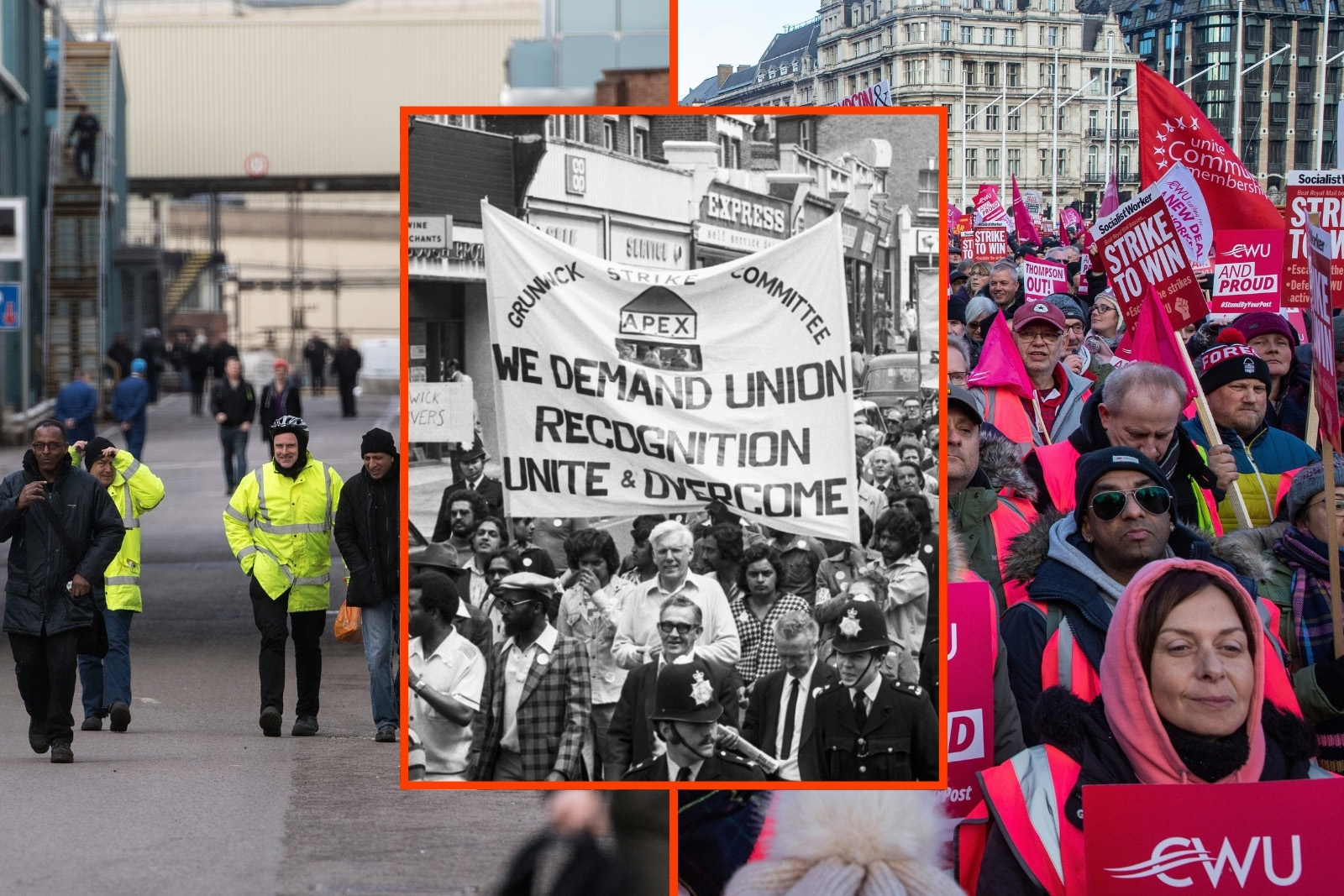
The heatwave of summer 1976 made conditions unbearable at the Grunwick film-processing plant in Willesden, north-west London. The majority of the factory employees were South Asian women who had recently arrived in the UK as refugees from east Africa and their days were already punishing.
If they needed the toilet, they had to raise a hand like a child in school. Overtime was compulsory and could be imposed at a moment’s notice. Pregnant women were denied time off to see doctors. Their productivity was monitored and many lived in fear of dismissal. For a full 40-hour week, they were paid just £28. At the time the national average wage was £72.
Related content
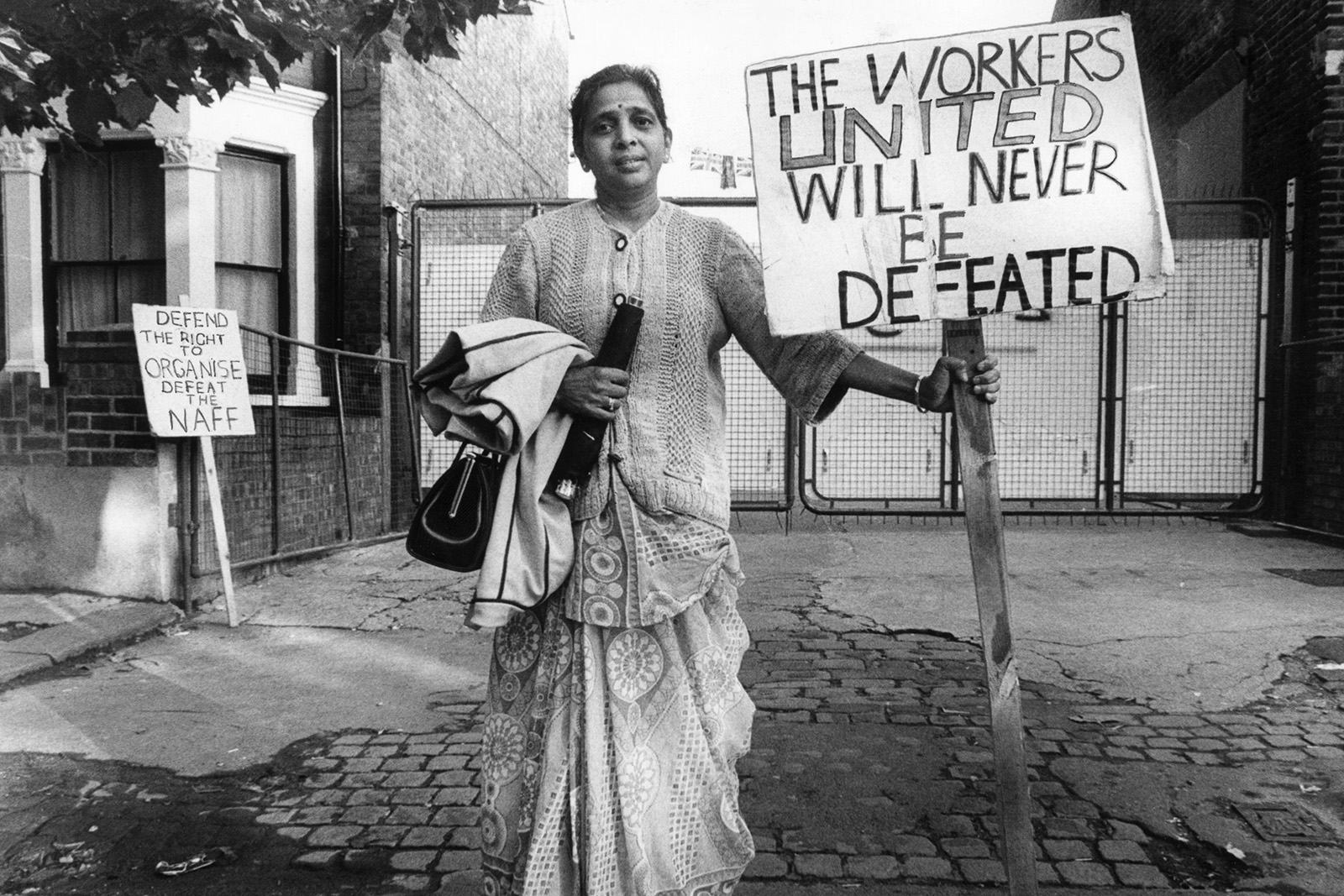
On 20 August 1976, Jayaben Desai confronted the plant’s manager and led her colleagues out on strike. Their industrial action lasted for nearly two years, forcing Grunwick to increase wages and improve conditions. The sacked workers were, however, never reinstated and the strike was ultimately defeated.
In his new book, An Injury to All: The Unmaking of the British Working Class, historian Ewan Gibbs highlights that the Grunwick workers had the support of many white working-class trade unionists.
The strikers’ central demand was the right to form a trade union. Dockers, postal workers, teachers and miners travelled to the Willesden picket line from across the country. The strike committee’s secretary, Mahmood Ahmed, recalled giving speeches and taking in large donations during a tour of workplaces including shipyards in Glasgow, collieries in Kent and factories in Edinburgh, Paisley and Kilmarnock.
The trade union movement had its own problems with racism, but Grunwick showed what working-class solidarity could look like. In archive footage, you can hear white workers describing the treatment of their South Asian peers as an attack on their class and, therefore, on themselves.
In my new book Come What May, We’re Here to Stay, I write that while many anti-racist and workers’ groups were established as South Asian organisations, their members also saw themselves as part of a broader working class with real political power. Trade union membership was roughly twice what it is today and unions had far greater influence over working conditions and government policy.
Gibbs is clear that the decline of working-class power over subsequent decades has not been a natural process but a calculated policy, “dictated by ministerial decisions, corporate boards, police batons and press barons”.
At Grunwick, picketers faced police violence that foreshadowed the 1984 miners’ strike. As Gibbs highlights, Stephen Kelly, who was reporting on the picket line for the then Labour left publication Tribune, was punched in the face by a police officer. More than 500 arrests were made at the plant in 1977 and 37,000 police officers were estimated to have been deployed between June and November, the high point of the action.
To back up his theory of a deliberate plan to erode working-class power, Gibbs points to the transformation of British society and the way people view themselves ushered in by the Conservative government of Margaret Thatcher. Its legacy has clung on long after her years in power. During the first two decades of the 21st century, recorded self-employment in Britain grew by two-thirds, from three million to five million. Meanwhile, in the same period, the number of businesses grew from 3.5 million to 6 million.
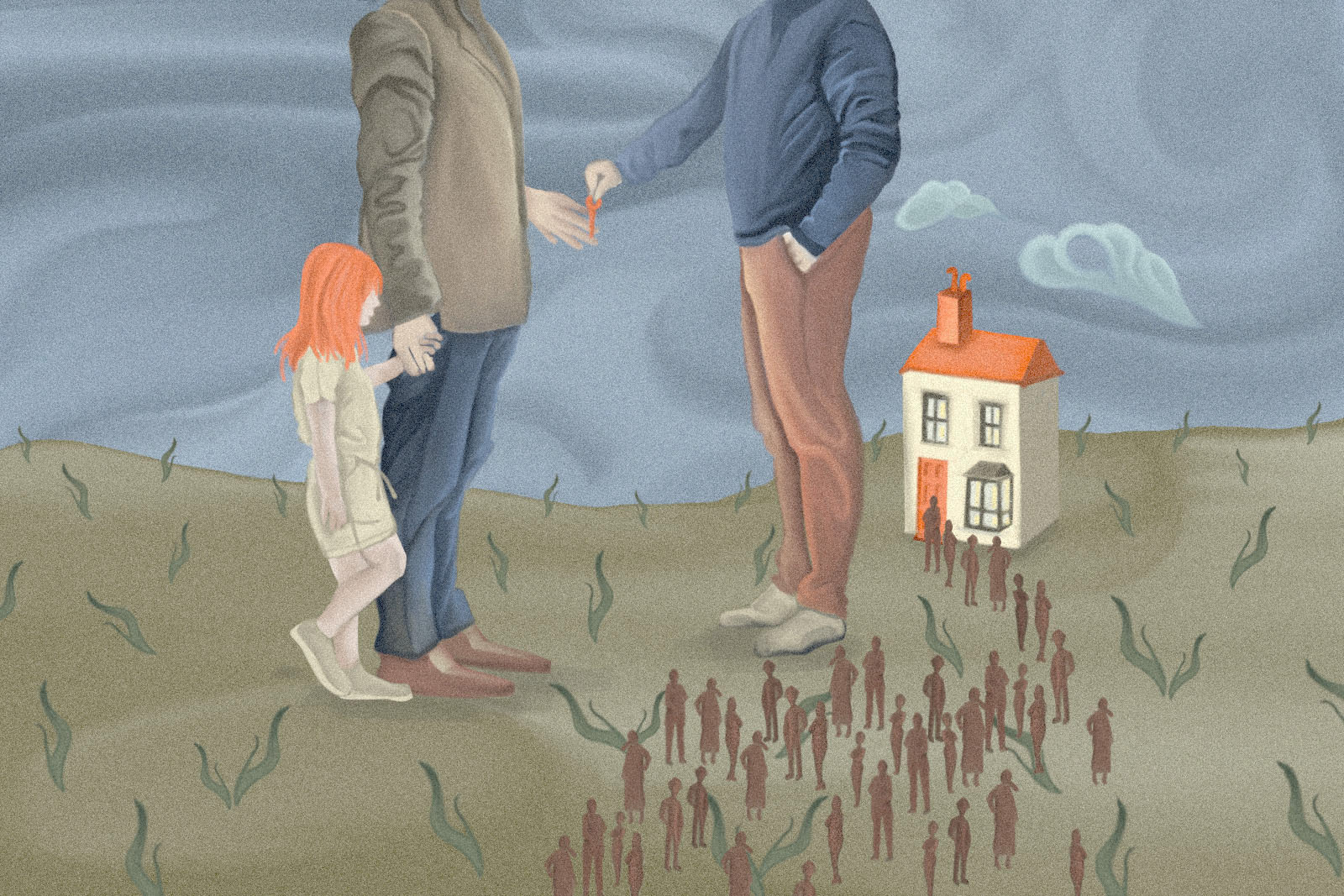
Coupled with the legacy of Thatcher’s right to buy policy, which reduced council housing stock and increased home ownership, many ordinary people who would once have automatically identified as part of a wider working class now see themselves as individual property owners, traders and shareholders. Pride is taken in personal advancement, but not in collective action or traditions of solidarity.
That certainly mirrors my own experience. I’m the son of a Vauxhall factory worker who was made redundant in 2002. Like many South Asians in Luton, my dad became a self-employed taxi driver. His health problems meant that our family eventually relied on benefits. We never referred to ourselves as working class, though.
Poverty was embarrassing and wealth was something to flaunt. I remember a non-uniform day at school when someone asked what designer clothes I would be wearing. I proudly said I would be wearing Armani. I pronounced it “Armania”. The next day, I turned up Primark jeans and pretended the flashy Italian logo had fallen off. A friend once drew a Nike swoosh on his off-brand white trainers.
Our childhoods were defined by such details. Were your clothes right? Did you shop at Tesco or Lidl? Did you have the Disney channels on your TV, or just the free ones? We looked up to rappers, footballers and celebrities with their fast cars and mansions. We fantasised about what we would do if we ever had that kind of money. Class was something to escape, not embrace.
It was at university that I began to gain a real understanding of class. I studied with the children of wealthy families, many of them privately educated. They had parents who could support them financially and connections that opened doors. When my studies ended during the Covid-19 pandemic I ended up working 12-hour night shifts in a local naan factory.
That experience taught me something about the insecurity that sits at the heart of working-class life today. You can work hard at school, go to a good university and still struggle to find a decent job at the end of it. Often, in order to build a career, you’ll have to work freelance, enduring periods without pay and grinding through sickness to keep the lights on.
There’s rarely any financial safety net for working-class people, yet the idea that we live in a meritocracy persists. Probably because its continual reinforcement helps to keep us divided. Take, for example, the narrative of the deserving and undeserving working class. The strivers versus the scroungers.
Related content
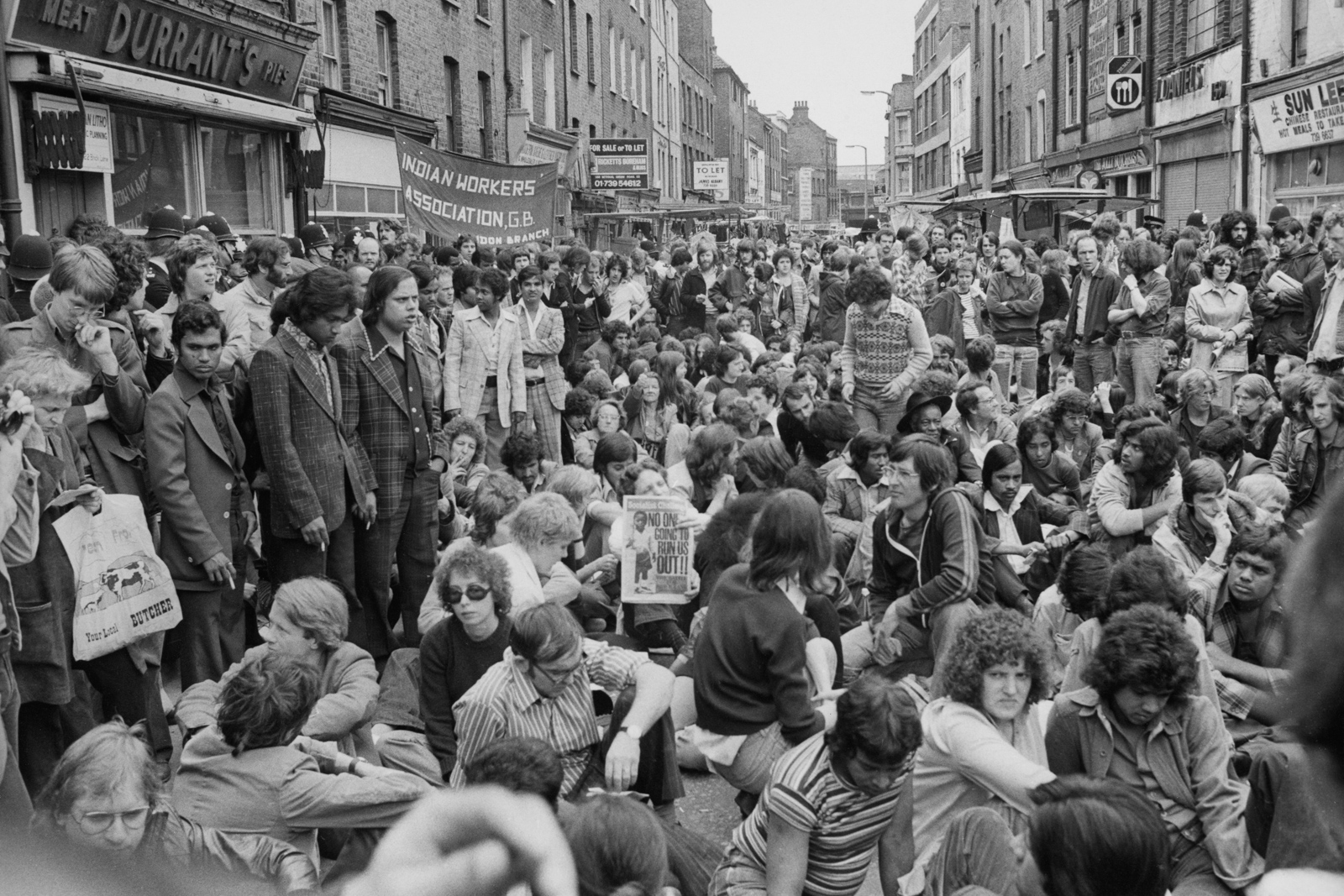
The racialisation of class concerns functions in a similar way. As Gibbs highlights, a Google Ngram of British publications reveals that use of the term “white working class” more or less doubled in frequency between the mid-1990s and 2008. By contrast, discussion of the working class as a whole declined by around a quarter.
The truth is that the British working class is as significant as it ever was and more diverse in terms of race and faith. It has, however, been fractured by the changing nature of work, economic insecurity and political narratives that encourage us to see one another as competitors rather than comrades.
Class still matters. It shapes our chances in education, our health, the housing and the jobs we can get. What has changed is not its existence, but our relationship to it. We have lost much of the pride and collective power that once came with being part of the working class.
Rebuilding that power means rejecting the idea that everyone can simply work their way out of inequality. We should also recognise that working-class experiences are not all the same: race, gender, disability, migration and geography all shape how class is lived. But we can work to build broad fronts to tackle all of our issues. Ultimately, we all want a roof over our heads, food on the table and money in our pockets.
What Gibbs describes as the unmaking of the working class happened as a result of concerted political will. Rebuilding will require similar effort. Books like his are a start.