
Muslims in England are being driven to seek healthcare abroad
Struggling to access NHS care and priced out of private treatment, some are seeking help when they visit family overseas. But not all can afford it
When Fozi Rauf woke up and found herself struggling to walk, she put it down to burnout: she had recently resumed two part-time jobs and her daughter had not even turned one.
But as the weeks passed, Rauf, then 42, found her walking progressively deteriorating. By the time she made an appointment with her GP in September 2019, she was limping. Concerned she might have multiple sclerosis, her GP sent her to A&E at Queen Elizabeth Hospital in Birmingham.
Related content
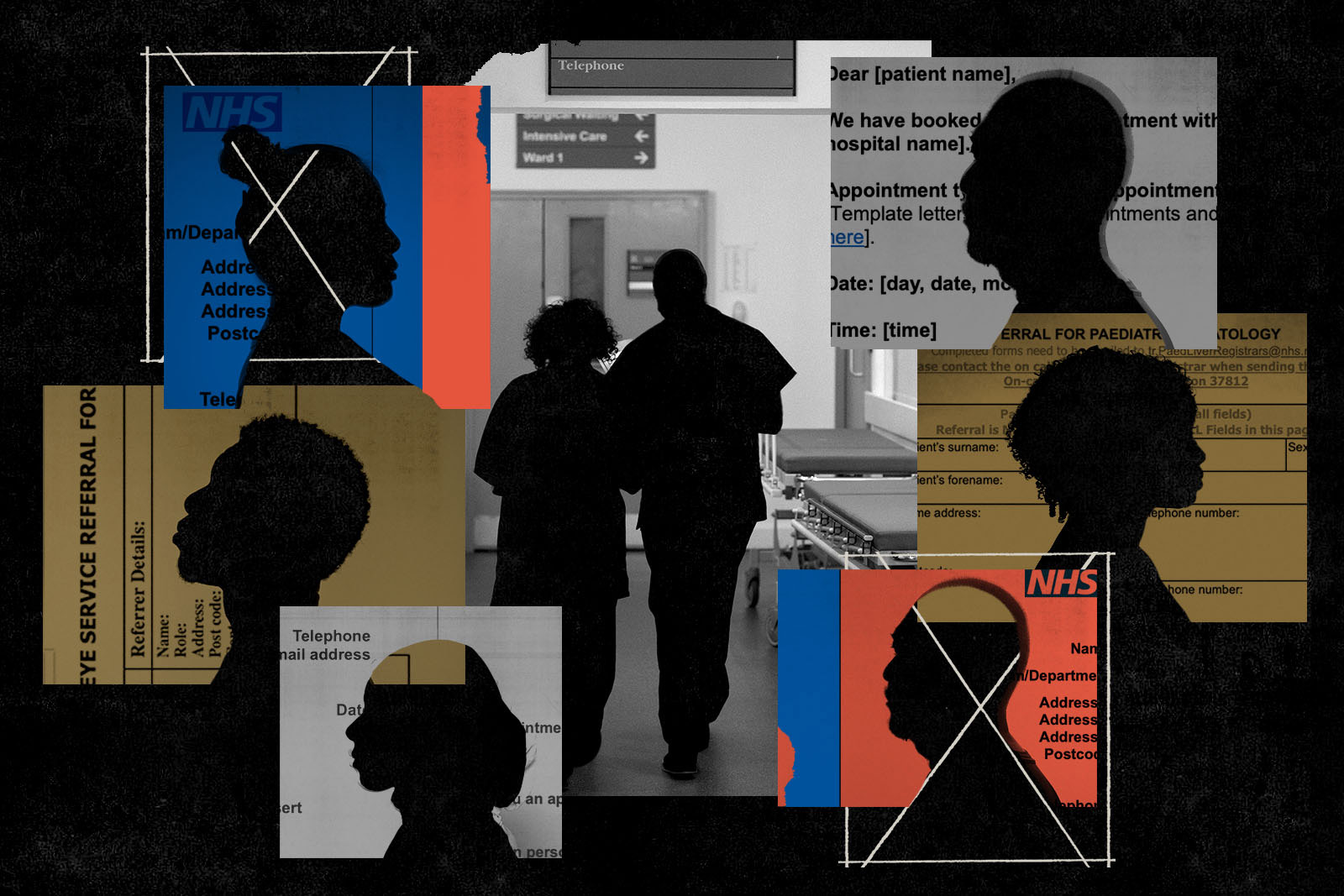
Rauf was kept in hospital for several days while doctors ran tests. None could figure out what was wrong.
“They mentioned fibromyalgia,” Rauf said. “Someone said: ‘You’ve got nerve damage.’ At the end, they gave me Vitamin B12, strong painkillers and Amitriptyline [an antidepressant] to help me relax and sleep. They sent me home and said they’d put me on the waiting list for a neurologist.”
Rauf was given a neurology appointment in April 2020 but it was cancelled as Covid surged. By July 2020, she could not walk at all. Her husband became her carer in addition to looking after their two young children. With no answers, Rauf’s mental health began to spiral.
“I was getting panic attacks all the time because I didn’t know what was wrong with me,” she said.
Rauf and her husband made the decision to visit Lahore in Pakistan to see one of the city’s top neurologists. The cost, says Rauf, was cheaper than seeing a specialist privately in the UK. Within a matter of days she had a diagnosis.
“The MRI in Pakistan showed that I had had a stroke,” she says. “The neurologist said the stroke had developed into functional neurological disorder.”
Rauf returned to the UK with copies of her scans and her diagnosis, but it was almost another year before she saw an NHS neurologist, who confirmed the diagnosis. With neurophysiotherapy, her condition, although incurable, has improved. She still cannot walk unaided, but says she harbours no ill feelings towards the NHS.
Rauf is one of a number of Muslims in the UK that Hyphen has spoken to who have gone to their or their parents’ countries of origin in the last few years to receive both urgent and non-urgent healthcare as a result of long waits to see an NHS hospital specialist or GP.
While the pandemic was initially blamed for the backlog in appointments, there are other factors at play, said Dr Hina Shahid, chair of the Muslim Doctors Association and NHS GP in north-west London — the most significant being two decades of underinvestment in the NHS.
“I can think of patients, family, friends and people in the community who go abroad for treatment for all sorts of things,” she said. “For some specialties, the waiting list is over 12 months. People are in pain, they can’t function and they’re becoming progressively more disabled. They will do anything they can for their health, and they do: they go abroad and have treatment.”
In June, the NHS hospital appointment backlog fell to its lowest in two years, but the health service remains significantly below its target of seeing 92% of patients within 18 weeks, currently seeing just under 60% in that time. Hyphen revealed in February that 79,130 names had been taken off waiting lists for non-urgent NHS care because patients had died before receiving their appointments.
“What happens to those people who can’t go [abroad]?” said Shahid. “We see health outcomes that are much worse, whether it’s heart disease, cancer, mental health or diabetes — all of these conditions that our communities are more likely to experience and then present later in the hospital and be admitted.”
Hebah Kaleem, 29, says it takes three to four weeks to see her GP at The Light Surgery in Leeds. Kaleem, who grew up in Saudi Arabia and has a history of health problems, said it had been easier to see a doctor in Dammam, where she goes twice a year to visit her family, than in the UK.
“It’s mainly check-ups and if they think I need any long-term medicines, they know that since I live here it might be difficult for me to get them,” said Kaleem, who works as an auditor. “Usually it’s antibiotics and they give me enough to last a year.”
Reviews of The Light Surgery on Google Reviews reveal similar complaints. Hyphen was unable to reach the surgery for comment.
Part-time NHS GP Dr Aliaa Ahmed, from Ealing in west London, said the long wait for appointments had been caused in part by a declining GP workforce coupled with a growing population. She often sees upwards of 30 patients a day; the doctors’ union the British Medical Association (BMA) recommends a maximum of 25. The BMA also points to a 20% drop in the number of GP practices in the last decade and a loss of 356 GPs since 2015. On average, as of June 2026, a full-time GP was accountable for the care of 2,187 patients, 249 more than in September 2015.
A spokesperson for NHS England told Hyphen that 50,000 more GP appointments are being offered every working day than they were last year, while the latest GP patient survey found three quarters rated their GP experiences as “good”.
But the most recent Office of National Statistics survey of NHS healthcare services in England shows fewer than half of patients were able to get a GP appointment or call-back on the same or next day, with more than 15% having to wait longer than two weeks. More than a third said they could not speak to their preferred practitioner because no appointments were available within a fortnight.
Alongside GP shortages, said Ahmed, is an increased administrative workload that leaves less time to see patients.
“We’re looking at blood test results and actioning them, reauthorising prescriptions and looking at letters from hospitals asking us to do certain things,” she said. “It’s not just that you go in and do your clinic and leave — it’s an extensive workload. Many doctors in the NHS are struggling with burnout.”