
New novel brings the forgotten story of Saddam Hussein’s atrocities against Iraqi Kurds to life
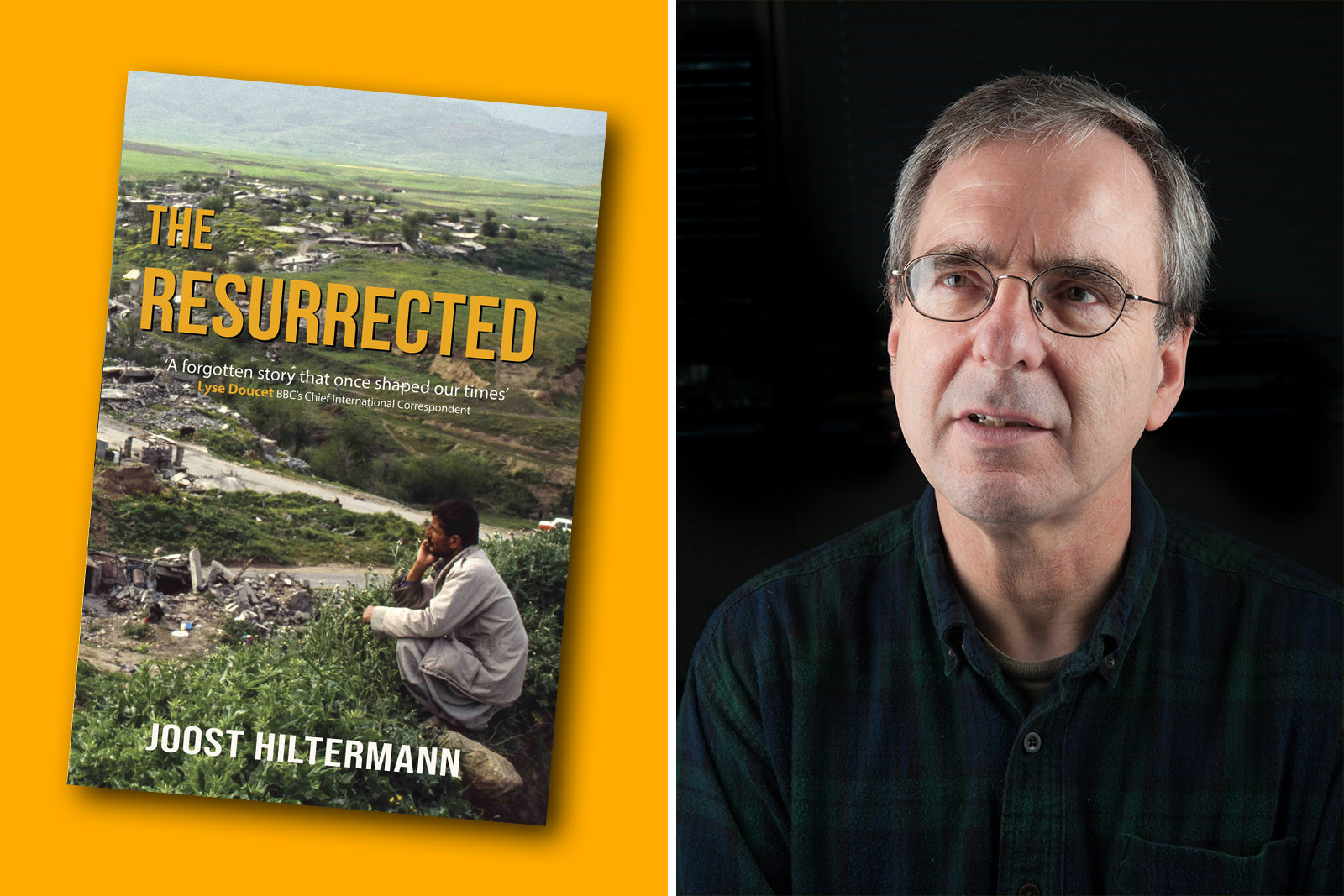
Human rights investigator Joost Hiltermann spent years documenting the murderous Anfal campaign. Now he is using fiction to tell the real story

In 1992, human rights investigator Joost Hiltermann arrived in northern Iraq with a questionnaire and a mission. He was among the first outsiders to enter Iraqi Kurdistan, dispatched by the international NGO Human Rights Watch (HRW) to investigate claims that tens of thousands of Kurds had been systematically murdered by Saddam Hussein’s regime as the Iran-Iraq war drew to a close in 1988. Western countries, which broadly considered Hussein to be a useful ally and armed Iraq throughout the eight years of that war, had looked the other way.
Hiltermann, who is from the Netherlands, spent three months travelling around the region, looking for survivors and documenting their stories. “You could talk to anyone in Kurdistan, and they would have an opinion about things, but I would only get close to the truth by talking to the people who were actually affected,” he says. He and another researcher interviewed more than 350, mostly survivors of what the Iraqi government referred to as the Anfal campaign. That name, for a brutal campaign by a secular state against its own Muslim population, was cynically taken from a Quranic verse meaning “the plunder of the infidel”.
Related content
Personal testimonies alone did not prove that the crimes committed against the Kurds were systematic. After completing his field research, Hiltermann travelled back to the US, where he spent the next two years supervising the cataloguing of 18 tonnes of Iraqi government documents seized by the Kurds. Through them, HRW was able to show that the Anfal campaign — eight phases of coordinated killing, chemical attacks and mass displacement between February and September 1988 — were ordered and meticulously recorded by the Iraqi state. Between 50,000 and 100,000 rural Kurds had been murdered.
Documenting that atrocity has stayed with Hiltermann, not least because there was never any meaningful accountability for the perpetrators. In the intervening decades, he has returned to the subject repeatedly, through advocacy, academic study and, now, fiction. His novel The Resurrected, published by Afsana Press, is a haunting book that combines fiction, memoir and oral history. In his preface, Hiltermann writes that because “there is no single way to tell this tale”, he will “allow a throng of actors — perpetrators, victims, bystanders, and chroniclers” to do so. As he warns the reader, “you may seek to extract fact from fiction, but you’d be missing the point”.
The story’s central characters are Karwan and Kawa, two young Kurdish men who miraculously escape the mass executions. Their experiences are presented in fragments, from different perspectives and through time — as the events unfold, a few years later when they relay their testimony to a character known only as “A Human Rights Investigator”, and then as they build new lives as refugees in the US. Sections on the Iraqi government draw from real speeches by Ali Hassan al-Majid, often referred to as “Chemical Ali”, Saddam’s cousin and the mastermind of the campaign.
Although much of the novel is based on real people, testimony and documents, Hiltermann found that fiction allowed him to try to reach a place that human rights reports cannot: inside the minds of people experiencing atrocity. “I won’t pretend I know what went on in the heads of people caught up in the Anfal campaign — the severe stress and anxiety they must have experienced — because when they were talking to me four years later, it was behind them and they were quite composed,” he says. “But I hope I stay true to the idea.”
Karwan and Kawa are based on real individuals who Hiltermann has remained close to. He helped them move to the US and now sees them whenever he is in Washington. They were in their early 20s at the time of Anfal. Now they are approaching retirement.
“It’s remarkable because they’re thriving, despite the trauma they went through at a young age,” says Hiltermann. “They’re normal people, and their kids are fantastic. It’s just a joy to spend time with them.”
Those survivors were Hiltermann’s most important readers. He explained his project to them and gave them power of veto over the manuscript, which they read before publication, aided by their children, who are more fluent in English. An earlier draft ended with Karwan and Kawa’s escapes from the mass executions, but now that moment falls in the middle of the book. It felt important to Hiltermann to show, in the novel’s structure, that life continues after tragedy.
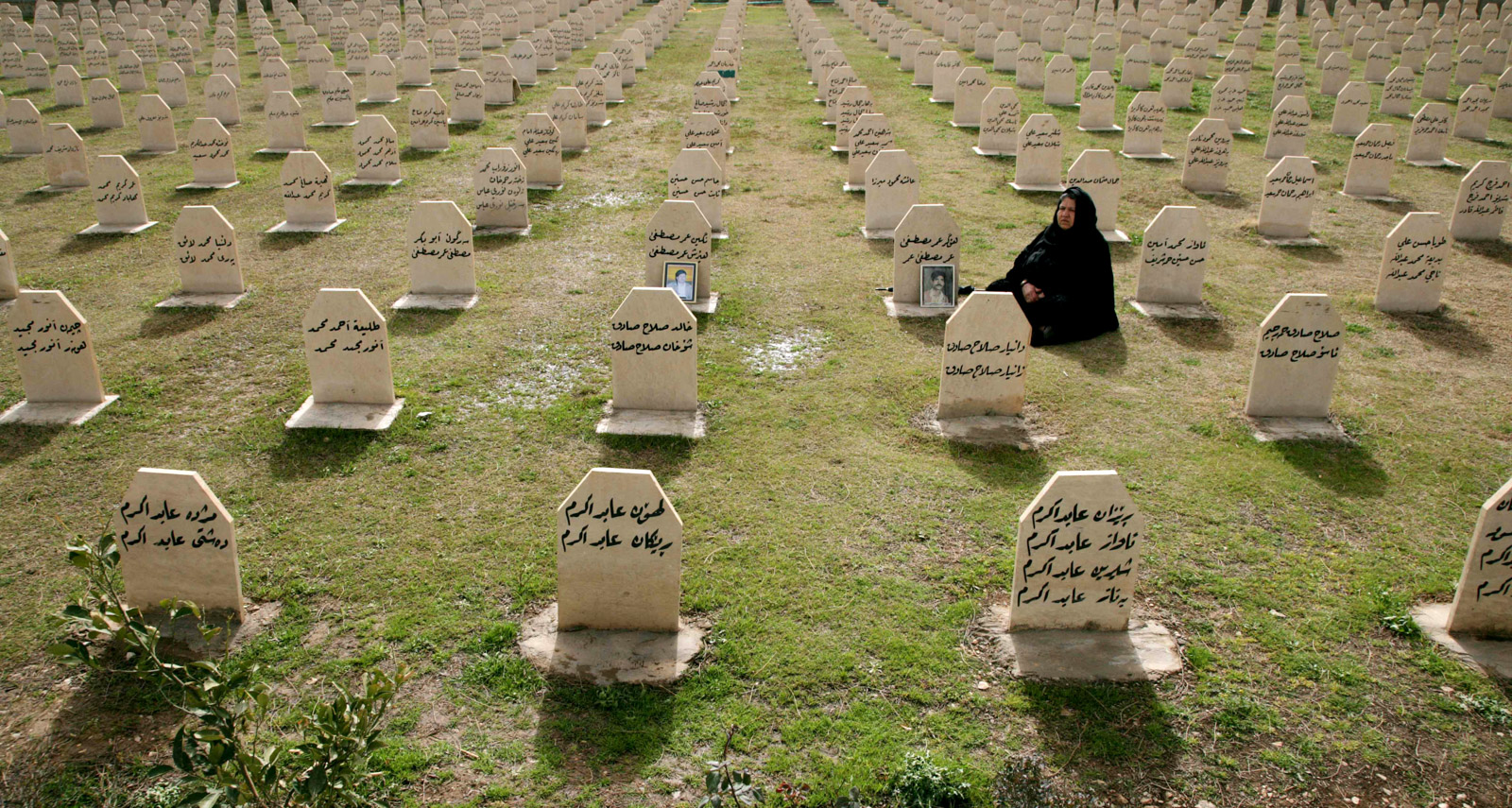
Although it has been largely forgotten in the west, the Anfal campaign remains a live political issue in Iraq, where survivors — stripped of their ancestral farm land and moved to barren camps — still rely on government handouts. “That generation is still around and they’re often politicised or instrumentalised,” says Hiltermann. “I think it won’t go away.”
The complex, conflicting feelings evoked by migration and displacement run through The Resurrected, in which characters grapple with the pain of losing their homeland even as they know they have more opportunity in the west. Towards the end of the novel, A Human Rights Investigator asks himself whether he was right to get Karwan, Kawa and others out of Kurdistan, concluding: “I honestly do not know, but I suspect the answer is neither clearly yes nor no.”
For Hiltermann, the novel was also something more personal, a way of processing years of frustration at the limits of his human rights work. Back in 1993, HRW published a report setting out its findings from Iraqi Kurdistan, describing the Anfal campaign as a genocide, and tried to find a state willing to take a case to the International Court of Justice in the Hague.
It did not find the necessary support and, somehow, the issue dropped lower and lower down the international agenda. Although only five years had passed between the atrocity and the HRW report’s publication, the world had changed: the Berlin Wall had fallen, Yugoslavia was breaking up and the cold war was coming to an end. “The Kurds were forgotten,” says Hiltermann. “It was not just in the past, but as if it was in a previous era.”
Related content
In The Resurrected, the character of A Human Rights Investigator struggles, as the real-life Hiltermann does, with the fact that gathering so much evidence did not result in accountability. Despite that, Hiltermann says, “I would not have chosen another career.”
After investigating Anfal, Hiltermann moved on to other projects, working for HRW’s arms division before taking up a role at the International Crisis Group, where he still works as an adviser. But he could not shake his frustration that there had been no real justice for the horrors he had documented in Iraqi Kurdistan.
In 2007, he published A Poisonous Affair: America, Iraq and the Gassing of the Kurds, detailing the Iraqi regime’s use of chemical weapons, with Cambridge University Press. It received positive reviews, but as a factual academic book, he says, “there was a limited audience for it and that frustration remained.”
Ultimately, he hopes that fiction will give him access to a wider audience and the freedom to tell this important story in the most human of terms. “For me, the research was very meaningful. It shaped a few years of my life, and I needed to give expression to that,” he says. “Call it therapy, if you want.”
The Resurrected by Joost Hiltermann is published by Afsana Press in paperback at £15.99.