
What did Arab scholars think of Homer and The Odyssey?
The epic Greek poem, now brought to the big screen by director Christopher Nolan, has a shared cultural ancestry with Arab literature

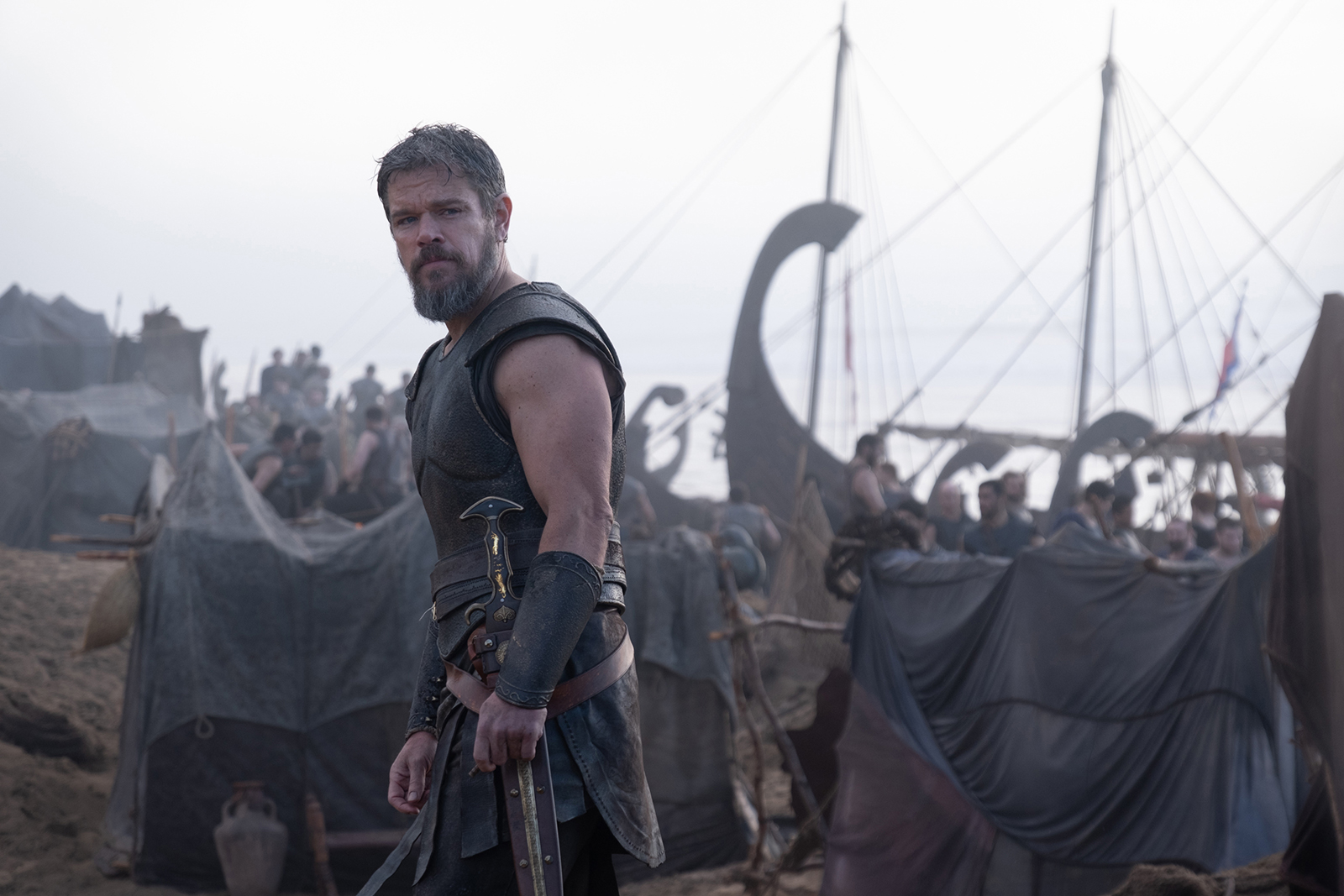
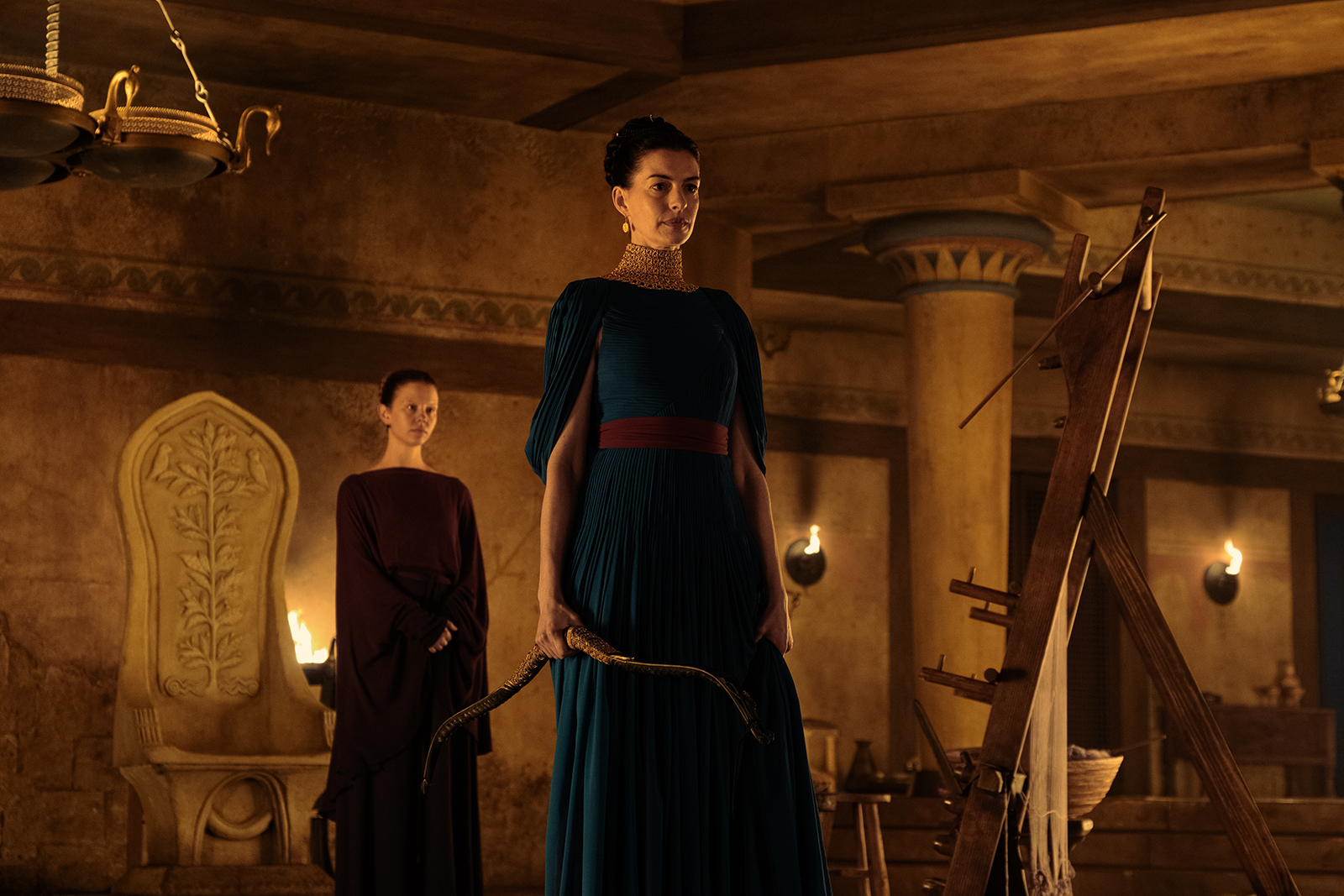
More than 3,000 years after it debuted, Homer’s Odyssey — arguably the first road trip tale of the Western canon — gets its latest big screen adaptation. Director Christopher Nolan’s retelling of the ancient epic, starring Matt Damon, Anne Hathaway, Tom Holland and Robert Pattinson, has already sold out in cinemas worldwide, with the UK’s largest screen, BFI Imax, running viewings from morning till dusk throughout the rest of July and August to meet soaring demand.
The story of Odysseus’s decade-long return journey from Troy to Ithaca has moulded millennia of European art and literature and is considered one of the foundational texts of the continent’s culture. Its roots and subsequent influence, however, stretch far beyond Europe’s modern borders.
Did medieval Arab scholars know about Homer?
Yes. Well… it’s complicated.
Opening a 13th-century manuscript, likely originating from Mar Mattai monastery in Mosul, modern-day Iraq, we see an ink sketch of a man. He wears a turban and a beard. The sketch is labelled: “A picture of the poet Homer.”
The manuscript is a version of an 11th-century text by the Egyptian scholar Mubaššir ibn Fātik, Choice of Wise Sayings and Fine Statements, in which he compiled information, anecdotes and aphorisms attributed to various Semitic, Greek and Egyptian wise men.
Ibn Fātik describes Homer as the “oldest poet of the Greeks” and offers readers a visual description: “He was of moderate stature, beautiful appearance and of brown complexion; he had a large head, narrow between his shoulders. He walked swiftly, and often looked around. On his face there were scars from smallpox. He joked a lot, but was also fond of insulting those who preceded him, and was funny.”
Homer can be spotted in a number of other medieval Arabic texts, described invariably as a great Greek poet and a wise man.
How did Arab scholars find out about him?
According to a 10th-century Baghdad bookseller, Ibn al-Nadim, Caliph al-Ma’mun once dreamt of a man with a broad forehead, joined eyebrows and bloodshot eyes sitting on his bed. He asked the unexpected bedfellow his name.
“I am Aristotle,” the man replied. He proceeded to assure the caliph that there was no conflict between reason and revelation, directing him to translate Greek philosophy into Arabic. “Knowledge has no boundaries; wisdom has no race or nationality. To block out ideas is to block out the kingdom of God,” he said.
Upon waking from the dream, al-Ma’mun set out to establish Baghdad as a centre of Greek learning.
Barbara Graziosi, Professor of Greek Literature at Princeton University, said it was undeniable that Baghdad scholars contributed greatly to preserving Greek philosophy, mathematics, astronomy, medicine, and botany through the middle ages, eventually allowing Latin translation of the works to spread throughout Europe.
“The second dynasty, of the Abbāsids, was characterised by a long-lasting interest in ancient Greek culture,” she wrote. “They founded a new capital, Baghdad, which quickly became a cosmopolitan centre of learning.”
Aristotle, Graziosi writes, enjoyed the greatest prestige among Baghdad scholars and it was through Aristotle that the Arab world was introduced to Homer.
However, though Aristotle’s Poetics was translated by medieval Arabs numerous times, not a single poem mentioned in the work, including The Odyssey, was translated.
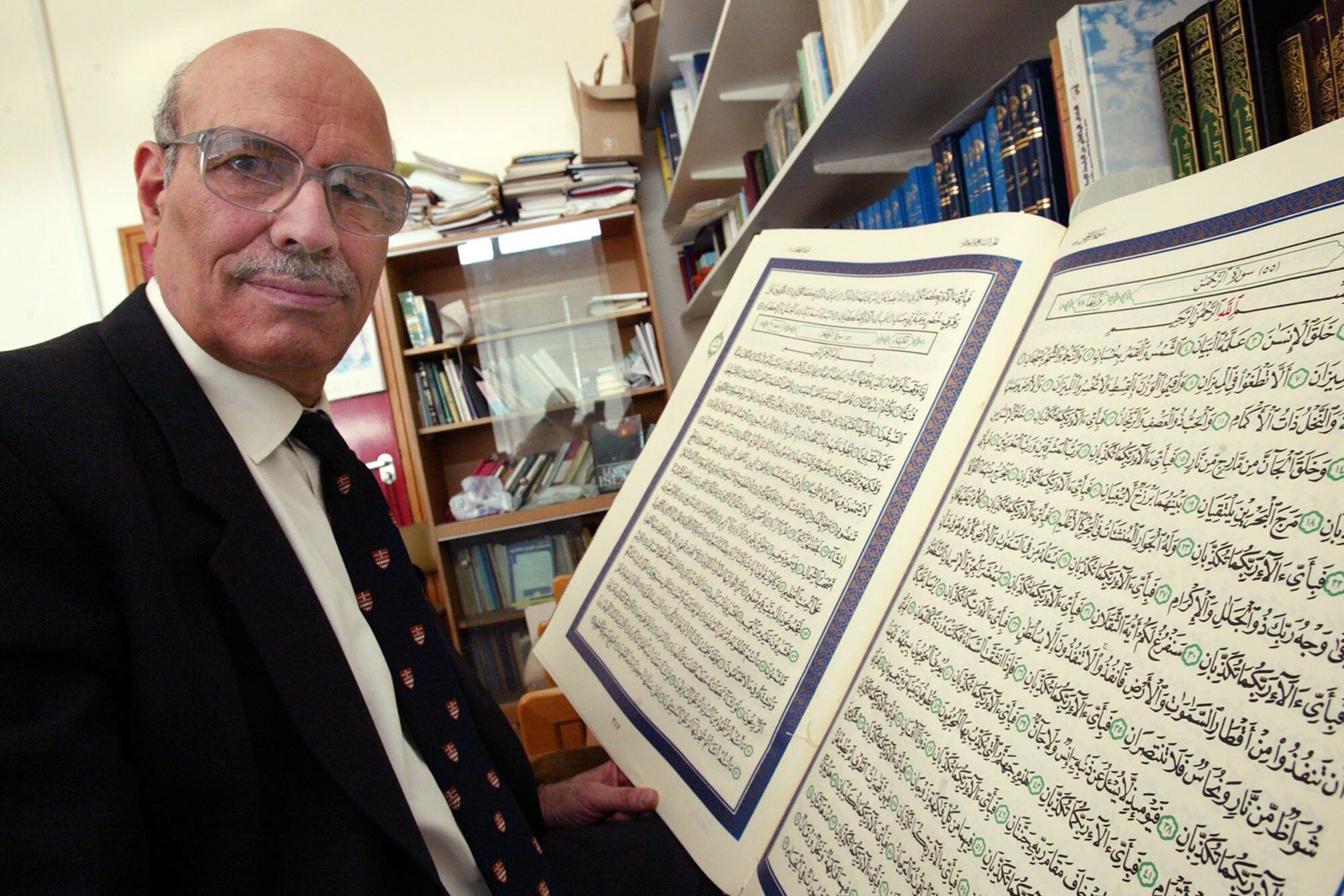
“Ancient Arabs felt no need to translate foreign works,” said the late Egyptian professor Ahmed Etman, who completed the first direct Arabic translation of The Iliad from the original Greek in 2004.
“Even during the pre-Islamic period they already had a well-established poetic tradition. On the other hand, Arab Muslims also believed that poems are untranslatable,” he wrote. “Consequently, in the Abassid Age Arab Muslims were interested in the Greek theory of poetry, and not in Greek poems themselves.”
Why was poetry left out from the Greek translation movement?
First, as Etman pointed out, Arab scholars valued poetry immensely and considered translation to be a degradation of the original works.
“Poems do not lend themselves to translation and should not be translated,” wrote the ninth-century Baghdad polymath, Al-Jazid. “When they are translated, their poetic structure is broken, the meter is no longer kept, the poetic beauty disappears, and nothing worthy of admiration remains.”
Second, the mythological nature of Homer’s works might have been one of the biggest obstacles to Arab engagement with them. Not only due to religious considerations but because the Greek concept of “myth” was fundamentally different from Arab understanding.

“Even Arab pre-Islamic poetic tradition rarely and vaguely deals with mythology,” Etam wrote. “As far as we know there is no essential function of myth for Arabic poetry. On the Greek side, however, it is almost impossible to separate myth from poetry.”
However, many of the Abbasid Greek translators were Christian and it is through these figures that we hear of direct engagement with Homer.
Theophilus of Edessa, court astrologer to the Abbasid caliph al-Mahdi and a Maronite Christian, translated The Iliad into Syriac in the eighth century, although only a fragment of the text survives today. There is nothing to suggest, however, that the translation sparked broader interest among the Baghdad elite.
Did Homer influence Arab literature?
Ever since the first translations of The Arabian Nights began appearing in Europe in 1701, readers pointed out that the third and fourth voyage of Sinbad the Sailor appear to mirror Odysseus’s encounters with the cave-dwelling, man-eating giant and the beautiful Circe who changed men into beasts by serving them potion-laced food.
But asking how Homer influenced the Arab and the near East traditions might be getting the question the wrong way round.
“Greece is part of Asia; Greek literature is a near Eastern literature,” Martin West, philologist and classicist at the University of Oxford, wrote in 1966.
West’s work, alongside that of the German philologist Walter Burkert, revolutionised modern understanding of ancient Greek art and culture, establishing its antecedents in the near Eastern traditions.
“The Homeric epics have a number of Oriental precedents and prototypes,” argued Etman. “The geography of The Iliad and The Odyssey includes the Orient and particularly Egypt and Phoenicia. The Trojan Wars, the subject matter of Homer, take place on the western shore of Asia Minor.”
Some scholars since have drawn comparisons between The Odyssey and The Epic of Gilgamesh. Is it time that we see Hollywood lend its magic to the world’s oldest flood myth?