
Art in the face of chaos with shamstep pioneers 47Soul
The Palestinian band’s new EP, Dualism Part 2, is some of their most politically charged and emotively incisive work to date
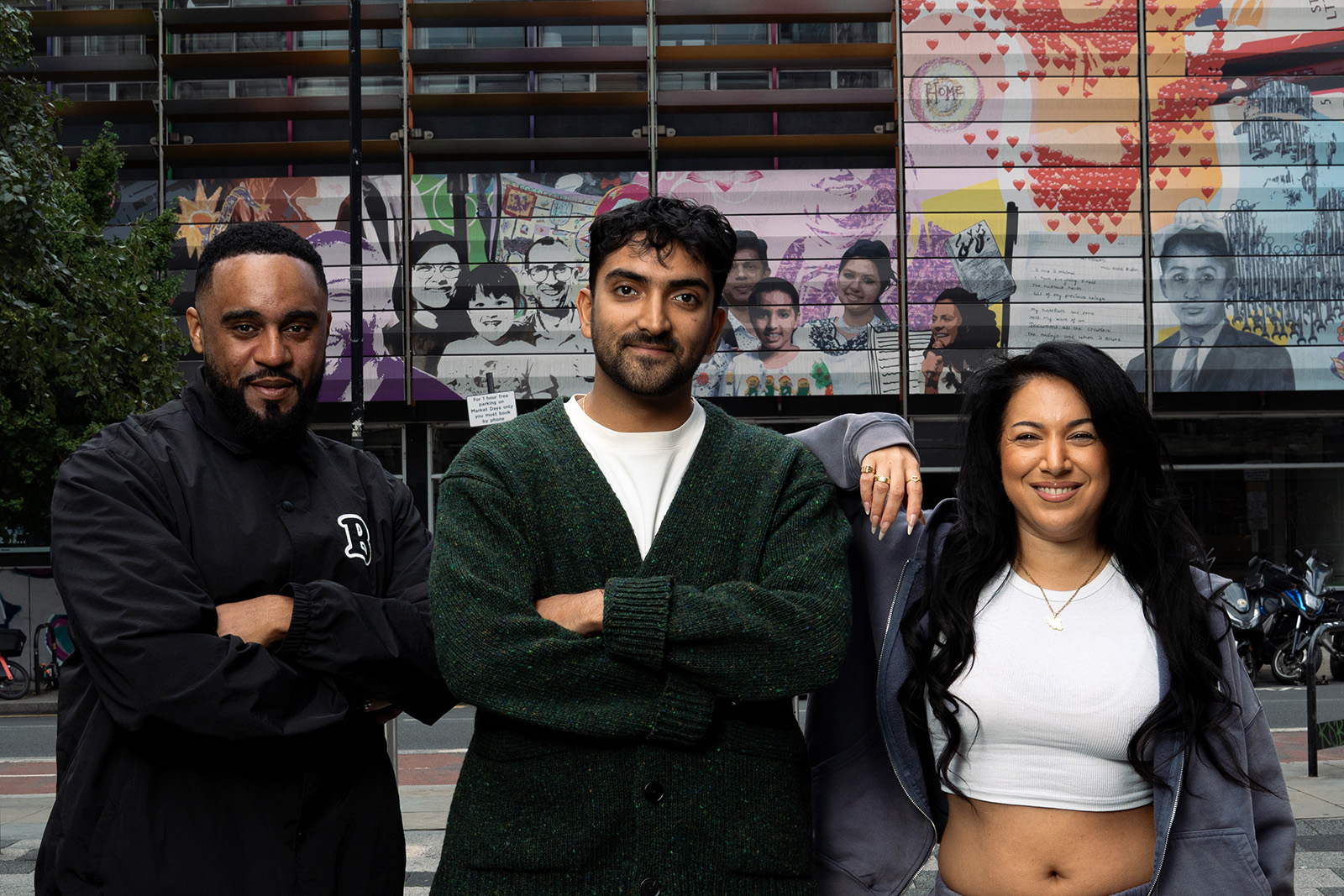
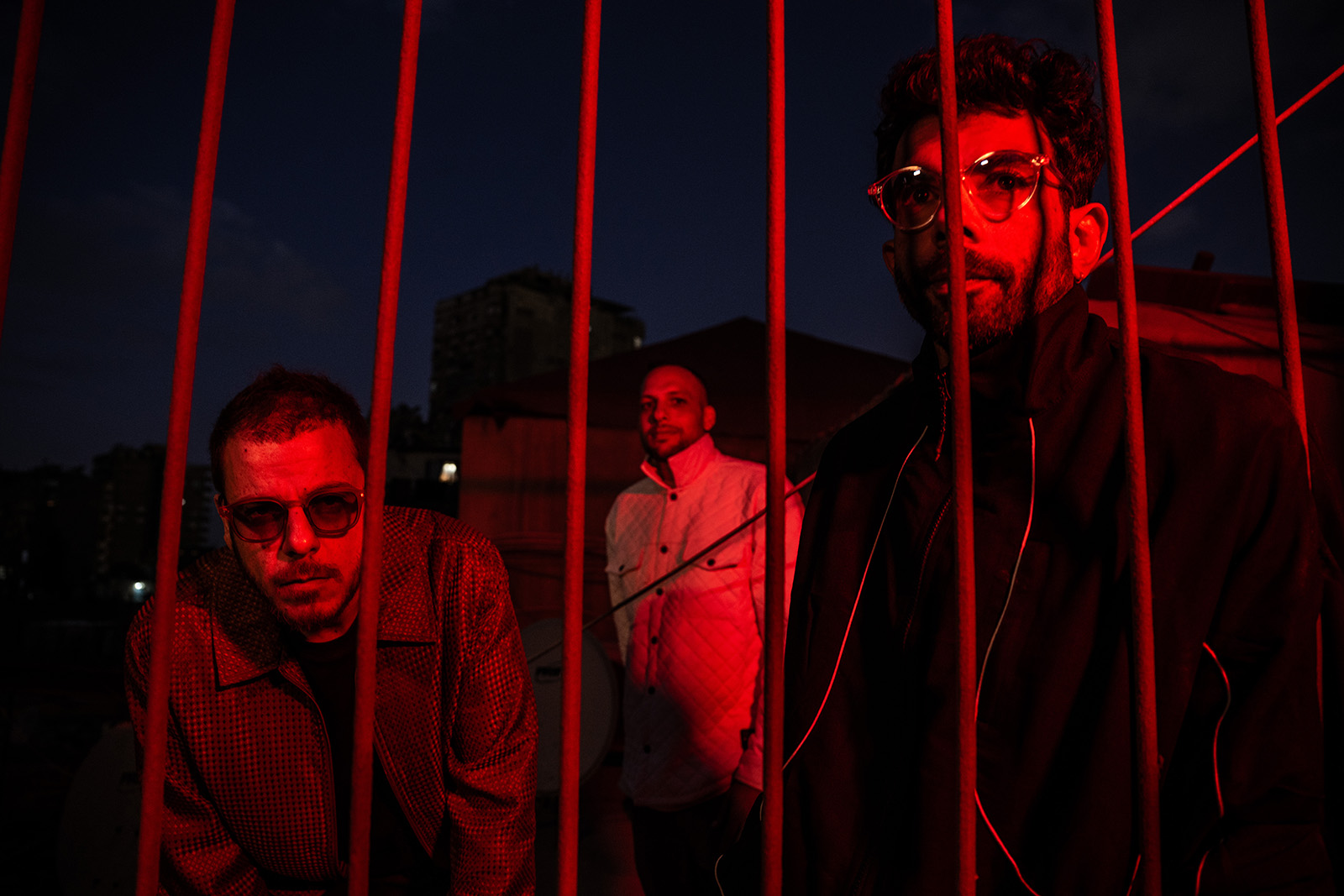
Palestinian alternative hip-hop group 47Soul have spent the past decade making energetic, genre-hopping music to give voice to the plight of their people and honour their resilience.
“This music is borne from the idea that even if we’re united, what do we do if everyone else around us is divided?” says vocalist and synth player Ramzy Suleiman. “How do we celebrate our Palestinian culture while also experiencing the bittersweet emotions of the horrors we have been going through as people?”
Releasing their debut EP, Shamstep, in 2015, the group coined a new musical style that sought to mix the Arabic folk dance of dabke with hip-hop lyricism and dancefloor electronics. Rather than simply MCing with a pre-produced backing, the musicians build their songs as a band, featuring vocals, synthesiser, darbuka drums, bass and guitar.
“We wanted to make a pan-Arabic sound, which meant drawing on the music of Bilad al-Sham [the historic Arab name for the Levant], while the ‘step’ comes from having a commitment to movement,” Suleiman explains. “It’s evolved over the years like any other living thing.”
Following 2018’s debut album Balfron Promise and 2020’s Semitics, the group have built a reputation for raucous live shows on festival stages including Glastonbury and Roskilde, as well as during last year’s global arena tour with trip-hop pioneers Massive Attack.
47Soul now return with some of their most politically charged and emotively incisive work to date. The double-EP Dualism is a record that feels enlivened by the group’s experience of playing their music to their largest audiences to date, yet also holds the trauma of the aftermath of the 7 October attacks.
With Part 1 of the EP released in 2025 and Part 2 in June 2026, the aim of the six-track project is to refigure the group’s cultural role in a time of crisis. “When we first started, it felt like our duty to imagine a world where we had a right to return to our land and to deliver a message of hope,” Suleiman says.
“As we have built more of an international fanbase, we now have a growing duty to also speak up for the lived experience of the Palestinian people and our day-to-day realities. It’s a duality of expression and that’s where the project title ultimately came from.”
That double-edged experience results musically in the downtempo, minor-chord introspection of Part 1 track Ya Kho, which probes how artists can continue to create in a time of crisis, and the eerie synth tones of the war-referencing Ghost Town. The uptempo defiance is felt in Part 2 through the infectious electro-dabke number Signal, the euphoric group vocals of Rajilik and the nocturnal sensuousness of Leila.
“Leila is all about the daily reality of living as a Palestinian, since it tells the story of a romance, except the lovers are confronted with checkpoints and the need to tunnel into Haifa. Romance and the situation in the street are always coupled in Palestine,” guitarist Hamza Arnaout says.
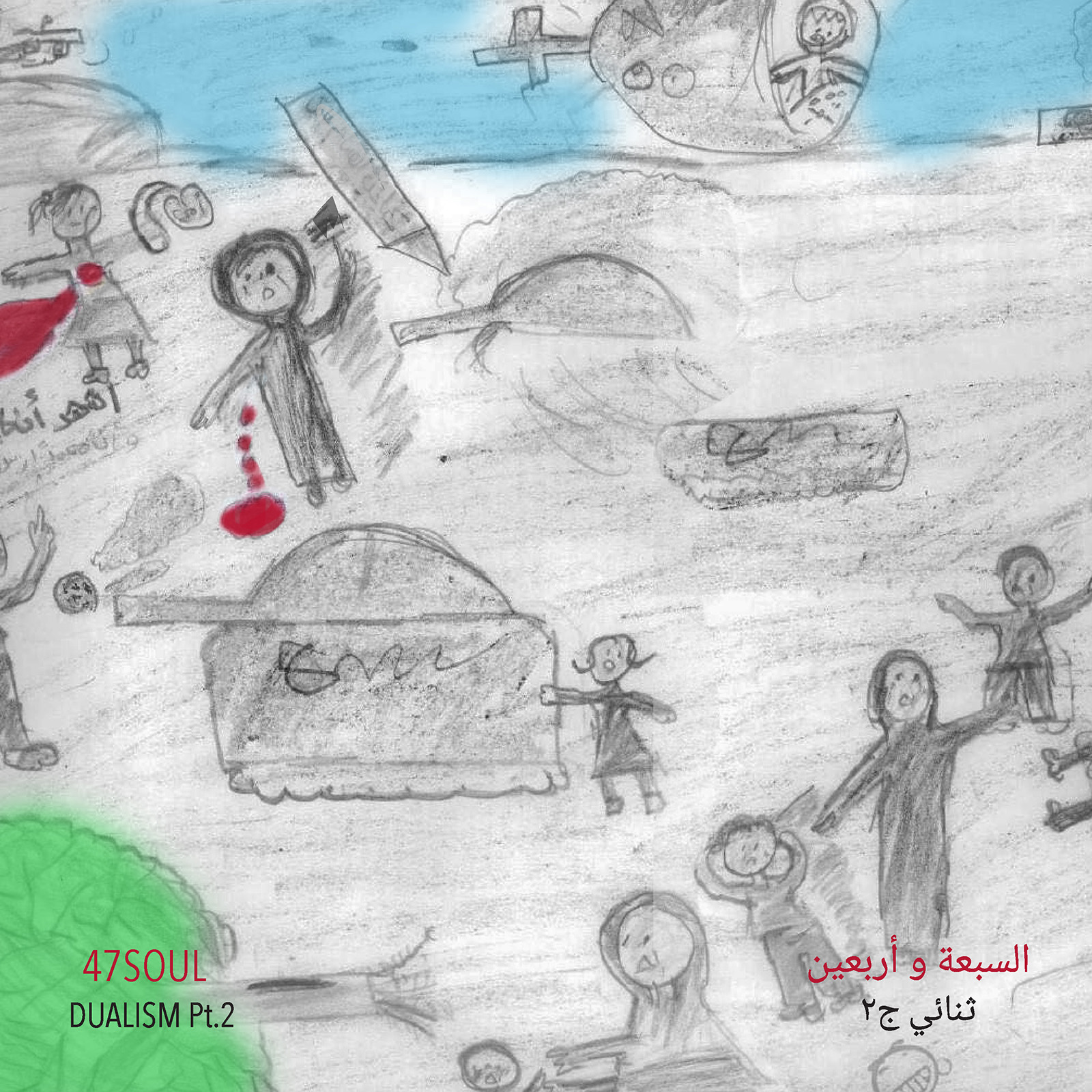
The project’s striking artwork equally expresses the dichotomies of the music, presenting both a darkened negative scan and a reproduction of a child’s drawing. In crude pencil marks, the image depicts a playful family scene interrupted by bombs falling from the sky and blood shooting from bodies.
“We wanted to express the truth and psychology of what it’s like to live in a warzone as the most vulnerable members of a community,” Arnaout says. “That image doesn’t need explanation, it speaks for itself in its sadness.”
Formed in 2013 in Amman, Jordan — a creative haven that artists from nearby Palestine, Lebanon and beyond can get to without the need for excessive visa paperwork — 47Soul were originally an offshoot of the Arab diaspora alternative scene. Arnaout was performing in the Jordanian indie group Autostrad, while Tareq Abu Kwaik, who performs as rapper El Far3i, was part of the post-rock band El Morabba3, and Suleiman and fourth member Walaa Sbait were each making music under their own names.
Coming together through a shared desire to create a new style of “open-border music”, the group named themselves after the tentative period of 1947, a year before the first Israel-Palestine war, which saw at least 750,000 Palestinians forcibly displaced and the establishment of the state of Israel.
“It was a way to see ourselves beyond the stigmas of those other years that have separated us,” Suleiman explains.
The band’s members relocated to London soon after forming, but Suleiman and Sbait now live in Ramallah, while Arnaout and Kwaik remain in the UK capital.
“I haven’t been able to perform in Palestine for the past 11 years,” Arnaout says. “It’s part of our struggle. We get letters and messages of support from the Palestinian people and we get to share our music with the rest of the world, even though our visas are often delayed until the last minute or cancelled altogether. It’s vital for us to have the space to connect with our audiences but I always say when it comes to our touring, if anything can go wrong it will.”
Notwithstanding the usual administrative challenges, the group are soon to embark on a series of shows in Jordan and Morocco, including a performance at Amman’s El Masnaa arts space — a performance that will take them full circle back to their origins.
“I’ve seen so many amazing groups play there so it’s an honour to be headlining ourselves now,” Arnaout says. “Whatever continues to happen in the world, at least we can share our art and a sense of defiance in the face of chaos.”
It’s a poignant reality and one that seems sure to drive 47Soul onwards, no matter their ongoing struggles.
Dualism Part 2 is out now on Cooking Vinyl.