
Mohammed Z Rahman: ‘I want to do away with this mythology around being an artist’
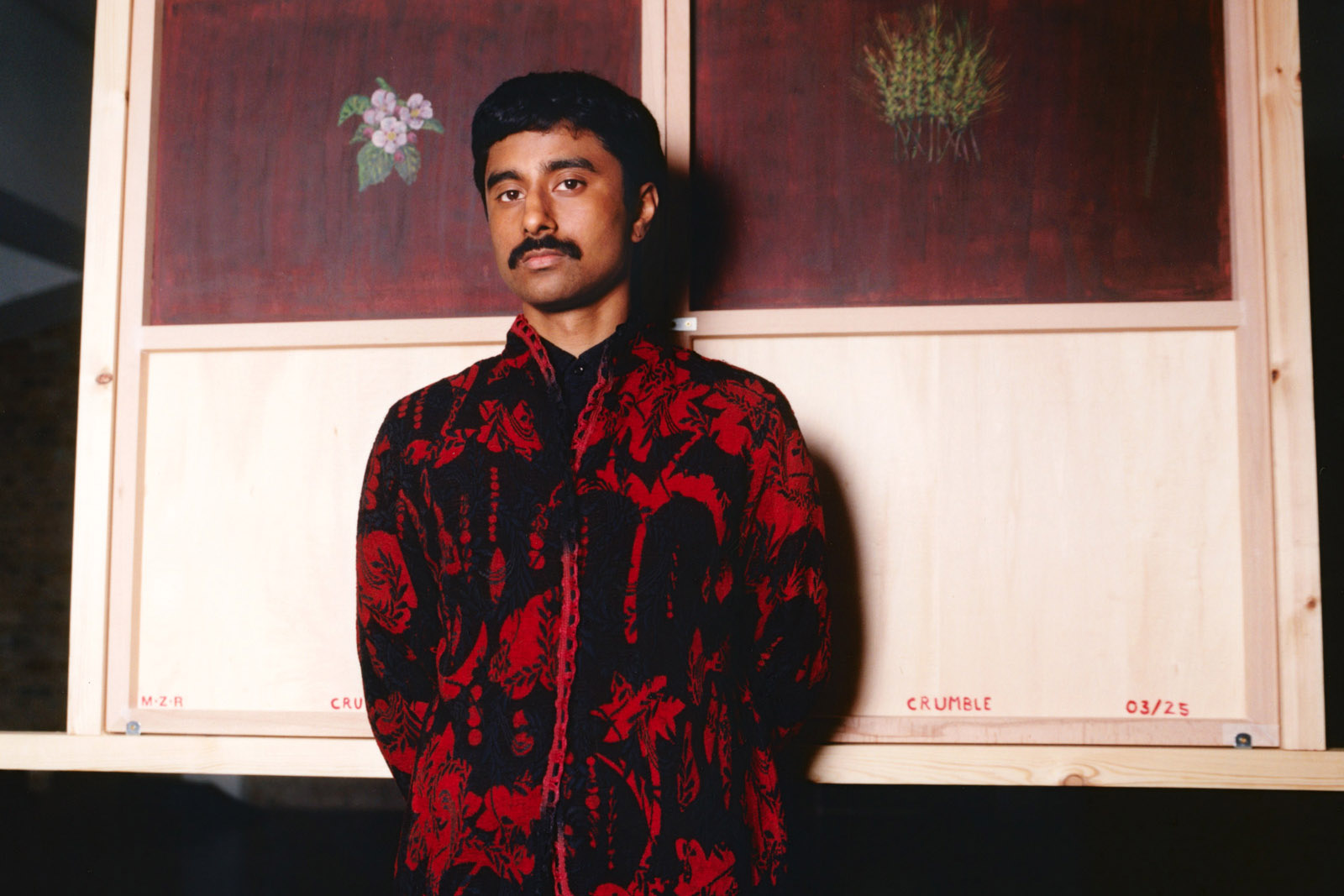
The multidisciplinary artist’s exhibition at Tate Britain is part of a series showcasing the work of emerging creatives

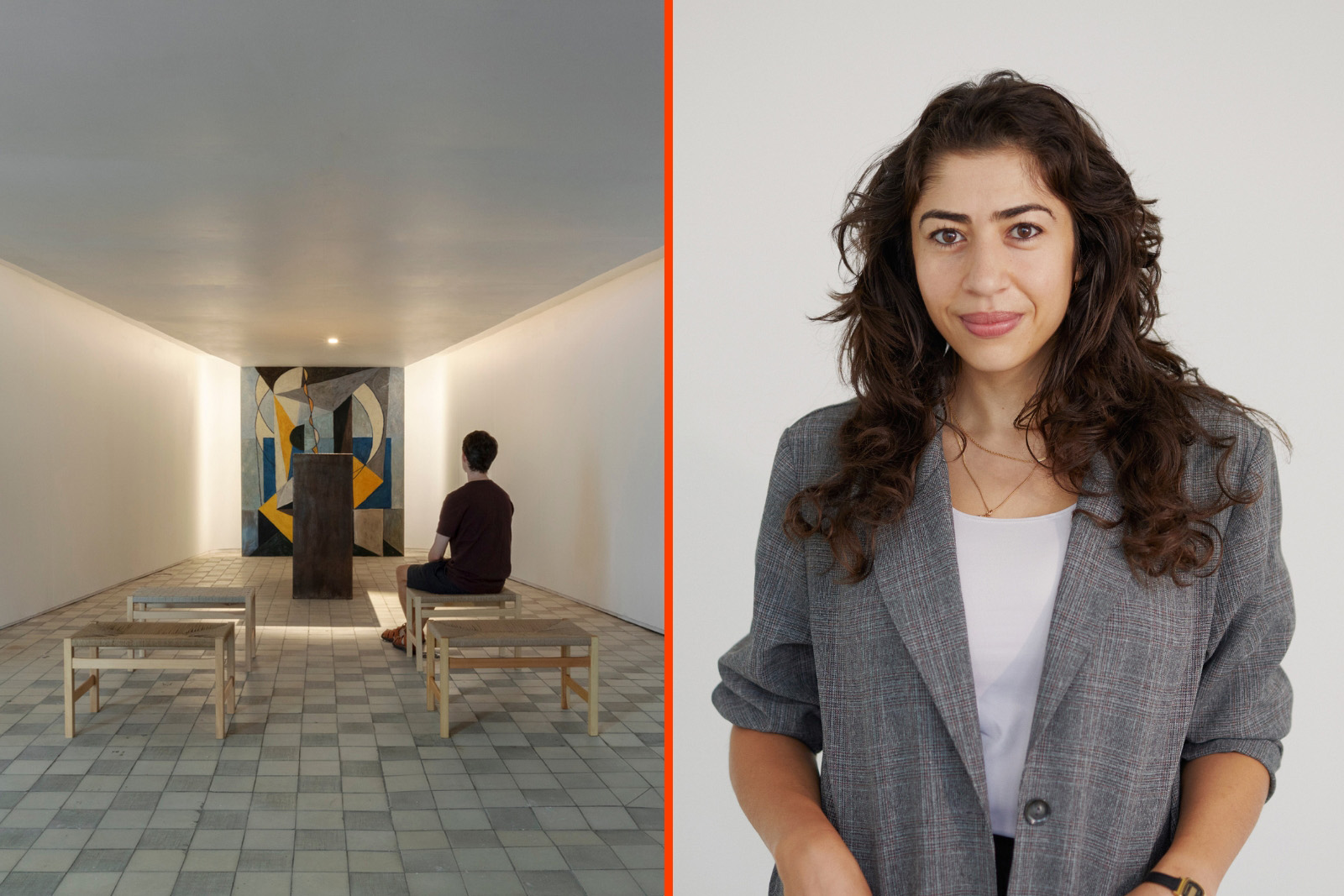
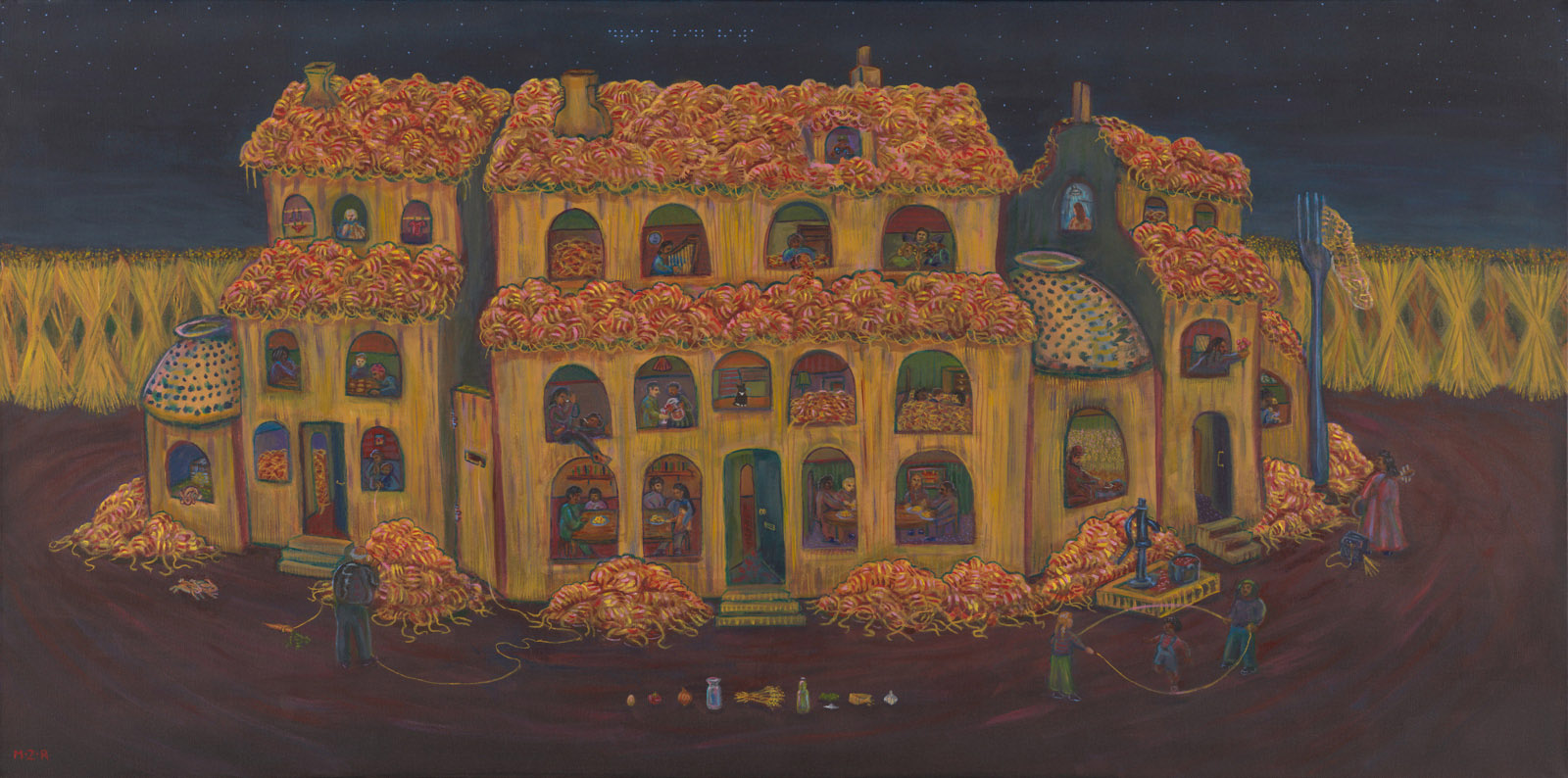
Upon entering Mohammed Z Rahman’s Never The Same at Tate Britain, viewers first encounter The Spaghetti House (2024), a work of acrylic on canvas.
Inspired by an imagined home made of spaghetti that Rahman invented alongside his six-year-old niece, the painting depicts the titular structure in whimsical style, its thatched roof replaced by mounds of pasta, each window revealing a different domestic scene. Outside, a child skips rope, the cable rendered here as a thin long noodle.
Related content
The painting, Rahman explains, was created during the ongoing genocide in Gaza, as he confronted the scale of child mortality and death coming out of Palestine. “I felt like I had to respond, and the way to do that for me in my practice was to make work about taking the dreams of children seriously, and to consider what is at stake when a childhood is ended prematurely,” he says.
Rahman’s exhibition of 10 works made over the past two years is on display until November as part of Tate Britain’s Art Now. The series showcases new work by emerging artists and has been doing so since the 1990s; its former recipients include Turner prize winners Jesse Darling and Cooking Sections.
Rahman’s Never The Same unfolds across paintings, miniature objects, a shipping crate transformed into a box of chocolates.
The Spaghetti House gives way to a series of three Spaghetti Rooms. The paintings expand on the universe of the original work to showcase acts of routine and joy within the home, drawing on the colourful houseshares Rahman lived in during his 20s, as well as the interior worlds of the east London community he grew up in, where houses were often a site of congregation on occasions such as Eid.
“I personally come from a background of domestic violence, and also housing instability, so we moved around quite a lot,” Rahman says. “There is this kind of process of reparation and healing and of homemaking, through the artwork, that was quite ruptured growing up.”
Born in London in 1997 to parents from Bangladesh, Rahman began painting as a teenager, creating art on anything that he could find, including matchboxes. “It was very opportunistic, I think. Also, it says something about making artwork during a political climate of austerity in the UK,” he tells me.
Here, a series of matchboxes are positioned on a shelf and line one wall, covered in miniature paintings of chilli peppers, plants, a loaf of bread, a glass half full. The effect is one of transformation, imbuing an everyday object with the kind of magic Rahman believes is central to the dream-making of marginalised communities, their ability to create “entire worlds from very little”.
While at university, Rahman sold postcard prints of his paintings out of his jacket at houseparties and made zines. He studied anthropology, hoping that the subject might make him a better writer of fiction. It exposed him instead to the rarefied ways that the discipline makes research inaccessible to the very people it examines, as with the ethnographies of east London’s Bangladeshi communities that he began to read as part of his coursework.
“It’s behind paywalls, it’s written in this very academic English,” he says, referring to the ways in which being anglophonic or having a certain level of education is taken for granted. “I want to make art that people feel is very accessible.”
In 2022, the curator Eliel Jones came across Rahman’s work on Instagram, and invited him to contribute to that year’s Brent Biennial. The resulting commission — a series of paintings examining the migrant history of the borough — was installed at the Kingsgate Project Space in Kilburn, and caught the attention of Phillida Reid, the gallery that now represents him.
Solo exhibitions have since followed, including a show at the Whitechapel Gallery last year. For the current edition of the Venice Biennale, he is the youngest invited artist to present work, as part of the central exhibition In Minor Keys, curated by the late Koyo Kouoh.
Rahman draws on a rich cultural vernacular in his practice, within which, he says, he is careful not to privilege or hierarchise forms of knowledge over others. “It comes from seeing my mum as a maker,” he explains. “When she came to the UK in the 80s, she was a seamstress. The sheer skill and the craftspersonship that goes into her work, and the way that it’s not really seen as fine art — I’ve always felt that distinction is very arbitrary and quite classist and racist.”
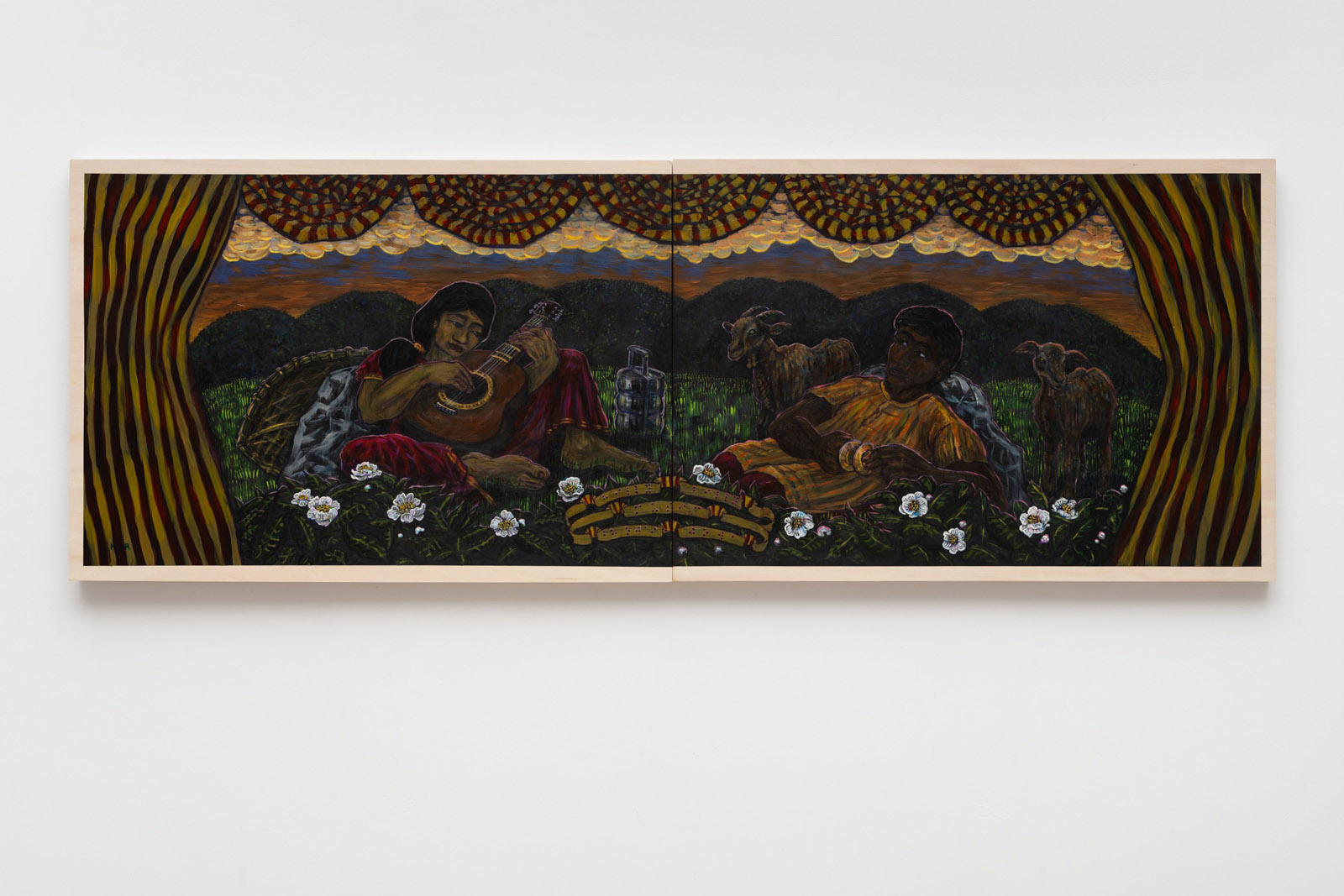
His reference points are as varied as tarot cards, the poems of Khalil Gibran, the letters of Audre Lorde, the bucolic cinematography of The Sound of Music.
To bring these disparate elements together in a single configuration, Rahman tells me, is to create a “fragile, radioactive isotope in the world”, enriched by his position on the frontier of language and meaning and cultural form: British-Bengali, queer. “There’s something really precious and beautiful about that.”
Related content
Despite recent institutional recognition, Rahman explains that he does not want to reproduce the idea that only art that makes it into galleries is art worth aligning oneself with, or finding important. Much of the work made for this show, he says, was produced in his bedroom or on his kitchen table.
“I really want to do away with these dusty ideas, this mythology that comes around being an artist, and actually foreground the notion that people are making art all the time,” he says.
“It doesn’t need the validation of an institution or a biennale. It’s there, and it’s the creative blood of social reality. I think it’s important that people remember that and feel empowered to tell their own stories, especially [those] who have been made to feel like they’re people without history, without things to say.”
Mohammed Z Rahman’s Never The Same exhibition is showing at Tate Britain until 8 November.