
Can virtual reality change how people see Islam?
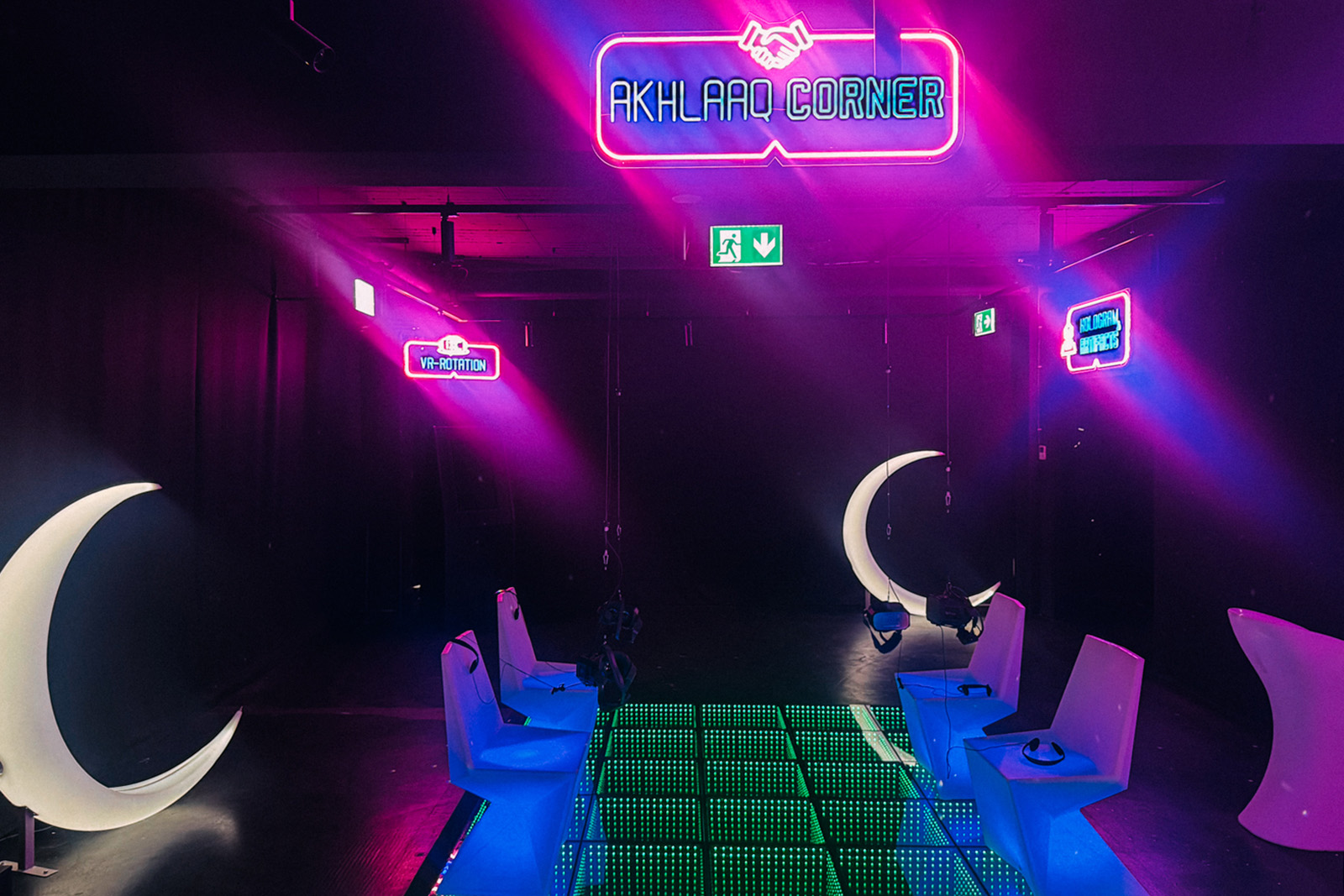
The Islam Experience Centre in Rotterdam immerses visitors in pilgrimage, history and culture through interactive exhibits

Two women in hijabs and a younger Muslim man wait near the entrance of Rotterdam’s Islam Experience Centre (IXC). Inside, three non-Muslim friends watch an animated history of Islam playing on a large screen overhead. Their guide, 21-year-old Tarik, identified by his first name only at the request of the centre, soon gathers them together before leading them through a series of immersive installations.
Rather than relying on lectures, exhibitions or printed materials, IXC uses virtual reality (VR) and interactive storytelling to introduce visitors to Islamic history, practice and lived experience.
The model has drawn interest from Muslim and non-Muslim visitors, as well as school groups and teacher-training institutions, at a time when questions about Islam, integration and religious diversity remain prominent in Dutch public debate. The IXC hosts school groups, university students and community organisations every week. According to the centre, it has welcomed nearly 50,000 visitors over the past two and a half years.
“We wanted people to experience Islam rather than simply explain it,” Tarik tells Hyphen.
“For us, there was clearly a need for a place like this. We’re seeing a growing demand for knowledge about Islam in the Netherlands, but also a need for more accurate information.”
The centre was opened in June 2023 by former far-right Dutch politician Joram van Klaveren, once known for his anti-Islam views as a member of Geert Wilders’ PVV party, before converting to Islam in 2018 while researching a book critical of the religion.
Inside IXC, however, Van Klaveren’s story operates more as context than centrepiece. The focus is on experience: learning through immersion rather than instruction.
The first VR experience unfolds from a first-person perspective. Children playing football tell you that you cannot join their game. Moments later, an elderly white woman looks directly at you and mutters something about “your kind”. In a classroom, a teacher introduces you to your new classmates and asks who would like to sit beside you. The room falls silent.
Bram, 34, one of the non-Muslim visitors in the group, says he had expected something very different.
“I expected facts and history,” he says. “What surprised me was that there was also an experience of what discrimination feels like. I hadn’t expected that.”
Across Europe, museums and cultural institutions are increasingly incorporating immersive technologies into exhibitions and educational programmes.
Wouter Smets, an educational scientist at Erasmus University Rotterdam, who researches immersive learning experiences in museums, says organisations the growing availability of VR and other immersive technologies has made it easier for museums and educational institutions to experiment with new forms of visitor engagement.
“You can bring something like the Hajj, which takes place on another continent, much closer to people,” he says. “Through a virtual experience, you can bridge a distance that would otherwise be impossible to overcome physically.”
That observation echoes wider research on representations of Muslims.
Evelyn Alsultany, a professor of American studies and ethnicity at the University of Southern California, says Muslims in western media have long appeared through frameworks of “terrorism, war, political conflict or national security”. Experiences that allow audiences to encounter Muslims outside those narratives, she argues, create opportunities to connect with them “as human beings rather than stereotypes”.
Research on immersive learning suggests that experiences can make unfamiliar subjects feel more tangible, but Smets cautions that immersion alone does not automatically lead to learning.
“The biggest risk is that an experience becomes so stimulating that people are overwhelmed by it,” he says.
“For learning to happen, there still needs to be structure, context and opportunities for reflection.”
Without that framework, he argues, immersive experiences can be memorable without necessarily deepening understanding.
In one room, a group of non-Muslim visitors move slowly along a row of illuminated displays, headphones on and audio devices in hand. They pause beneath a glowing sign that reads “Pilgrimage”, listening to an explanation of Hajj while a digital model of the Kaaba glows inside a glass case.
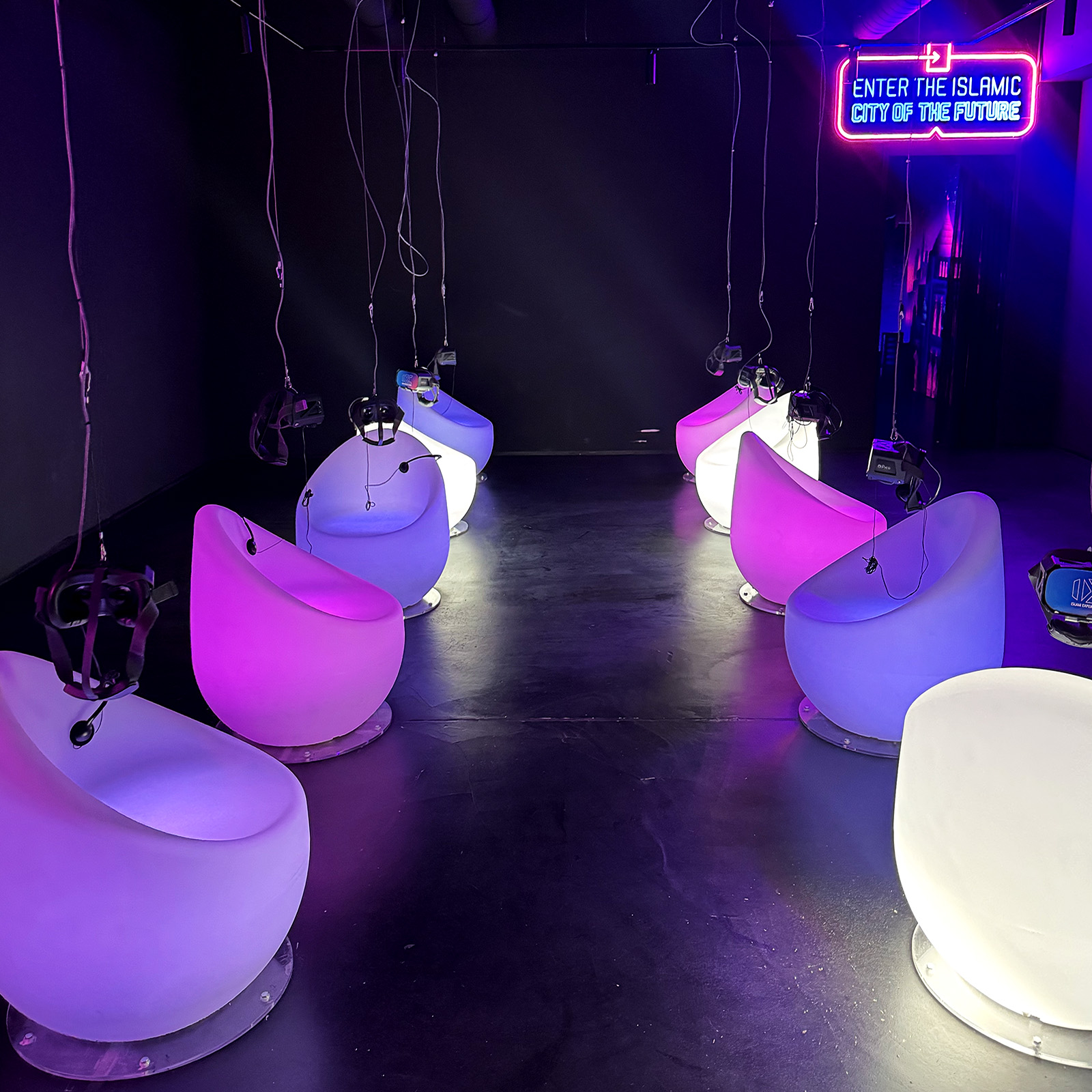
In another, the two women in hijabs and the younger man settle into glowing white chairs beneath suspended VR headsets. Animated scenes set in seventh-century Arabia show a man in a white thobe moving through desert settlements and marketplaces, introducing figures such as Bilal ibn Rabah, the first muezzin.
AI-generated figures answer visitors’ questions through interactive screens. Another display tells the stories of converts to Islam, including Malcolm X, Muhammad Ali and Van Klaveren himself.
Tarik says visitors generally include practising Muslims, less religious Muslims reconnecting with their faith and non-Muslims curious about Islam.
Among them is Sam, 28, the younger man who arrived with the two women in hijabs. He came with his mother after hearing about IXC through family friends.
“I thought it would just be a normal tour about Islam,” he says. “What surprised me was the creativity. The VR puts you inside another experience.”
IXC’s educational ambitions extend beyond individual visitors. According to Tarik, school groups have become a significant part of the project’s audience. Some visit the Rotterdam centre as part of school trips, while IXC staff also travel directly to schools with VR equipment and presentations.
One of those institutions is Marnix Academy in Utrecht, a training college for primary school teachers. Elise Akkermans, a lecturer in pedagogy, says the programme was designed to help student teachers engage with the realities of increasingly diverse classrooms.
“Future teachers need not only pedagogical skills, but also cultural knowledge and understanding of different religious and cultural backgrounds,” she says.
Tarik argues that understanding different religions and cultures is also important.
“When students learn about Dutch history or the second world war in museums, I think it’s equally important they learn about religions and cultures around them,” he says. “People encounter Muslims every day. Understanding each other matters.”
The centre exists against a backdrop of long-running debates about Islam in Dutch public life. Questions of integration, religious identity and multiculturalism have shaped Dutch politics for decades, with politicians such as Geert Wilders making Islam a central focus of political debate.
Tarik says those debates can contribute to misconceptions about Islam. Projects such as IXC, he argues, seek to address those misconceptions through education and direct engagement rather than political debate. He says one of IXC’s aims is to provide what he sees as more accurate information about the religion.
“We want to show what we see as the true image of Islam,” Tarik says. “If there are misconceptions, we try to address them in a healthy and accessible way.”
Related content
Nick, 28, who was visiting the centre with Bram, says his interest in IXC began with Van Klaveren himself.
“If somebody from the most anti-Islam political party in the Netherlands researches Islam and completely changes his mind, then you become curious.”
Smets sees projects such as IXC as part of a broader search for more meaningful forms of education and public engagement.
“Teachers want students to be curious about the world around them. Experiences like these fit into that wider search for meaningful education,” he says.
For supporters of the project, that educational potential extends beyond the museum itself. In a country where debates about Islam, identity and integration remain politically charged, IXC is attempting something unusual: not simply telling visitors about Islam, but inviting them to experience aspects of it for themselves.
Whether immersive technology can change attitudes remains difficult to measure. But for an afternoon in Rotterdam, visitors who arrived with very different relationships to Islam left having encountered it through something other than headlines, politics or stereotypes.