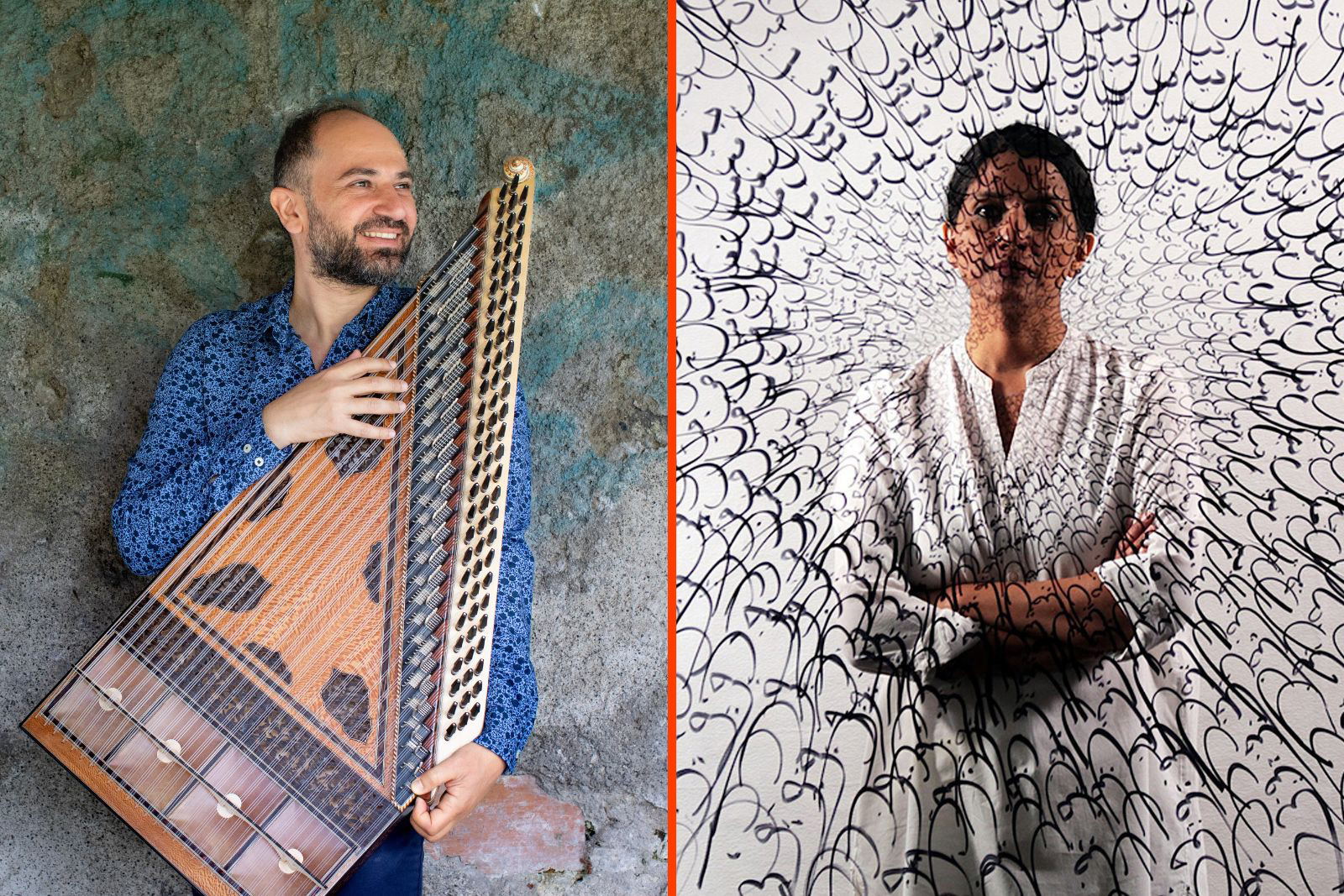

‘Women don’t usually play these instruments. We’re keeping tradition alive’
In Edinburgh, The Aga Khan Music Programme brings together a boundary-breaking ensemble from Senegal, Lebanon and Iran
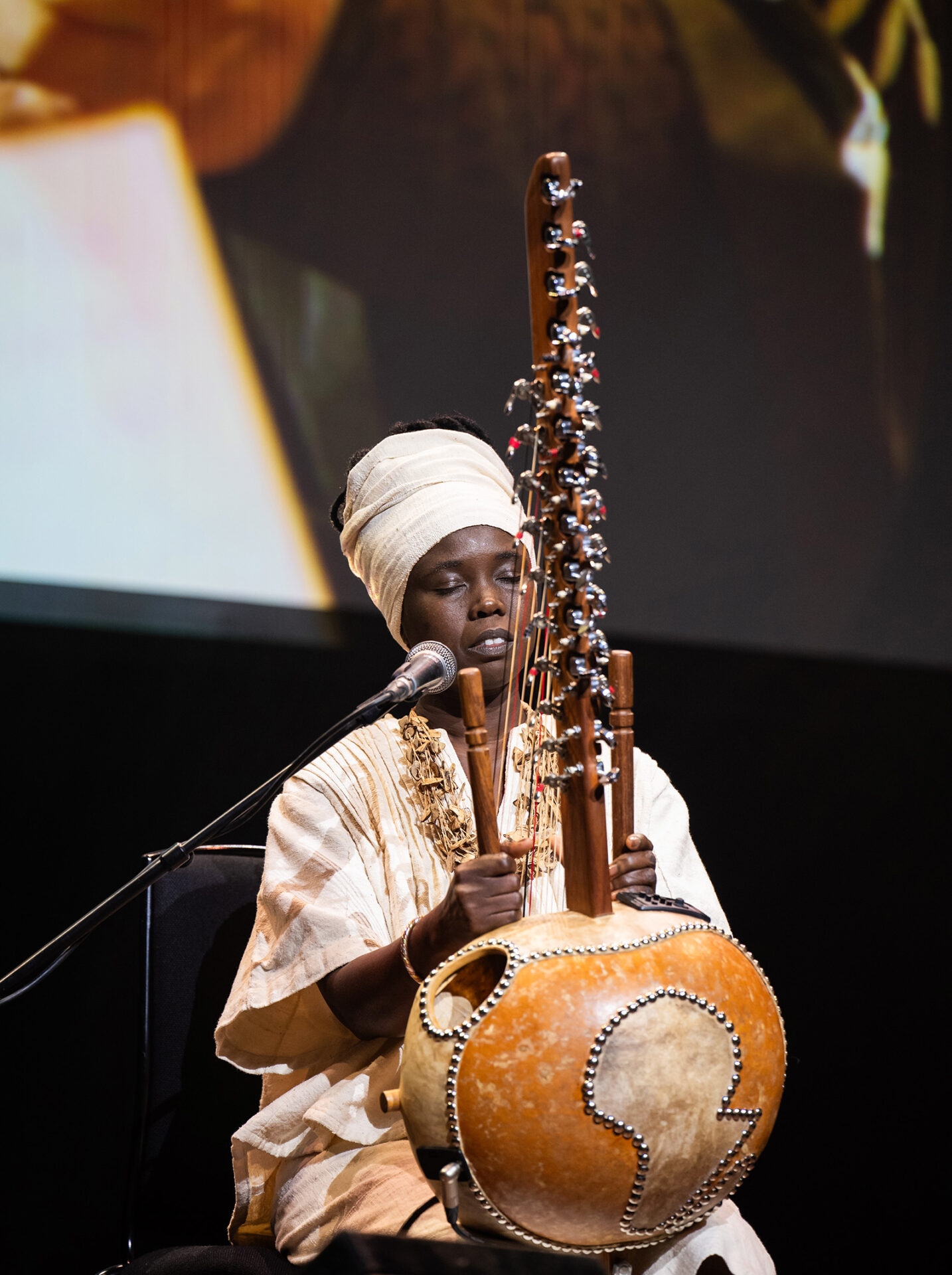
“Having three female artists onstage together from our different cultures is deeply inspiring,” says Senegalese kora player Senny Camara. “Women don’t usually play these instruments. We’re keeping tradition alive while also showing other girls and women that there is a place for them in this music.”
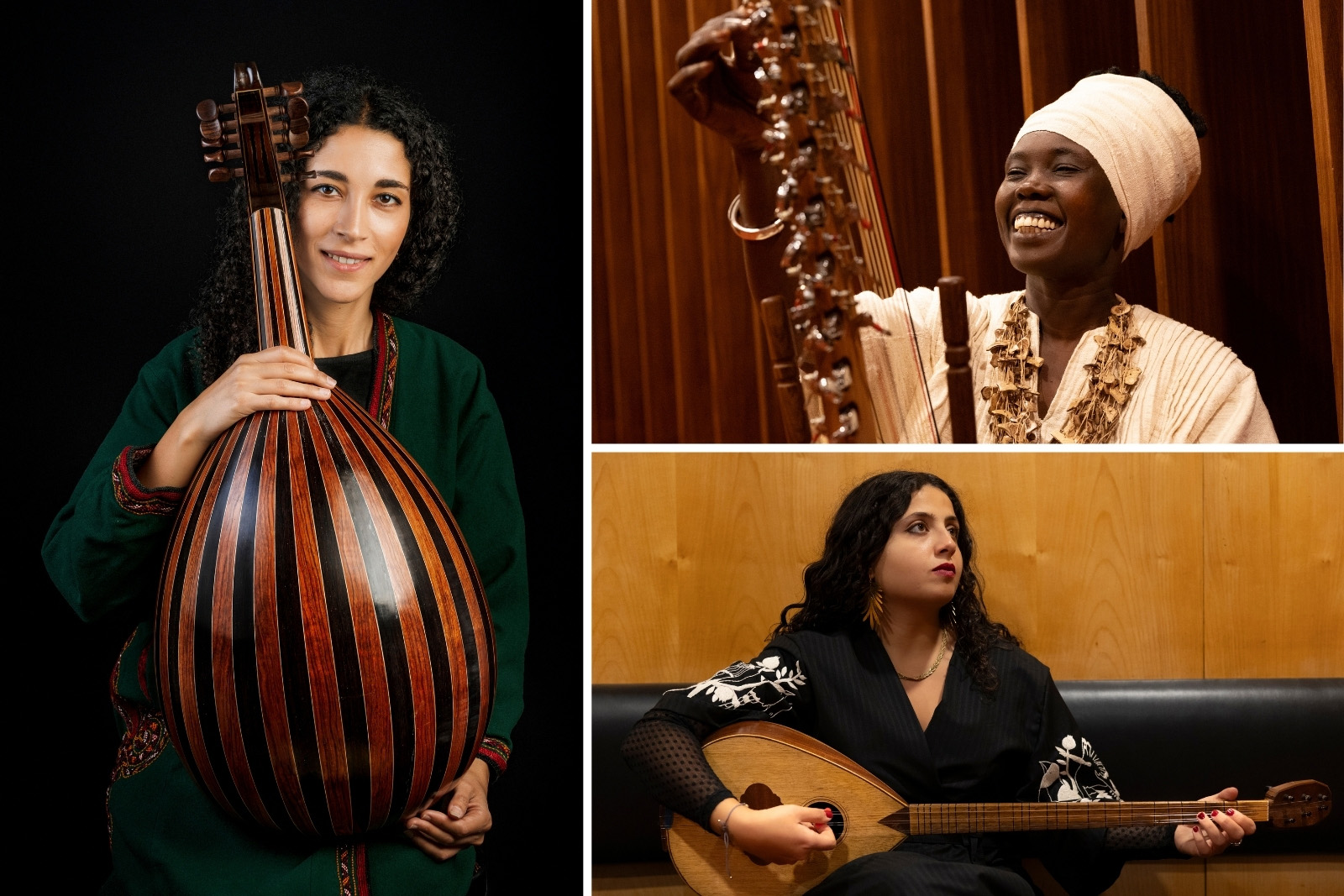
On 21 August at Edinburgh venue The Hub, Camara, Lebanese buzuq artist Farah Kaddour and Iranian oud player Yasamin Shahhosseini will perform a unique interpretation of their collective cultural heritages.
Coming together as part of the Aga Khan Music Programme at the Edinburgh International Festival, under the apt billing of Beyond Tradition, the three women are delivering a concert of new, collaborative work that celebrates the unusual combination of their chosen instruments.
Their presence onstage will defy genre, blending of Arabic classical maqams with west African griot music, and break boundaries, since the instruments played are typically the exclusive preserve of men.
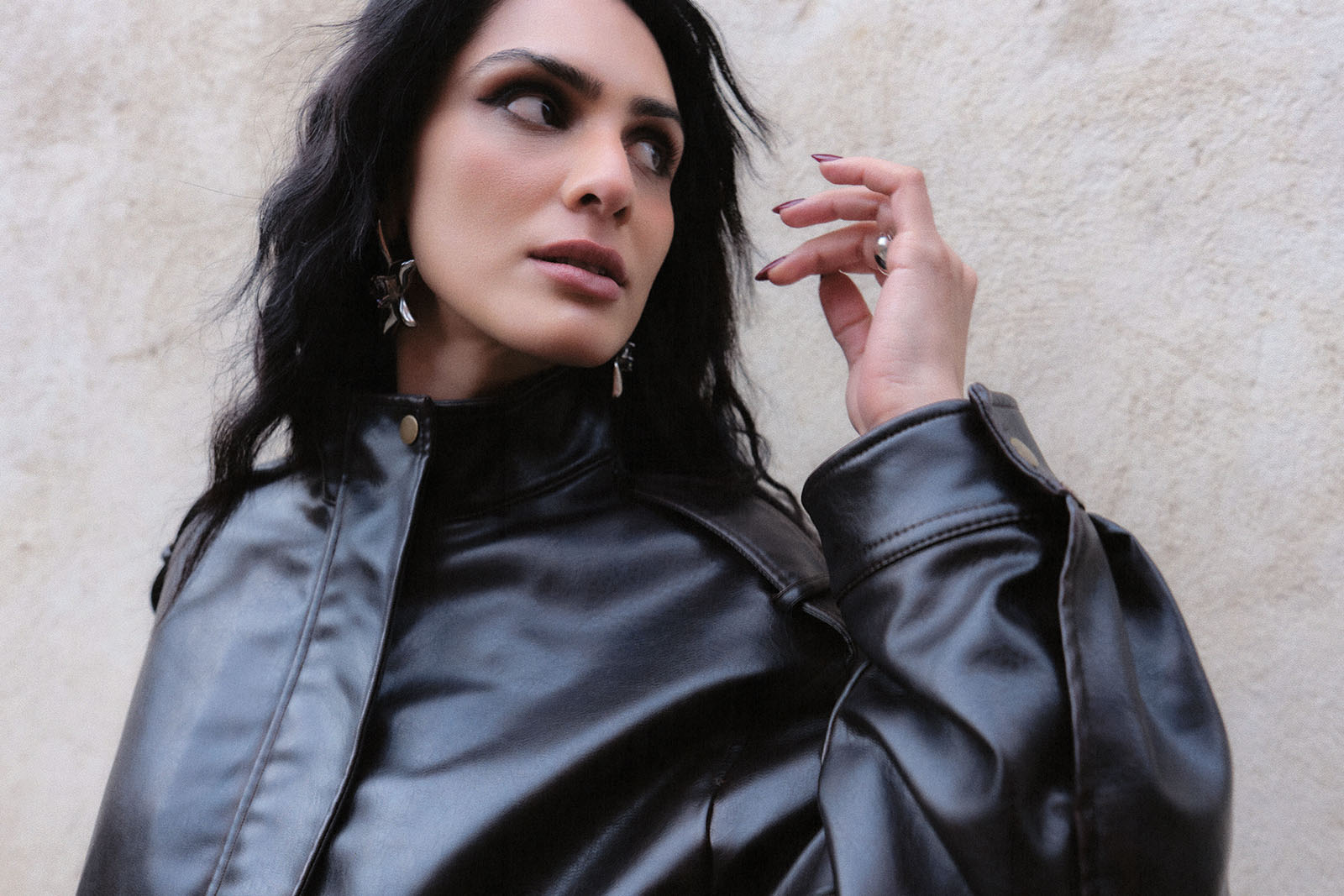
“I fell in love with the buzuq when I saw a friend of mine pick one up at school and by 15 I began learning it at a music school,” Kaddour says. “It’s not usual to have women playing it though, as it was usually a wedding instrument. There may have been female players in the past, but we don’t have much record of them.”
Over the years Kaddour has created her own relationship with her instrument, including teaching it to communities displaced by war through the charity Action For Hope, and both Camara and Shahhosseini have faced their own challenges finding space within male-dominated traditions.
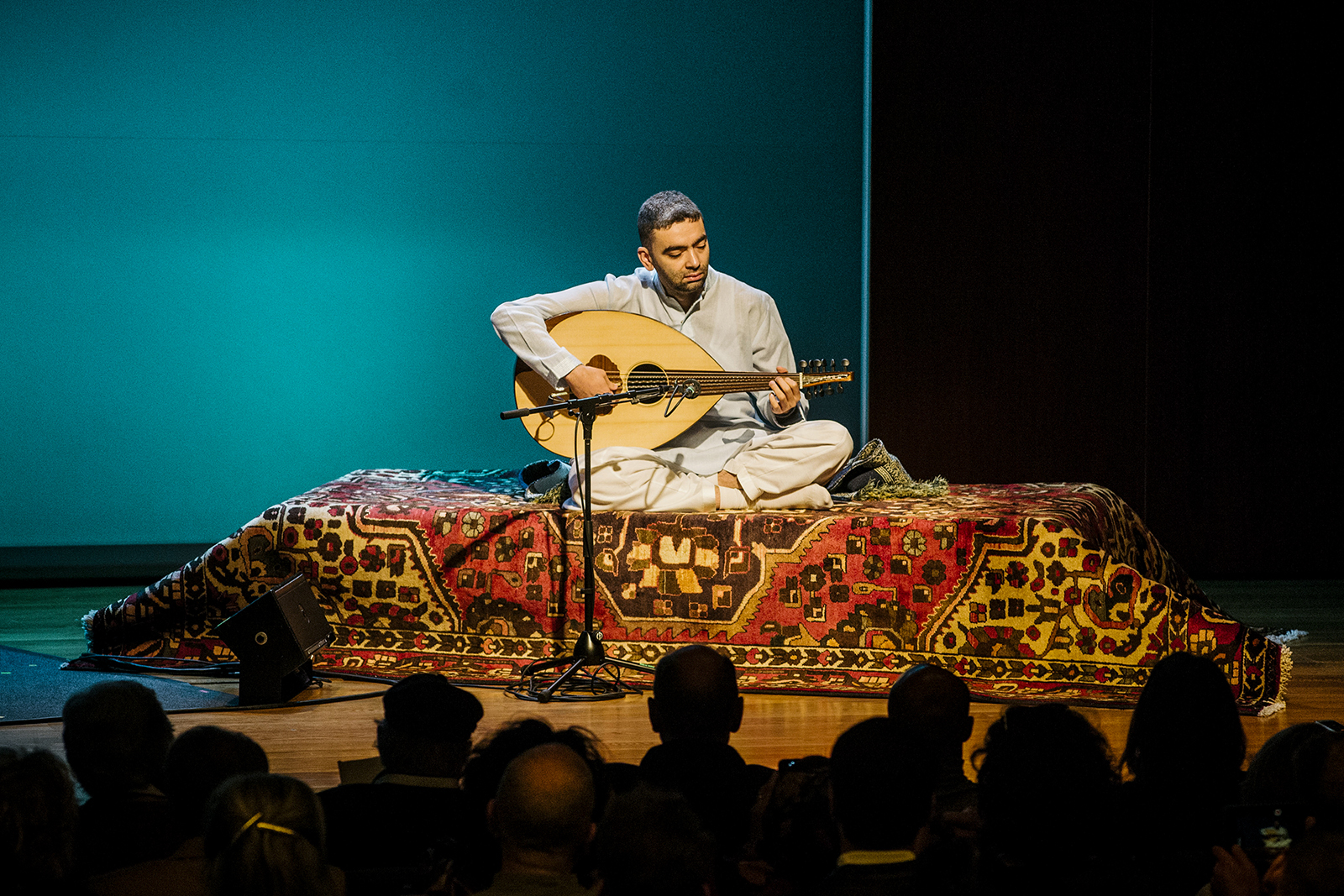
Shahhosseini learned the oud at a conservatory in Tehran with the encouragement of her mother, but Iranian authorities often restrict instrumental performances by women, while solo vocal performances are forbidden. Camara, meanwhile, was restricted by the fact that the kora is usually only performed by griot families with generations of musical heritage.
“From the first moment I heard the kora as a child, I knew I wanted to play it but my grandmother told me it wasn’t allowed as we weren’t from the right family,” she says. “Instead, I learned the guitar until I was 22 and finally accepted by a teacher in Dakar. People would give me funny looks when I played, but I carried on since it was such a pure form of creativity for me.”
All three women have spent the past decade establishing formidable musical careers. Kaddour released her debut solo album Badā in 2024 and plays as a member of the electronic-influenced improvisational group SANAM and the Arab folk trio Tilt. Camara released her debut album Yéné in 2024 and Shahhosseini released her debut solo album, Gāhān, in 2015 and has collaborated with the likes of Dutch bassist Tony Overwater and Syrian qanun player Maya Youssef.
All are also prize winners at the Aga Khan Music Awards, a charitable platform supporting musicians from the Islamic world. Kaddour and Camara first met while playing an improvised show for the 2025 awards ceremony in London.
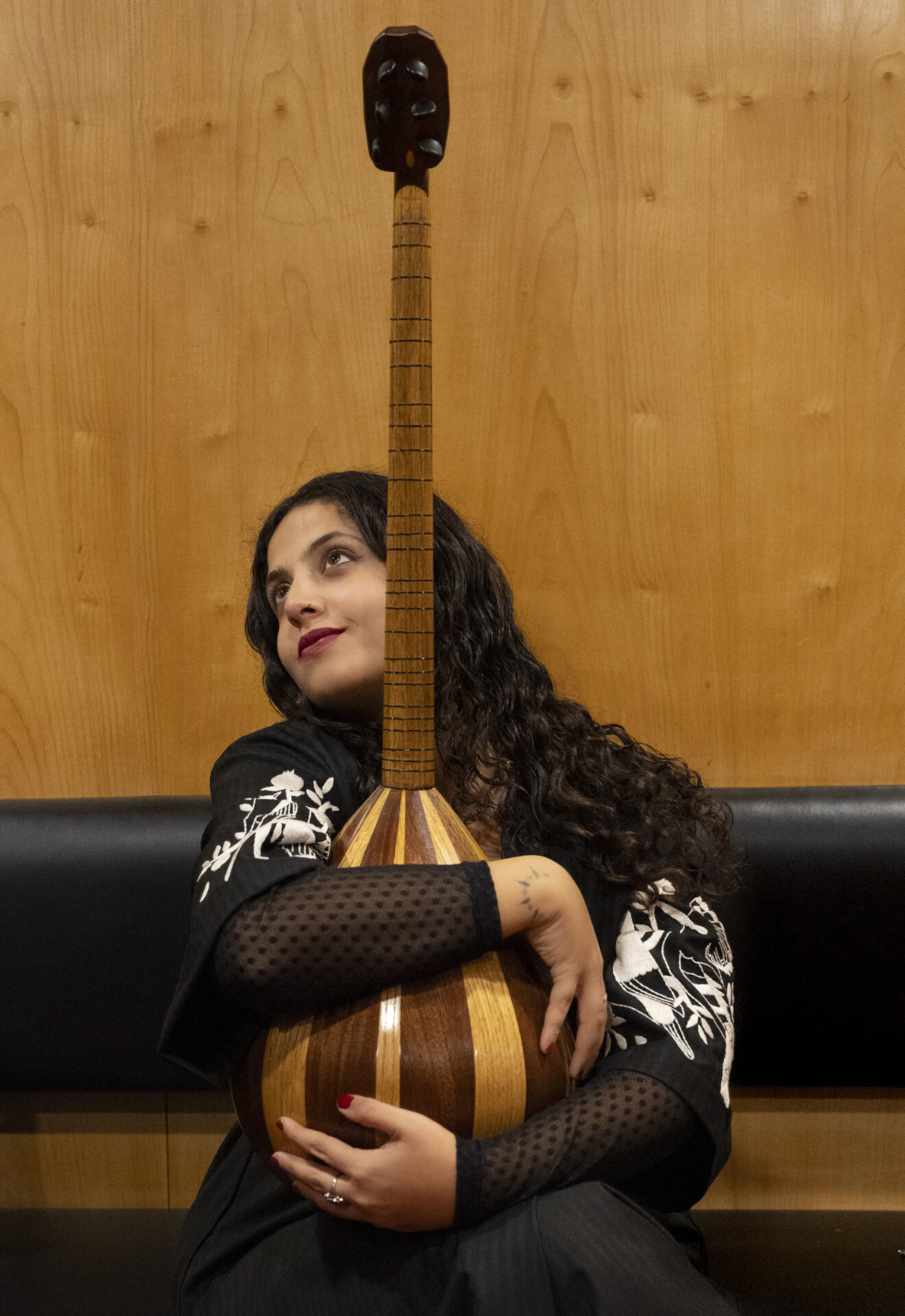
“The team at the Aga Khan Music Programme put us together and we had only one rehearsal before our performance with [Palestinian vocalist] Kamilya Jubran, but we had such a great and instant connection,” Kaddour says.
“Senny is amazing at listening and interacting and, even though her instrument’s tuning is so different from the buzuq… it just worked.”
Following their triumphant first outing, the duo were brought together with Shahhosseini by the Aga Khan Music Programme for the Beyond Tradition concert and spent a week in Istanbul in June developing a new repertoire. Kaddour describes their arrival as fraught, owing to the ongoing wars across the region.
“Myself and Yasamin arrived not well. It was Yasamin’s first time travelling from Iran since the war. We jokingly said that we had post-war syndrome since we were so tired,” she says.
“We’d been spending so long in survival mode but, gradually, being able to make something new together and to express our music was so healing. The three of us developed a certain telepathy during rehearsals to develop the same phrases at the same time and it ended up sounding like we were made to be together.”
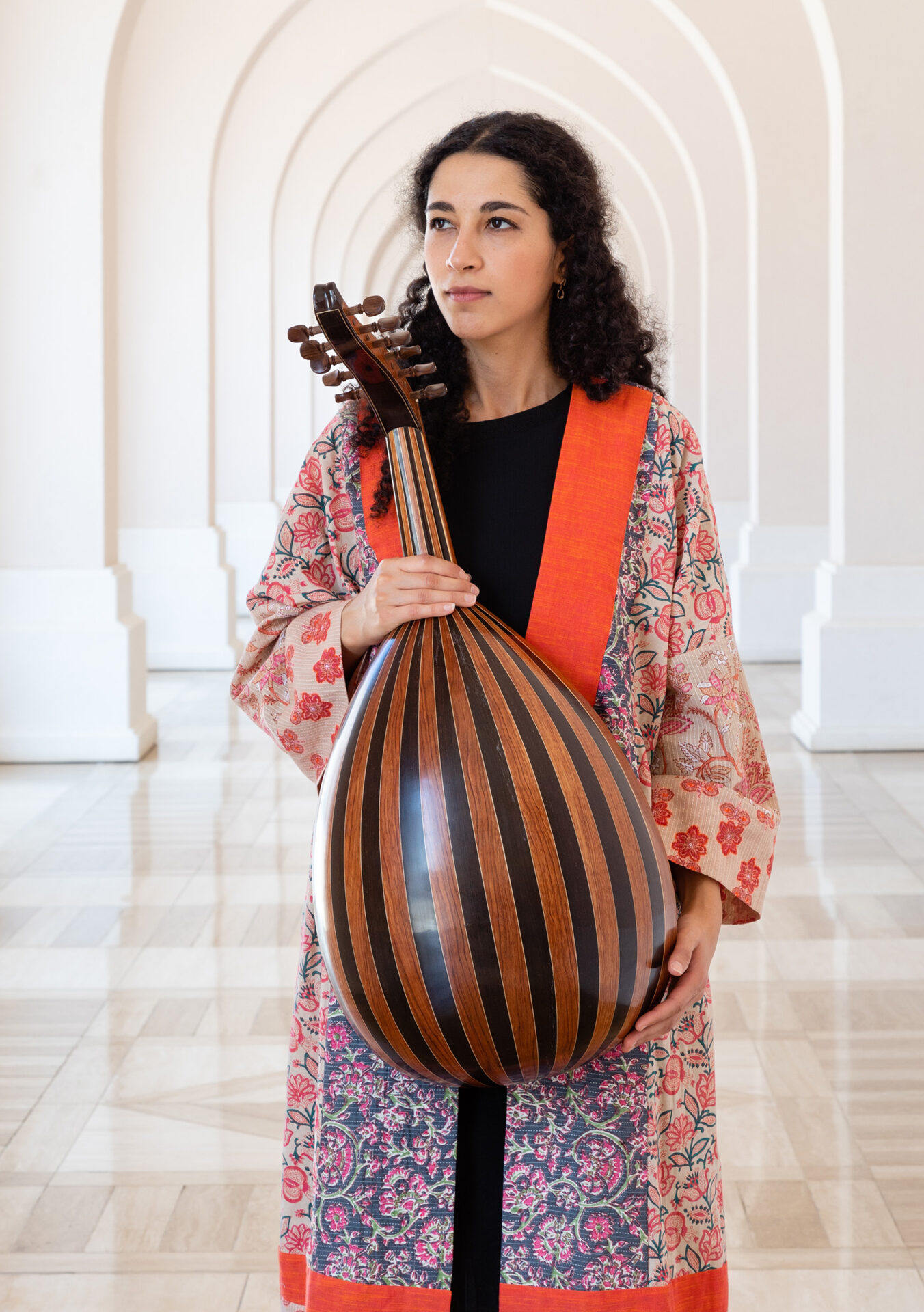
Working out a concert programme that could incorporate the Middle Eastern roots of the oud and buzuq as well as the west African tradition of the kora resulted in largely new music that was improvised, then notated on the spot. Other more formal compositions included a reworked version of Kaddour’s song Taraddud, as well as a new piece by Shahhosseini about Iran.
“This has challenged me in a new way and opened an entirely new world of sounds and colours,” Shahhosseini says. “By the end of the first day, we had already arrived at what was essentially the overall structure of the performance and discovered a shared musical voice. The sound of these three instruments is remarkably warm and rich and they complement one another beautifully.”
As well as the complementary timbres of their respective instruments, Camara, Kaddour and Shahhosseini believe the experiences they bring to their collaboration are what will ultimately lend it the most power.
“I want to be defined as a genderless musician without a label. When the three of us play together, I forget that we’re women,” Kaddour says. “I want people to see how different cultures can create beauty together. We don’t need to have a common language, we have our ears and that’s enough.”
“It’s music about love, peace, equality and freedom,” Camara adds. “With everything happening in the world, we want audiences to be curious and hopefully leave inspired by something that is rooted in tradition and that is also entirely new.”
Beyond Tradition is at The Hub, Edinburgh, from 7pm on 21 August.