
New documentary is a timely love letter to Amadou & Mariam
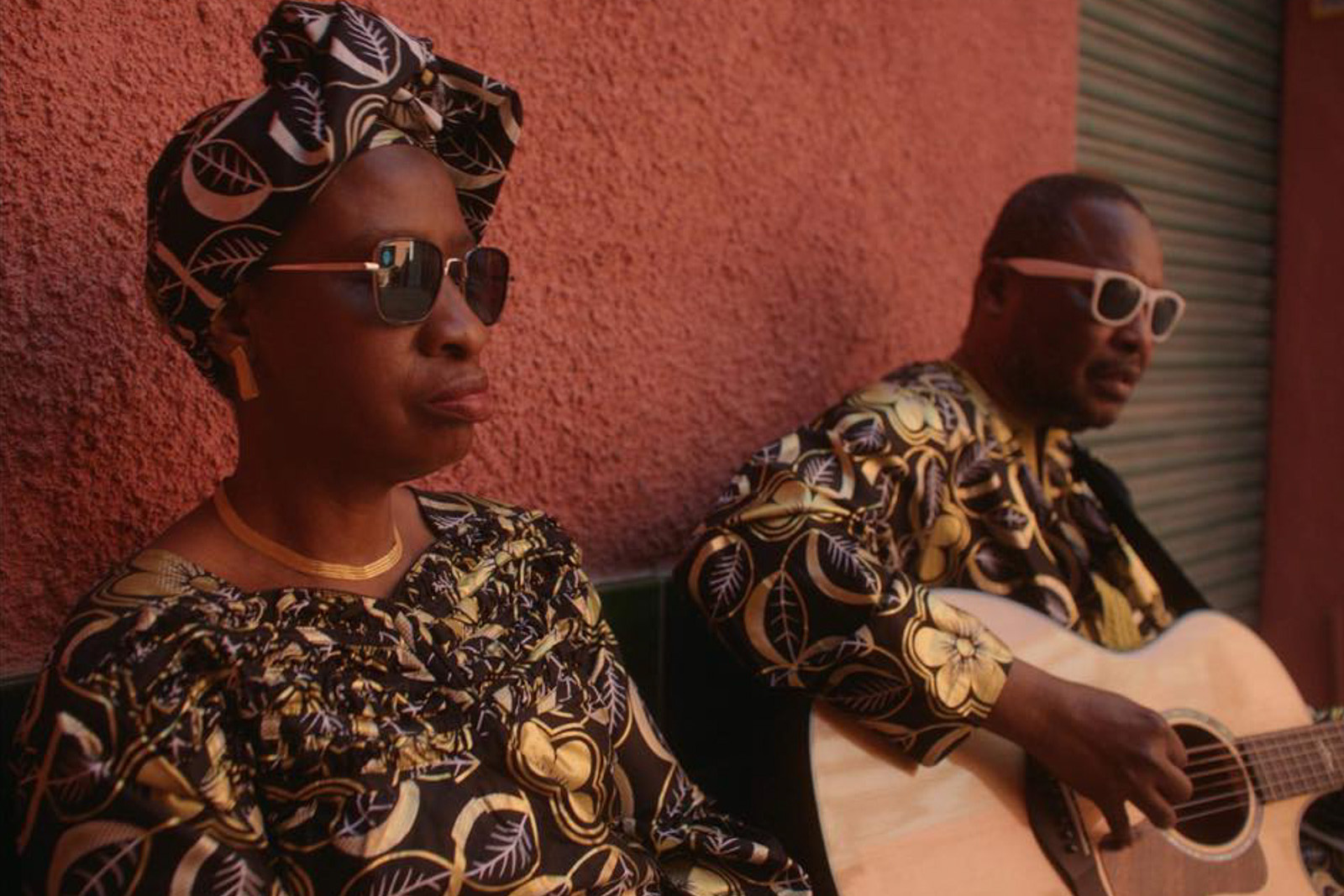
Ryan Marley’s film The Blind Couple from Mali offers a joyful and intimate look inside one of the world’s great musical marriages

In 2023, Canadian film-maker Ryan Marley made the journey to a suburban Barcelona studio to witness two of his musical heroes, Amadou & Mariam, at work.
The Grammy-nominated husband-and-wife duo from Mali were writing their ninth album and aiming to harness the heady blend of bluesy guitar riffs, driving rock grooves and soaring Bambara vocals that have made them household names in Mali and across the French-speaking world since their international breakthrough in the late 1990s.
“Ever since I first heard them in 2006, I was blown away by their sound and so moved by their story,” Marley says. “To watch them at work in the studio was magical, it was a true partnership with no ego or brashness. I especially got to see how much of a confident leader Amadou is.”
Yet, only two years later, at the age of 70, the singer and guitarist died following complications from malaria. L’amour à La Folie, the album Marley saw the couple working on, would be their last. The resulting footage, along with scenes compiled from two years spent following Amadou & Mariam to their homes in Paris and Bamako, is now being released as a documentary and love letter to the musicians, titled The Blind Couple from Mali.
“I dreamt of making a film with them and to just be in their presence was incredible – they are the most authentic people I’ve ever worked with,” Marley says. “There is no staging or scripting, they are exactly who they are and that is a direct reflection of the love and joy that’s so present in their music.”
Amadou Bagayoko lost his sight at 16 as a result of cataracts in both eyes. Mariam Doumbia, meanwhile, became blind at five years old, following complications from measles. They first met in 1976 at the Bamako Institute for Young Blind People. Both were immediately drawn to each other through music.
They became both creative and romantic partners and began writing songs that reflected their love for each other. They also discussed the often harsh realities of living as a blind person in Mali. “We were conditioned to stay at home or beg for money,” Amadou says in Marley’s film. “We lived but we lived in misery and the songs that we sing were the realities.”
Developing this distinct combination of emotive lovesongs with social commentary, Amadou & Mariam started to build a loyal following in Mali in the 1980s via bootleg cassettes of their demo recordings circulated in local shops, market stalls and among friends. Bagayoko’s virtuosic guitar work drew on the lyrical blues of artists such as BB King, while Doumbia’s elegant, melismatic vocal style was deeply rooted in Bambara folk melodies.
It was a blend tailor-made not just to win fans at home but to also capture the attention of global record labels. In 1998 the duo released their international debut, Sou Ni Tilé. The album’s lead single Je Pense à Toi, a love song featuring an undulating percussive groove and earworming melody, became a top 50 chart hit in France.
“There’s something incredibly regal about Amadou and Mariam and they share a genuine loveliness with people, they don’t exist above anyone else,” Marley says. “The feeling of their music is who they are all the time and they have such a huge impact in Mali because they’re always talking about the realities of being blind, as well as political corruption and their deep love for their country. Their music makes a real difference but in the English-speaking world, I’d say nine out of ten people don’t know who they are. They deserve to be cherished everywhere.”
First stumbling upon the duo’s music after catching them at a free show in his hometown of Vancouver, Marley became fascinated with their story but as the years went on he couldn’t find many details of their lives or personalities beyond the basics.
“I was fascinated to find out more about them as people and as I developed my own career as a documentary film-maker, I resolved to make this film with them,” he says. “Many people have tried and failed to document them but when I reached out in 2021 and began talks with their team, they agreed to let us film. That kicked off the 2023 trip to the Barcelona studio and then two years following them around the world.”
The documentary will have its UK premiere at the London Doc’N Roll Film Festival on 24 October, Marley’s film is full of insights into Bagayoko and Doumbia as people. We see them walking the streets of Paris and being stopped by awe-struck Malian fans, playfully critiquing each other’s studio performances in the way that only a long-married couple can, singing at impromptu gatherings at their Bamako home and being mobbed by fans after touching down in Mali.
The duo’s home country is an important touchstone in the film, as a result of the recent violence between Islamist separatists and Malian government forces.
“The Islamists want to outlaw music, so Amadou & Mariam wanting to hold a concert in Bamako while we were filming was a quiet act of defiance,” Marley says. “It was only a small show in one of the city’s oldest venues and it was heavily guarded, but once they started playing it was like nothing else I’ve ever seen. They were speaking directly to their people and everyone in the room was united in a shared purpose.”
Finishing the film only a few months before Bagayoko’s untimely death, Marley was left with a difficult decision: whether to re-edit his footage to make it a celebration of the artist or to acknowledge his passing in the end credits. Ultimately, he managed to find a more hopeful ending — one that speaks to Doumbia’s creative future.
“My feeling was that the film had to end with Mariam getting back on stage by herself for the first time,” he says. “We waited until September 2025 when she [performed] in Paris and she sings a beautiful song that expresses how the love she has for Amadou will carry on. She’s singing from the heart and you realise in that moment that, as long as she’s still alive, the power of this musical partnership won’t end.”
The Blind Couple from Mali screens at the Barbican, London, from 6pm on 24 October.