Bengal United’s mission to preserve east London’s 50-year history of South Asian football
The project is collecting stories and artefacts before they disappear forever

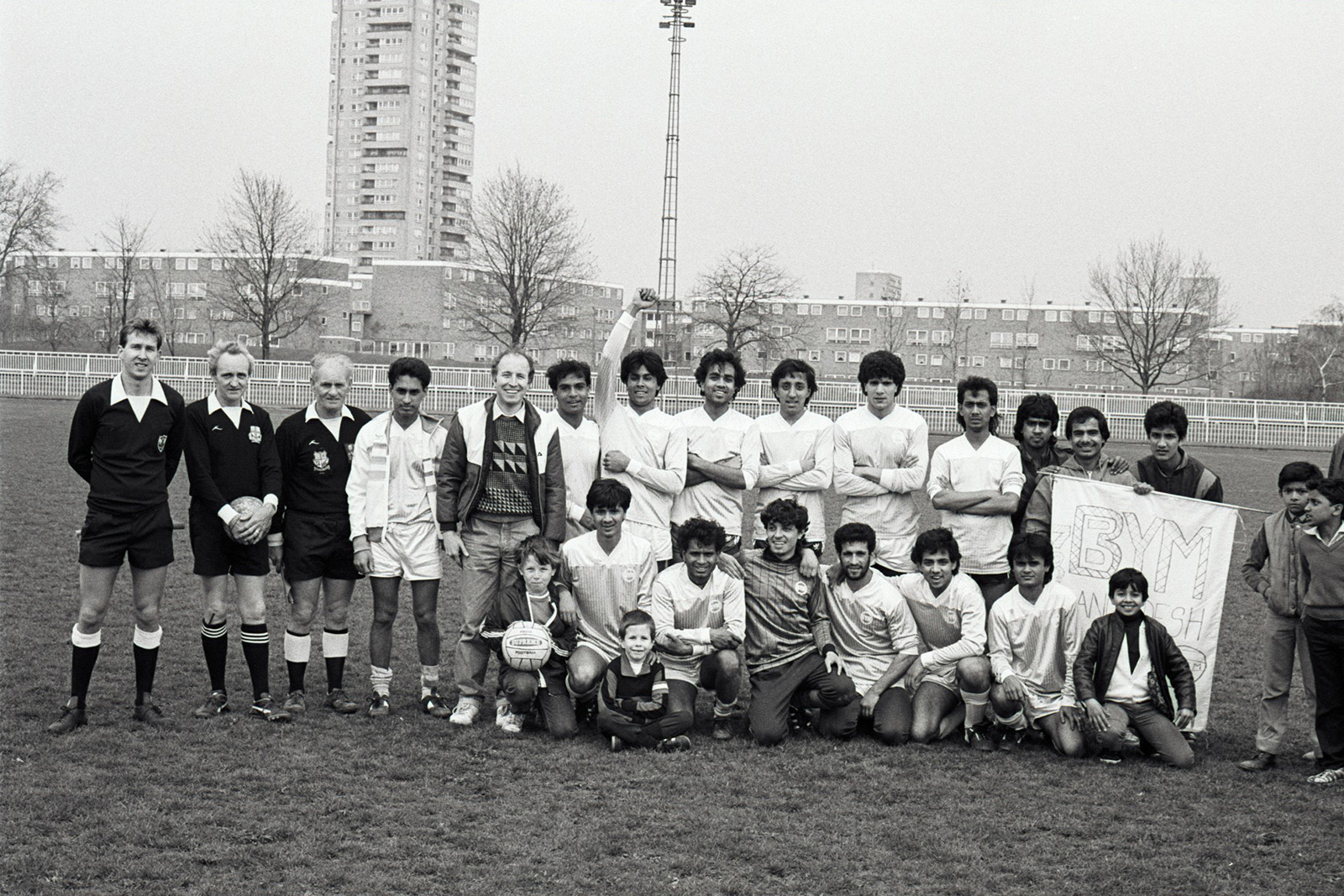
When he was growing up in Tower Hamlets, historian Tharik Hussain’s local football pitch sat between his estate, which was home to a large Bangladeshi community, and another populated almost entirely by white English residents. He and his friends quickly learned to play there only in large groups.
“The football pitch was a contested area,” Hussain recalls of his 1980s east London neighbourhood. When he and his mates heard the revving of motorcycles, their fight-or-flight instincts kicked in. The bikes belonged to local boys who would routinely assault members of the area’s South Asian community.
Related content

Once, as he fled the park, he saw something he has never forgotten. One of the older boys had been caught and horribly wounded. “It’s etched in my mind,” says Hussain. “He was being held against the wall with a blade and his cheek was sliced open.”
Bengal United is a new heritage project that aims to document the role of football in east London’s Bangladeshi community over the past 50 years. The archive will be produced by Swadhinata Trust, a Bengali community group, where Hussain serves as project director, and is supported by The National Lottery Heritage Fund.
For Hussain and his friends, football was always more than just a game. “It was where lifelong friendships were made, where we found community and where many of us first began to feel that this part of London belonged to us too,” he says.
As the 1980s heroin epidemic tore through deprived communities across the country, football provided refuge for Hussain.
“Tower Hamlets was really suffering at this time and football, like many other youth services, was our sanctuary,” Hussain says, who lost friends to addiction. “Football was a distraction from hanging out on street corners and becoming vulnerable.”
The history of Bangladeshi football in Tower Hamlets has never been comprehensively documented. Team photographs and kits are at risk of being lost forever and some of the players Hussain hoped to interview have already died. The biggest challenge, he says, is convincing those who remain that this history is worth perserving.
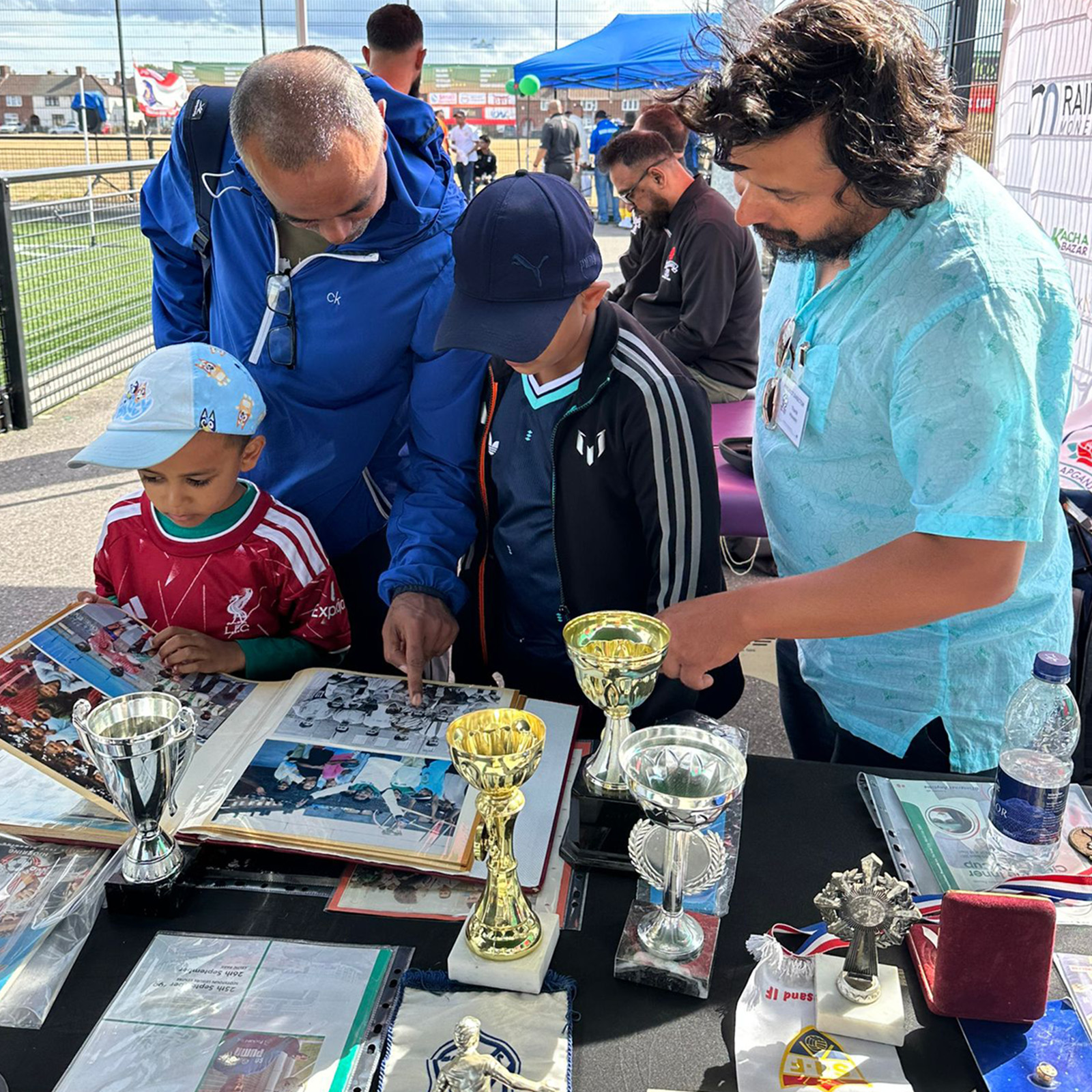
“You’ll hear them say ‘Who wants to hear my story? I just played football on broken pitches.’ I have to explain that telling stories about their ordinary lives is how we introduce the tradition of archiving to immigrant communities,” says Hussain.
Bengal United plans to put on a touring exhibition and a digitised version that will be accessible through Tower Hamlets Local History Library and Archives by June 2027.
One of the stories Hussain wishes to preserve is that of Sonali Onith, a community group that takes its name from the Bengali phrase “golden past”. Formed in 2001, it promotes fitness for older people via football tournaments and training sessions. The organisation also assists over-40s to receive FA coaching qualifications.
Sonali Onith hosts the annual Upazila Cup, where Bangladeshi elders and young people come together to represent their family district in Bangladesh. Many of the Bangladeshi community in Tower Hamlets, which is estimated to number more than 107,000, hail from the north-eastern Sylhet region.
Related content
In the competition, players form teams and wear shirts featuring Bangladeshi postal districts and villages. “In these tournaments individuals who may have lost ties to their ancestral homes are starting to learn about that ancestral connection,” Hussain says. “When I first signed up for one of the teams, I realised some of the people I was getting quite competitive and nasty towards were relatives of mine.”
One individual Bengal United will highlight is Dr Zakir Khan, who dedicated himself to improving South Asian representation in professional football. Khan founded Sporting Bengal in 1996. The club now plays in the Essex Senior League. Khan’s work was recognised by the FA in August with the Bobby Moore Award for his services to inclusion in football.
As well as preserving Tower Hamlets’ proud tradition of Bangladeshi football for future generations, Hussain hopes his project will create space within the heritage sector. According to a 2024 Historic England survey, 90% of people working in the field identified as white.
Bengal United will train young volunteers from Queen Mary University, many of Bangladeshi descent, in research and oral techniques. “Once you make young people realise that so much of their history has already disappeared, they appreciate the importance of collecting it,” Hussain explains.