Let it slide — the 21st-century renaissance of carrom
The much-loved South Asian game is taking its place as the centre of nights out and a new competitive league

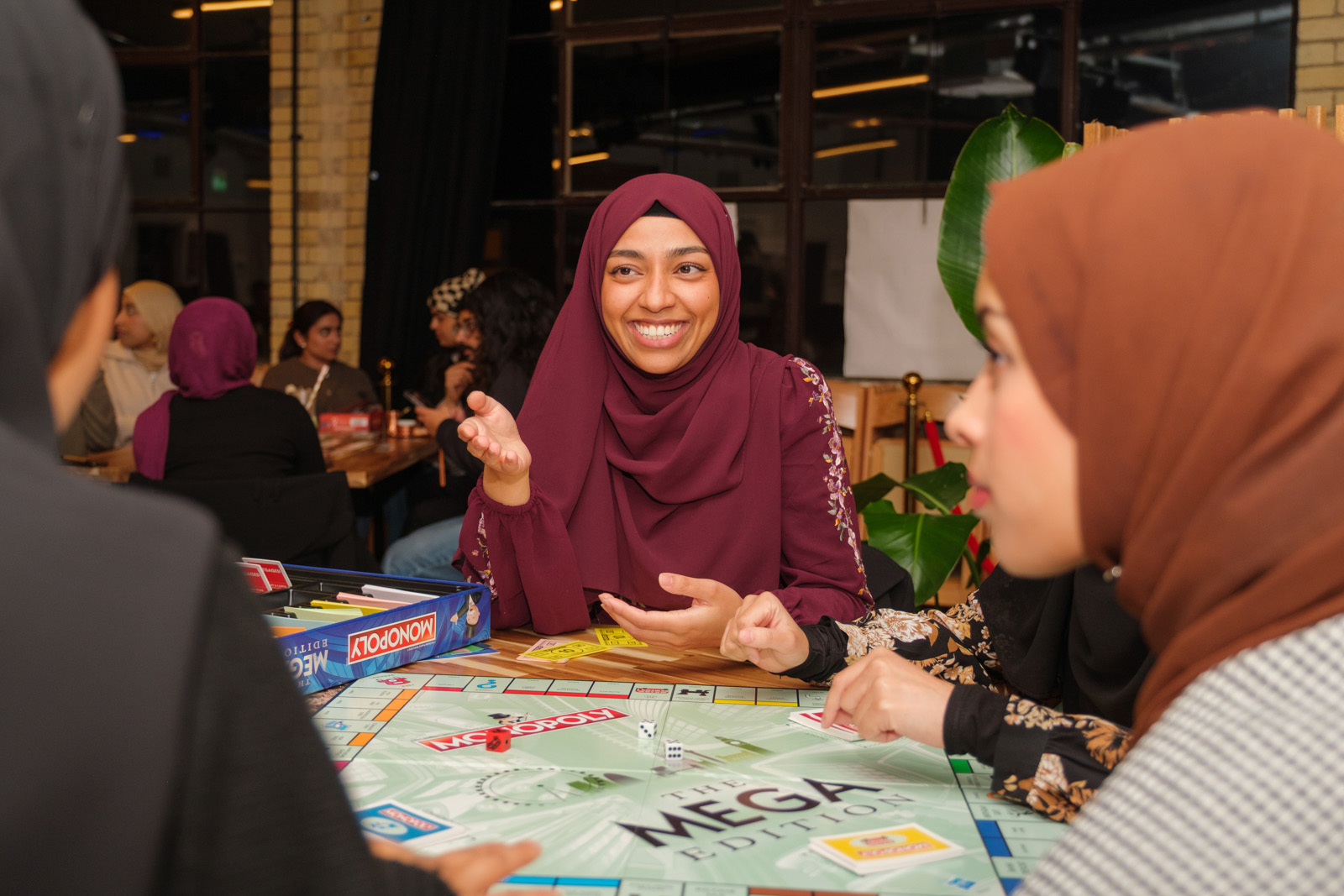
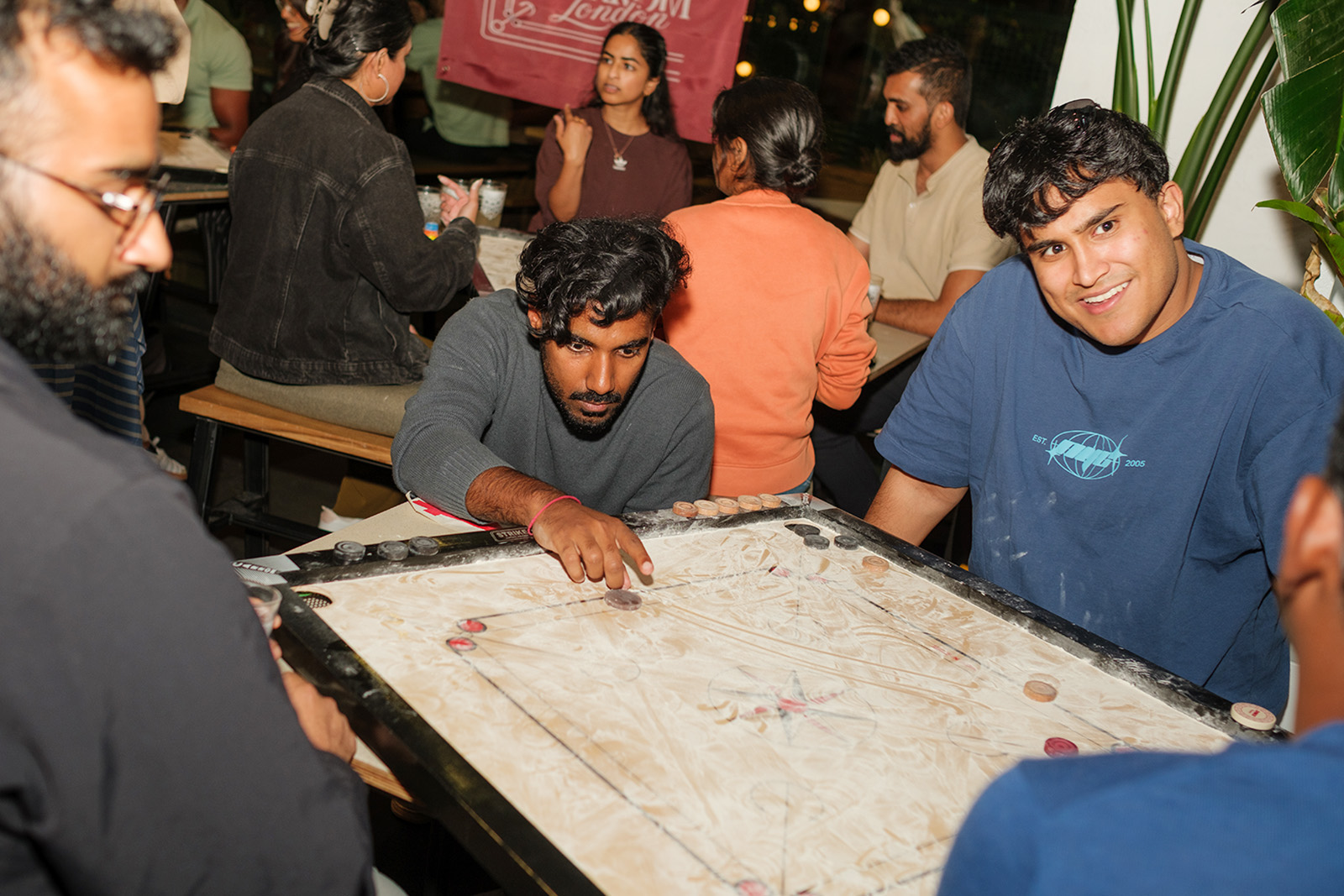
As I arrive at Crate, a pizzeria in Canary Wharf, east London, on a Monday evening, a couple of dozen people are milling around the bar. It’s a diverse group, from university students and young professionals to seniors. They aren’t here for the usual post-work dinner and drinks, but rather to face off against each other over carrom.
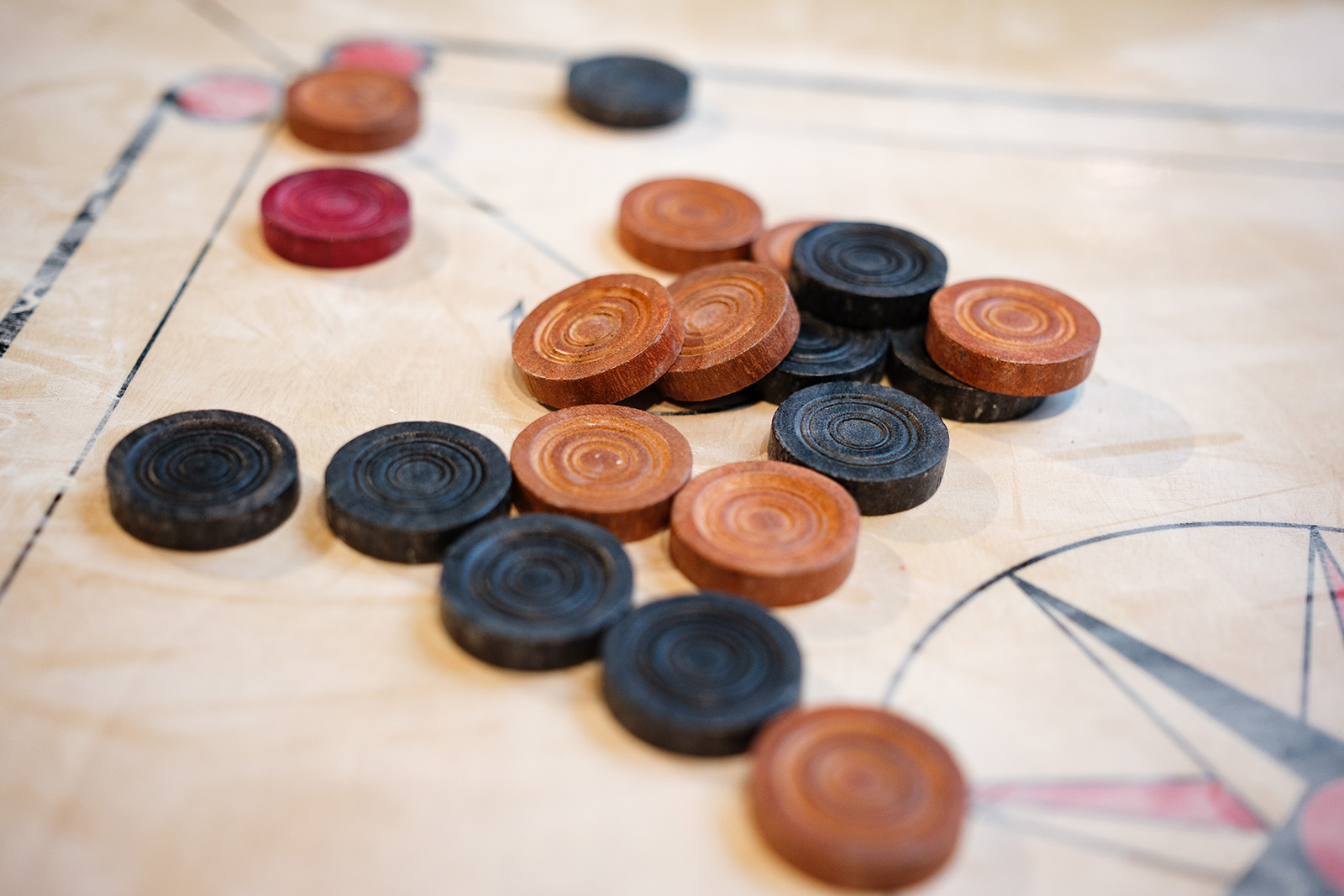
Carrom is a tabletop game similar to traditional pool or billiards. Four players sit around a large, square wooden board, using their fingers to flick small discs into corner pockets. While the game has long been played in countries across Asia, including Pakistan, Bangladesh, Nepal and India, it is now gaining fresh momentum in the UK thanks to a wave of community-led groups and independent cafes.
Among those leading the charge is Pankaj Bhatkar, 39, a finance professional who grew up playing carrom with his family. Alongside his wife Amrita, Bhatkar runs Carrom London, an initiative that organises events and social activities based around the game.
“We wanted to create a space where people could socialise, make some new connections and bring back memories people have with their families, friends and neighbours,” Bhatkar told me during the event at Crate.
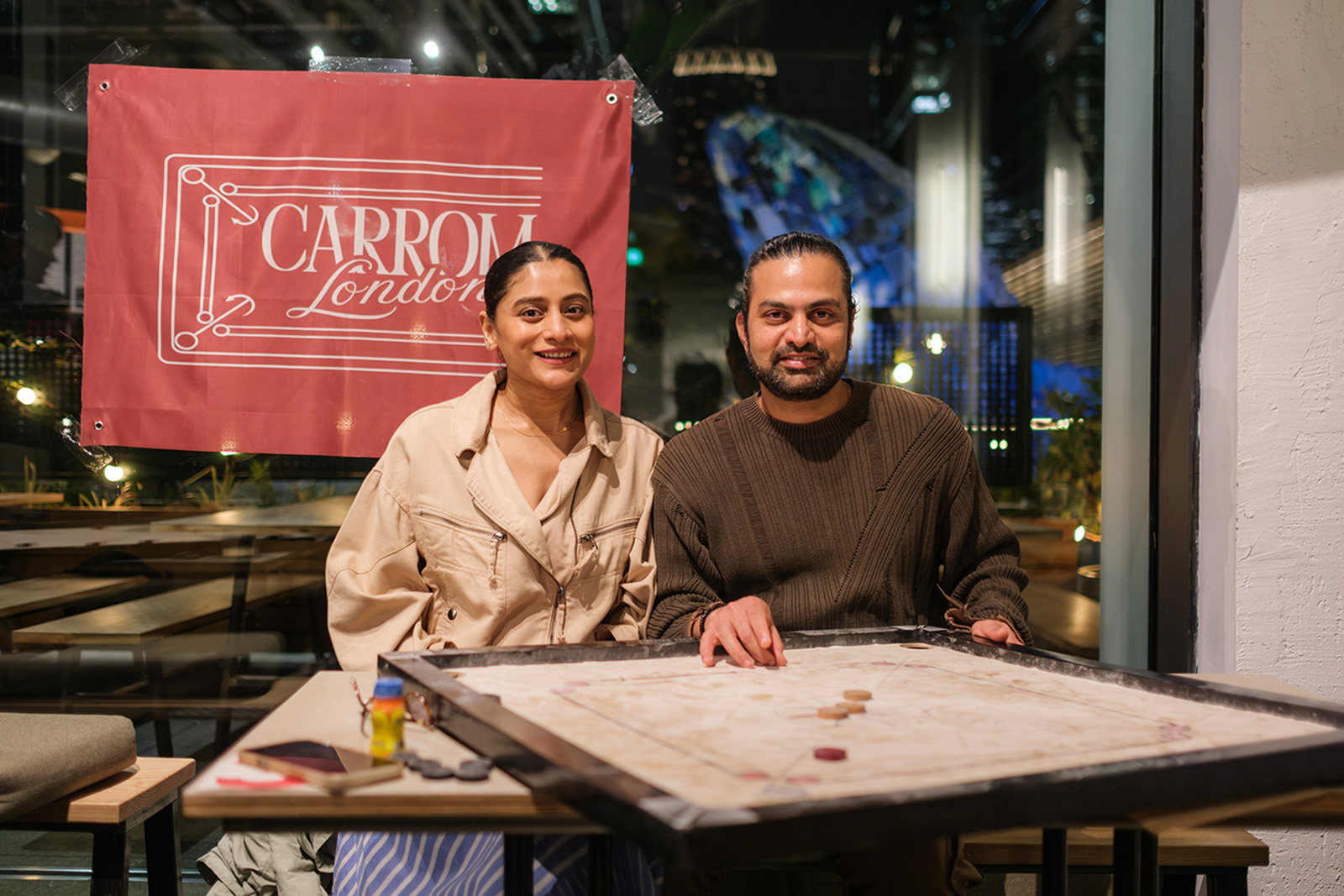
Bhatkar, who was born in India, has fond memories of hours spent playing carrom with his neighbours during the summer holidays. “I’m definitely trying to recreate that community here. I feel a lot of people miss their home countries, especially during the festive times. This is a way to give back and bring back memories,” he said.
His earliest memory of carrom, however, is of playing with his grandmother. “She’s the one who taught me and she played it so well. Even though she’s not here any more, it brings back memories and I still connected to her through carrom,” he recalled.
Despite it being a Monday afternoon, some players had travelled considerable distances to attend, including one who had come all the way from the Cotswolds. Another, named Haroon, had come from Watford after finishing work.
“I thought it would be a good place to play, and also meet some new people,” he said. “I played carrom growing up. It’s quite nostalgic, but it’s not something you see in a lot of settings outside the home, at least in the UK, anyway.”
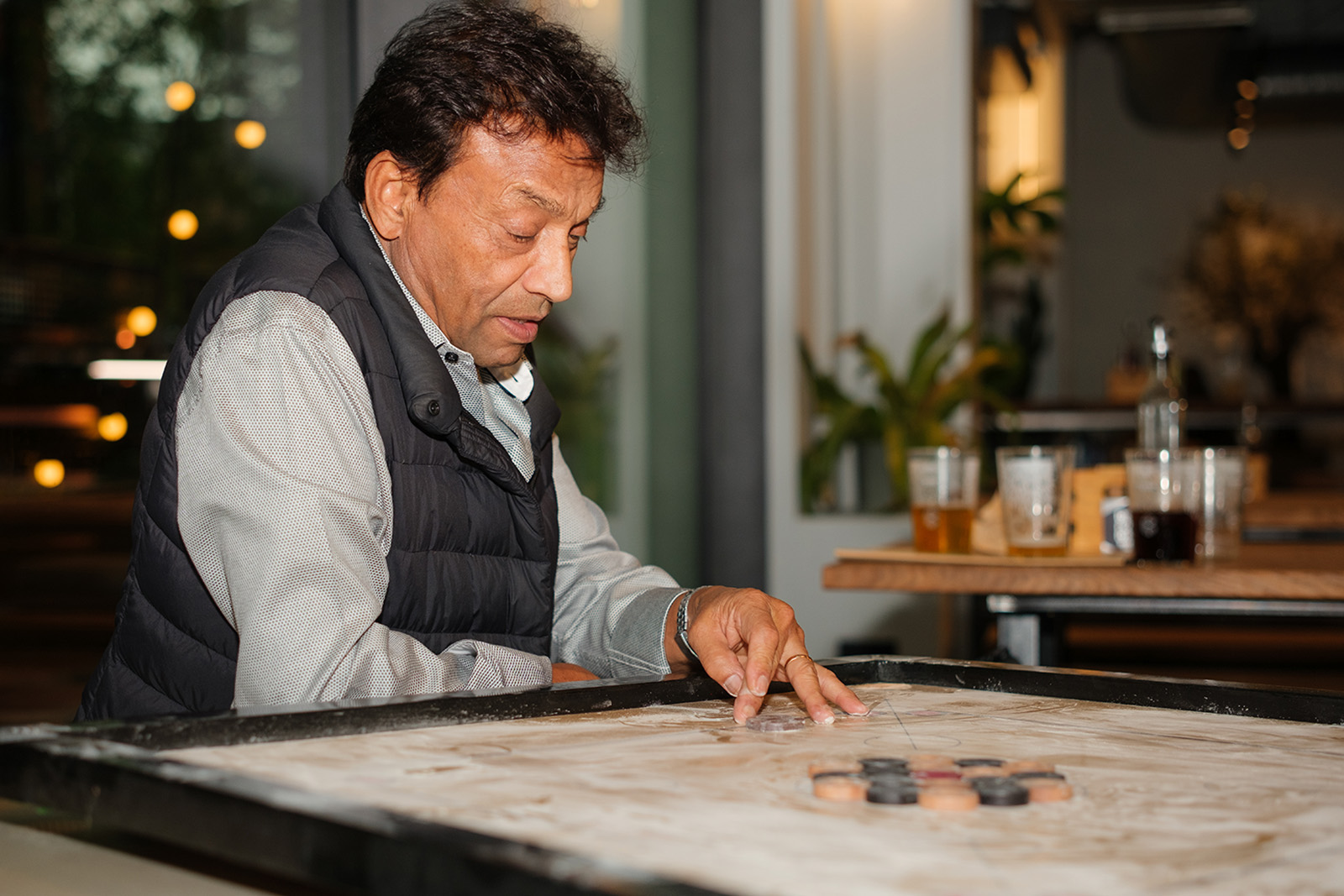
Another attendee, Mithula, says she used to play with her siblings after school. “It would just bring all of us together. It’s a family game. Even if you’re good or bad, you just laugh about it and have fun.”
In total, around 25 people showed up at Crate. One player, named Anand, who was in his 70s, told me this was his first time playing in 50 years. Over the course of the evening, players competed across three rounds, rotating tables after each match to face new opponents.
Another attendee, Ifthikar, said he loved that carrom “brings out the competition in everyone”. “Even if you’re playing with someone who is quite quiet and reserved normally, you’ll find the competitive side to them when you are in a match.”
As the popularity of carrom grows across the UK, one organisation is hoping to establish the game as a spectator sport. Karrom was founded by Abdus Khan, 31, in early 2025. Since then, Khan has held carrom nights in partnership with restaurants including Dishoom, Cinnamon Kitchen and Mowgli Street Food.
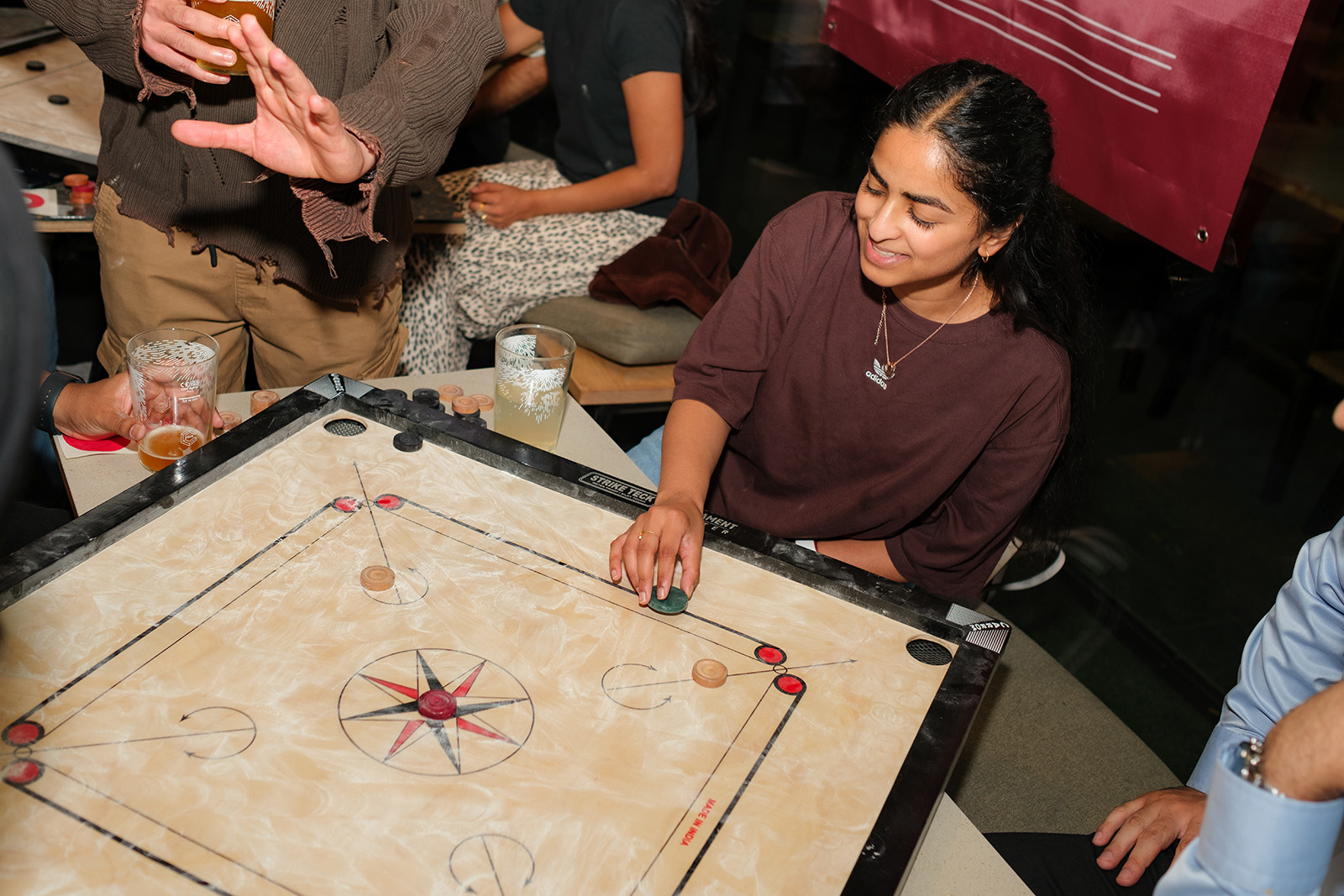
“Carrom was a huge part of our lives growing up,” Khan says. “The fondest memories I have are of the living room — the laughter, the conversation, the community and the game. That’s what I wanted to bring back. Karrom’s aim is to hold these curated experiences that are a replication of the living rooms we shared and experienced growing up.”
Karrom’s events have proved extremely popular and Khan estimates that the organisation now has around 2,500 members. Though each event is limited to about 50 people, he says that upwards of 900 people often try to secure tickets.
In response to the enthusiasm people have shown for the game, Khan recently launched the Karrom Super League, a new annual event that he hopes will turn carrom into “a global competitive spectator sport”.
Ahead of the 11 October launch, Khan and his team spent months scouting “the best of the best” players. Their search culminated in 16 “champions”, split into eight teams, going head-to-head at Big Penny Social in east London. Alongside the competition, the event also featured open board areas for casual players, food and drinks.
“One thing I noticed when I started this was that there is a real desperate need and desire for human connection. We’re living in a post-Covid-19 world, where connection itself is something that we’ve lost, and people really want that real human-to-human interaction,” Khan says.
Other venues are also offering a space to play carrom. Dawood Bush, 26, founded Cuppa Chaii, a chain of halal cafes that feature board games, after quitting his job as an accountant in 2022. The aim was to replicate the late-night coffee culture in other countries. All locations are open 364 days a year — they close on Christmas Day — from 8am until midnight.
“Originally, we thought it would cater to South Asians who love carrom, but what we saw very quickly was an unbelievable amount of white British customers who were coming in and absolutely loved the experience,” Bush says.
“The number-one thing I find rewarding about my career now is you can see people from different walks of life, different cultures and ethnicities all sitting next to each other, and sometimes even coming together and playing on the same table. In a challenging time and quite a fragmented society at the moment, it’s really nice seeing people coming together, playing, and even making friends.”
Bush adds that in his family, the carrom board is where stories are usually shared. “Every single time I’ve sat down at a carrom board, there’s always been a new story that I didn’t know about, like, ‘Oh, I remember when I was in Pakistan and I used to play with my brother and he told me to do this,’ or ‘I remember when the milkman came and taught me to fly a kite, or ‘I remember when I used to secretly climb into my neighbours’ gardens.’”
Cuppa Chai has 12 locations in total, 11 across the UK and one in Karachi, Pakistan. The first branch to open, located in Wimbledon, south-west London, has an entire room dedicated to carrom. On the Thursday evening I visit, the cafe is pretty busy, but Bush tells me it is usually packed on weekends.
As I arrive, a young boy and his grandfather are just packing up after finishing a game. Bush said the cafe often sees players of all ages playing together. “I think it bridges generations quite nicely. A lot of the time, with board games, it’s often the younger generation teaching the older generation… but I can play carrom with my parents who are a lot older than me and some people play with their grandparents,” he says. “It doesn’t matter if you are 90 years old or very young, it’s a game you can pick up pretty quickly.”