
Asian underground sounds return to east London for Rich Mix’s 20th anniversary
The Shoreditch venue pays tribute to the communities and culture that have long made the surrounding area a hotbed of musical innovation

Artists who shaped the acclaimed Asian underground scene of the late 1990s are set return to east London to kickstart a programme celebrating the 20th birthday of local venue Rich Mix.
Here to Stay, the first in a series of anniversary events, will take place on 3 October and include live music, film screenings and a panel discussion tracing the history of the Asian underground scene and its links to Brick Lane, Shoreditch and the surrounding area.
Related content

The event is part of London, From The Margins, a wider programme exploring four musical movements with deep roots in east London. It will be followed by New Ground on 10 October, tracing the journey of UK jazz; Brick By Brick on 14 November, exploring the grime scene; and After Dark on Saturday 28 November, focusing on club culture. The season will end with a two-day birthday weekender on 11 and 12 December.
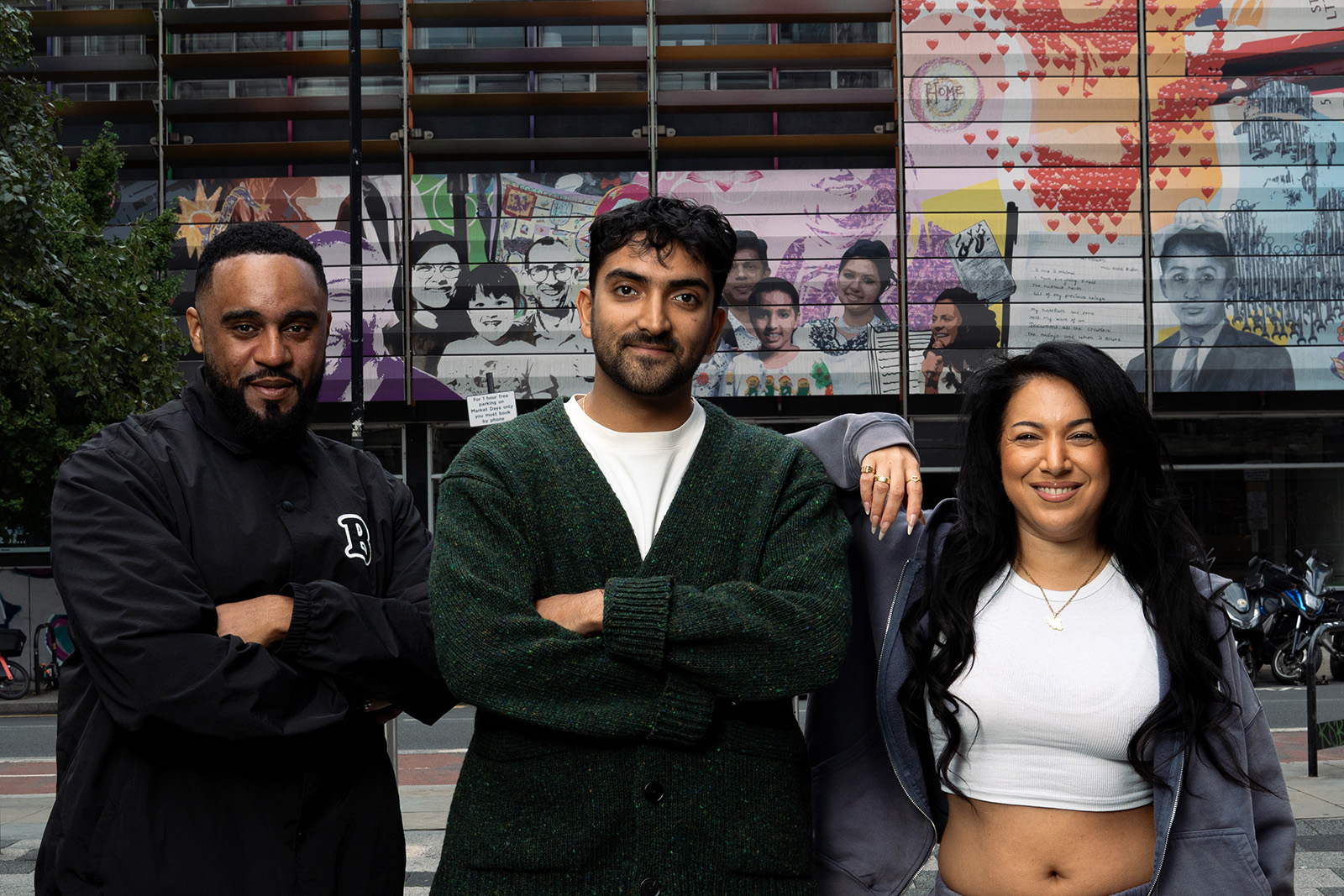
DJ and broadcaster Rohan Rakhit, who co-curated the wider programme alongside grime artist Jammz, says opening the season with Asian underground was intentional.
“If we’re questioning who built the area, it’s the Bangladeshi community, the Bengali community and the Jewish communities that were there to start,” he says. “It was the natural place to start a whole season that celebrates the area.”
Rakhit, who is also part of DAYTIMERS — a collective championing South Asian creative communities — says the Asian underground movement represents much more than a musical genre.
“It encapsulates a radical rejection of the far right and a rejection of stereotypes that were imposed on second-generation [UK Asians], largely from racist attitudes, but also parental attitudes and expectations,” he says. “There’s a creative energy and freedom that the movement speaks to.”
While the term Asian underground became widely used in the late 1990s, Rakhit says the story began earlier and looks different depending on where in the country it is being told.
“Southall was really well-known, as was Birmingham for proliferating bhangra as a UK-born genre,” he says. “East London became associated with Bengali folk-influenced trip-hop, drum and bass, jungle and dubstep. There were loads of really radical artists fusing that side of their heritage with forward thinking forms of British dance music.”
Several of those artists will be at Here to Stay. Farook Shamsher of music collective Joi will DJ and take part in a panel discussion exploring Asian activism and sound in east London. Alongside his brother Haroon, who died in 1999, Farook helped pioneer a sound that blended traditional Bengali music with hip-hop, funk, dub and dance music.
“He was literally the first name on the team sheet for me because if it wasn’t for that family, I think history would have been very different,” says Rakhit.
“Their dad used to own two music shops on Brick Lane. In the back room of one of the music shops, they would be using the traditional flutes that their dad would be selling but mixing with drum and bass,” says Rakhit.
The brothers were also involved in anti-racist organising around Brick Lane — an area that was targeted by the far right throughout the 1970s — and started the Joi Bangla Sound System in 1983.
“People would experience the Joi sound system as the sound of the anti-racist resistance in the area,” Rakhit says.
Here to Stay will also pay tribute to the late producer Sam Zaman, AKA State of Bengal, with a performance of his work by sister Amena Zaman. Nasha XP, described by Rakhit as “the godfathers of Bengali drum and bass” will also perform.
The event will begin with two film screenings, including Here to Stay, about the 1985 Newham seven case, involving a group of South Asian young people who were arrested and charged with affray and conspiracy after responding to racist attacks. It will be followed by a screening of Pratibha Parmar’s Brimful of Asia, on the explosion of second-generation South Asian talent in mainstream British culture. Next on the bill is a panel discussion with Parmar, Shamsher, Rakhit and singer Sonia Mehta, followed by live music and DJ sets.
Rich Mix itself was founded with the aim of bringing different communities together through arts and culture.
“When Rich Mix was established, it was artists and activists coming together,” says Rakhit. “Being a space for radical thinking and inclusivity was central to the mission statement of the venue.”
He adds that revisiting that history is particularly important for younger audiences who may not know the political and community roots behind the music.
“The building’s not going anywhere, the community isn’t going anywhere, the artists aren’t going anywhere,” Rakhit says.