
The Dutch ensemble bringing Arab-Andalusian music into the classical mainstream
The Amsterdam Andalusian Orchestra began as a way of connecting musical heritage to the present. Now it is challenging ideas of what belongs in the canon

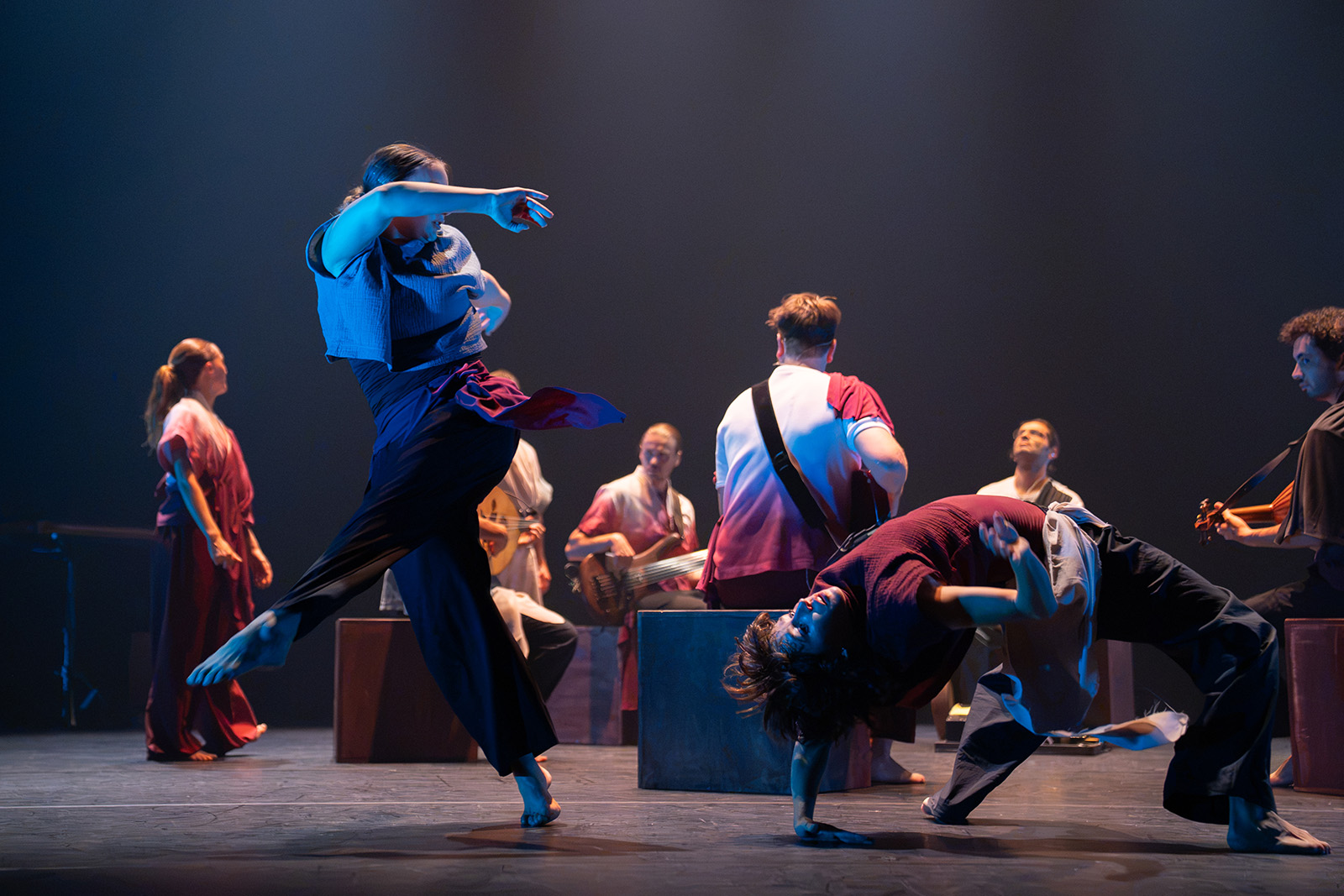
Blue light fills the stage. A sole qanun player is silhouetted against the backdrop; the instrument’s mournful strings are the only sound. A dancer, carrying another, comes into view as the light shifts from blue to gold and more musicians emerge. The music begins to change — one man plays the oud, another an electric guitar, while another sings in Arabic. Past and present come together.
This is Ghosts, a multidisciplinary dance and music production and a collaboration between urban dance group Zero Dance Theatre and the Amsterdam Andalusian Orchestra (AAO), exploring what happens when centuries-old musical traditions of Al-Andalus — the parts of the Iberian Peninsula under Muslim rule between the eighth and 15th centuries — north Africa and the Middle East are brought into a contemporary context. For the AAO, that means treating Amsterdam and its multicultural musical heritage not simply as the setting for this music, but as part of its evolution.
“Emulating the tradition of Al-Andalus without being rooted in where you are means music loses its meaning,” says Mohamed Aadroun, the orchestra’s co-founder and creative director. “And then it just becomes a museum piece.”
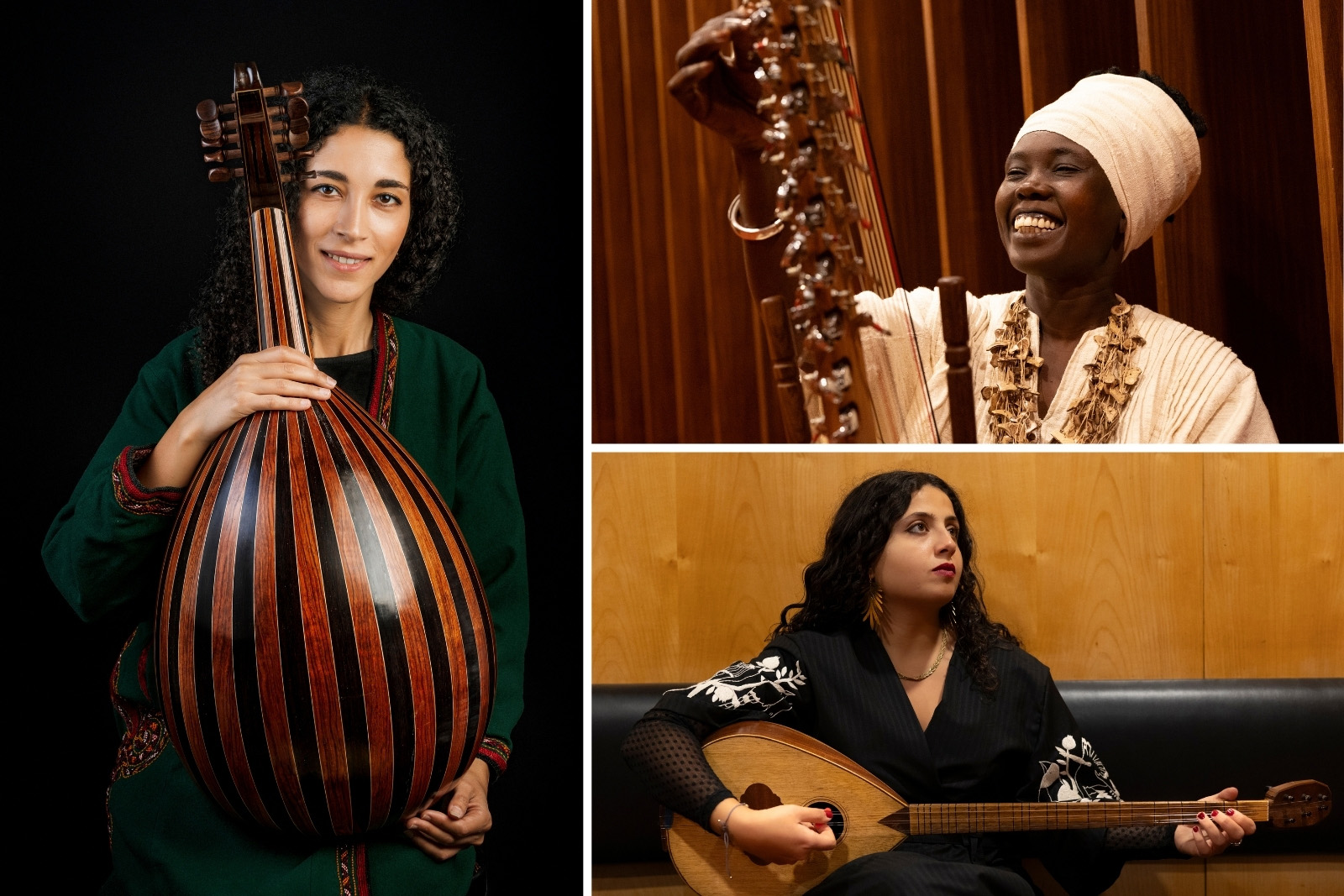
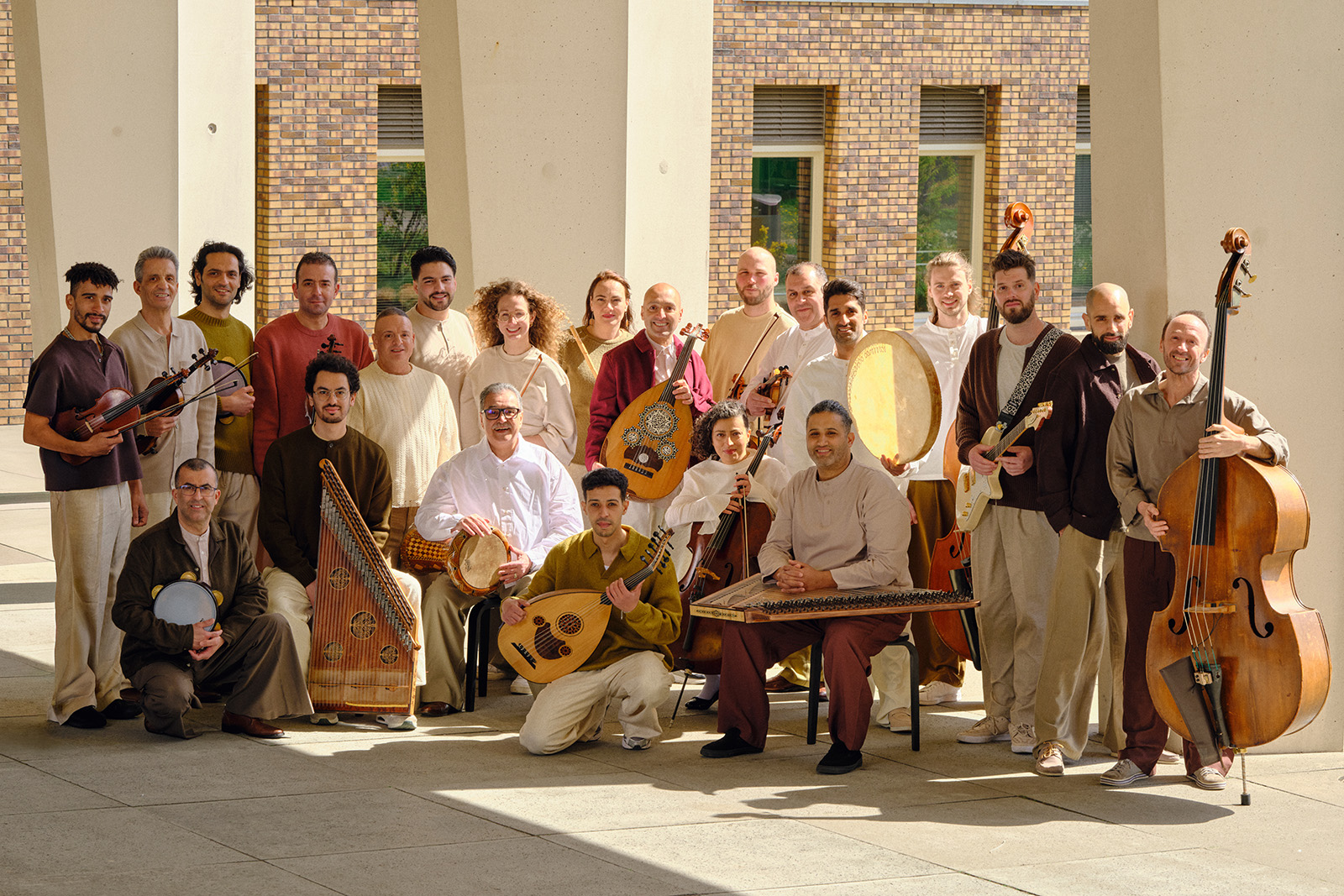
It’s one reason the group is so diverse — speaking six languages, with backgrounds spanning Moroccan, Sudanese, Palestinian and Dutch — and why their sound isn’t about recreating the past but honouring it.
“With our sound, we wanted to recruit people from here,” says Aadroun, referring to the Dutch capital. “We started finding musicians from other genres who were not of Arabic background, but who were very much interested in this music. And it’s these people who create the sound which makes it so Amsterdam.”
Now 15 years old, the orchestra has grown from a project among four friends into a professional ensemble that performs at venues including the Concertgebouw and Muziekgebouw. Its repertoire stretches from Baghdad to the Maghreb, incorporating malhun and sharqi alongside flamenco and jazz.
“There was Arabic and Moroccan music [in Amsterdam], but never within a fixed orchestra context, which meant that all those things that were done before us never really amounted to capital gain or cultural capital,” says Aadroun. “We were not really focused on the commercial side of things. We focused on the music we loved.”
But the orchestra’s arrival on some of Amsterdam’s most prestigious stages raises a bigger question about what music those institutions consider belongs there.
For Orville Breeveld, a Concertgebouw programmer and former AAO musician, this goes beyond opening concert halls to new audiences.
“I consider Andalusian music from the Maghreb as classical music,” he says. “And it should be part of the canon.”
The music, he argues, has long existed outside the institutions traditionally associated with European classical music. The change is bringing it onto stages where musicians such as Breeveld believe it has always belonged.
“We are very proud of who we are and want to see ourselves back on those stages where we think we belong,” he says. “But we had to go through a long, emancipatory process to bring it here.”
Joost Heijthuijsen, a programmer at the Muziekgebouw, Amsterdam’s major contemporary music venue, has supported the orchestra over the years. He says its development reflects a wider change in the city’s musical landscape.
“They are a vital part of the music scene,” he says. “It’s a challenge for institutions here to open up, but AAO are breaking down those barriers. Ten years ago, I couldn’t have dreamed that we’d have fantastic oud players as part of the classical scene.”
He’s seen how important that shift has been for audiences too. “I spoke with a parent who brought his kids along, who said, ‘I’m here because I can show them my heritage, not just on TV but in a concert hall. And show them that this is what our roots are’.”
The AAO’s ambitions, however, extend beyond getting the orchestra onto established stages.
“We always saw ourselves not specifically as an orchestra, but more like a platform, a cultural creative platform with an orchestra as a flagship,” says Aadroun.
It established Maqam in Amsterdam Nieuw-West, a cultural centre that serves as its base and a meeting ground for emerging musicians and artists. It also runs the biennial UD festival, the first of its kind dedicated entirely to the oud. Education was central from the beginning.
“Our first funding was not even for music,” says Aadroun. “It was for education, for teaching kids.”
As the orchestra grew, it was able to establish Maqam and demonstrate the demand for music from the Arab-Andalusian tradition.
For Aadroun, Al-Andalus also offered a way of understanding his own place in Europe. Growing up after 9/11, he says, meant frequently encountering negative images of Muslim backgrounds.
“When I discovered the history of Andalus, it became a door to the history of Europe. You always read it as a history of Muslims and never a European history. It gave me inspiration, allowing me to strengthen my own self-image.”
That history is more complicated than the romantic image of medieval Al-Andalus as a place where Muslims, Jews and Christians lived harmoniously alongside one another.
Professor Mònica Colominas Aparicio, a researcher at ILC-CCHS/CSIC in Madrid specialising in the history of Muslim societies in the west, cautions against turning a complex history into an ideal.
“Essentialism is often dangerous because you are reducing complex phenomena to something that does not always fit the historical reality,” she explains.
Coexistence varied across periods, with moments of cultural flourishing alongside persecution and expulsion. The idea of convivencia, or coexistence, has itself acquired a contemporary political and cultural meaning.
“It has become a catchword for tourism and for the touristification of heritage,” Colominas Aparicio says. “So it also has a political function.”
Yet the mixing of influences that characterised the Al-Andalus period produced an extraordinarily rich cultural inheritance. “The intellectual production at that moment was amazing, with music and poetry,” she says.
For Aadroun, however, the significance of that inheritance lies in what can be created from it now.
“I think we’ve changed the scene. More people are open to the universal aspect of our culture: beauty. And more people are drawn to the similarities than polarised by the differences.”
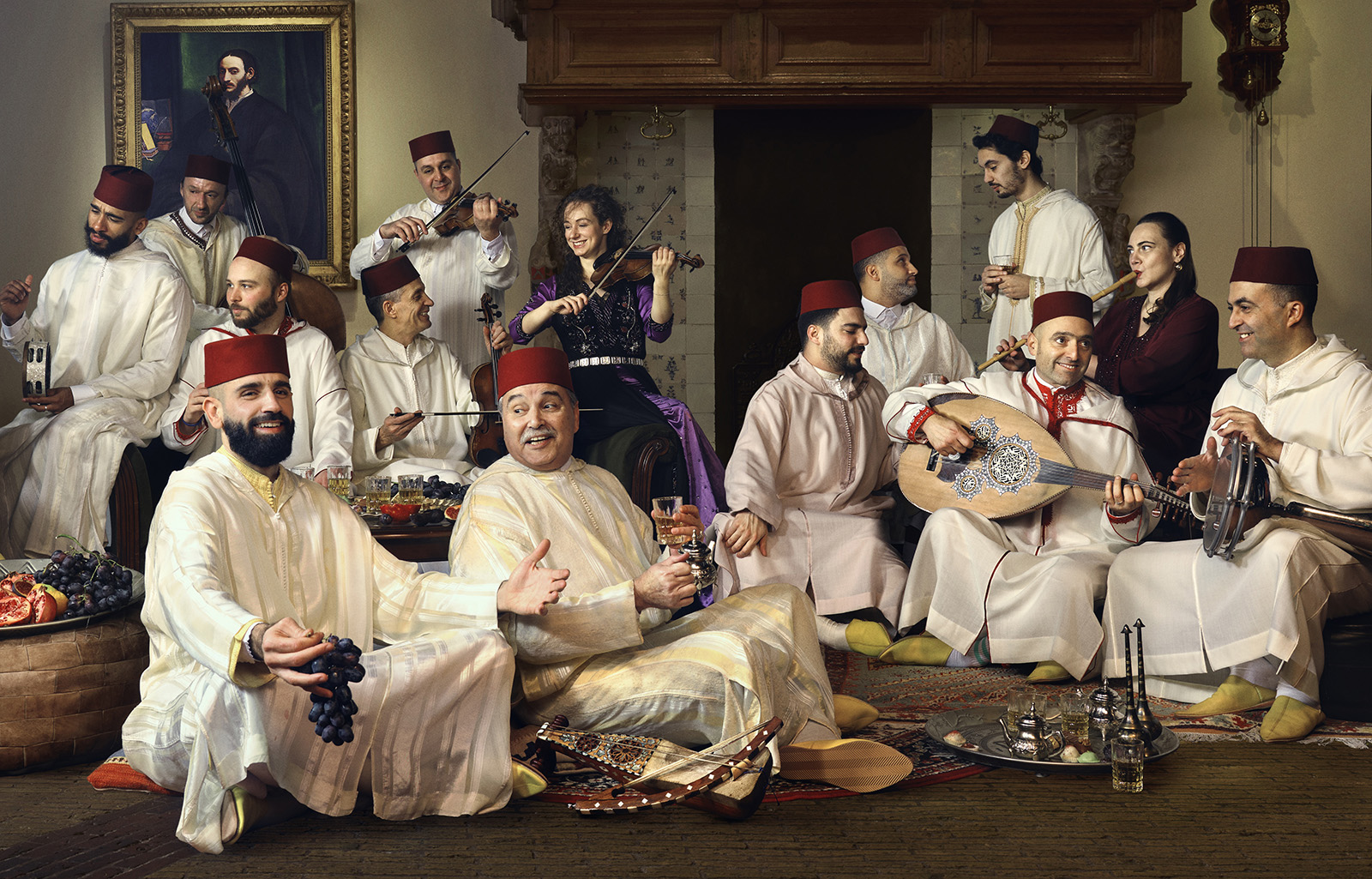
At Maqam, the AAO’s home, Aadroun explains there’s a large-scale poster the orchestra had made for press and marketing. It’s almost a painting, styled in the tradition of the Dutch Old Masters: the orchestra seated in a grand old room, backed by an imposing portrait, enjoying grapes and figs, and surrounded by ornate tea sets.
“In a lot of old paintings here in the Netherlands, you’d see influence signalled through what Europeans considered ‘exotic’ accessories: so rugs, teas and food you couldn’t get in Europe,” says Aadroun. “We thought it would be fun to subvert that idea by placing our orchestra in this context and reclaiming those traditions as ours. Because we’re here now – and we’re creating something new.”