
Yassmin Abdel-Magied interview: ‘There are lots of people who are just happy cruising through life, being Muslim’

The author talks about her new novel, At Sea, and her mission to create nuanced characters for whom Islam is not a problem to be solved

When Yassmin Abdel-Magied was growing up in Brisbane, Australia, her dream was to build cars. To that end, she did a degree in mechanical engineering and was then accepted on to a master’s degree programme in motorsport at Cranfield University in the UK.
There was just one catch: it cost A$50,000 (around £26,000 at current exchange rates), money she did not have. She could not accept the place and she needed a job.
“The jobs that were available where I grew up were work in an office or have an adventure and work on a rig,” she says. “The idea of going to work on a helicopter was quite exciting and that was pretty much my thought process.”
That was how she ended up on an oil rig off the Australian coast, as the company’s first woman field engineer.
Abdel-Magied, who is now 35, was used to standing out. Growing up as the daughter of Sudanese migrants in an overwhelmingly white part of Australia, she was often the only Black person in a space, and she was the first hijab-wearing woman in her school of 2,500 students. Studying engineering at the University of Queensland, she had also been one of very few women in her cohort.
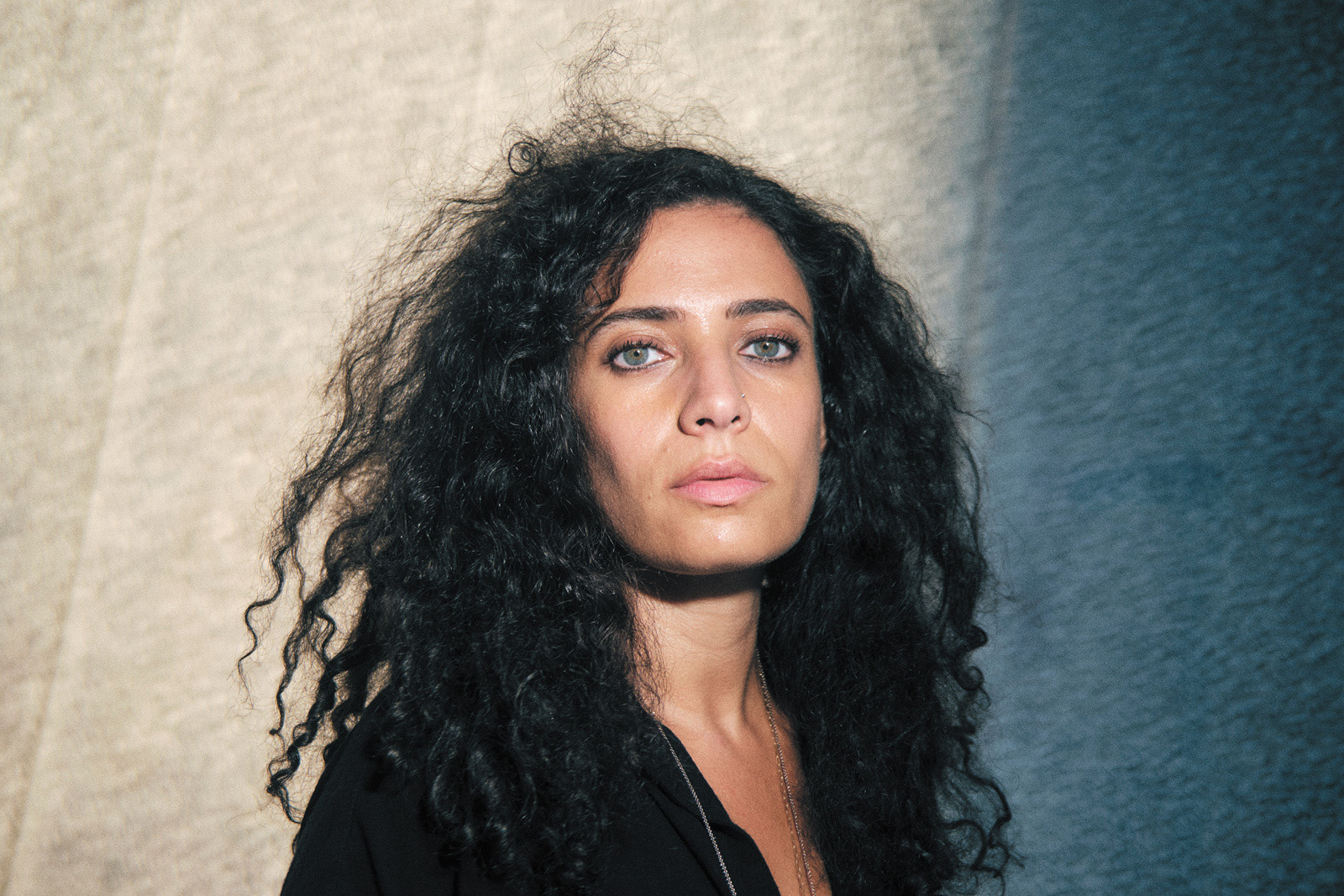
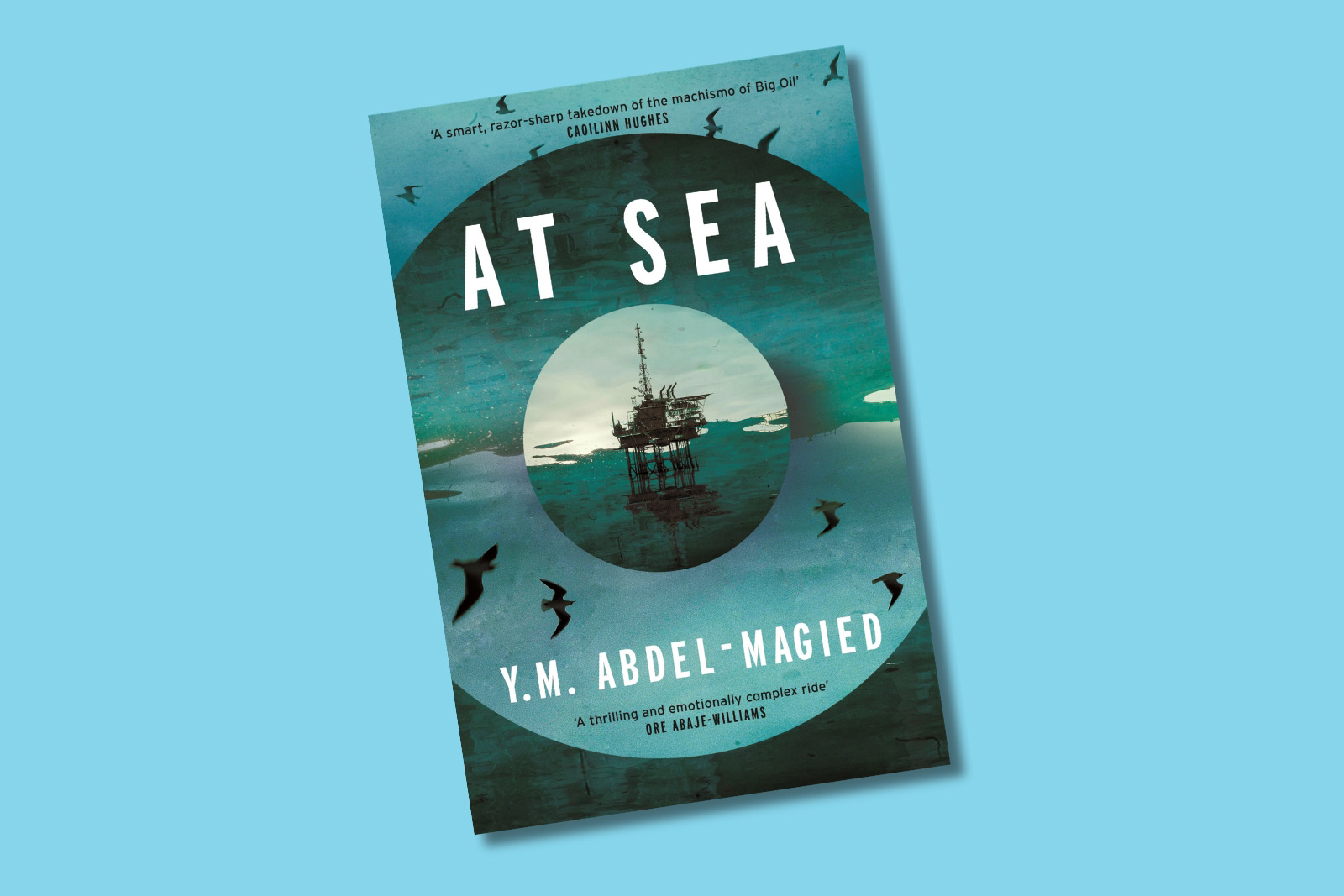
It is something about that experience — of being not just a woman in the heavily male-dominated world of rig work, but a Black, hijabi Muslim woman — that she captures in her new novel. At Sea is a taut literary thriller that follows Zainab, who is taking control of a high-stakes offshore operation, having just won her dream job as head of drilling operations. When she discovers an issue with her rig, she races to uncover the truth while also struggling with the hardened men on her team who want nothing to do with her.
Although she shares obvious similarities with Zainab, Abdel-Magied stresses that it is not an autobiographical work. She entered the world of oil rigs as an engineer, whereas Zainab has a completely different career path, joining as crew and working her way up.
“It was important for me that it was distinct,” Abdel-Magied says. “It’s informed by my experience, but it’s also informed by the experience of other people I know who are marginalised in different male-dominated industries, and by research that I did into the specific ways that women in engineering survive those dynamics.”
One thing Abdel-Magied wanted to capture was “the amount of cognitive work Zainab has to do” over and above her actual job: constantly reading a room, calculating when to push back or let something slide, and staying alert to her own safety. In the novel’s opening scene, she enters the rig, gearing up for a nasty surprise of some sort, having previously experienced all sorts of shocks on other jobs, “from a warm slug of human shit on her bedroom doormat, to a bucket of blood over her hijab as she entered the cafeteria”.
But it is not a straightforward story of racism and oppression. Zainab is the boss. She has power over the men on the rig. She also finds herself repeatedly choosing to return to such environments. “There’s something that draws her back to this world. What is that about? I wanted to bring colour to those complexities and contradictions,” says Abdel-Magied.
One striking feature of the book is Zainab’s faith, which is woven throughout the text without being a plot point. Her inner monologue, told in a close third person, is littered with familiar words, including “bismillah” and “inshallah”, and sentences such as “Allah was really testing her on this rig.”
Abdel-Magied consciously wanted to write Zainab’s faith as she experiences her own. It is the framework through which her protagonist understands the world, not something she grapples with. “It was really important to me that her Muslim identity wasn’t a problem to be solved,” she says. “It’s often the case that in the fiction that gets published, that is legible to a non-Muslim audience, the struggle is in the faith. But there are lots of people who are just happy cruising through life, being Muslim.”
Abdel-Magied’s route from oil rigs to writing began shortly after she finished university in Australia. She spent six months living with her grandmother in Sudan and started a blog “because that’s kind of what you did at the time”.
It was 2012, the era of the Arab spring, and Sudan was experiencing its own protest movement. Very few English-language bloggers were writing about it and Abdel-Magied amassed a small readership. She returned to Australia to start work as a drilling engineer for a multinational company, but continued blogging about her experiences on the rigs and “my perspective as a hijabi, Sudanese girl in Australia”. Off the back of that, in 2013 she was commissioned to write an essay for the Griffith Review, a quarterly journal, about her life.
The piece was well-received and publishers reached out to ask if she wanted to write a book. Initially baffled by the attention, Abdel-Magied accepted and her memoir Yassmin’s Story was published by Penguin Random House in 2016. Abdel-Magied was 24. Her engineering company was not happy about it and placed her on probation. This ended up being a turning point: “I decided to take a year’s leave without pay, and I never went back.”
Alongside her writing and engineering work, Abdel-Magied had always been involved in social activism and her public profile was growing. She had already been honoured as Queensland Young Australian of the Year in 2015 for her community work and, after the book’s publication, she began presenting Australia Wide, a weekly current affairs show on ABC, Australia’s public broadcaster.
She became a prominent advocate, sharing views on feminism, Islam and social justice issues — and, inevitably, became a target in Australia’s vicious culture wars. In 2017, on Anzac Day — Australia’s day of remembrance for military personnel killed in conflicts — she posted on Facebook, using the term “lest we forget” in reference to refugees in offshore detention and Palestinians. The backlash was extraordinary. Government ministers criticised Abdel-Magied and ABC was targeted for hiring her. Soon after, she moved to the UK.
Related content
Abdel-Magied has, in the past, described herself as “the most hated Muslim in Australia”. In 2019, the comedian Sami Shah presented a radio programme on free speech in Australia, in which he reported that his interviewees who were people of colour said they feared “getting Yassmined”.
Almost 10 years on, Abdel-Magied is not interested in relitigating that experience. Undoubtedly, though, it has had a major impact on her. “I was shown very early in my life the cowardice of major institutions when you’re somebody who is not from the dominant culture,” she says.
But she has worked hard to not let it define her, turning down numerous requests to revisit it in documentary or drama. “It could very easily have become the one story that everyone knows about me,” she says. “But I’m not interested in rehashing it, because I don’t have agency in that. It’s a thing that happened to me that I had to respond to. I’m more interested in: ‘What have I created? What is the story that I’m driving?’”
Abdel-Magied’s instinct to give her characters agency is what makes Zainab the boss rather than simply the outsider. It’s a throughline in a career that has otherwise ranged wildly. Abdel-Magied jokes that she is “genre-promiscuous”. At Sea is her seventh book – she has previously penned young adult fantasy, a memoir and essays.
She is also now writing for the ITV soap opera Emmerdale, set in a Yorkshire village. It’s quite a leap for a Sudanese Australian, but she says the storytelling is more familiar than you might expect. “A village operates in the same way that a migrant community does,” she says. “Everybody knows everybody else’s business, there’s the uncle nobody really wants to talk to… .”
In London, where she has lived since 2017, Abdel-Magied feels a new level of ease. She lives in a Muslim-majority area. “If I walk down the street, nobody looks at me because I’m not an outsider,” she says. She is grateful for what the city has given her. “There’s such a freedom in coming to London, and feeling like I could be whoever I wanted to be.”
At Sea (£16.99) is published by Canongate.