
Ahmed Iqbal Ullah: the legacy of the schoolboy’s murder 40 years on
The killing of the 13-year-old Bangladeshi Muslim boy exposed racial tensions in Manchester and would rally hundreds to organise against racism. Now, his family feel a ‘duty’ to speak up again amid the rise of the far right

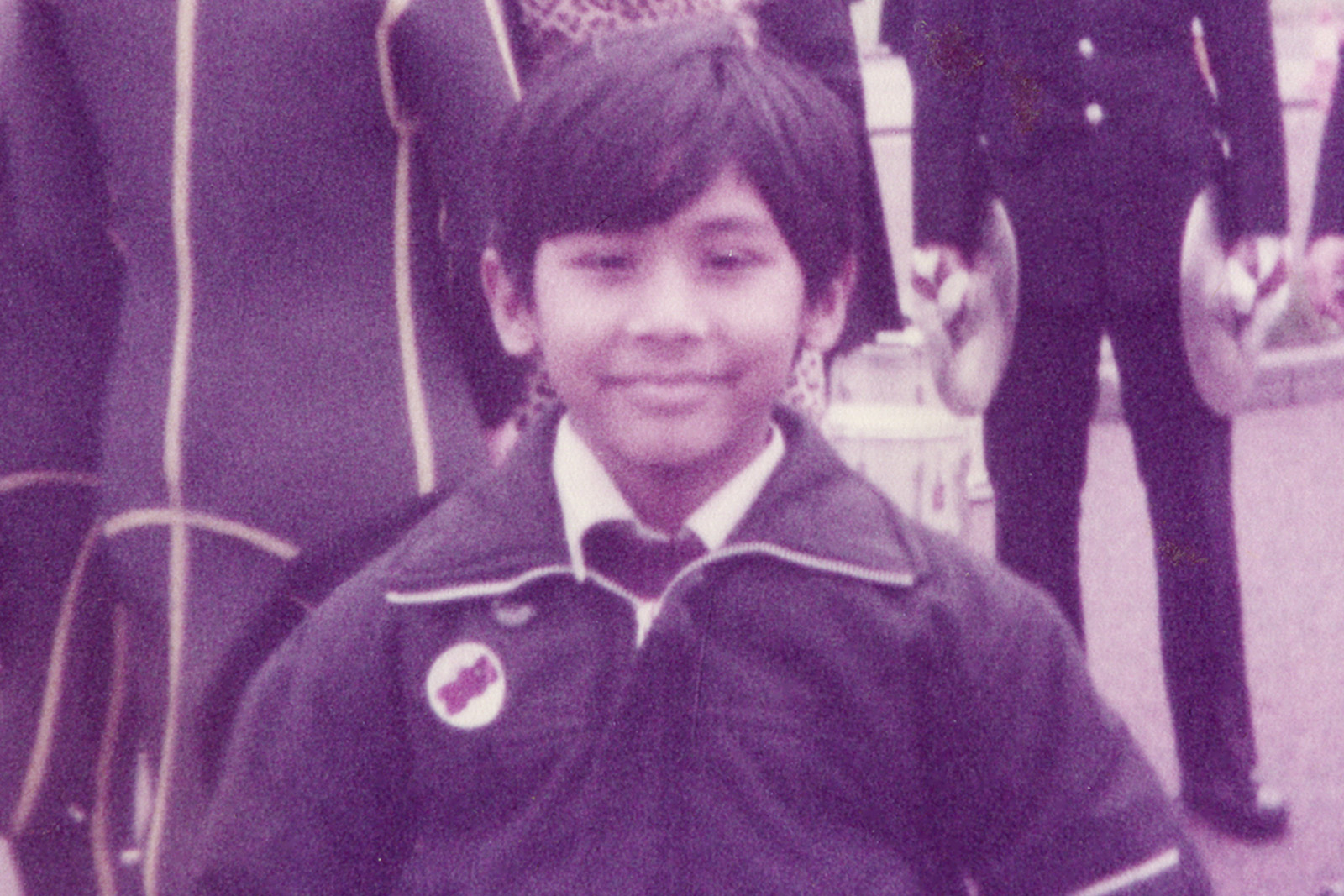
The last time Selina Ullah saw her 13-year-old brother, Ahmed Iqbal Ullah, alive, it was an ordinary September morning in 1986 at their home in Chorlton-on-Medlock, Manchester. A new academic term had just started. Before leaving for school, Ahmed came to kiss his niece goodbye. He walked to the bus stop with Selina’s husband and the pair caught buses in opposite directions.
“That was it,” Selina says, her voice cracking over a video call from her home in West Yorkshire.
Later that morning, Selina, then 20 and the eldest of six siblings in a Bangladeshi Muslim family, answered a call from Burnage High School for Boys. “They said there’d been a fight, Ahmed had been hurt and there was a knife,” she recalls. “They didn’t use the word stabbed.”
Ahmed had been attacked in the playground by 13-year-old Darren Coulburn. He died at Withington hospital later that day.
Ahmed’s attacker was a white pupil from the same school, and his family and community believed strongly that it was racially motivated. Ahmed’s murder immediately exposed wider racial tensions in Manchester and would draw hundreds of people to organise against discrimination in the area, eventually leading to human rights and educational institutions being formed in his name.
Four decades later, some of those who lived through its aftermath fear similar divisions are returning amid far-right mobilisation across the country.
“It’s important that Ahmed shouldn’t be forgotten and that there is a legacy from his death,” Selina says. “A lot of good work has come from this — he wasn’t just Ahmed Iqbal Ullah who was killed and that’s the end of it.”
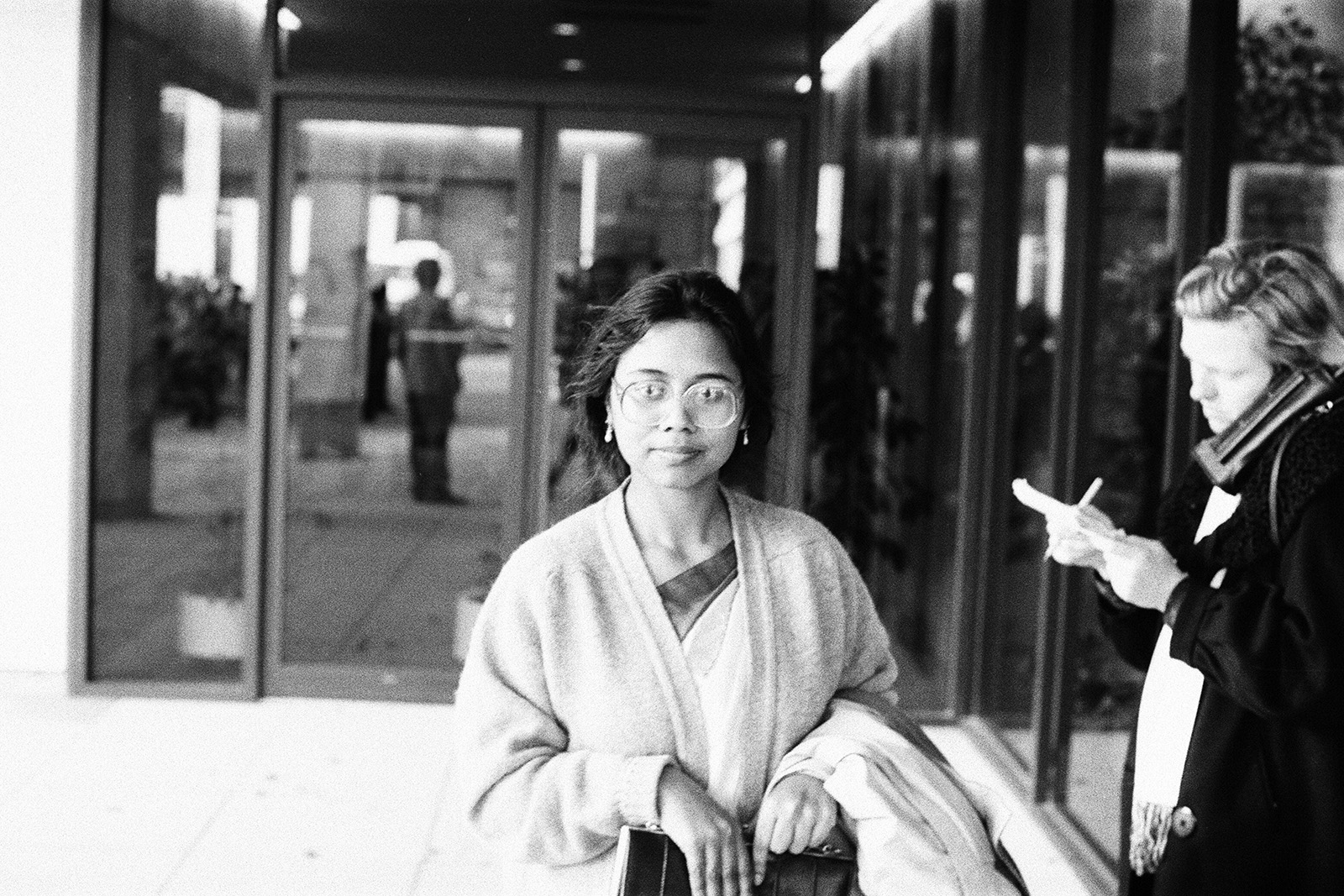
The details of what happened 40 years ago fill large boxes in an archive at Manchester Central Library. There are newspaper cuttings, school letters, pictures of protests and evidence gathered by the independent inquiry commissioned by Manchester City Council a year after Ahmed’s death. Among them are his exercise books and school certificates. He was a Manchester City fan and would listen to Walk of Life by Dire Straits incessantly.
Ahmed had taught himself computer coding from library books. That summer, he had started writing a novel about war, bringing home books about tanks, helicopters and military armour, because he wanted to get all the details right.
“He had self-belief,” Selina recalls. “He was sporty, academic, he had the social skills, he could be quite geeky about things. He was very much a whole person.”
Two days before the murder, Ahmed had intervened when Coulburn attacked a younger Asian pupil in Ladybarn Park, roughly 15 minutes’ walk away from the school. The following day, Ahmed and Coulburn had a physical altercation in the park. The inquiry found that Coulburn told friends that he would stab Ahmed if they fought again.
The next morning, on 17 September, Coulburn brought a knife to school and stabbed Ahmed in the stomach. On 6 February 1987, Coulburn, then 14, was convicted of murder and ordered to be detained “during Her Majesty’s pleasure”, which mirrors a life imprisonment sentence for adults.
The public argument over whether Ahmed’s killing was racist began almost immediately. On the day he died, Ahmed appeared on the front page of the Manchester Evening News. The paper reported that the boys had previously been involved in an argument at school but added that “police ruled out any racial aspect”.
Ahmed’s family rejected that. “In our mind, it was very much a racist incident. There was no doubt about it,” Selina says.
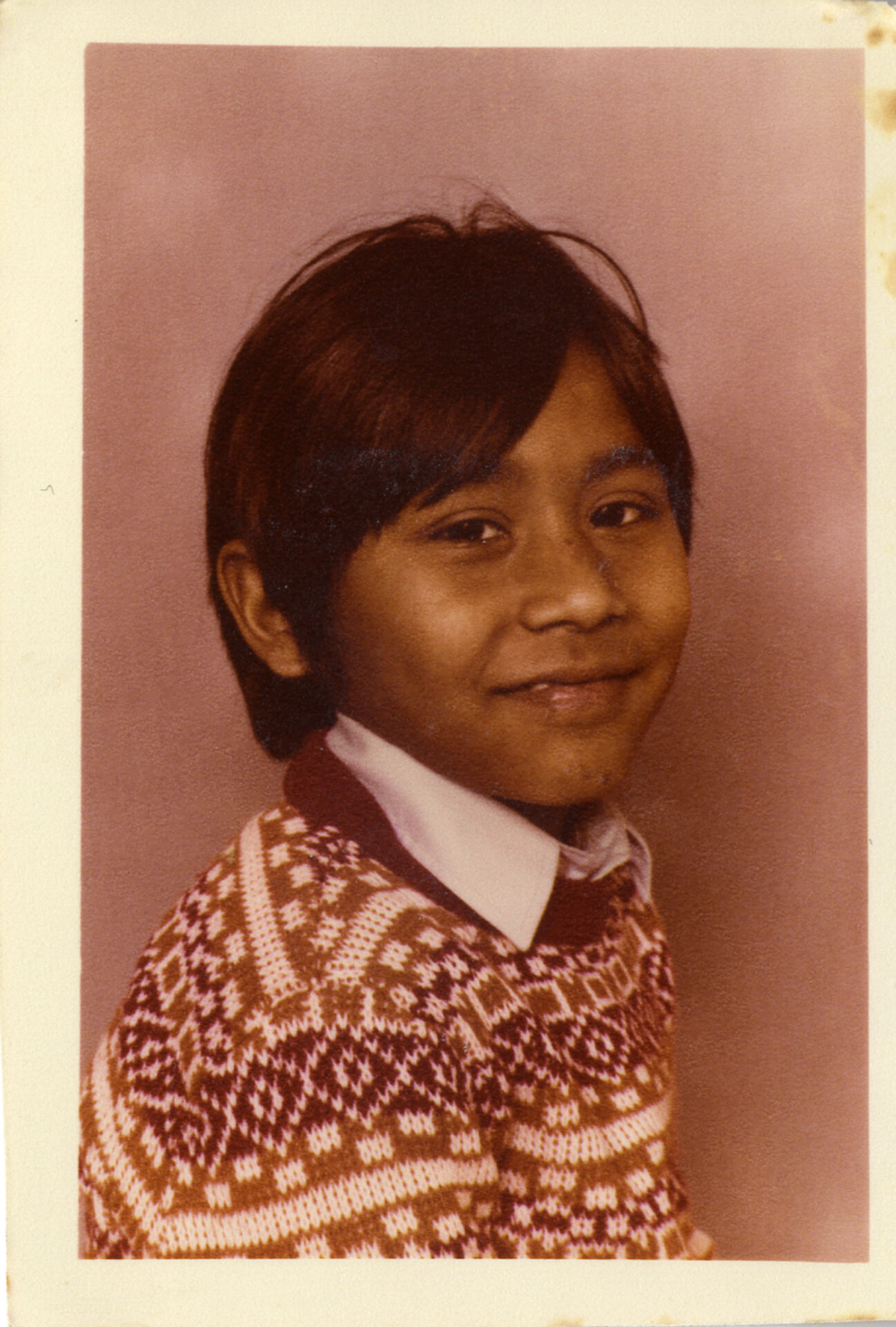
Within days of her brother’s death, Selina was attending meetings, demonstrations and speaking to journalists. “It was really important to emphasise that it was a racist murder,” she says.
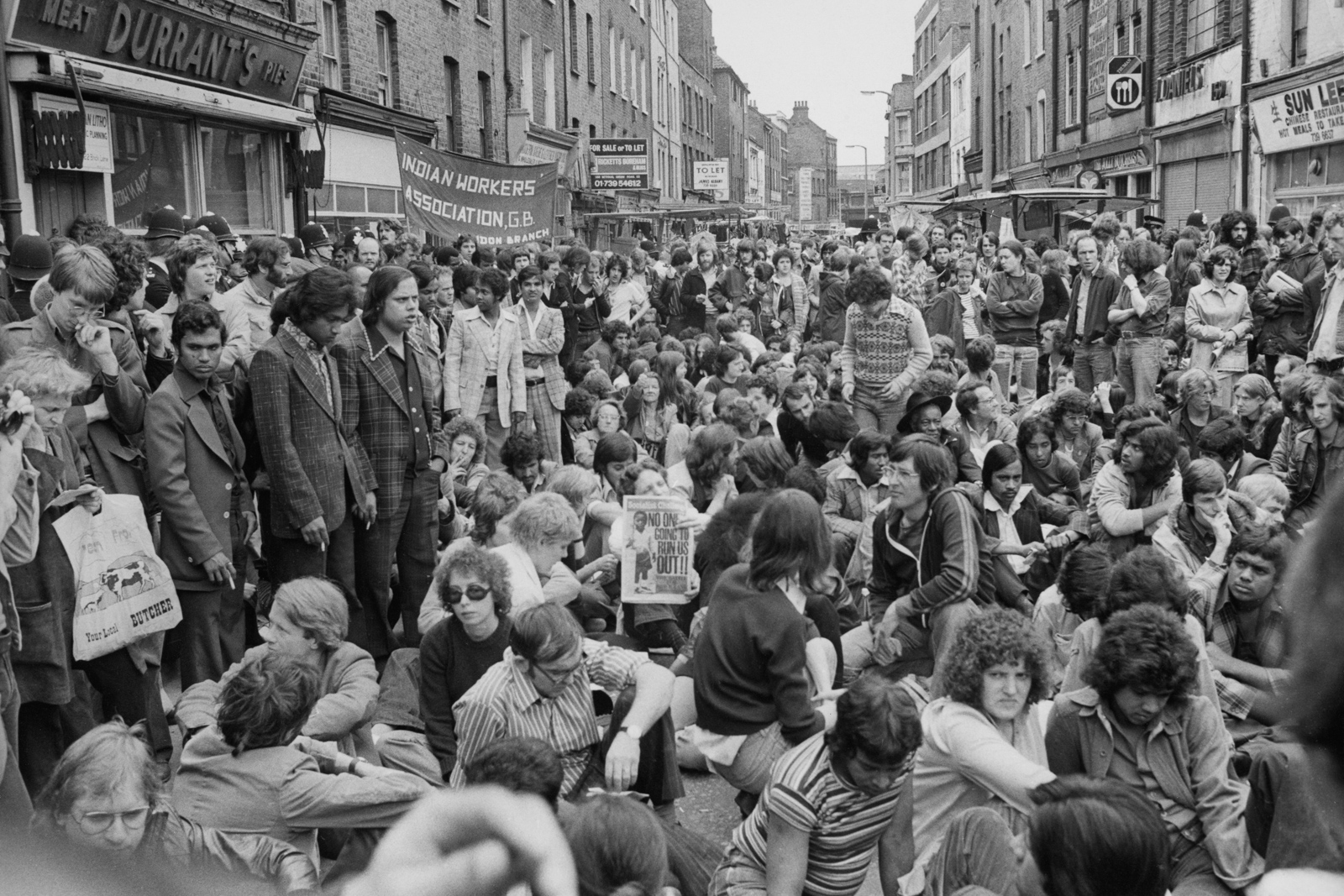
Ahmed’s murder came at a turbulent time for race relations in the country. In 1981, the New Cross fire — in which 13 Black teenagers died in a suspected racist attack — and anger over the police response prompted mobilisation within Black communities. Uprisings in Brixton, south London and Moss Side, south Manchester, highlighted tensions around racism, policing and deprivation.
Selina recalls one of the first meetings she attended following the murder was at the Bangladeshi Community Association. At least 200 people from all backgrounds across Manchester packed into the room to support the family.
“The numbers were comforting. We were not alone,” says Selina. “People were standing with us in solidarity.”
Nasrullah Khan Moghal, a Manchester city councillor at the time, remembers Black and Irish residents and people of all different faiths coming together.
“This is our town,” he recalls thinking. “We can’t allow such things to happen here. We have to stand up together.”
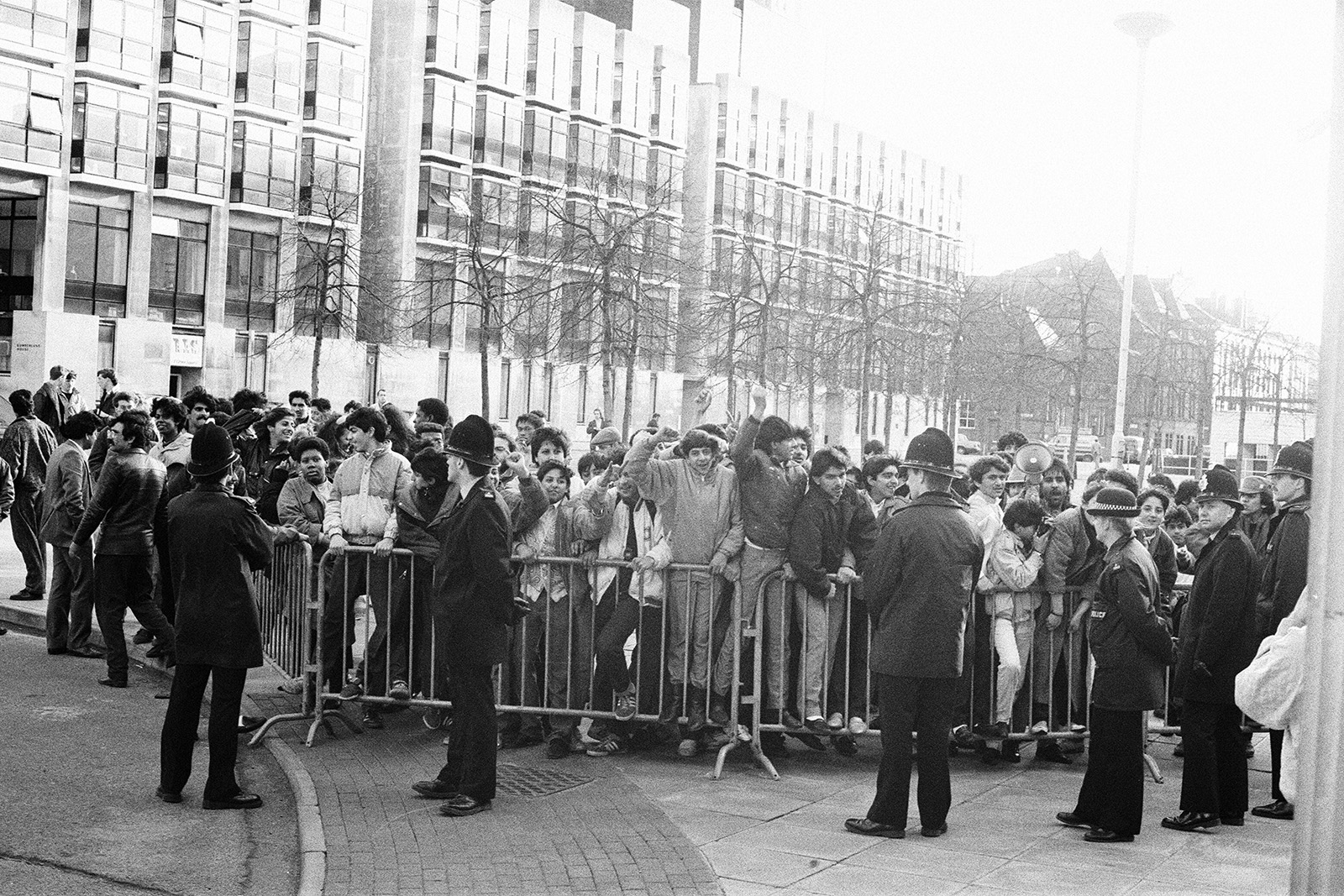
Ahmed’s funeral drew so much support that it became too big to be held at the local Shahjalal Mosque, where it was originally planned. Prayers were moved to nearby Platt Fields Park. “It was absolutely huge,” Selina says.
But the environment was tense. The school only allowed Asian pupils to attend the memorial amid concerns about more trouble. The inquiry later concluded that the decision contributed to already existing racial divisions at the school.
Kadir Gafur, then 14 and a year above Ahmed at school, remembers police having to escort pupils to the bus stop. But he also recalls Asian pupils protecting white friends when tempers were high. “You can either go backwards and cause more trouble or try and work to bridge ties and make things better,” he says.
After Ahmed was killed, Mohhamed Bilal Samed, another former pupil, joined the protests. “Even though I was young, I was at the front of the march,” he says. He remembers the crowd chanting: “Death to racism.”
The inquiry into Ahmed’s death, led by senior barrister Ian Macdonald, began hearing evidence in May 1987. It also looked into racism and violence in Manchester’s schools more widely, concluding that Coulburn had not simply set out to kill Ahmed because he was Asian, but that racism “was one of the vital ingredients” that brought the boys together. It found that the confrontation would not have happened if Ahmed had been white.
It also concluded that class and deprivation were inextricably linked to racism and structural inequalities. In the 1980s, deindustrialisation accelerated under Prime Minister Margaret Thatcher’s government, leading to job losses and rising unemployment across the country. By May 1984, the unemployment rate across the wider Manchester area had reached 13.3%, compared with 5.2% just five years earlier. Today, 61% of households in Burnage are deprived in one or more measures covering employment, education, health or housing.
“That gave me a sense of the scale of the problem,” Selina says.
The results of the inquiry gave Selina and others who were working to challenge racism at the time something concrete to take to public bodies such as schools in order to raise awareness of racial injustice. Its findings became “a very strong document to work with, and so people had to listen to us,” says Moghal.
A few years after Ahmed’s death, institutions that work to preserve histories of race and migration in Manchester were established in his name. The Ahmed Iqbal Ullah Race Centre at the University of Manchester was founded in 1999 as an archive for global majority communities in the city. Its sister organisation the Education Trust was founded in 2001 to collect oral histories and support schools in developing anti-racist curriculums.
“The community came together after the murder to demand better treatment and a better response from the statutory organisations,” says Maya Sharma, who heads both organisations.
“It’s so easy when we talk about how people experience racism and racist attacks, for people to just become victims,” she adds. “They become almost symbols but not really people in their own right. It’s important that we have a sense of who he was.”
That is why Ahmed’s notebooks sit alongside records of protests and campaigns at the Race Centre.
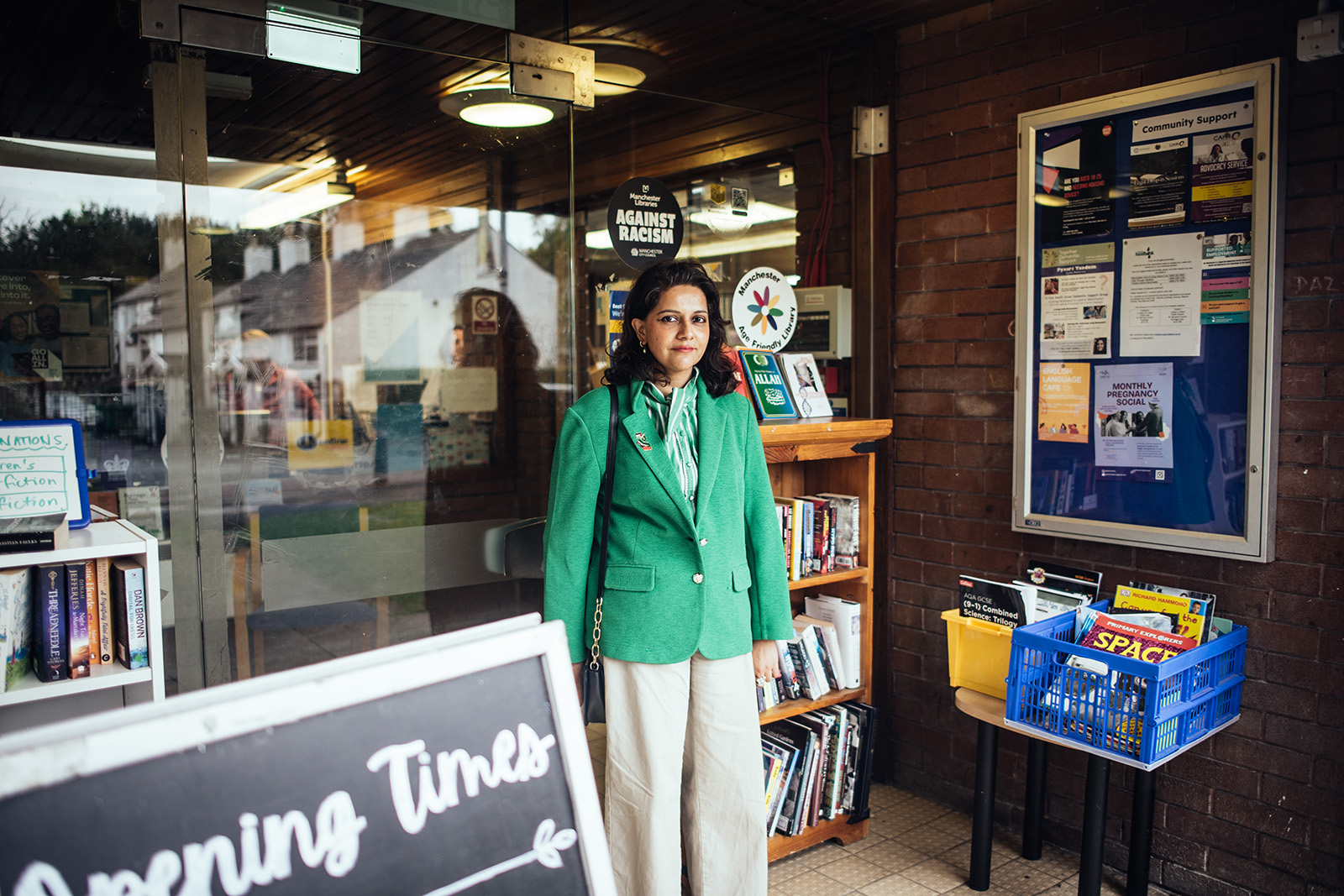
Four decades later, Burnage looks much the same as it did when Ahmed was alive. “Same roads, same streets,” says Asma Alam, a Green Party councillor who has lived in the area since 1984. But it is much more diverse today; 2021 census data shows that 32.6% of Burnage residents are Asian, 4.8% are Black, 3% are Arab, 5.6% are from mixed backgrounds, while 35.9% of the population identify as Muslim.
Alam recalls just one other Asian household on the street she grew up on. “I remember my mum saying that when they first came in the 70s it was a hard time for them to integrate. There were times we weren’t allowed to cook curry in the house because it smelled, and [neighbours] didn’t like the smell.”
Though she says things are better now, Alam is worried by how anti-immigrant rhetoric has become increasingly mainstream.
“My kids are growing up with racism,” she says. Home Office figures show that in the 12 months to March 2025, there was a 6% increase in race hate crimes in England and Wales and a 3% increase in religious hate crimes recorded by the police. Religious hate crimes targeting Muslims outside London rose by 19%.
Professor Gus John, a lifelong equality and human rights campaigner and now the only surviving assessor on the Macdonald inquiry’s four-person panel, is wary of giving a simple verdict on whether anything has actually changed over the past 40 years.
“It depends on what you mean by change,” says John, who still remembers how “gruelling” it was to sift through all of the inquiry’s evidence and “relive people’s pain”.
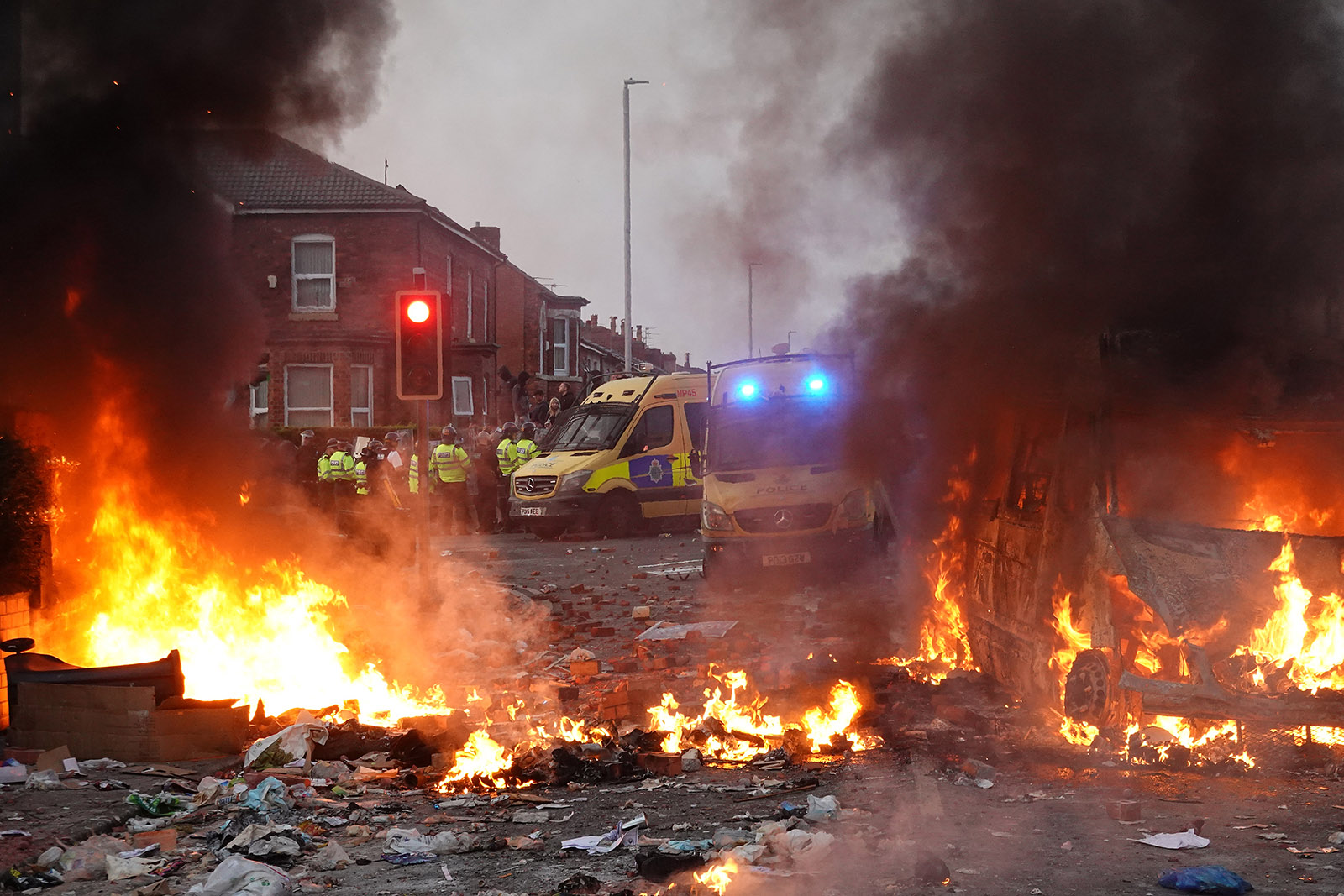
For John, one lesson from Ahmed’s death is that schools cannot separate themselves from what children are exposed to at home and in their communities. He points to the racist riots that followed the Southport killings in 2024 — some children may come from homes where far-right ideas are accepted, while others come from families targeted by them.
“They’re assembling in the same class, in the school, in the playground. Why assume that what you’re teaching them on a day-to-day basis should have nothing to do with their lived experience?” he says.
Zara Manoehoetoe, a youth worker with the anti-racist organisation Kids of Colour, first became familiar with Ahmed’s story in her early 20s while working in Burnage. “Children are not being given that history in formal educational environments,” Manoehoetoe says.
“Even now, when the story of his murder is told, we often hear it held in the space of how it led to the Macdonald report and positive outcomes. No, a boy was murdered because of racism.”
Witnessing the violence committed by far-right groups across the country in recent years, Selina now feels a “duty” to speak publicly about Ahmed again.
“Anti-Muslim hate is increasing. Our tolerance of others, people who are different, who have different experiences is very low,” says Selina. “I think it’s really important that we talk about the impact of those views and what it can result in. Ahmed gave his life and his life is worth something.”
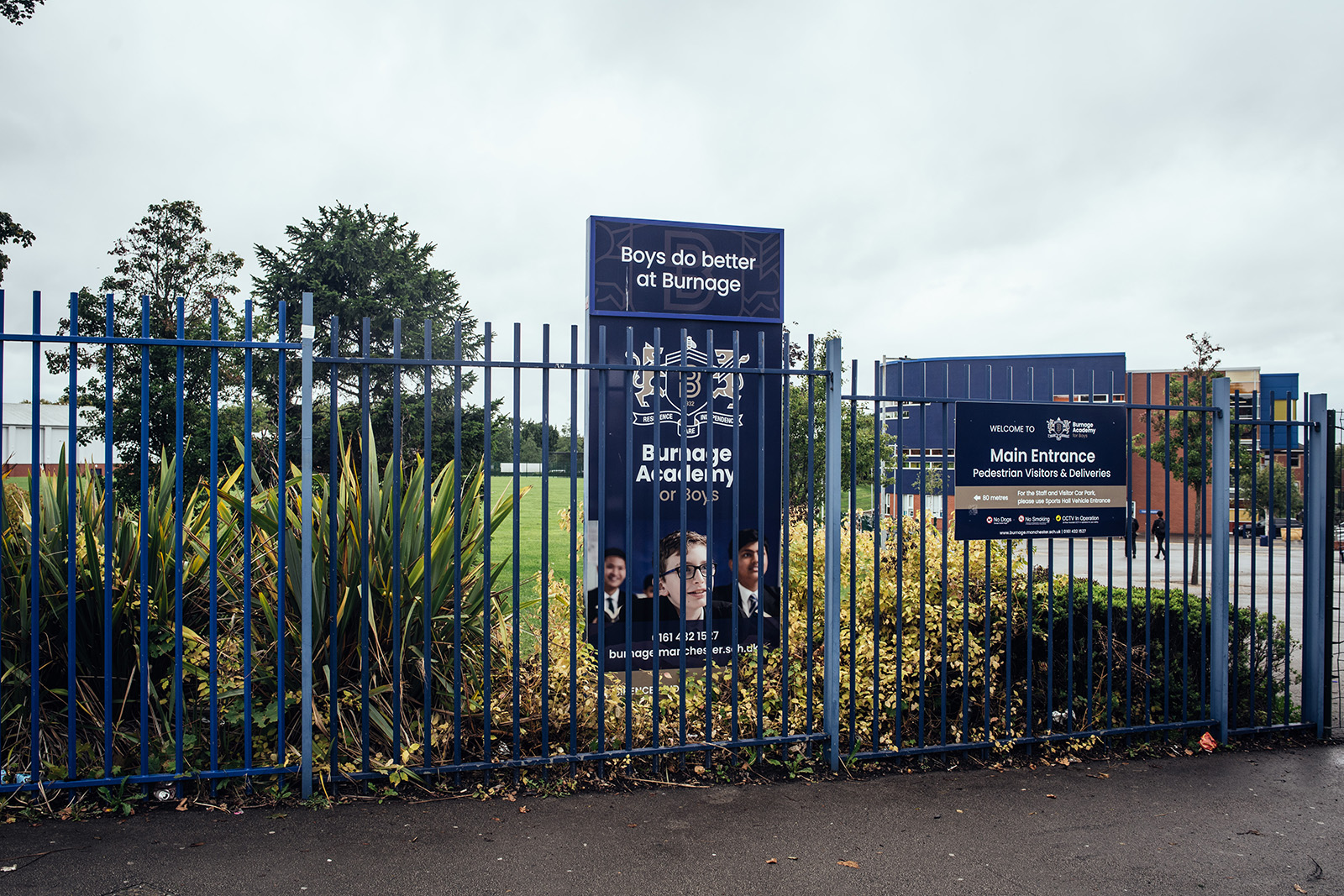
Selina says she and the headteacher of Ahmed’s school, now the Burnage Academy for Boys, have begun discussing establishing awards in his name, potentially recognising leadership, community contribution and sport. She hopes to visit the school and “speak to the boys directly and share with them who Ahmed was and what he meant to us”.
“Hopefully it’ll be something that they will be inspired by,” she says.
Tucked away in Ahmed’s archive is a certificate that says he had “worked extremely hard” and produced work of “exceptional quality in all subjects” at school.
Selina smiles at the idea that 40 years later, another boy might receive an award displaying his name.
Ahmed would now be in his 50s. Selina has children and grandchildren, and often thinks about the life her brother never got to lead.
“I think about what we’ve lost, what we’ve missed by not having him in our lives. If he was alive now, he probably would be doing something amazing,” she says. “But even though he’s not here, he’s still doing something.”