For young French Muslims, the student protests are also a fight against racism
Muslim protesters say demands for better schools cannot be separated from Islamophobia, discrimination and police violence

In an Instagram video posted on 26 September, Soumaya Sarré, 18, summed up the frustration felt by many fellow students — a frustration that, over the following days, would ignite nationwide protests in France.
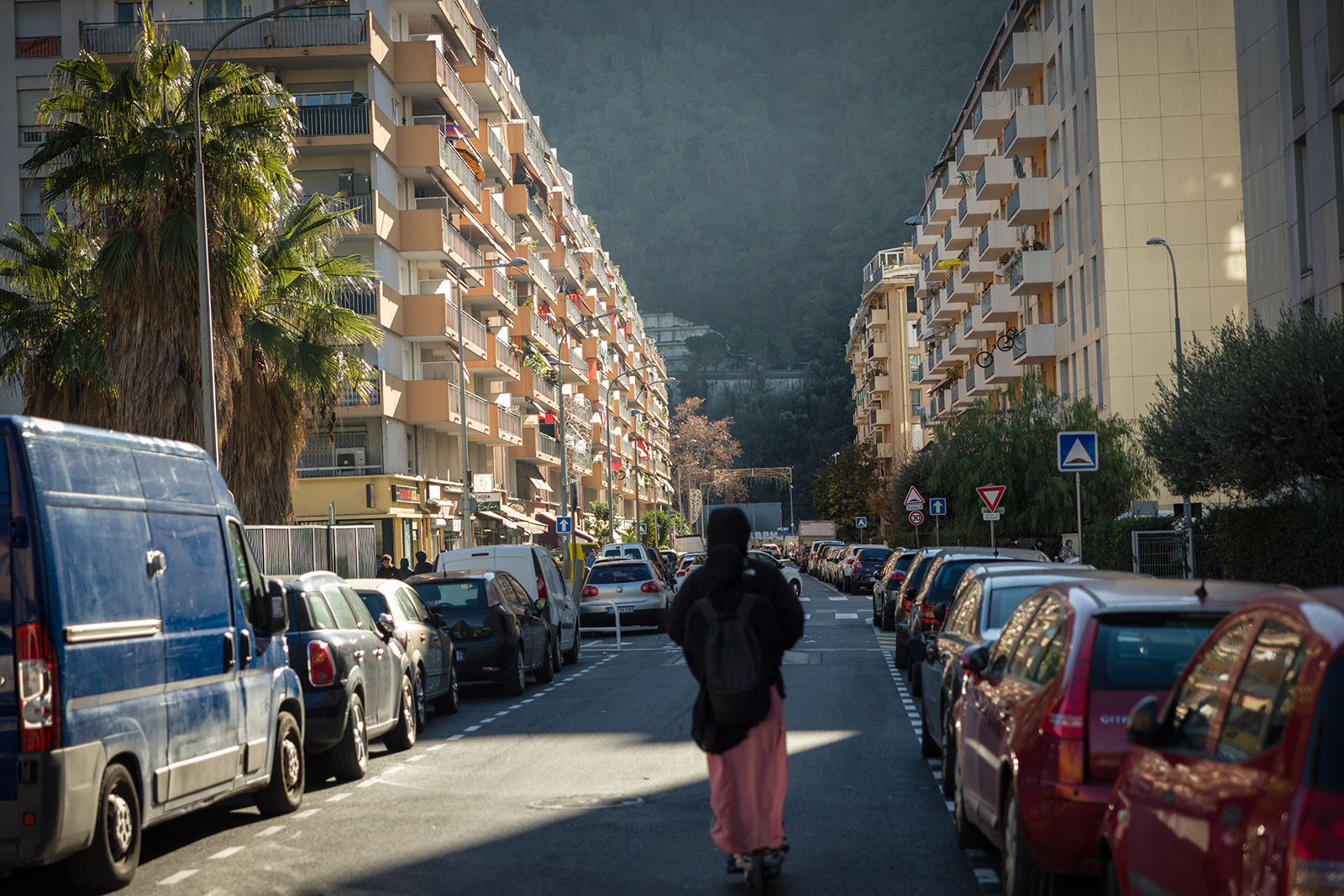
“You get to school and you’re told to take off your headscarf. We took it off. You wear a dress, you’re told it’s an abaya and are sent home. OK,” she said in the video filmed walking down the street.
“Now we ask for a teacher and a decent classroom, and you send the police? When it comes to telling us how to dress, the state is quick to act, but when it’s about ensuring decent learning conditions, suddenly there’s no one around.”
Sarré is the spokesperson for Fédération Lycéenne des Quartiers, an organisation established earlier this month to give a voice to secondary-school students from Paris’s working-class, ethnically diverse suburbs.
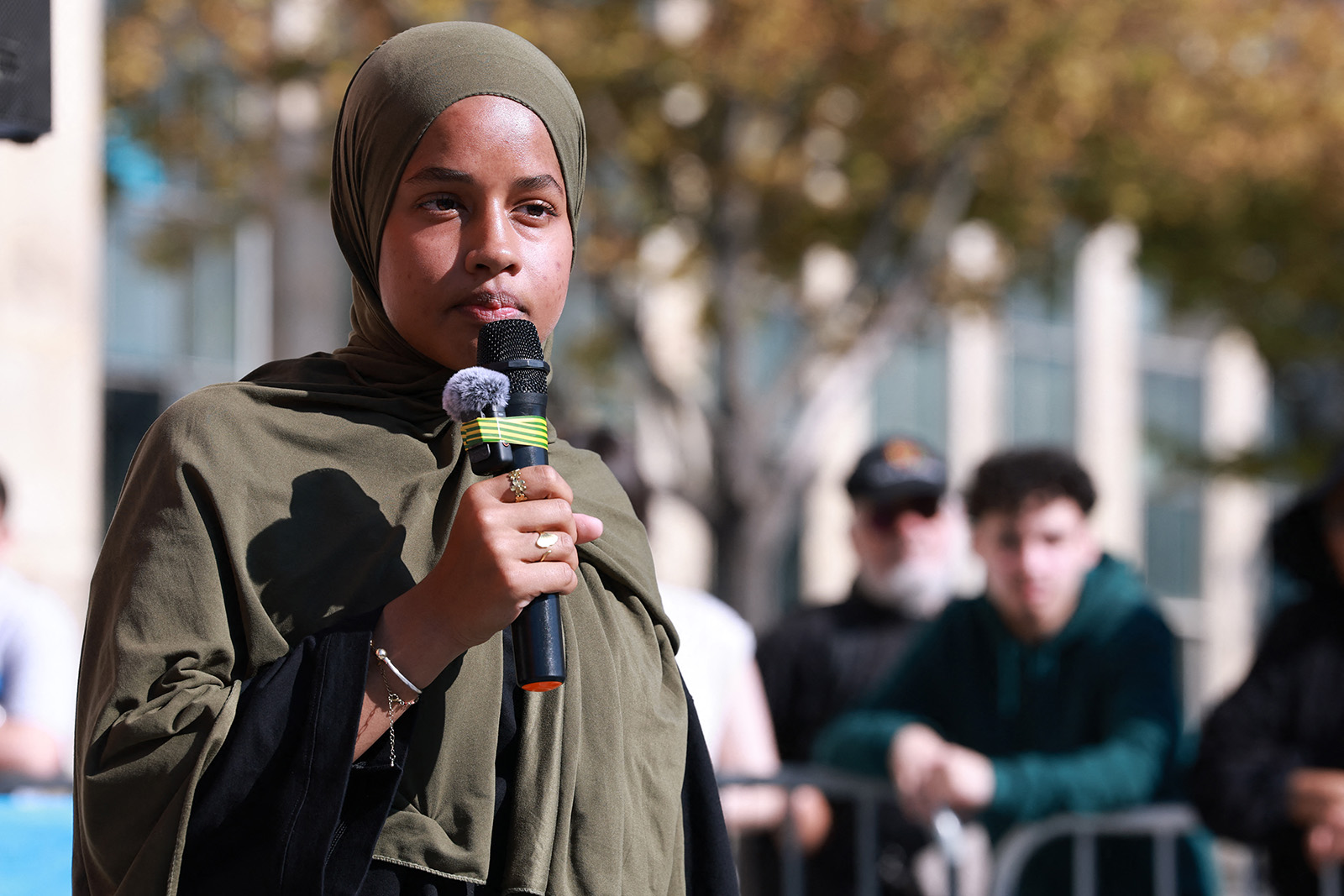
In her viral video, Sarré refers to the French government’s 2023 ban on wearing the abaya — a loose-fitting, full-length robe — in French public primary and secondary schools (headscarves have been banned in schools since 2004). For young Muslim women like Sarré, it’s a clear example of a state that is more preoccupied with policing outfits than ensuring decent working conditions.

“The national education system focuses on things that are pointless when they should be paying attention to the real issues — the things that genuinely affect all secondary school students,” said Farah, 15, a high school student who was protesting with her classmates in Place de la Bastille on 8 October.
“It’s a way of diverting attention away from the real problems in France,” said Assya, a law student at the Sorbonne who was also at the protest. “There are far more important issues than what religion someone follows, or how a particular girl is dressed.”
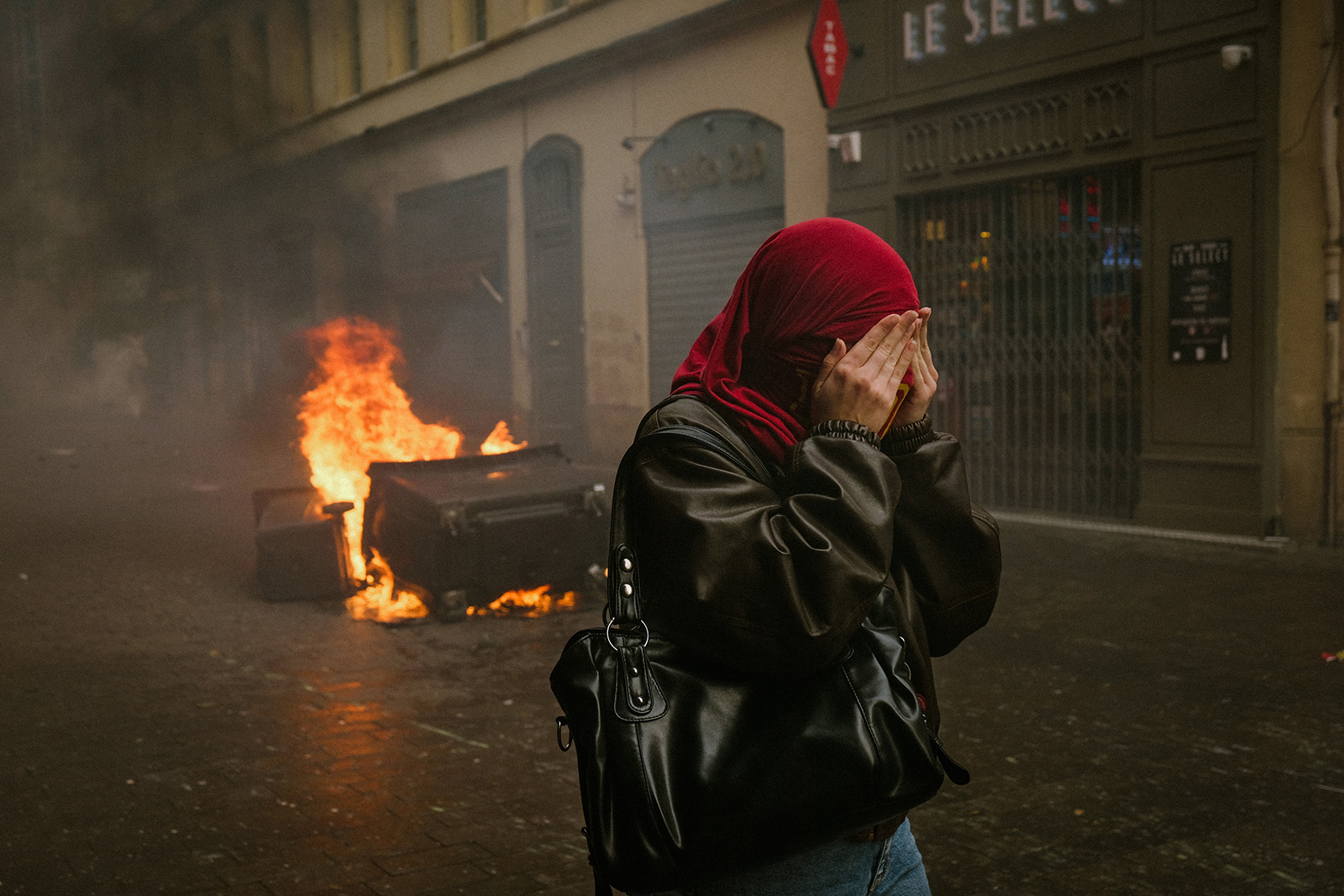
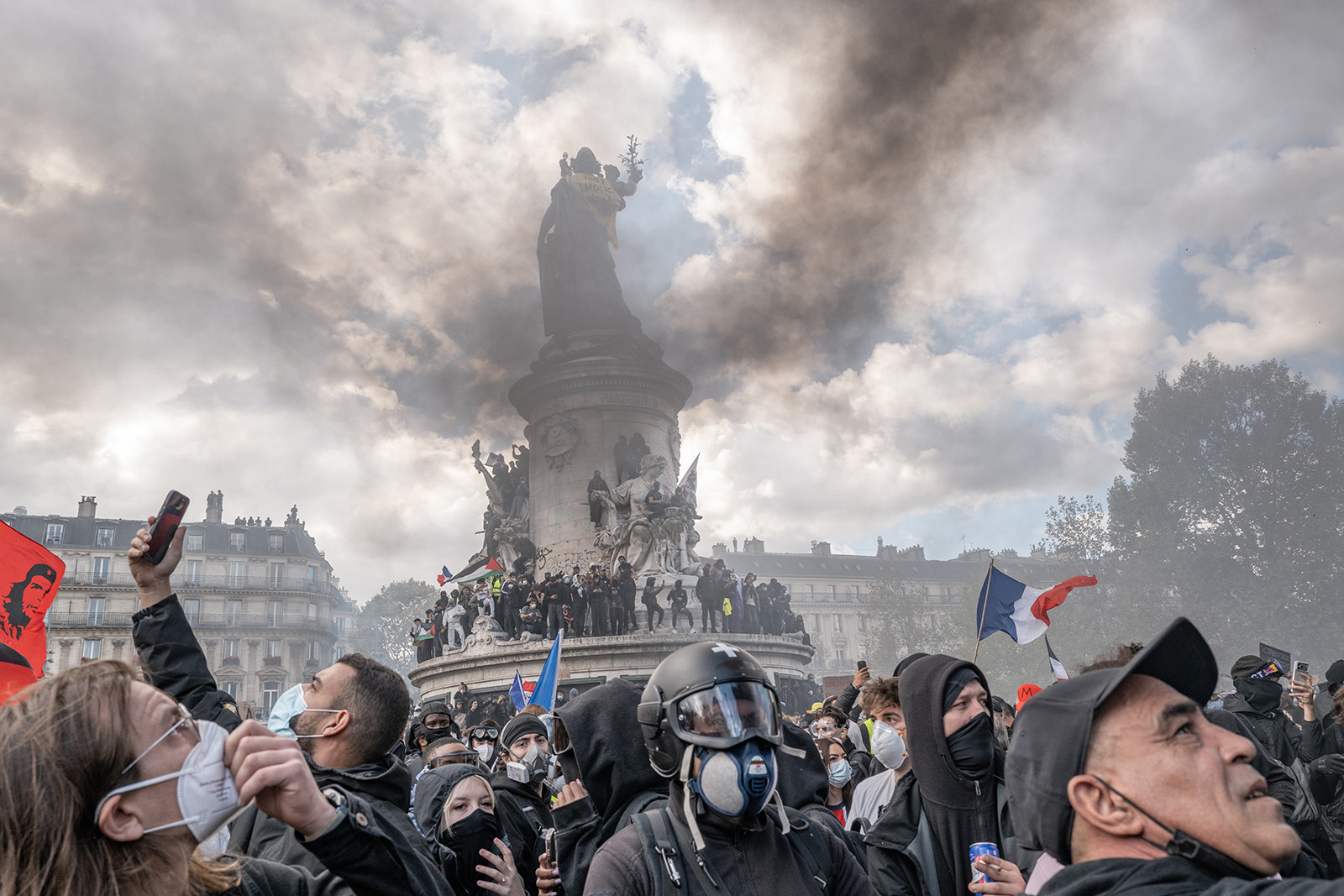
The student demonstrations demanding solutions to overcrowded classrooms, staff shortages and dilapidated school buildings converged with wider protests against the cost of living on Saturday in a significant escalation of the crisis.
According to the interior ministry, some 550,000 marched in cities across France. While most marches were peaceful, the day ended with some of the worst violence the country has seen in years, with large crowds rioting, looting and setting public buildings on fire. More than 2,500 people were arrested while 1,000 police officers were injured, and the interior minister acknowledged that the police had “lost control”. With more protests expected, French President Emmanuel Macron said on 22 October that “illegitimate” demonstrations would be banned in the coming days.
Trust in the authorities “has completely broken down in the wake of recent events,” said Diangou Traoré, deputy mayor in charge of community life and city contract of Saint-Denis, a town on the edge of Paris, and a former activist against police brutality. “We know for a fact that the police are more aggressive against people from working-class neighbourhoods,” she added.
Since the protests started more than a month ago, authorities have responded to the demonstrations with heavy-handed policing and sometimes a disproportionate use of force, with some teenagers severely injured and maimed. Internal investigations have been opened into 36 allegations of officer violence against demonstrators.
For many Muslim students in France, the current unrest reflects decades of policies they consider to be unfair and even dangerous. “There is a direct link between the violence perpetrated by the police against school pupils and the institutional and legal violence that has been established over time, which takes the form of measures that are racist and Islamophobic,” said Yusuf Omar Akhter, president of the student organisation Muslim Students of France (EMF).
“It is no coincidence that the high school protests began in neighbourhoods where schools have the least resources, which also have the highest number of students from racialised backgrounds. We have realised that we cannot separate the issues of racism and Islamophobia from other social issues.”
Related content
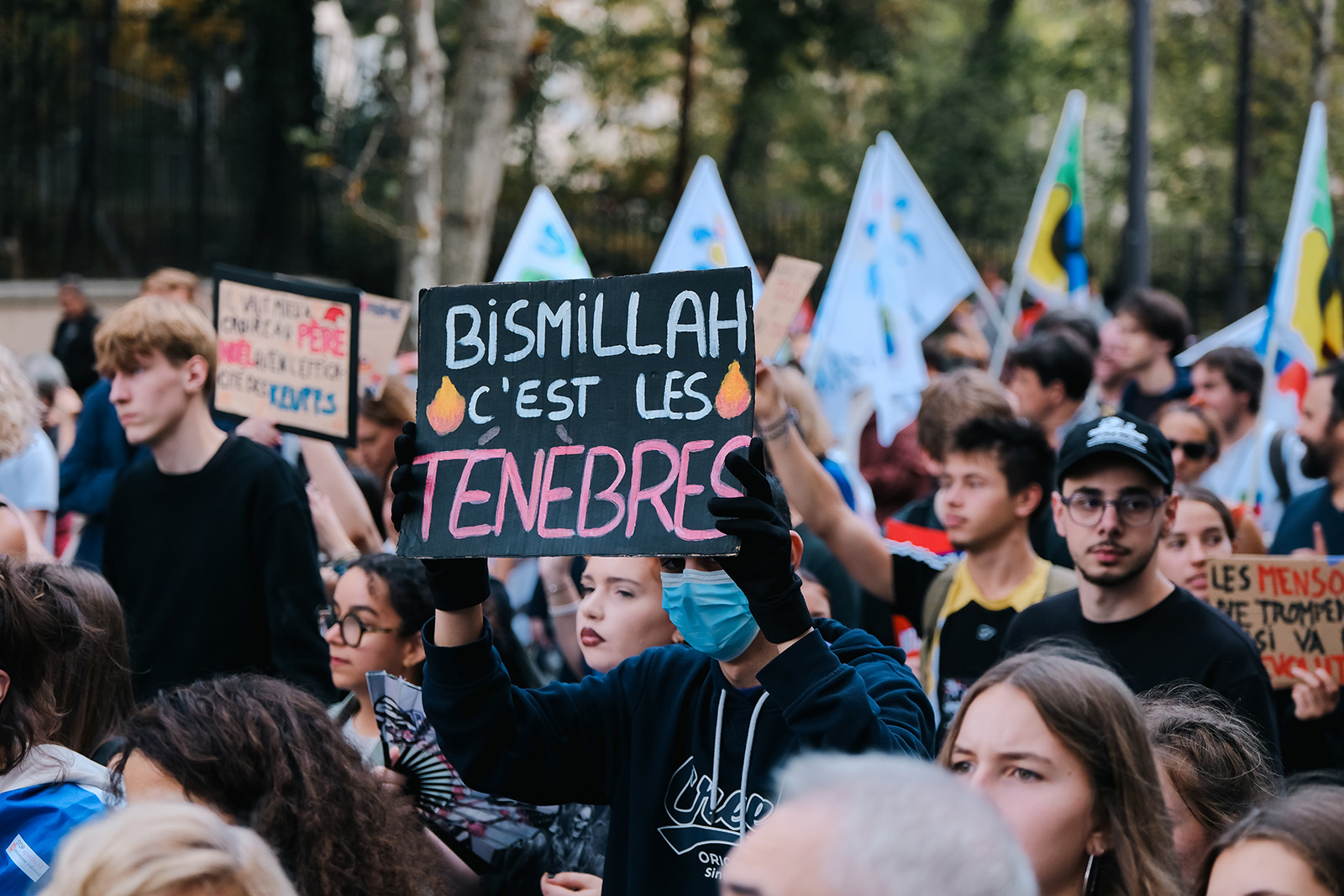
One phrase in particular has come to symbolise the student movement. On signs across protests, the words “Bismillah, c’est les ténèbres” — roughly translated as “in the name of God, it’s the darkness” — has become ubiquitous. The phrase appears to have originated in Snapchat messages from an account that, students suspected, belonged to an undercover police officer attempting to enter their private chats. The origin of the messages has not been independently verified.
For protesters, the slogan crystallises what they see as the police’s prejudiced view of the demonstrators: young, Muslim and from deprived banlieues.
Traoré acknowledged that some Muslims could find the phrase offensive when divorced from its original context. But by adopting it, students have turned what they believe was a clumsy attempt to caricature them into a joke at the authorities’ expense.
For Akhter, the episode demonstrates something more serious. “What we take away from this is quite simply an understanding of just how deeply Islamophobia has become institutionalised,” he said. “It’s just the latest example.”