Language is transforming how young Dutch Muslims learn about Islam
As Dutch plays a growing role in Islamic education, a new generation is seeking religious knowledge beyond the communities and languages of their parents

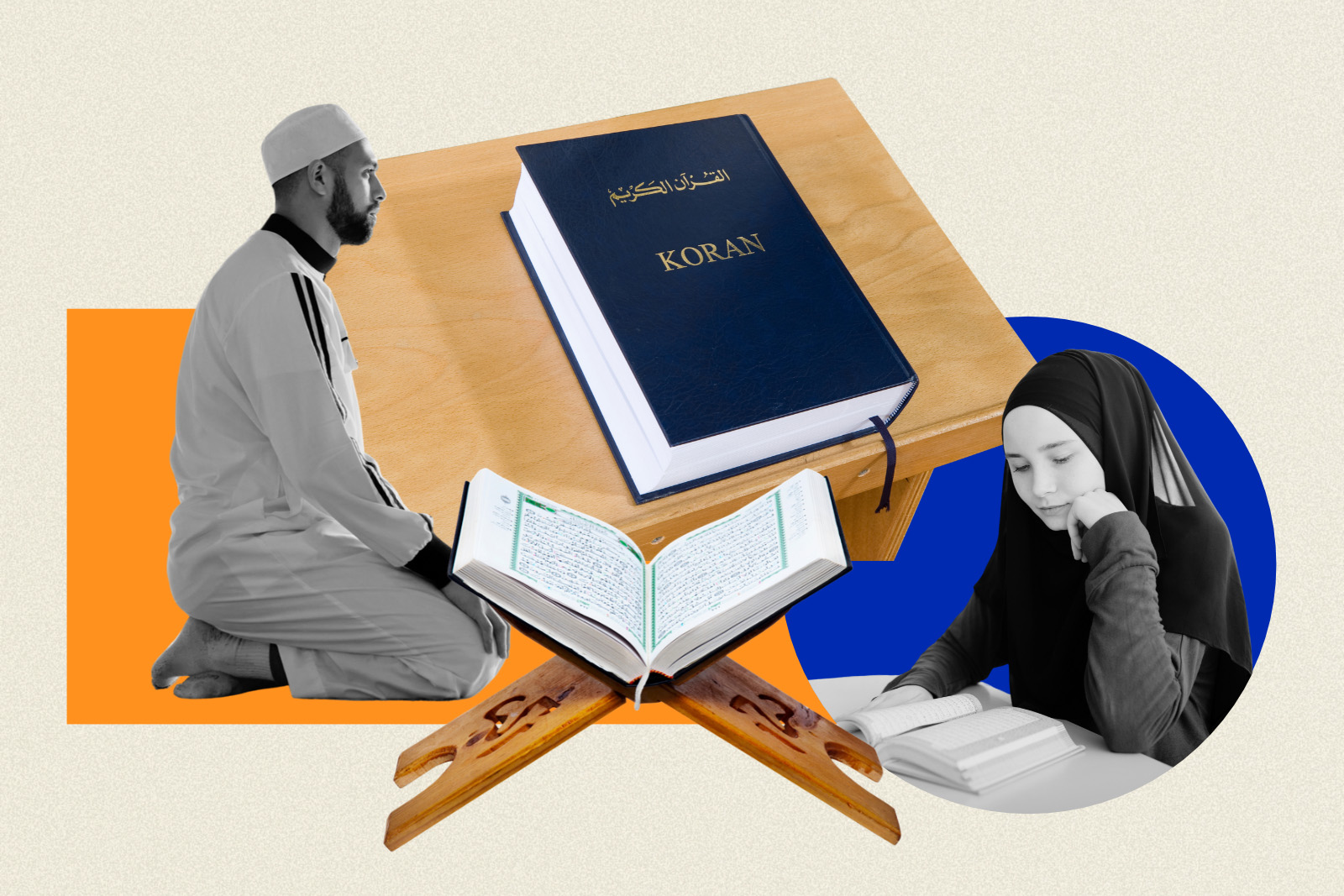
At Amsterdam’s Masjid Al-Karam mosque, children aged six to 12 sit on the floor for their Islamic lesson, Qur’ans open on low wooden stands. They call out to each other as three imams teach them, switching between Urdu and Dutch.
The reliance on two languages reflects a generational divide familiar to many Muslim families in the Netherlands. Mukhtar Chaudhary, chairman of Al-Karam, says parents generally speak Urdu and some Dutch, while their children are more comfortable communicating in the latter.
But the growing use of the Dutch language in Islamic education is doing more than making lessons easier to understand for younger Muslims. For a generation raised in the Netherlands, it is widening where — and from whom — they can learn about their faith.
At Amsterdam’s Blauwe Moskee, Dutch and Arabic have long been used alongside each other. In September, however, it launched a dedicated Dutch-language Fiqh Ibadaat — or jurisprudence — course on Islamic worship.
Among those taking part is Selin, 38, who grew up attending a Turkish mosque where she learned about Islam in Turkish. Her parents were born in Turkey and moved to the Netherlands as teenagers.
“Before, I would just accept what the imam in the mosque taught me,” she says. “Now I do my own research, search online, listen to lectures in Dutch and discuss Islam with friends who seriously study it.”
Selin, who asked to be identified by a pseudonym, says Dutch-language lessons and online Islamic content have made it easier to look beyond the community she grew up in. The course has introduced her to differences between the Hanafi school of jurisprudence, which she follows, and other schools of Islamic thought. Rather than changing her own practice, she says, these differences have helped her understand why different Muslims interpret certain matters in different ways.
Yusuf, who also asked to be identified by a pseudonym, is one of the mosque’s educational coordinators. He says that the choice to teach the course in Dutch has drawn people from all sorts of backgrounds: “In Dutch, you can follow the explanations more easily and ask questions when something isn’t clear. Most people aren’t proficient in Arabic, which creates a barrier to attending other lessons.”
Martijn de Koning, an associate professor of Islam, politics and society at Radboud University, says Dutch has been gaining ground as a language of instruction in mosques for several decades. More specialised Islamic education in Dutch, including fiqh, has become particularly visible over the past five or six years.
De Koning says the relationship between younger Muslims and traditional religious institutions is changing. “We see a strong fragmentation of religious authority,” he says.
While established figures — imams and scholars — remain influential, younger Muslims increasingly encounter religious authority through Dutch-speaking teachers, influencers and social media.
Ayşe, 26, has experienced this shift within her own family. Her father learned about Islam in Turkish at the same mosque she attended when she was younger. She now follows lessons with different teachers online and in person, and has studied Arabic grammar online.
She has enjoyed the freedom to learn from teachers outside her Turkish community and encounter different interpretations of Islam.
She offers an example: the position of the hands while sitting during prayer. While studying Hanafi jurisprudence, she discovered that there were different interpretations of a practice she had previously learned from her family and at her mosque.
“I learned that within a particular Islamic tradition there can sometimes be room for different views,” she says.
Related content
But greater choice has not made her feel less connected to the Turkish mosque community she grew up in. “I grew up with that community and I’m simply used to being part of it,” she says. Learning elsewhere, she adds, did not make her question what she had been taught so much as show her that some of her earlier knowledge had been incomplete.
Mohammed, 31, has a different relationship with inherited religious authority. He also uses books, online material and AI to explore different interpretations of Islam and understand why his family may practise certain things differently from other Muslims in the Netherlands. But unlike Ayşe, he considers Arabic more important than Dutch for deeper Islamic study, because it provides access to a much larger body of scholarship.
He still attends Amsterdam’s Al Kabir mosque, where his grandfather was one of the founders and his father took him as a child, and he does not usually follow religious teachers outside the Moroccan tradition he grew up with. When he encounters different interpretations, he ultimately turns to his imam and trusted books and articles by established scholars.
De Koning argues that younger Muslims can remain connected to their parents’ mosques while seeking knowledge from other teachers and communities. Increasingly, they “find their roots in different contexts”, he says.