
Mosque denied security cash under new Home Office rules after waiting years

MPs blast ‘vague’, ‘opaque’ process as mosques get turned down for security funding just hours after new code of conduct published

A mosque that applied to the government for security funding in 2023 was left waiting for almost three years before being finally turned down on the basis of a code of conduct that had been published just hours earlier.
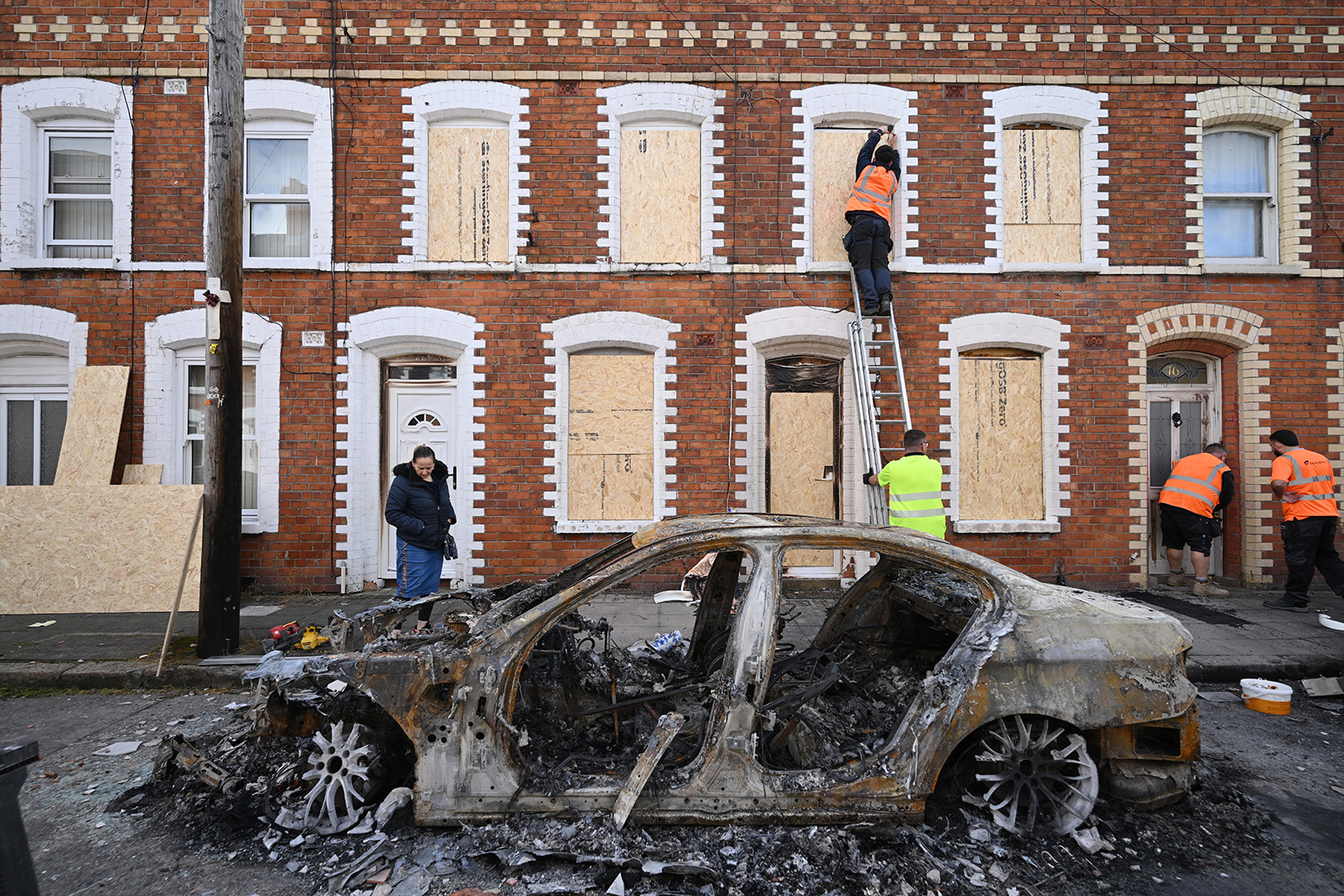
The mosque had been targeted in an arson attack before its application and, during Ramadan this year, a man threatened to kill a woman who was walking through its car park.
Hyphen has also been made aware of a second mosque that was refused funding on the same day, 14 May 2026, on the same basis. Neither mosque was given further detail about why its application had not been successful, even when the Home Office was asked.
These refusals are among examples of what MPs have told Hyphen is a “vague” and “opaque process with little accountability”.
Related content
The code of conduct states that mosques “must be careful not to bring themselves into disrepute or otherwise undermine the work of the Home Office or wider government”, but does not provide examples.
In its emails to mosques, the Home Office said it had conducted “due diligence” checks “to ensure that organisations participating in the scheme meet certain standards expected by the Home Office”. It invited both mosques to review the code of conduct and submit new applications.
But emails seen by Hyphen show that when mosques asked for further information about why their applications had failed so that they could make the necessary improvements, the Home Office said it was “unable to provide further information”.
The Home Office also claimed in one email that “it is not possible to provide further information on the specific findings of due diligence assessments in individual cases for security reasons”.
Iqbal Mohamed, the independent MP for Dewsbury and Batley, said the Home Office’s approach raised a “basic question of fairness”.
“The stated purpose of the protective security scheme is to help keep mosques protected and worshippers safe, yet applicants are being denied funding without being told precisely why,” Mohamed said.
“How can a mosque address concerns or improve a future application if it is not told why their initial application was rejected? I agree that security funding must be allocated through a process that is robust, but it must also be one that is transparent. On that criterion, the scheme appears to be failing.”
One of the mosques, in the Greater Manchester area, has been refused security funding twice. The mosque initially applied to what was then known as the places of worship protective security scheme in 2022, having been targeted in an arson attack. Its application was refused.
It made another application to the newer protective security for mosques scheme (PSMS) in 2023, but did not hear back for nearly three years. It was notified that its application had been unsuccessful, citing the code of conduct, at 10.39am on 14 May. The code of conduct had been published less than 24 hours earlier — at 4.45pm the previous day.
“There is no security for mosques as far as I’m concerned,” said a staff member, who asked not to be named. “Even when anti-Muslim hatred is on the rise, they don’t seem to want to help. My understanding is that we have brought the government into disrepute, but tell us what it is, because both of our applications predated that guidance.”
The mosque, which also runs a children’s Qur’an school and a foodbank, welcomes 1,500 worshippers every Friday.
“It’s not the congregation’s fault,” said the staff member. “It’s not the children who come to the Qur’an school’s fault. So why aren’t the Muslims who use this mosque allowed to stay safe? Why can’t we improve our security, knowing what we face here?”
The staff member said the mosque is “constantly” facing threats from the far right. “We’ve had far-right protests outside of the mosque,” they said. “We know that sometimes people are nervous to come to the mosque because it’s always under far-right attention, and we just haven’t got the money [for extra security].”
Another mosque in the north-west of England that applied for funding in the summer of 2025 also had its application refused by email at 10.39am on 14 May 2026. A trustee, who spoke on condition of anonymity, said it was “completely unacceptable” that the code of conduct had been published only the evening before decisions were sent.
“You should make clear that these are the ground rules when people are applying for funds, not the day before, 12 months after people have applied,” he said.
He also criticised the code of conduct for being “woolly”. “It talks about the various due diligence checks, and that includes checking social media of trustees. It seems like someone’s taken offence to a social media post that somebody from the mosque has made.
“If there was actually anything offensive or illegal, they wouldn’t hide behind this — they would say exactly what has caused our application to fail. So they’re not being transparent, and they’re not opening themselves up to scrutiny in terms of their decision-making process.
“My concern is that even if there might be an odd tweet or a post on social media from somebody related to the charity that the Home Office doesn’t like, how is that then protecting the Muslim community who the government has set this fund up for? And if we don’t know what’s causing the offense in the first place, how can we mitigate that?”
The mosque welcomes approximately 2,000 people for Friday prayers and also runs a children’s Islamic school. The trustee said it has faced intimidation in the form of verbal abuse, and a small tree had been uprooted from outside its gates and thrown inside its premises. “With all the rhetoric on social media, and the masked people marching through Dover and Portsmouth, there is fear in the community. We just don’t know what else we can do,” he said.
Hyphen has seen letters written by MPs to the Home Office earlier in 2026 to express concerns about the scheme. Cheadle MP Tom Morrison, who is among them, told Hyphen that the latest revelation about refusals “fits a wider pattern your reporting has exposed — a scheme where decisions are made behind closed doors and mosques are left with nowhere to turn”.
The Liberal Democrat MP added: “I wrote to the Home Office in June to press for clarity and got no real answers back. Ministers cannot keep hiding behind vague due diligence checks. The Home Office needs to be properly accountable for how it makes these decisions and give mosques the transparency they are owed.”
An investigation published by Hyphen in August found that the PSMS has suffered severe delays. Both MPs and the Muslim Council of Britain have called for greater transparency around the scheme.
Mohamed criticised the government for declining to publish data on the number of applications that have been approved and rejected, and the criteria used to determine applications. Hyphen had to fight for nine months to obtain basic figures.
“While protecting sensitive security information is important, withholding even basic information that poses negligible security risks will fundamentally undermine public confidence in the scheme among the Muslim community,” he said.
“At a time when anti-Muslim hatred is on the rise, the priority should be helping mosques access security support, not subjecting them to an opaque process with little explanation or accountability.”
A spokesperson for the Home Office said: “We do not comment on individual applications to the Protective Security for Mosques Scheme to protect the integrity of the scheme.
“To help protect Muslim communities from the appalling levels of hate crime they face, the government has made £40 million available through protective security schemes. This is part of a record £77.4 million investment in security funding for faith communities in 2026/27.”