
‘It’s my job to be truthful and honest’: Ahmed Masoud on bringing Gaza’s stories to global audiences
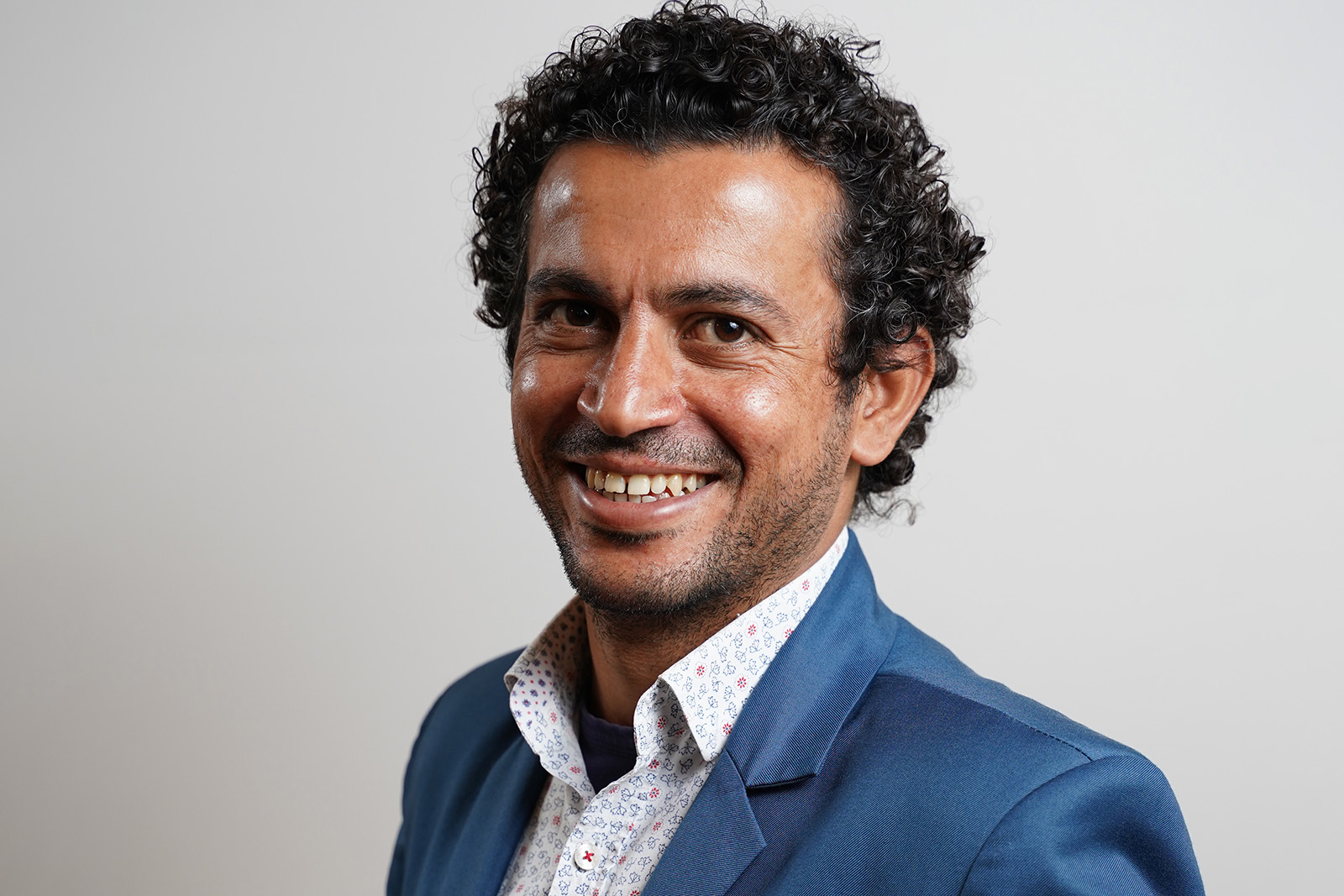
The playwright’s latest production, Application 39, imagines a future where Gaza hosts the 2048 Olympics

Ahmed Masoud still remembers his father’s reaction when he began writing plays as a university student in Gaza.
“He just slammed the door and left,” he says. Masoud thought his father was angry that he was writing instead of working to support their family. But then, “he came back with a cup of tea and said, ‘Please, do finish it’”.
Related content
The encounter was formative. “That was my inspiration: to see my dad as he was struggling and trying to feed his family, yet at the same time to make a tea for me and say, ‘This is what we need. We need storytelling. We need you to tell our story.’”
Masoud has been doing that ever since. We spoke at a particularly busy time for the writer, director and academic. A new production of his satirical play, Application 39, opened at Bristol Old Vic in late September and is touring venues in Newcastle, Ipswich and Manchester before finishing up at Stratford East, 13-14 October.
Two further plays by Masoud opened the same week: the dark comedy The Shroudmaker as part of PalArt Collective’s annual festival of Palestinian theatre, and a contribution to the ensemble production The First Year (of the Gaza Genocide in the Media) at the New Diorama in London. Masoud has been based in the UK since 2002. He is the author of two novels and his plays have toured the country and appeared on BBC radio.
Set in the near future, Application 39 follows two characters in Gaza who hack the bidding process for the 2048 Olympics as a joke, and to their surprise, are successful. It was initially published as a short story in 2018, then adapted for radio before Masoud staged it for the first time last year. Revisiting the story’s prophetic original themes eight years on was difficult to process.
“I was really horrified to reread it again because in the 2018 short story version, I mentioned there would be a genocide in Gaza in 2025, and it was horrifying for me to see that it actually started in 2023,” Masoud says. “I said Gaza will be divided into various areas and zones, and that there are robots that talk to people and do biometric scans. That is happening right now. When I wrote this story it was a fantasy.”
To be able to rework the play and write about the genocide from a future perspective, Masoud had to distance himself from the reality. The process was deeply painful. Several members of Masoud’s family have been killed by Israeli airstrikes in Jabalia, including his brother, sister-in-law, nephew and 13 of his cousins.
Still, using the speculative technique of looking forward provided a form of healing. “If you read a lot of Palestinian literature from Emile Habibi and Ghassan Kanafani for example, looking forward is always that way for us. It’s a way of coping, because the moment you stop and think about what is happening right now and what happened before, the loss and trauma is so weighing that you can’t move anymore. You can’t think.”
Masoud grew up in the Jabalia refugee camp in a large family, where his father helped him cultivate a love of language early on by bringing him books. “I read the biography of Lenin at the age of nine in Arabic, which was the most complicated thing I ever read in my life, and that fascinated me,” he says. Later, as a university student, Masoud became drawn to English literature. His studies and writing were “my way of looking at the outside world, of bridging it”.
A move to the UK, where Masoud pursued PhD research in English literature at Goldsmiths, University of London, brought to life the Dickensian city he had previously only read about, alongside his enjoyment of the dry British sense of humour. Only Fools and Horses is a particular favourite.
Before October 2023, Masoud travelled from London to Gaza twice a year to connect with his artist friends, including the poet and academic Refaat Alareer, with whom he had planned to set up a theatre in Jabalia. Alareer was killed in an Israeli airstrike in December 2023.
Gaza’s presence has remained throughout Masoud’s work. “For me, Gaza is a beautiful city, a Mediterranean city with all that it offers, with organised chaos, alleys, cafes, the sunset over the beach turning red — it’s gorgeous. That’s my memory of Gaza. That’s the city I know and love so much. To have this vibrant city reduced just to conflict for me has always been problematic.”
Related content
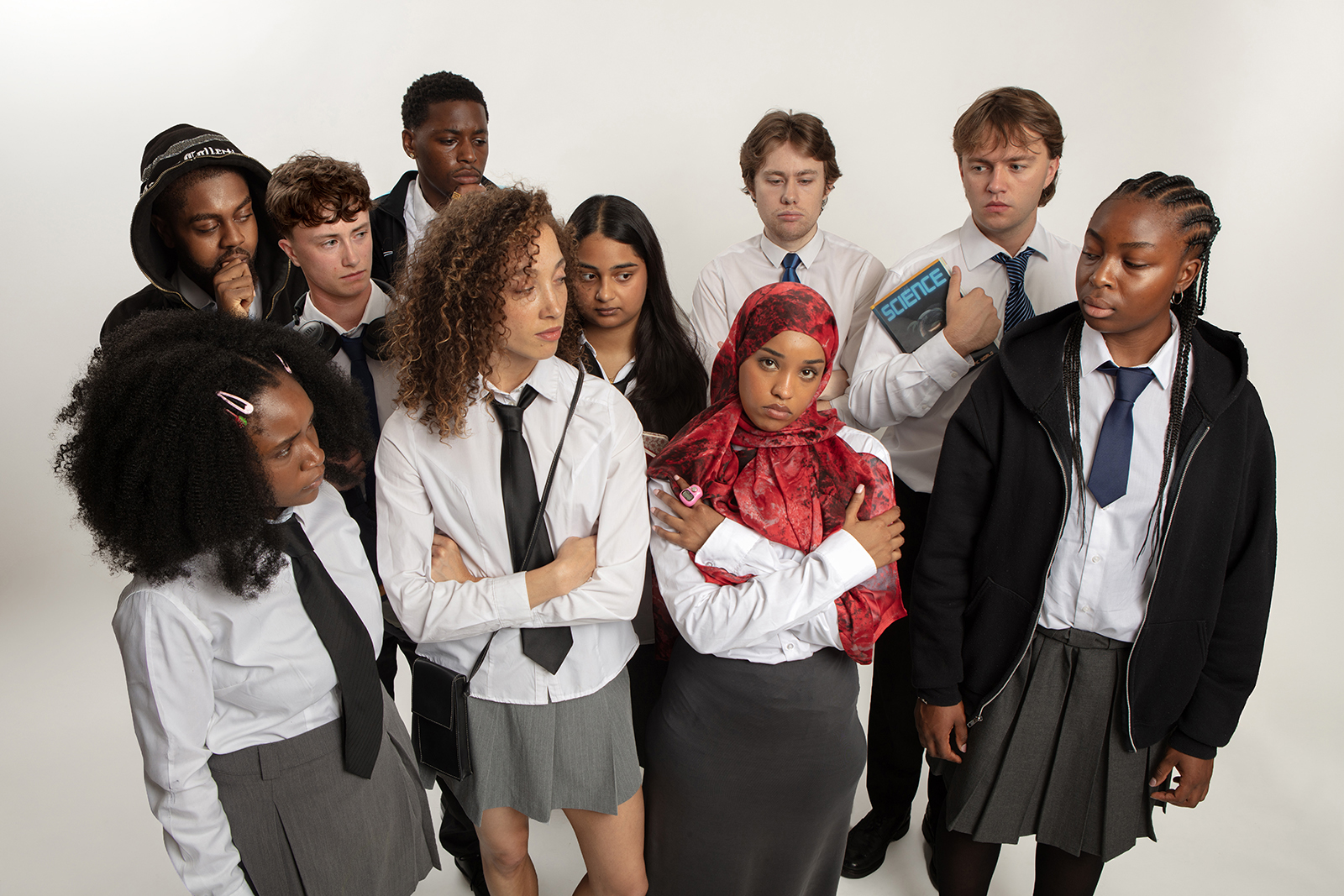
Application 39 grapples with these themes. “Maybe the world will start to see us differently,” one character wonders.
To tell such stories, in 2021 Masoud co-founded PalArt Collective, which has hosted an annual festival since 2022. It is in part an answer to the “systematic approach to silencing Palestinian voices” that Masoud says he has experienced firsthand in Britain. “Unfortunately, that is what happens. That’s what strips us from our humanities. That’s what enables genocide, in a sense.”
While Application 39 is darkly comic in tone, there is still a hopeful message towards the end. More than anything, Masoud hopes that it will prompt audiences to consider the potential of Gaza’s future.
“I feel like it’s my job to continue to knock on doors, to continue to say, ‘Hey, I’m here. I’m telling the story,’” he says. “It’s my job as a writer to be truthful and honest to my people, but to also present something unique to the reader, and it’s not filtered. I feel it’s very important to honour their stories as much as possible.”
Application 39 is showing at Factory International, Manchester, 9-10 October; and Stratford East, London, 13-14 October.