
Learners in West Yorkshire wait up to two years for beginner ESOL classes

One provider said there had been a ‘massive boom’ in demand for ESOL in 2024-25 while another college warned of ‘more demand than we can deliver’

Aspiring English speakers in parts of West Yorkshire are having to wait up to two years for beginner classes because funding has lagged behind demand, a college leader has warned.
Esther Derbyshire, head of adult, community and English for speakers of other languages (ESOL) at Leeds City College, said her organisation has about 3,500 places available on these courses at different levels each academic year but still operates waiting lists, typically ranging from about 200 to 400 people for the most in-demand.
Related content
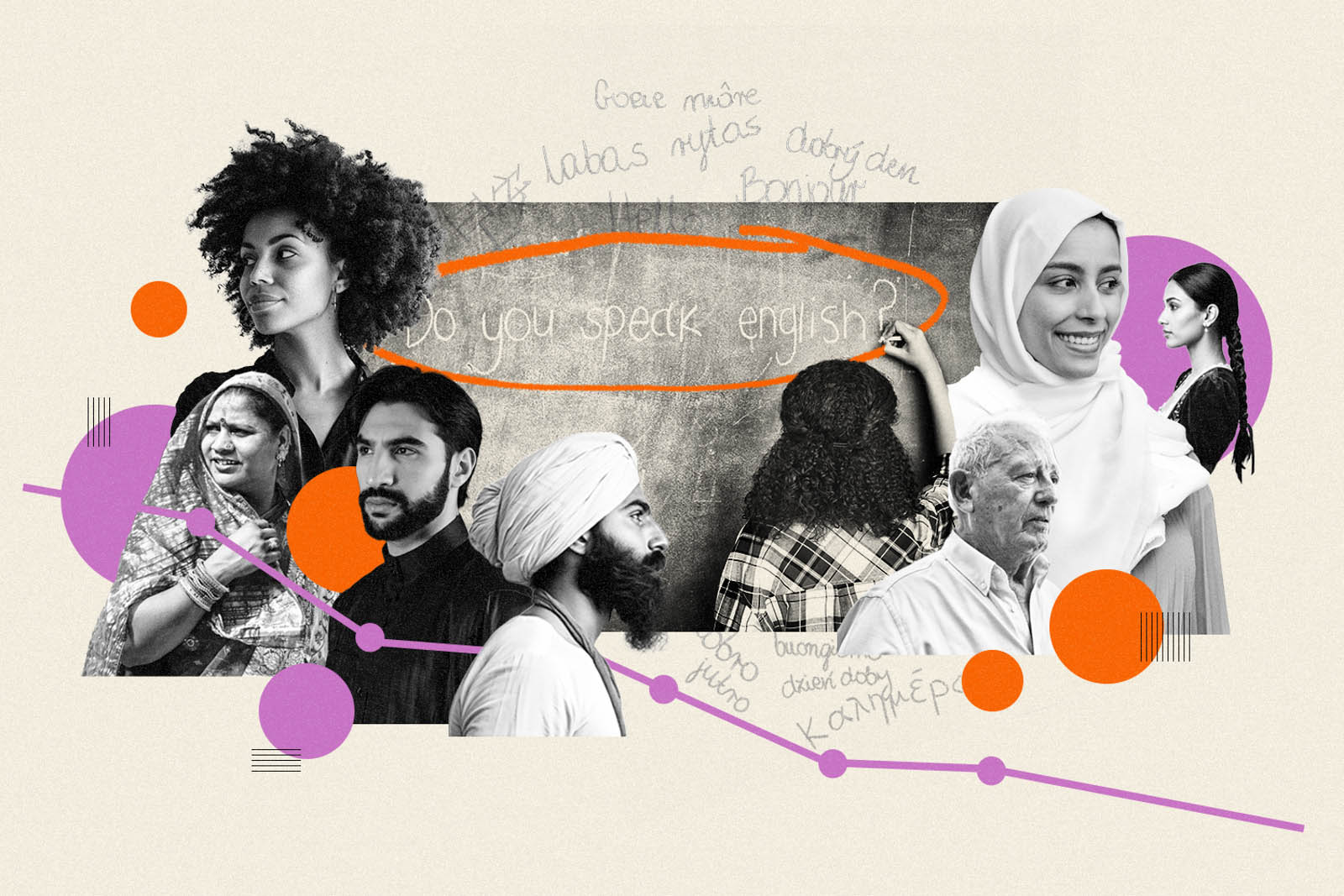
These classes, for adults aged 19 and up, are funded through the government’s adult skills fund (ASF), for which the West Yorkshire Combined Authority (WYCA) has devolved powers.
“It’s getting harder and harder to deliver on that scale with the funding we’ve got,” Derbyshire said.
Hyphen revealed on Monday that spending on ASF-funded ESOL in England had plunged by 39.1% in real terms between the 2009-10 and 2024-25 academic years — despite classes being a way to boost social cohesion, integration and the number of working adults.
“In terms of capacity, we constantly have a waiting list for our ESOL classes — and we have constant queries,” Derbyshire added.
“We have a full-time member of staff conducting interviews and initial assessments for people who applied for ESOL courses. That person is always booked up months in advance.
“So, whereas we’re providing as much as we can, there is definitely more demand than we can possibly deliver within the funding that we have available to us.”
There has been a wider, “prolonged cash-terms freeze” to funding rates for most adult education courses since at least 2013-14, analysis by the Institute for Fiscal Studies think tank found in January.
“Very simplistically, teacher salaries need to go up in line with inflation,” Derbyshire said.
“We’re getting the same amount of funding so we can’t have as many teachers and we can’t deliver as many classes as we used to, and that’s a national picture for everybody delivering under the adult skills fund.”
The WYCA’s expenditure on ASF-funded ESOL delivery rose from about £9m in 2021-22 to £13.4m in 2025-26, freedom of information (FoI) data obtained by Hyphen shows.
But demand has also increased in recent years, other ESOL providers, Wakefield Council and the Heart of Yorkshire Education Group, both noted. The latter described a “massive boom” in enrolments in 2024-25, while stressing it was sufficiently funded to meet this extra need.
Derbyshire said her college’s ESOL backlog fluctuates throughout the year and waits for a course can range from two months to two years, depending on the class level and the time of day.
Morning lessons are “always massively oversubscribed” and they “never have enough beginner classes”, she said.
Lengthy delays can have a “huge mental health impact” on some people, including asylum seekers looking to access services and integrate, Derbyshire warned.
Data obtained by Hyphen also shows the number of adult participants in ASF-funded ESOL courses in West Yorkshire rose by 19% from 8,250 in the 2021-22 academic year to 9,822 in 2024-25.
Across Leeds, Bradford, Kirkless, Wakefield and Calderdale, the local authority districts covered by the WYCA, 53,992 of the 2,269,555 usual residents aged three and over were recorded as not being able to speak English very well or at all as of the 2021 census.
Elsewhere in West Yorkshire, Wakefield Council said it currently has 106 people on its ESOL waiting list. The number of places on its courses increased slightly from 855 in 2022-23 to 885 in 2024-25, “varying according to staff availability”. A council spokesperson said these fluctuations were down to a “national shortage of further education tutors, in particular in ESOL”.
Backlogs were reported to be less of an issue at the Heart of Yorkshire Education Group, which offers ASF-funded ESOL classes at its colleges in Wakefield and Castleford.
A source at the organisation said its largest waiting list in recent years was a roughly 170-strong backlog in the 2021-22 academic year, but that it has since changed its delivery model and typically now has queues of no more than 20 to 30 people at a time.

People who apply after a course has already started are allocated onto the next cohort — starting in either January or September — and are not counted as being on a waiting list.
The group also allows learners to do multiple ESOL courses simultaneously, covering different components such as reading, writing, and speaking and listening rather than doing one longer course, leading to more enrolments, the head of ESOL explained.
They had planned for 378 ASF-funded ESOL learners in the 2024-25 academic year but ended up with 522 enrolments — up 26% from the 413 in 2021-22, he said.
Iqbal Mohamed, the independent MP for Dewsbury and Batley in West Yorkshire, said access to ESOL can be “life changing” and allow “individuals to participate more fully in society”.
He called for “proper investment” that meets demand, and for the WYCA and DfE to collect and publish clear data on waiting lists and waiting times to boost transparency and so that “provision can be planned properly and resources targeted where they are needed most”.