
Spend on English lessons for non-native speakers plunges 39% in 15 years

Department for Education funding for ESOL classes has fallen £117m in real terms despite rising demand, data obtained by Hyphen reveals

Spending on English language courses aimed at non-native speakers has been slashed by nearly 40% in real terms since 2009, freedom of information (FoI) data obtained by Hyphen reveals.
The Department for Education (DfE) and mayoral combined authorities in England spent about £183m on English for speakers of other languages (ESOL) courses for adults in the academic year 2024-25, down nearly 10% from the estimated £203m outlay in 2009-10.
Related content

Adjusting for inflation — using financial year data published by the Treasury — that £203m would have been worth about £300m in 2024-2025, our analysis has found. It means spending has been effectively cut by 39.1%, or £117m, in real terms over 15 years.
ESOL is seen as an effective lever for boosting integration, social cohesion and the number of economically active adults in England. But figures obtained by Hyphen through FoI requests reveal how funding was cut in the 2010s and had not recovered by 2024-25.
This is despite a surge in the number of adults living in England who stood to benefit from ESOL training between 2011 and 2021, as captured in census data from those years.
More than a million people in England, 1.86% of the population, could not speak English very well or at all as of the 2021 census — up by 174,335 since 2011. But adult participants on ESOL courses fell from 179,000 in 2009-10 to 168,730 in 2024-25, DfE data shows.
Of the 156,893 people in England who could not speak English at all as of the 2021 census, 16,073 said Punjabi was their first language, while 11,868 gave Polish as their mother tongue, 11,322 Bengali, 10,581 Gujarati and 10,137 Urdu.
Hyphen’s findings have sparked calls from one backbench Labour MP for ministers to boost ESOL funding.
“The ability to speak English is the key to integrating into your community and having a meaningful life in the UK,” Sarah Champion, MP for Rotherham, told Hyphen. “It makes no sense that help and support to speak English is being reduced across the country.
“The statistics show that there are many in the UK who have poor English skills. Think what that means — you can’t speak to your GP. You can’t speak to your child’s teacher. Perhaps most shocking, you can’t call 999. I am urging the government to increase funding for ESOL nationally as it is an investment in all our futures to have everyone productive and engaged in our society.”
Most accredited ESOL for those aged 19 and over and living in England is funded through the DfE-administered Adult Skills Fund (ASF), with courses delivered by colleges, higher education institutions, training organisations, councils and employers.
More than 60% of ASF funding has been devolved to mayoral combined authorities (MCAs) since 2019. The funding is not ringfenced to be spent on ESOL and can be diverted to a wide range of adult learning, including vocational courses such as engineering and construction. This enabled Andrea Jenkyns, Reform UK mayor for Greater Lincolnshire, to controversially announce ASF-funded ESOL in her patch would be axed from August 2027 and redirected to a literacy and numeracy scheme — despite 73% of consultation respondents opposing such a move.
Diana Sutton, chief executive at the Bell Foundation, a charity that aims to overcome exclusion through language education, said Hyphen’s findings showed the “scale of the challenge facing ESOL provision” as “investment continues to fall dramatically and is also vulnerable to regional priorities”.
“Decreasing adult education budgets have left some learners facing a postcode lottery, where suitable or sufficient ESOL provision is often out of reach,” she said.
“Yet ESOL can be the key to unlocking education, employment and social integration for many people. This under-resourcing of adult education must be addressed to enable investment in ESOL and unlock the economic benefits that investment can bring.
“As devolution expands to more regions, there is an urgent need for a national framework that specifies a guaranteed entitlement to ESOL to ensure that everyone can access quality English language learning, regardless of where they live.”
Hyphen sent multiple FoIs to the DfE, Greater London Authority (GLA) and MCAs to obtain the data, for the academic years from 2015-16 to 2024-25, inclusive. We combined this with publicly available spending estimates for the earlier years.
The Greater London Authority spent the most on ESOL courses in 2024-2025, £78.5m.
The West Midlands Combined Authority, which covers areas including Birmingham and Coventry, told us it spent about £16m delivering ASF-funded ESOL courses in 2024-25.
Prime minister Andy Burnham’s former Greater Manchester MCA spent the next most on ESOL delivery, £13.7m, followed by West Yorkshire with £12m, the data shows.
Total spending figures for the most recent 2025-26 academic year, which ended in July, have not yet been finalised by all MCAs, Hyphen was told in response to FoI requests for the latest data.
Related content
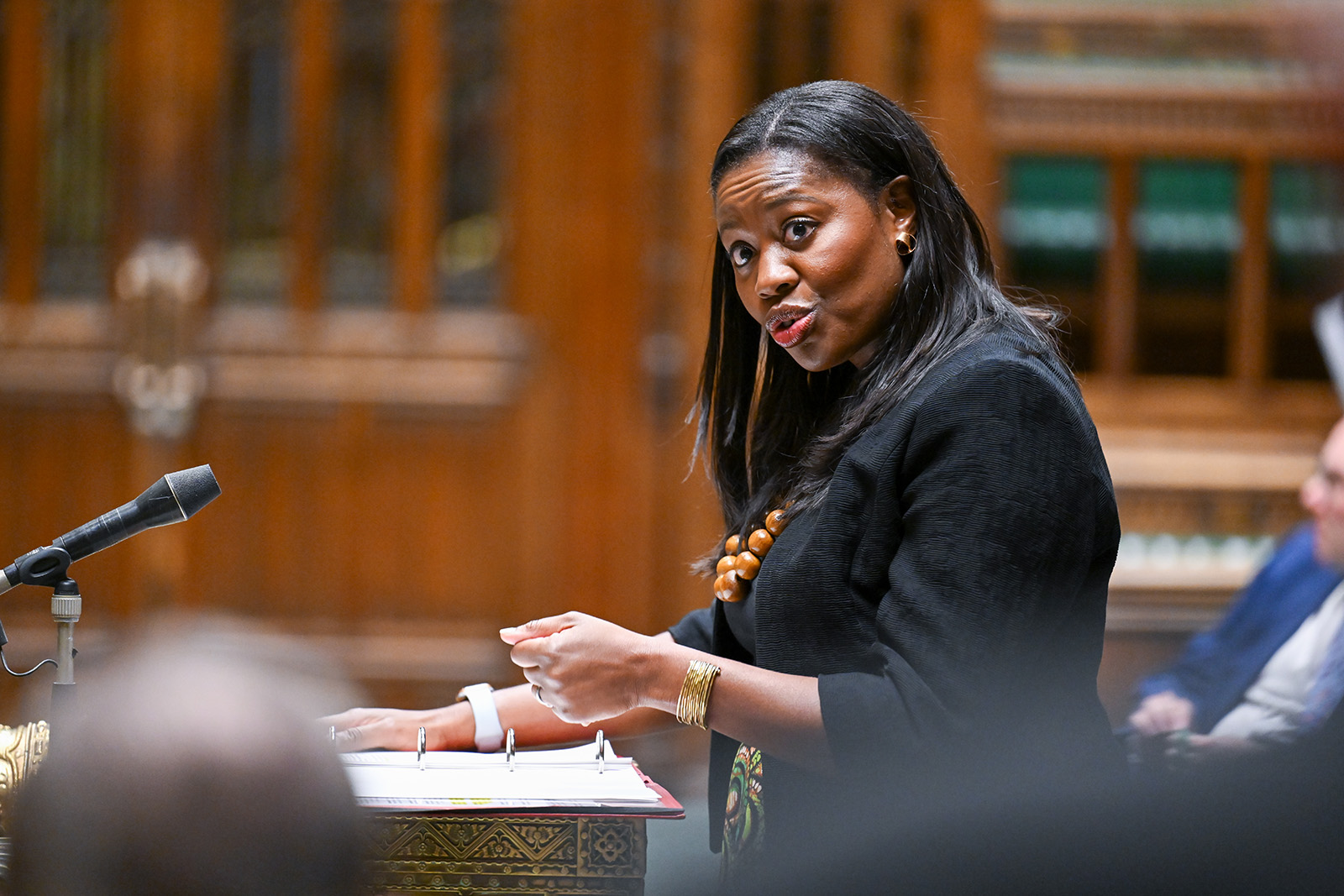
In an op-ed for Hyphen in March, then faith minister Miatta Fahnbulleh said the government would be launching a review of ESOL services as part of its Protecting What Matters social cohesion drive.
A Home Office white paper published last year stressed that the ability for people to communicate was “essential to perform civic duties, and for all social connections including, crucially, with the communities in which they live and with state and other agencies”.
This policy platform was further set out by home secretary Shabana Mahmood in March 2026, when she urged migrants to “work hard, learn the language and contribute to your community”. She made the remarks while announcing that from March 2027 those seeking permanent settlement would first need to speak and write English to A-level standard.
Similar requirements for those applying for most work visas were introduced in January.
The DfE was approached for comment.