
‘Great dignity and simple beauty’: the influence of Islamic art on MC Escher
The Dutch artist’s visit to the Alhambra, Spain, would leave a deep impression on him, an influence now being examined at the Escher Museum in the Hague

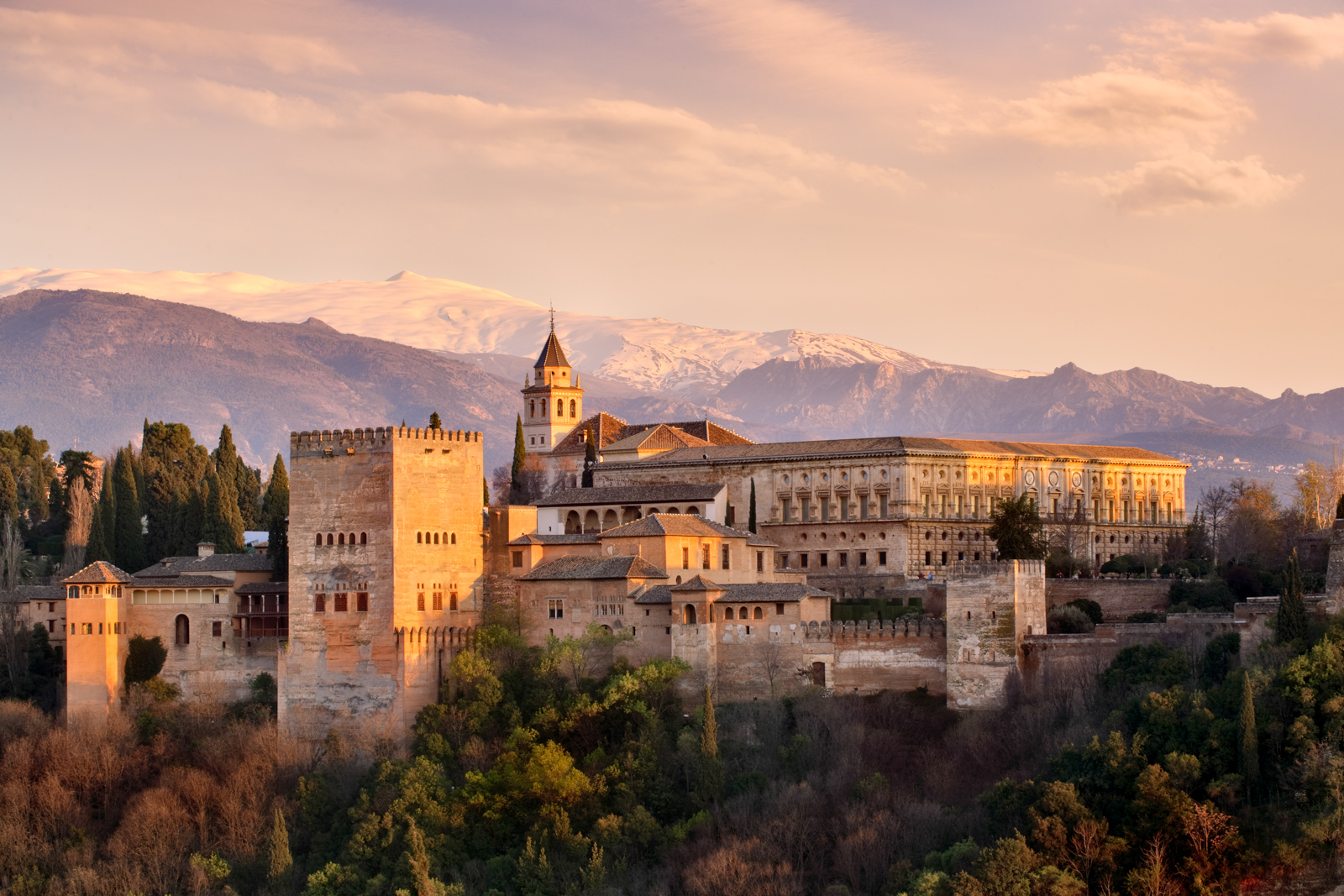
In 1922, the Dutch artist MC Escher visited Spain, travelling by ship to Malaga from Amsterdam, and then proceeding to Granada by train, where he encountered the Alhambra for the first time.

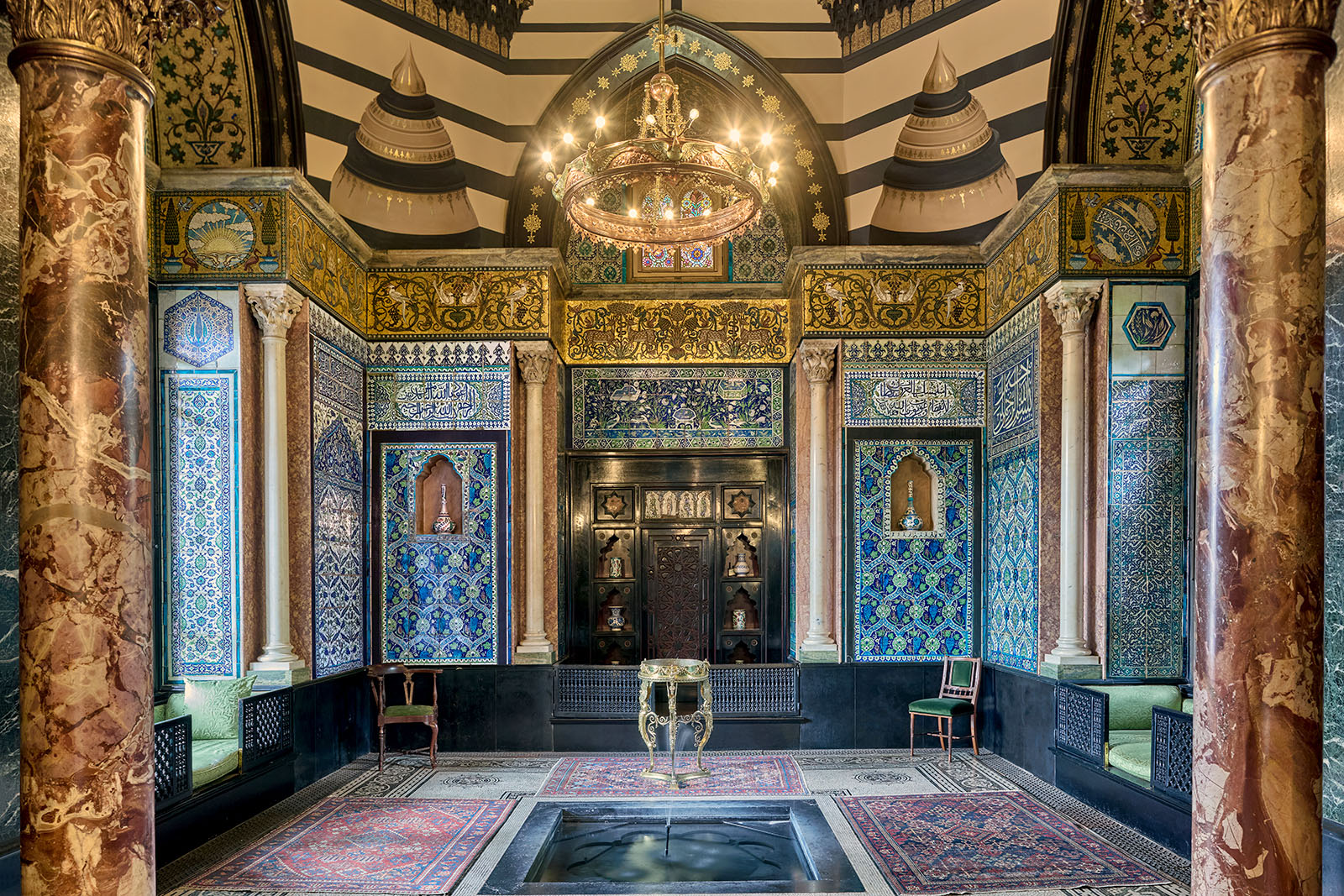
The 14th-century complex, completed primarily between 1238 and 1358, was built under successive Nasrid sultans, the last Muslim dynasty on the Iberian peninsula.
In one of his travel journals, Escher remarked on the palace’s “great dignity and simple beauty”. He was drawn to the geometric complexity of one of the starburst tile designs, which he spent an afternoon sketching. The absence of human or animal forms, the precedence given to tessellations and repetitive patterns rather than figurative elements, a hallmark of Islamic art, surprised him.
Fourteen years later, he returned to the Alhambra and the Great Mosque in Cordoba with his wife, Jetta Escher, on a three-day visit that would leave a deep impression on him. He would describe his discovery of tessellations there and throughout his life as a kind of “primal urge”.
Born in 1898 in Leeuwarden, Escher began studies in architecture before switching to the printmaking department on the advice of artist and teacher Samuel Jessurun de Mesquita. Heavily inspired by mathematics, the graphic artist worked across woodcuts, lithographs and engravings, and is known for works such as Drawing Hands, two hands that appear to be drawing one another in a self-referential loop.
“Escher is most famous for his optical illusions, but at the core of his art practice is actually geometry and the [inspiration] he received from his different travels to Andalusia,” says Mireille Linck, curator at Escher in the Palace Museum in the Hague, the Netherlands.
“When he went to Andalusia and saw this rich culture of patterns in the Spanish Islamic tradition, he was mesmerised by it,” she adds. “For him, it was very important to work in a figurative way, so he took what he saw, but then changed it in his own artworks where he combined different figures with each other.”
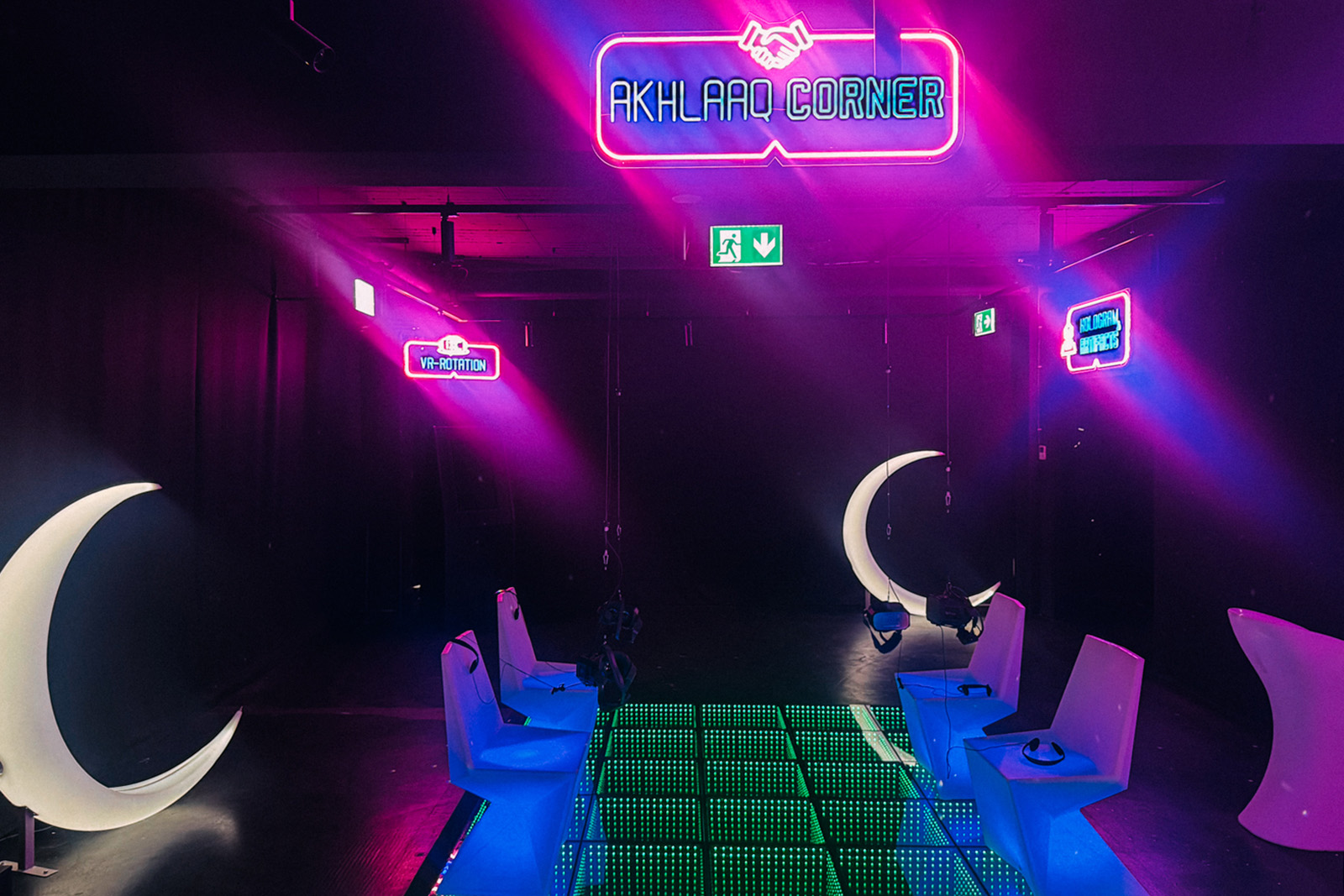
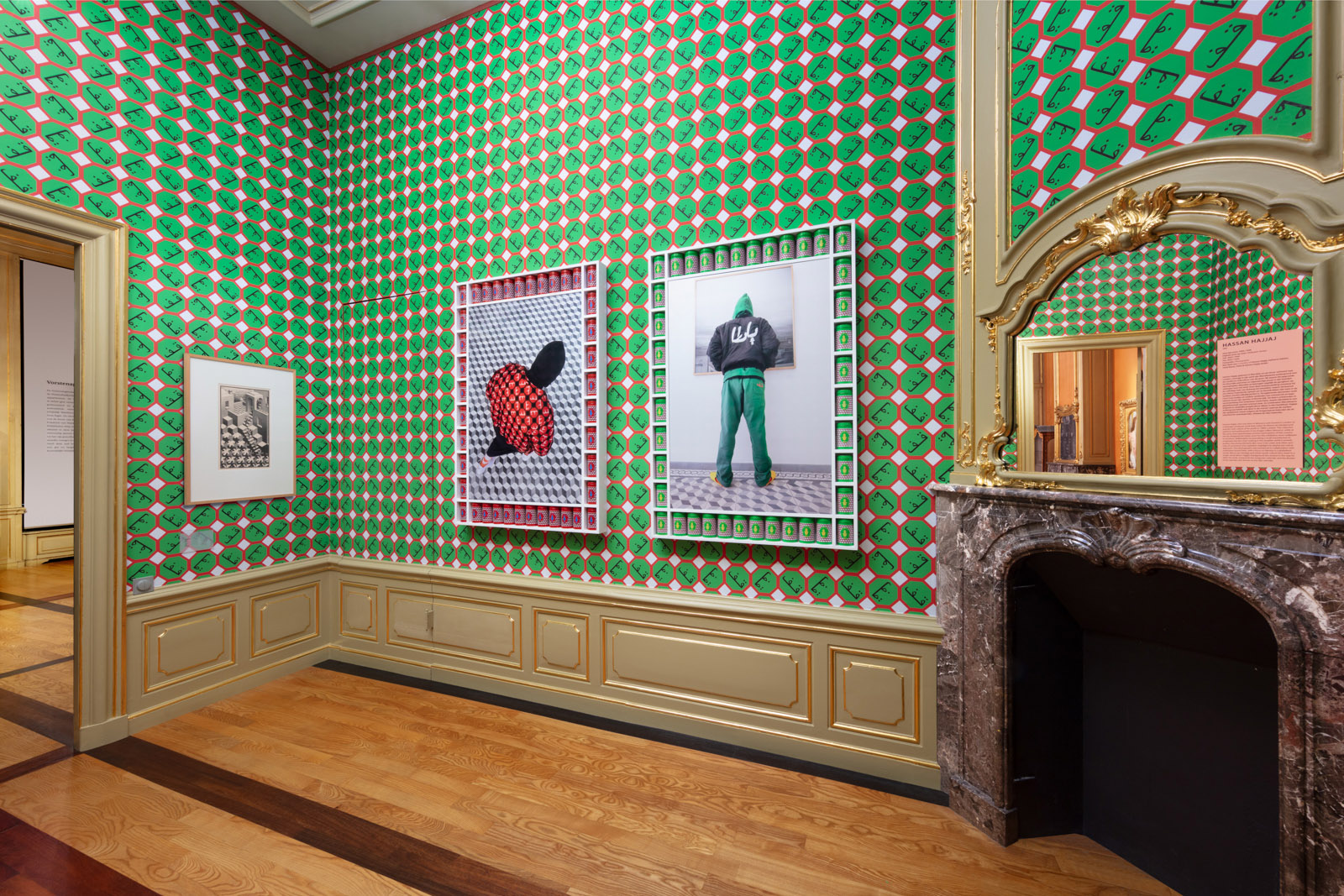
Linck is the co-curator with artist Qasim Arif of a new exhibition, Escher and Islamic Art: 20 Perspectives. The show, which is on at the Escher Museum until November, considers the influence of the Alhambra and Islamic art on Escher’s practice, alongside the work of 20 contemporary artists spanning painting, ceramics, photography, sculpture, and textiles.
The result is an exchange between past and present, considering how Islamic patterns and geometric designs remain an important aesthetic influence that transcends mediums, geographies and periods. Participating artists include Dana Awartani, Hassan Hajjaj, Shirin Neshat, Mounir Raji, Shehzil Malik, Emin Batman and Layla May Arthur, among others.
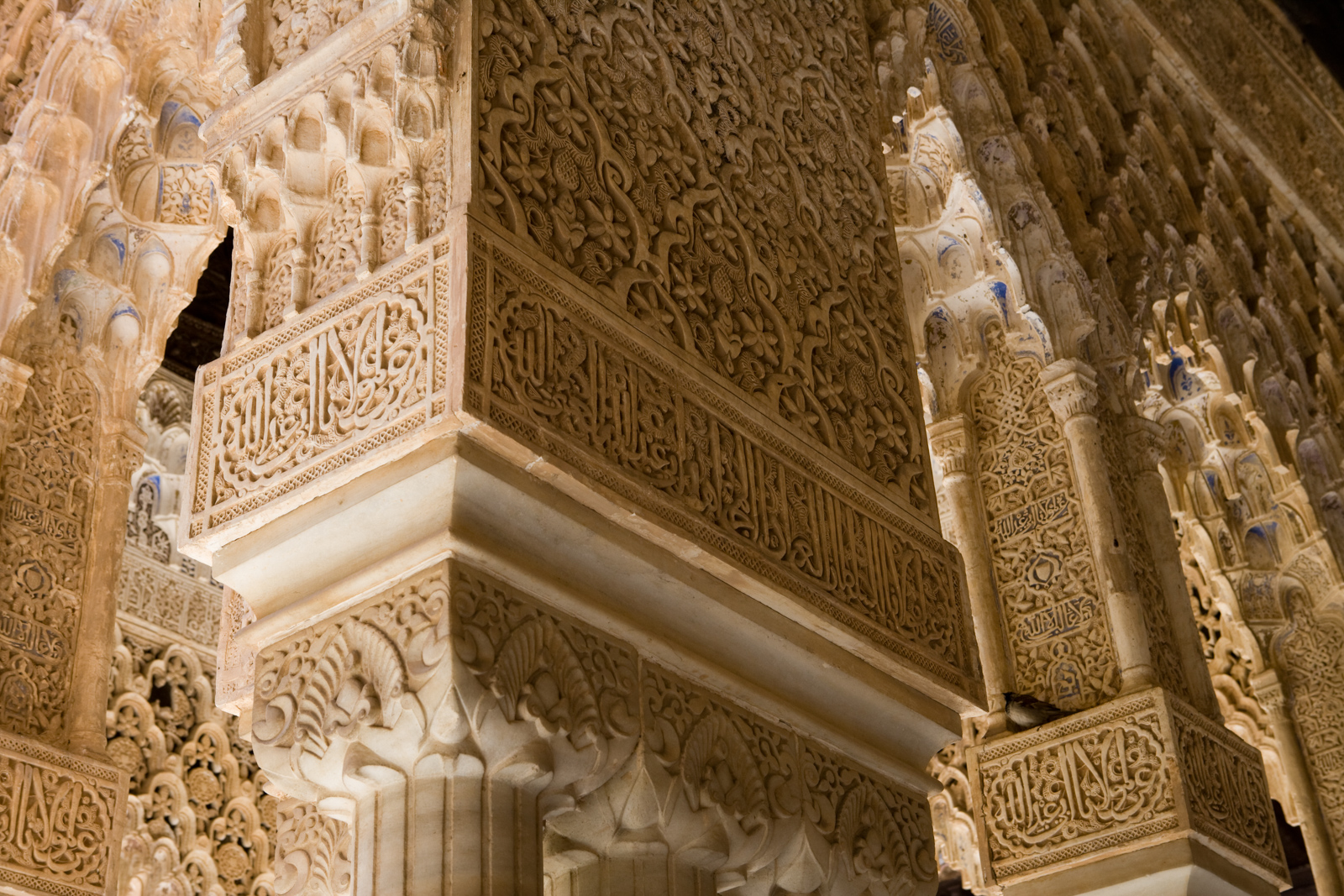
“Not a lot of people, in the broad sense of the audience, know this story,” Linck says of Escher’s fascination with the Alhambra. Escher himself, she suggests, has often remained on the peripheries of the art historical canon.
“He has been mentioned in art books and history classes, but he was never given the attention I felt he truly deserved, even at the university level or in Amsterdam schools,” says Spanish-Moroccan fashion designer and artist Karim Adduchi, who has contributed to the show.
The curation of the exhibition, Linck says, addresses a lack of representation in the Netherlands of work from artists with Muslim backgrounds. As part of its outreach efforts, the museum has involved groups such as the Dutch Muslim Archive, as well as holding tours in Turkish and creating a digital tool that enables attendees to read object texts in their own languages. “To engage with new audiences, but also to make sure that we reach those audiences in the way that they feel comfortable,” Linck says.
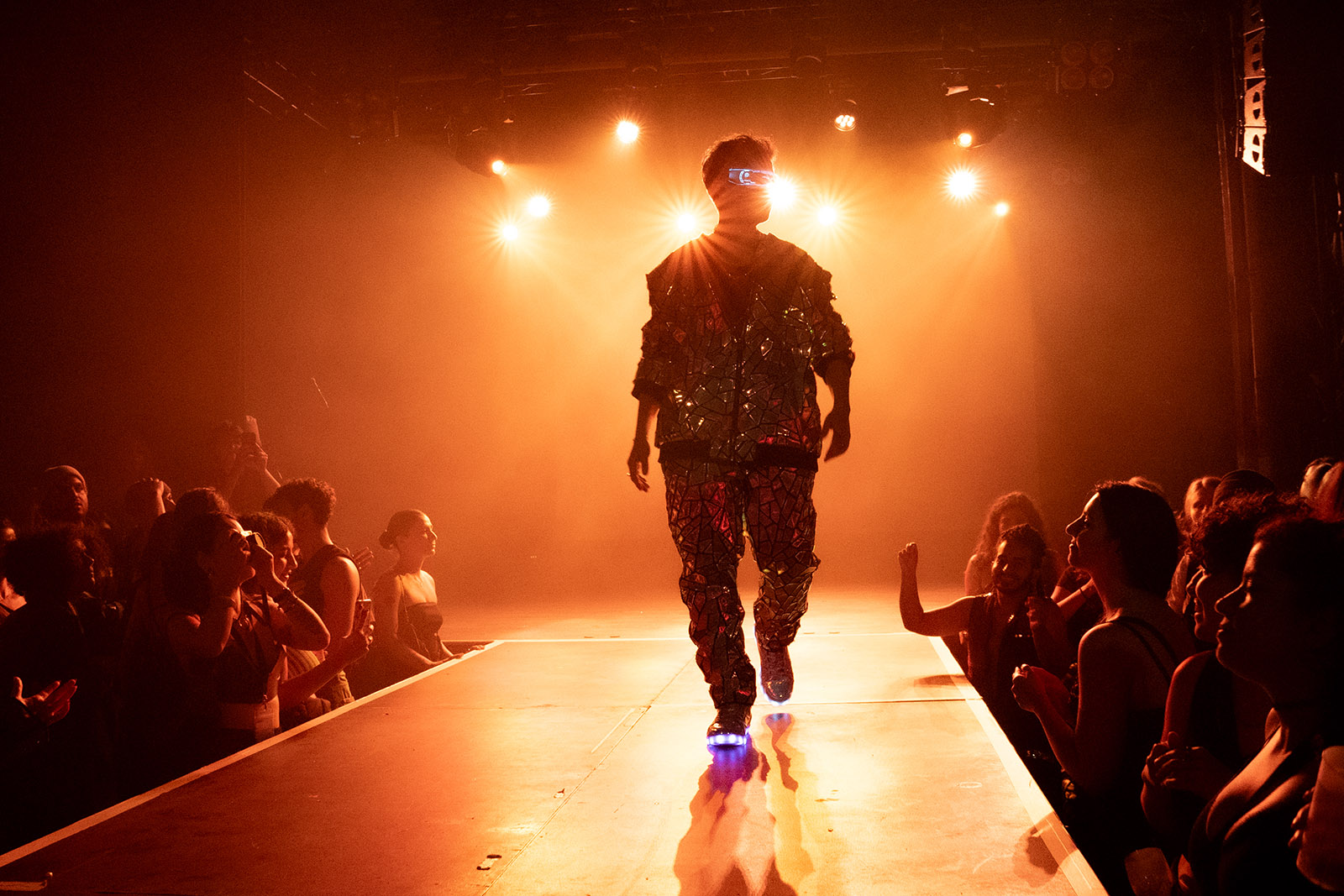
For some of the participating artists, the Islamicate roots of Escher’s interest in geometric patterns was an intriguing revelation. “What interested me was not simply that he was inspired by Islamic architecture, but how he translated what he encountered into a very different visual language,” says Iranian-American artist Leila Nazarian, who has created a series of skateboards using Iranian mirror-work for the exhibition. “The patterns remained rooted in one tradition while taking on new meaning through his way of seeing and interpreting them.”
Rotterdam-based artist Fatima Barznge, who was born in Iraqi Kurdistan, first encountered Escher’s work in Arabic language books while she was a student in 1990s Baghdad. “At the time, there was already discussion of the influence of Islamic art and architecture, particularly that of the Alhambra, on Escher’s work,” she says. “For me, this was a surprising discovery.”
Barznge’s eight ceramic tiles of glazed terracotta are arranged in an octagon in the gallery space, each inscribed with the name and construction year of a famous structure, the work interrogating the materiality of architecture itself.
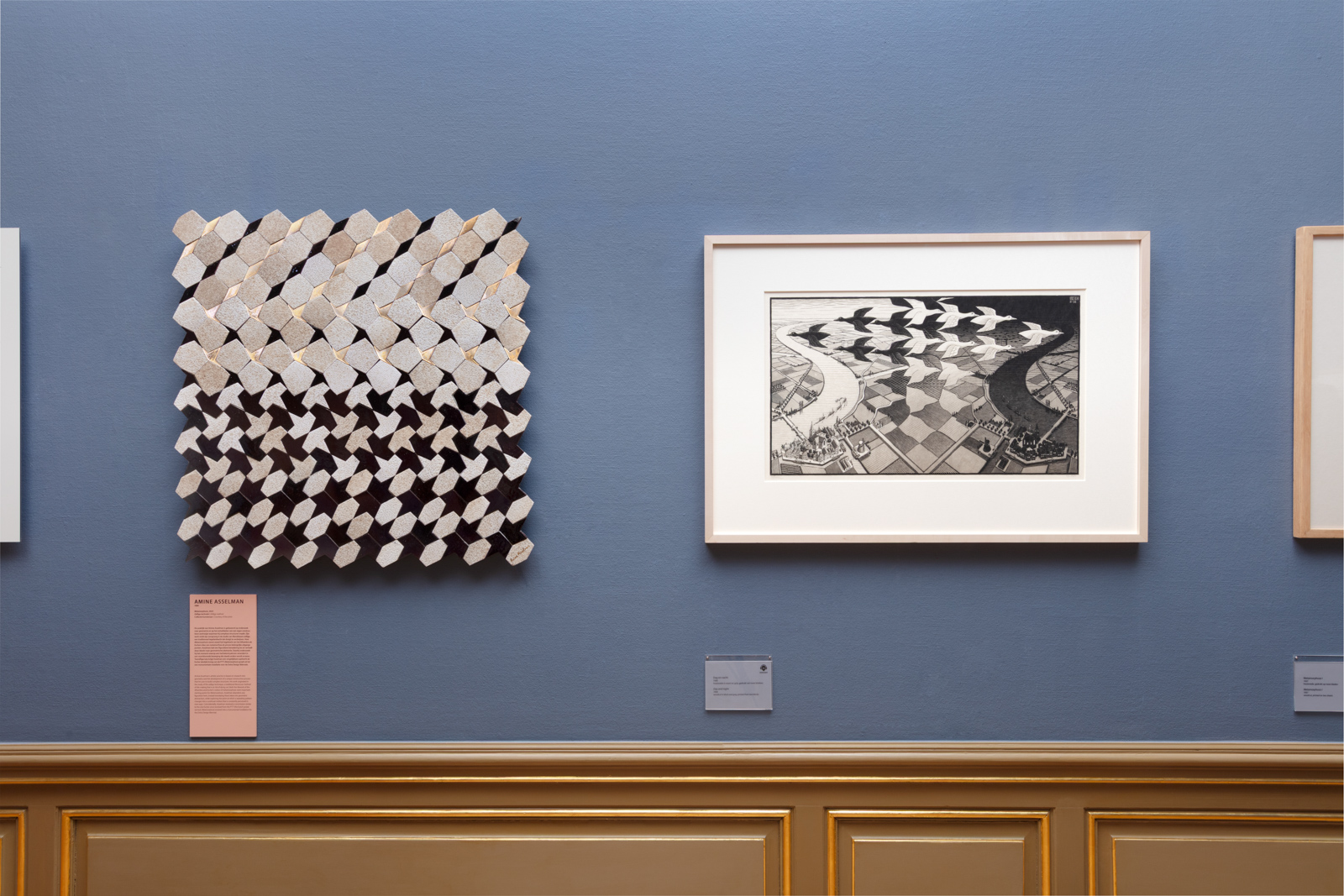
For others, Escher’s work served as both influence and point of departure. Moroccan artist Amine Asselman has employed the zellige technique, a Moroccan method of tile-making increasingly at risk of disappearance, to create a wall-mounted work rooted in geometric abstraction.
Related content
“Escher’s Metamorphosis series served as a clear conceptual reference throughout my research,” Asselman explains. “However, while Escher transformed lines to create organic and figurative shapes, I operate with the rotation of lines on the grid to achieve purely abstract mutations. I titled my own method and a series of works Metamorphosis as a tribute to his oeuvre.”
Returning to Escher’s source material, Adduchi undertook four months of research at the Alhambra to create She is the Seven Skies (The Conference of the Birds), a dress of walnut wood, wood veneer and wood mosaic, fashioned from a three-dimensional shape using the taracea-inlay technique. “This is the first time I have applied the method of sacred geometry to a garment in the way Escher did: every line had to align perfectly to convey a sense of infinity and repetition, much like the Alhambra itself,” he says.
“Whenever I found myself getting lost, I would ask myself: what would Escher do?” Adduchi adds.
“Most of the time, the answer was to trust the geometry and mathematics while maintaining visual harmony. When you look at Escher’s work, it gives you a sense of calm and transports you to an almost mystical state of mind, the same feeling I got by the Alhambra. That is the essence of sacred geometry.”
Escher and Islamic Art: 20 Perspectives is on at the Escher in the Palace Museum, the Hague, until 1 November.