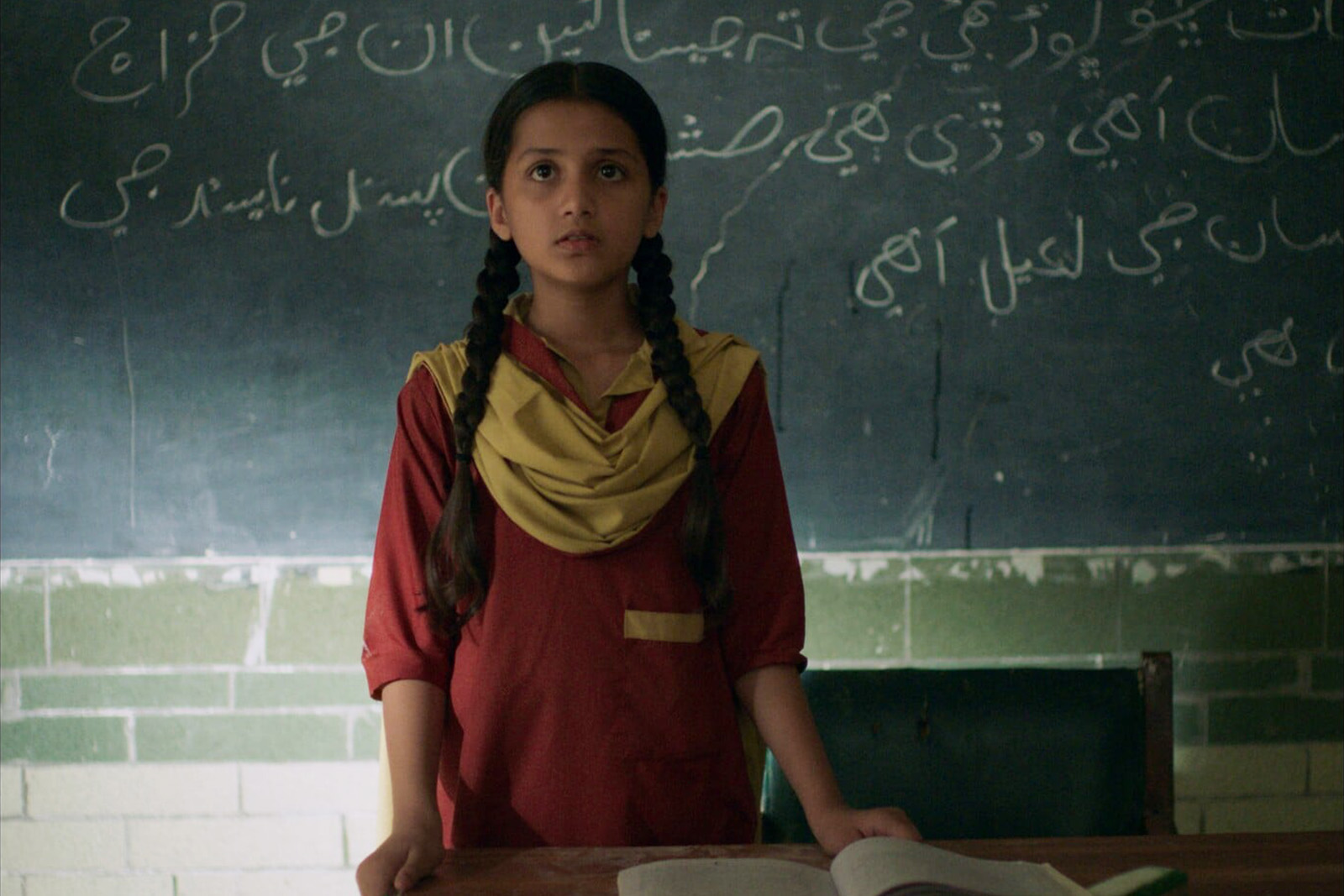

Hanging By a Wire documents Pakistan cable car rescue like an action thriller
It’s a story of tremendous heroism, but director Mohammed Ali Naqvi never lets that obscure the neglect that left the eight passengers dangling 900 feet in the air in the first place

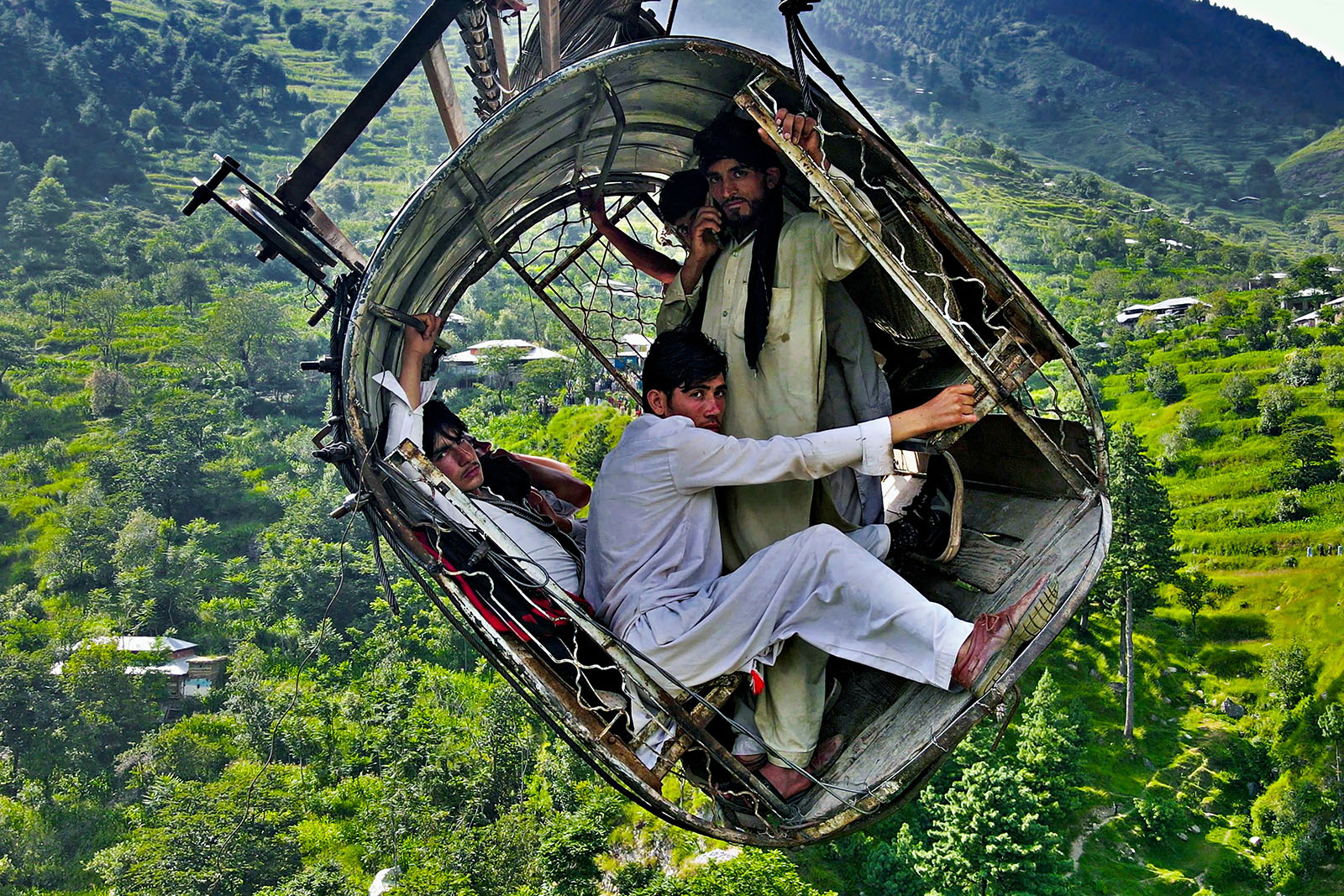
On an August morning in 2023, six boys in the mountainous Battagram district of northern Pakistan climbed aboard the cable car that carried them across a ravine towards school. These makeshift gondolas are an ordinary part of life in places where roads and bridges are scarce. But then, suddenly, two of its three supporting cables snapped.
The car came to rest at a sickening 45-degree angle, more than 900 feet above the valley floor, held by a single damaged wire. Local experts estimated it might have 10 hours left, if its passengers were lucky. What followed became rolling news in Pakistan, then travelled around the world: helicopters circling a tiny metal box in the sky, crowds gathering on either side of the ravine and increasingly desperate attempts to bring eight people, including the six schoolboys, safely home.
Mohammed Ali Naqvi’s Hanging By a Wire reconstructs those hours with the ruthless efficiency of an action film. The director knows perfectly well that he has been handed one of the great documentary thriller premises. Drone footage creeps towards the dangling car. Army helicopters send it swinging alarmingly in their downdraft. Darkness approaches. It is a breathlessly paced, ticking-clock rescue story assembled from news reports, videos from phones and drones, interviews and dramatic reconstructions.
The Pakistani-American film-maker has previously tackled the country’s knottiest political and religious fault lines, from radical Islam in Among the Believers and controversial leader Pervez Musharraf in Insha’Allah Democracy, to blasphemy laws in The Accused: Damned or Devoted? Hanging By a Wire continues this legacy, asking the question: why were these children hanging above a ravine in the first place?
In remote communities such as Battagram, residents have built their own cable cars because adequate transport infrastructure simply does not exist. The ingenuity is impressive, but it’s bittersweet to admire people’s resourcefulness while learning why so much resourcefulness is required. There’s a tragedy in the boys not being foolhardy adventurers — they are just children trying to get to school.
Once the crisis attracts national attention, official rescue machinery descends on Battagram, paying far greater attention to their plight than this community could have ever dreamt of. The army arrives. Helicopters arrive. Cameras arrive. Yet those forces remain laser-focused on fixing this problem, and this problem alone — not the structural inequalities that forced the boys to travel by these cable cars in the first place.
Local heroism proves more inspiring, perhaps most of all in Sahib Khan, a local cable car operator and repairman, one of the mandgaan, translated by the film as “sky pirates”. Slight, soft-spoken and equipped with knowledge accumulated by actually living in Battagram, Khan believes he can reach the stranded passengers using a homemade pulley.
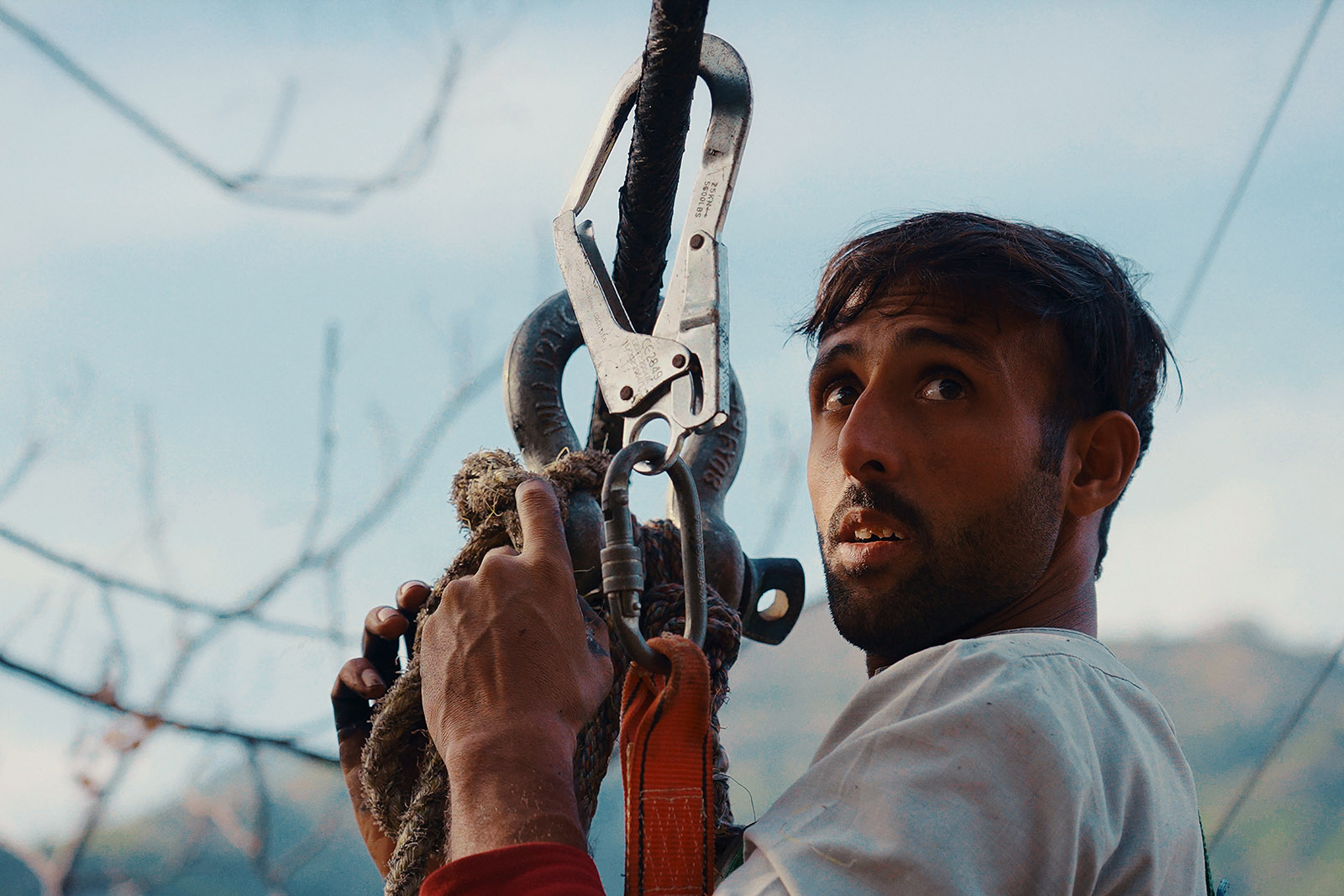
The authorities initially refuse him permission. Another rescuer, Ali Swati, a gloriously swaggering gym owner and zipline operator with professional equipment, receives a warmer welcome. The contrast is funny only because tragedy is eventually avoided.
Khan understands the wire because men like him have been forced to understand it. When he sets out anyway, hauling himself hundreds of feet above the ravine on his improvised apparatus, the film’s class politics become as vertiginous as the drop itself.
It would be easy for an outsider documentary about rural Pakistan to regard all this ingenuity as quaint, or worse, saccharinely inspirational. Hanging By a Wire has little interest in doing either. Naqvi allows the community to be funny, frightened, boastful, argumentative and frequently exasperating.
He supplements the bountiful archive with re-enactments performed by the people who were actually there. Before filming, he gathered the families, children and wider community for what he calls a tribal council, asking them not merely for permission but to “co-author” the film. Much of its extraordinary footage comes from the community too, recorded on phones by onlookers, rescuers and even the boys inside the cable car as events unfolded.
The effect is one of remarkable intimacy. Rather than an outsider reconstructing the disaster, it feels as though the community is piecing its own experience back together.
Anyone aware of the story knows that all eight passengers were eventually brought down safely, but Naqvi creates suspense by reiterating how unlikely an outcome that was. The rescuers deserve every bit of the heroism the film affords them, particularly the local men willing to risk their lives to help.
Ultimately, Hanging By a Wire refuses to mistake a successful rescue for a simple happy ending. There is tremendous beauty in watching a community risk everything to bring eight people safely home, but the film never lets that heroism obscure the neglect that left them dangling 900 feet in the air.
Hanging By a Wire is in UK cinemas from 28 August.