How proposed reforms could reshape protections for women in nikah-only marriages
Planned changes to cohabitation laws could help people in religious-only marriages, but experts warn they would remain vulnerable without civil registration

Emaan met the man who would become her husband at the age of 23. She had finished university, was working full time and had promised herself that she would marry a man of her own choosing.
Two years later, in January 2024, Emaan’s Pakistani family and her Indian-Pakistani in-laws to be were gathered in her parents’ house in the east Midlands for the nikah, the Islamic marriage ceremony that would make the couple husband and wife in the eyes of their religion.
There was no civil ceremony, meaning Emaan was part of a cohabiting couple, whose relationship may be recognised by faith and family, but not in law.
Related content
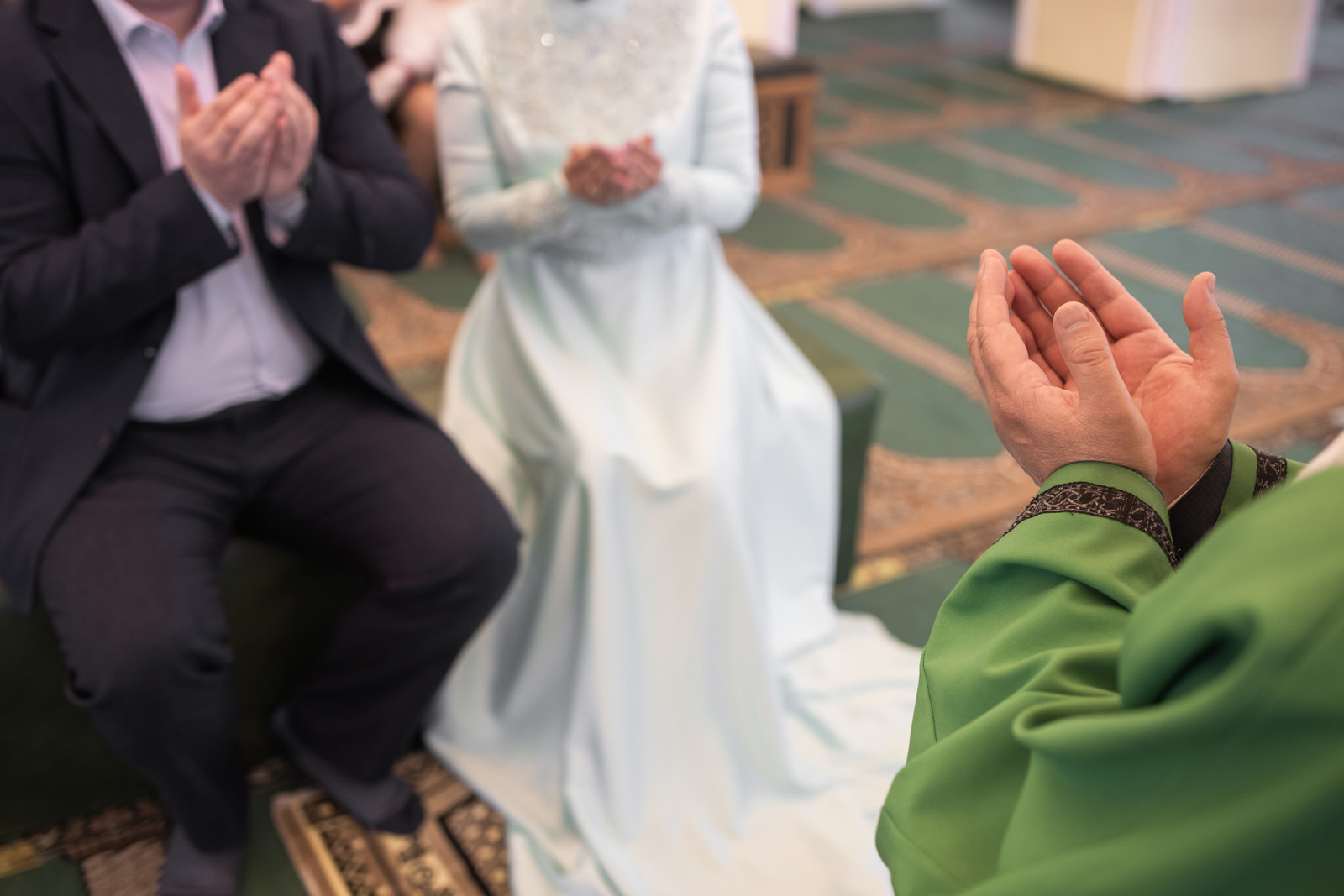
“I knew I wasn’t legally protected. I wouldn’t get any of his assets. I wouldn’t get any financial support if we were to divorce,” Emaan says. She did, however, believe in her rights as a wife under Islam. “He was to financially sustain me, he was to give me a home to live in, he was to clothe me and he was to feed me.”
A government consultation on cohabitation reform, which closes on 14 August, is considering whether couples in a non-legally-binding relationship who live together should gain stronger financial rights when a relationship breaks down or a partner dies.
To qualify, couples would need to have lived together for at least three years or to have lived together and had a child. The reform is being presented as a way to transform the experience of survivors of domestic abuse, giving them better financial protections when leaving a relationship, regardless of their marital status.
Currently, cohabiting couples have no legal status in England and Wales, and do not automatically gain rights to maintenance, pensions or each other’s property.
While all civil marriages and most Christian and Jewish marriages conducted in the UK are recognised under law, other faith marriages, including Islamic ceremonies, do not have the same legal rights. A separate consultation on marriage law would address this inconsistency by allowing religious ceremonies, including nikahs, to be legally recognised without a separate civic ceremony, provided paperwork is completed and the ceremony is conducted by an authorised legal officiant.
A Ministry of Justice spokesperson confirmed that nikah-only couples were among those affected by the cohabitation proposals, adding that many would know “first-hand” that a meaningful religious wedding ceremony “surrounded by family and rooted in tradition may not result in a lawful marriage”.
Emaan only saw the true consequences of this as the relationship began to collapse.
She describes months of tension with in-laws who had never fully accepted her and a partner who was physically abusive. Before the marriage ended, she was told to leave his parents’ home and became, in her words, “effectively homeless”.
Less than two years after the nikah, her partner issued a talaq, a form of Islamic divorce initiated by a husband. In Emaan’s case, it came by text. By then, the marriage had left her emotionally and financially depleted, with the feeling that “after doing so much, I still wasn’t enough”.
The absence of a civil ceremony meant Emaan could not apply for the financial remedies available on divorce or civil partnership dissolution, or ask a family court to consider the financial consequences of the marriage ending.
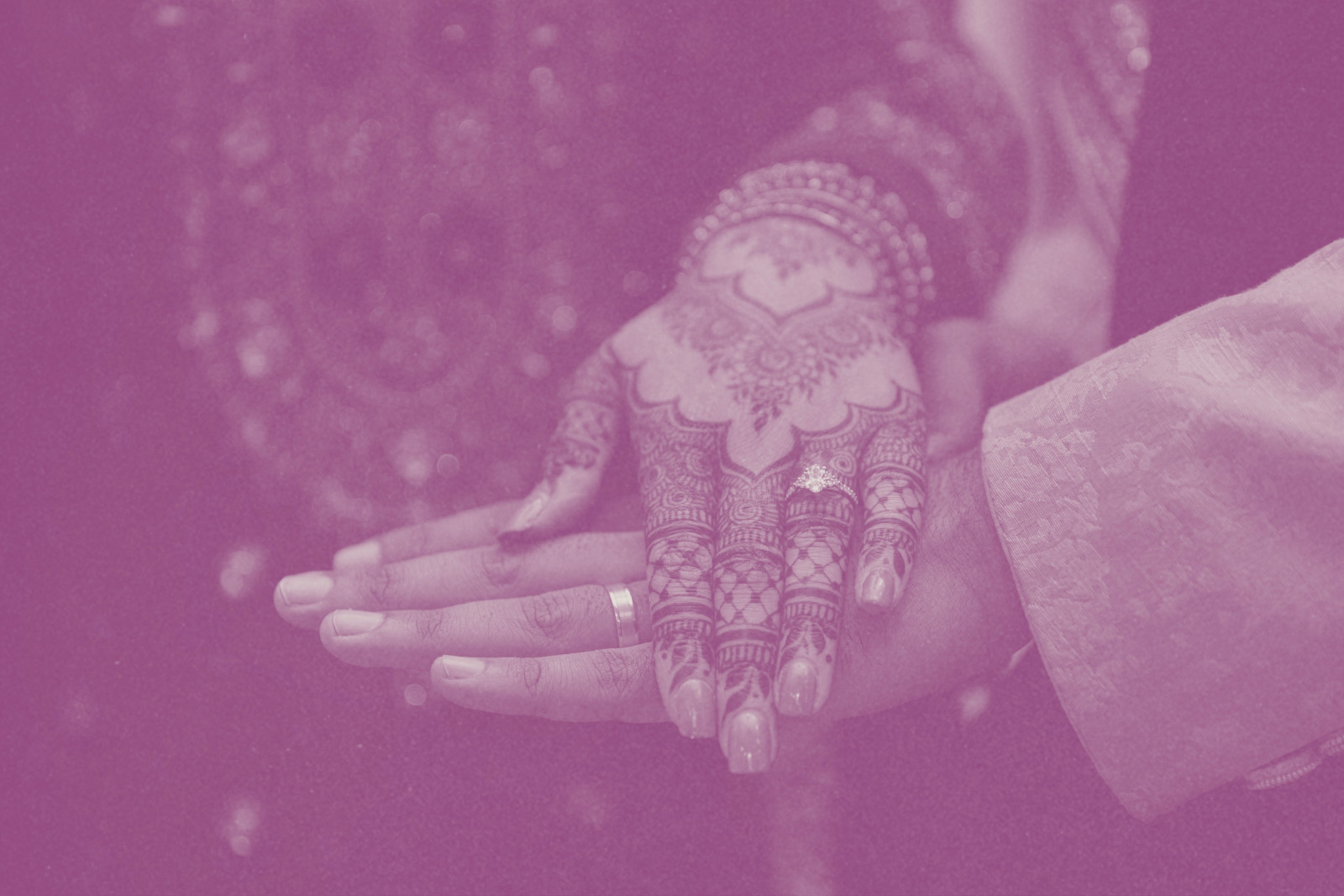
There had been no serious discussion of a civil ceremony with her partner, Emaan says. She understood that legal marriage could offer protection, but her view of it had been shaped by seeing how hard it could be for women to leave when a marriage became damaging. The nikah, she believed, carried religious obligations of its own. Up to three in 10 Muslims in the UK have had an nikah-only wedding.
Dr Rajnaara Akhtar, associate professor of law at the University of Warwick, says her research has identified “a range of reasons” why Muslim couples enter non-legally-binding marriages. “A common reason is that the religious ceremony is regarded as the ‘real’ wedding and the point at which the couple can begin an intimate relationship,” she says.
“As a result, the nikah is prioritised in terms of planning and celebration, while the legal ceremony is often viewed as a secondary administrative step.”
Others, she says, delay legal marriage to “see whether the relationship works in practice”, face immigration or documentation barriers, or choose to not legally marry in order to “retain control over their financial position and avoid sharing assets”.
Although the proposed reforms could provide some scope for assets to be shared following the breakdown of a relationship, and thereby helping protect the financially weaker party, cohabitation changes would be “not equivalent to the financial remedies available under family law” for divorcing spouses, Akhtar says. That can include lump-sum payments, ongoing maintenance, the transfer or sale of property and pension-sharing orders.
Shaista Gohir, chief executive and founder of Muslim Women’s Network UK (MWNUK), says the issue of women in religious-only marriages lacking civil legal protection is one her organisation sees repeatedly through its helpline, which supports survivors of domestic abuse. She says about a quarter of those who have disclosed their marital status have been in religious-only marriages.
MWNUK has heard from women who had been in religious-only marriages for more than 20 years and had children, but were made homeless when the relationship ended. Others had paid towards a mortgage or house maintenance but were not named on the paperwork. Some were living in council homes where the tenancy was in the husband’s name and struggled to have it transferred after separation.
Aarifah, for example, had her nikah in 2016, when she was in her 20s. The relationship ended after a decade, but the couple had never legally married. They had children, settled into a council home and were treated by families as husband and wife.
“I thought I was married-married,” she says. “The civil bit was always spoken about like something we would do later. But once you’re living together, raising children, doing school runs, paying bills, it starts to feel like the marriage has already happened. You don’t think, ‘One day I might have to prove I live here.’”
The relationship became physically abusive and drug use within the home made it increasingly unsafe. Aarifah wanted the relationship to end, but also to remain with her children in the council house where they had grown up. The tenancy, however, was in her husband’s name. Because the marriage had never been legally registered, she could not use the divorce courts to seek orders over the home or her financial position as a wife. Instead, she had to try to persuade the council that she and her children should be allowed to stay, despite her name not being on the tenancy.
“I wasn’t asking for his money or anything extra,” she says. “I was asking to stay in the home where my children grew up. But because my name wasn’t on the tenancy, it felt like I had to prove I belonged in my own house.”
For Gohir, cases like Aarifah’s point to the limits of reform alone. The changes would be a “step in the right direction” but she still urges couples to also have a civil ceremony and calls for clearer information for young Muslims before getting married, including an awareness-raising campaign to improve legal literacy around marriage and divorce.
Emaan agrees that women entering nikah-only marriages should try to understand their legal rights and know that “there is a possibility for divorce, and just know what situation you would be in at that stage”.
Reflecting on her own experience, she says women should also keep something of their own. “Always have your own little pot of money, whether that’s gold or your own one asset, something to fall back on,” she says. “Don’t be afraid of not having money or not having power or not having a place to stay. Don’t stay. There’s always help.”