
Once, twice, three times an MBE for founders of South Asian midwives group
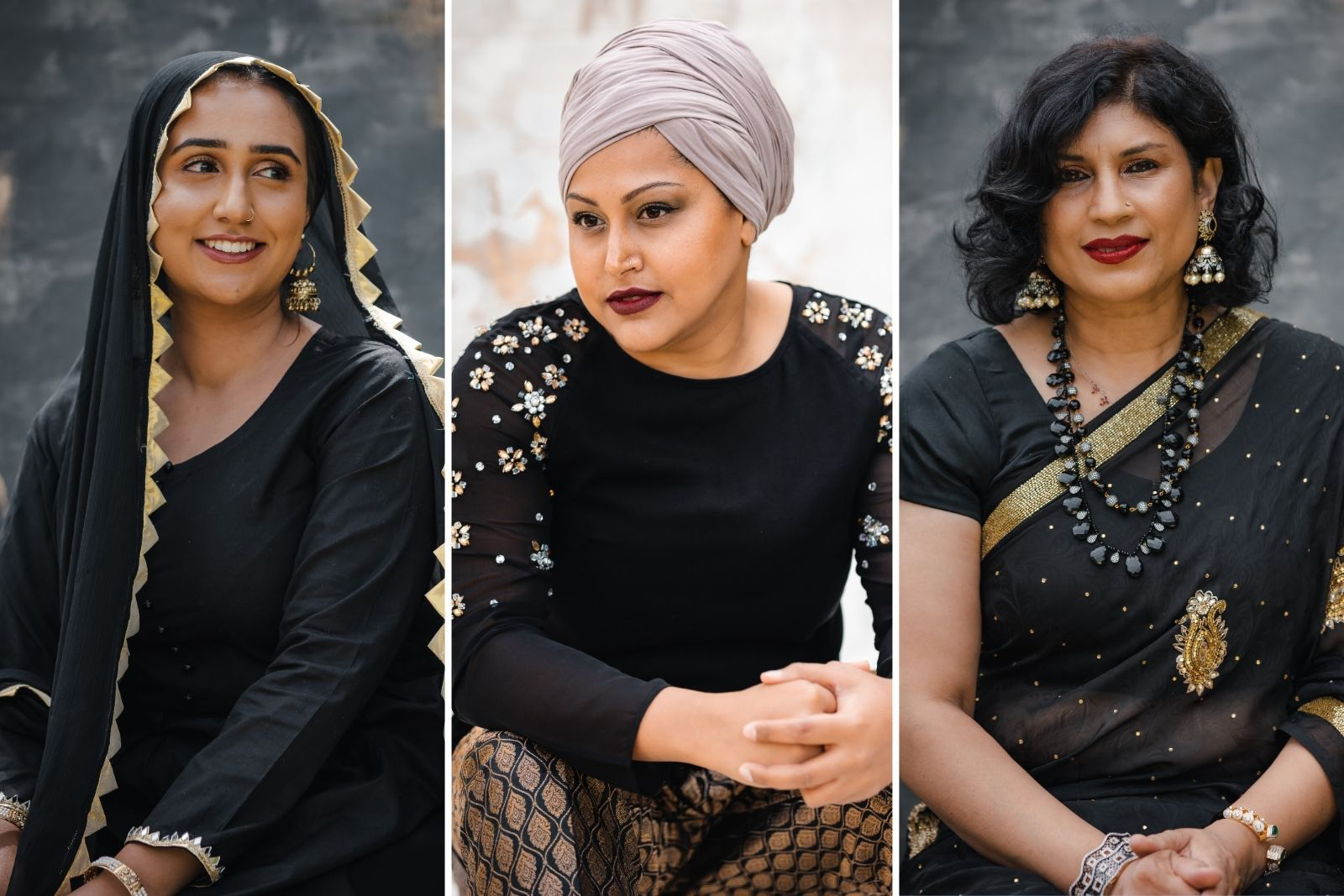
Benash Nazmeen, Nafiza Anwar and Sundas Khalid were recognised in King Charles’s birthday honours list — and say they’re ‘overwhelmed’
A group supporting South Asian midwives has been given a triple royal seal of approval after all three of its co-founders were made MBEs in King Charles’s 2026 birthday honours list.
Benash Nazmeen, Nafiza Anwar and Sundas Khalid, the founders of the Association of South Asian Midwives (Asam), were all given the honour in recognition of their services to charity and healthcare across the UK.
Every year, the King’s birthday honours recognise hundreds of people across the UK for their contributions to their communities and public life. The trio, who are all midwives, are among more than 1,100 people recognised this year. People from ethnic minority backgrounds made up 11.5% of the honours list, an increase on previous years, although the Cabinet Office does not publish any further breakdown of ethnicities.
Speaking to Hyphen, Anwar said they were “still trying to process” the recognition.
“We’re overwhelmed. It’s a great honour and privilege,” she said.
The founders met as speakers at a Royal College of Midwives conference in 2018. After a trip to a Birmingham restaurant, where they spent hours discussing the challenges facing maternity care, they went on to launch Asam the following year. It has since become a national organisation advocating for equity in maternity services.
Looking back on the past seven years, Anwar said they had underestimated how difficult systemic change would be.
“At that first meeting, we didn’t realise how slow progress is and how slow change is,” she said. “Our motivations were simply to share stories, but naturally things evolved, and we recognised it wasn’t enough to share the problems — we needed to work actively towards the solutions.”
Asam now works with communities, healthcare organisations, charities, policymakers and professional bodies to improve maternity care and champion the voices of South Asian midwives. Previous initiatives include its Not My Name campaign, which raised awareness of the importance of correctly pronouncing people’s names and respecting their cultural identity, and the Improving Representation in Maternity and Women’s Health Research Programme (IRMWP), which supported midwives who had trained abroad now working in the NHS.
“Our communities are called ‘hard to reach’, but they’re not. They are underserved and underrepresented,” said Anwar. “They’ve disconnected from the mainstream, and we are reconnecting them and making sure they are part of the change and their voices help shape it.”
Over the years, Asam has helped midwives stay in the profession and progress into new roles through pastoral and career development support, while also ensuring that South Asian women feel heard and are able to shape maternity services and policy. Nazmeen said creating opportunities for women to share their experiences had become one of the organisation’s defining achievements.
“One of our achievements is being able to have women say to us, ‘thank you’,” said Nazmeen. “They’ve had their voices heard, and they feel they’ve truly been able to represent their experiences and see the difference their involvement has made to services, to policy and the changes that have been made.”
While she acknowledged the “problematic nature” of accepting an MBE given Britain’s colonial history, she said she saw it as a chance to further Asam’s work.
“The opportunity it gives us to keep taking up space, where we historically haven’t been represented, is the important factor,” she said. “I see this opportunity as being a platform to continue the work that we are already doing, because there’s so much more to do.”
The founders said much of Asam’s work had been carried out voluntarily alongside their careers in midwifery and with very limited funding.
“We are small, but we are mighty,” Nazmeen said. “All of the work we do is in our own time. This is something that we do passionately — it’s our baby and we are nurturing it and growing it.
“I’m very proud of what we’ve achieved, but the greatest contribution is still way ahead of us.”