
‘The World Cup proved that, no matter the religion, we can represent France’
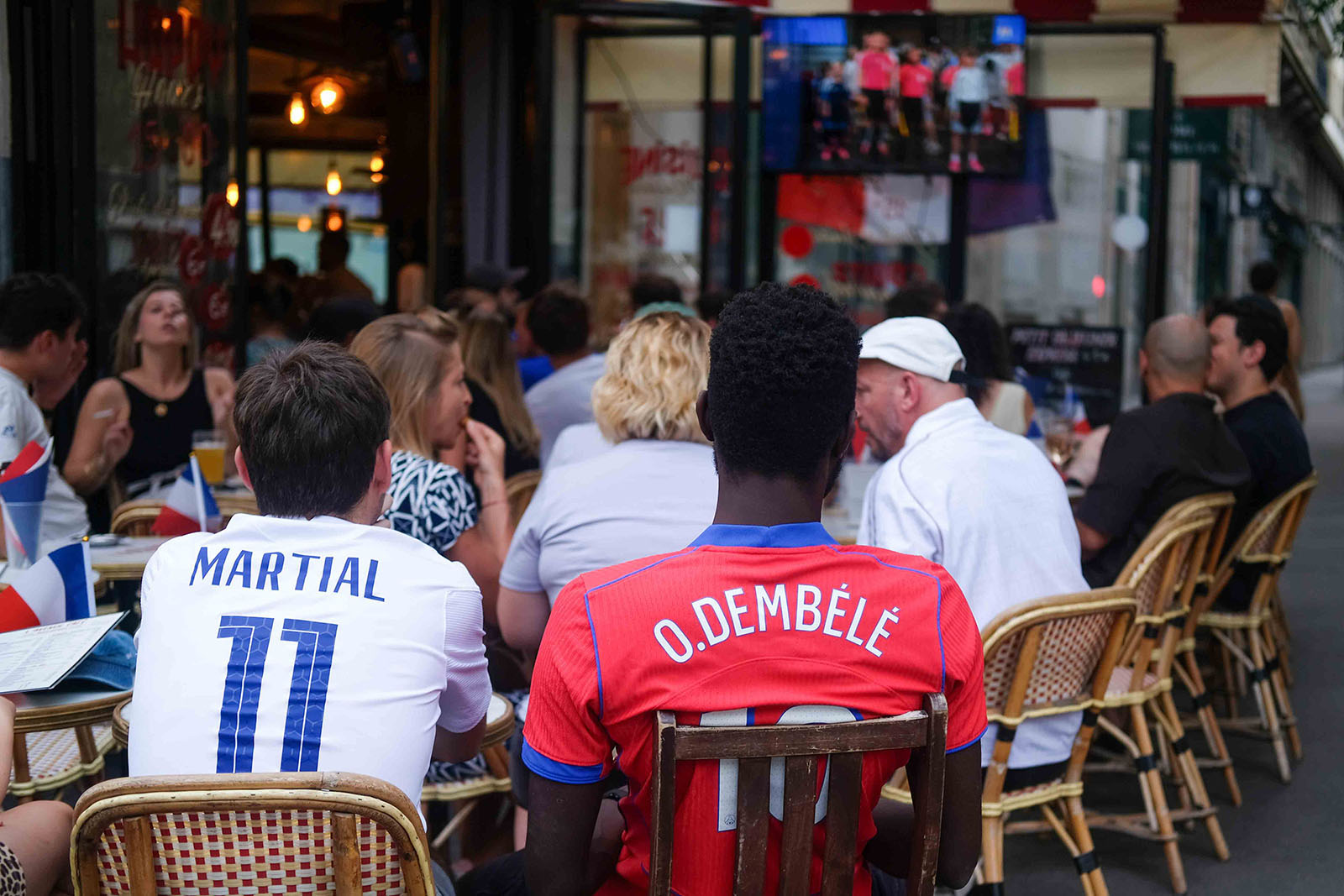
France’s football team brought the nation together. But when the flags come down, can the ‘vivre-ensemble’ — social cohesion — last?

The disappointment, huge and unexpected, is written on every face. In Chez Gudule, a bar beside Place de la Nation in Paris, 80s pop rock ballad Voilà, c’est fini plays.
Yet for a few weeks ahead of France’s World Cup semi-final defeat by Spain on Tuesday, the country’s dream of football victory made it the perfect postcard of “le vivre-ensemble” — a word used in national political discourse to refer to France’s dreamed-of social cohesion. The semi-final falling on Bastille Day, a national holiday, was even better: from military demonstrations to bars and cafes, the French flag was everywhere.
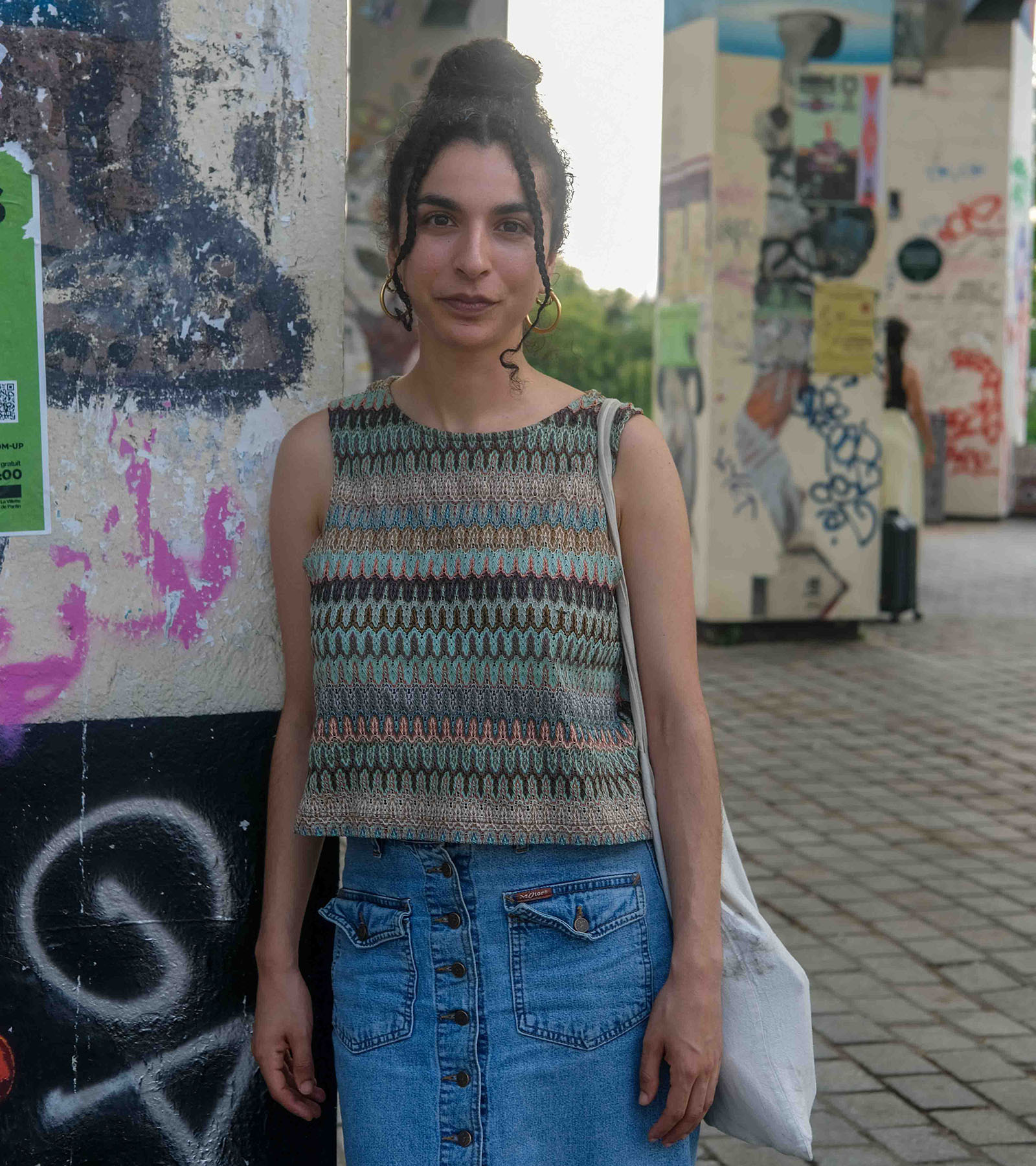
“These are symbolic moments of unity that give hope — that’s what I love about football. When you see young people on the Champs-Élysées wearing France jerseys,” says Djémia Trari, 31, speaking to us ahead of the match. She sips lemonade in a cafe near her home in the cosmopolitan neighbourhood of Belleville, central Paris. “What will survive from this World Cup is the fact that we could prove that, no matter the religion or ethnicity, we can represent France as well. I don’t know if that matters to everyone. But it matters to me.”
Trari is French Algerian and Muslim. In Belleville, Tunisian, Algerian and Chinese immigrants live among wealthy hipsters seeking a multicultural environment. But this 14th of July, Belleville, and Paris more broadly, is simply French.
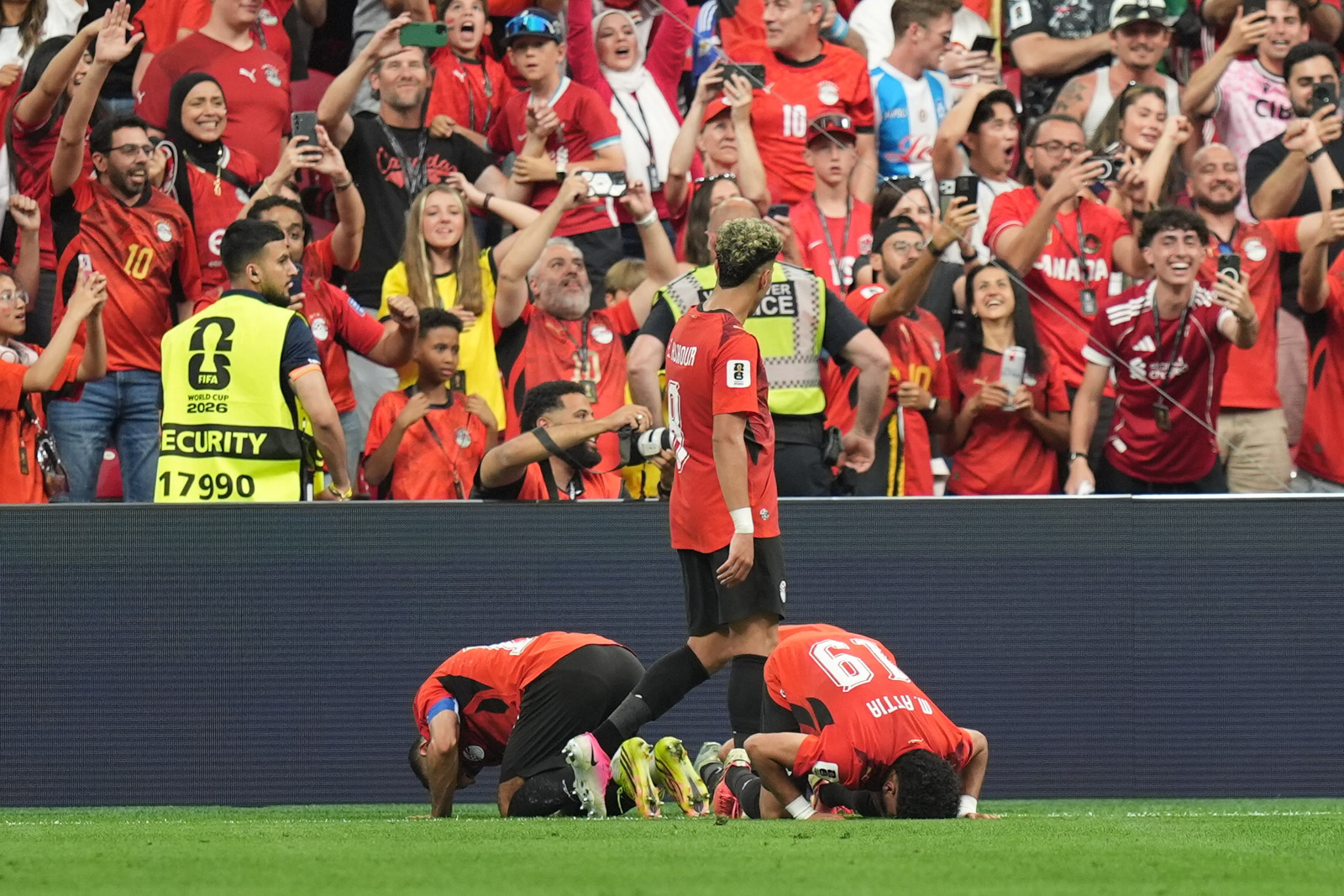
In his parents’ shop, a few streets away, Karim, 27, says he is supporting France even though he had also wanted Egypt, his family’s home country — knocked out by Argentina after a close match — to win. “When I look at the French players, I see myself as a kid,” he says, adding that he was also proud to see Morocco, an African team, win so many matches in the competition. But the conversation doesn’t go much further. Talking about cultural or religious identity can be sensitive in France.
Entering Karim’s shop, Sarker, 21, proudly wearing a France shirt, is curious about the questions we’re asking and wants to join the conversation. “Sport is a hugely important means of integration for us,” he says. “You can really feel that this is a moment of national cohesion. People who aren’t usually patriotic are proud to wear the jersey right now.”
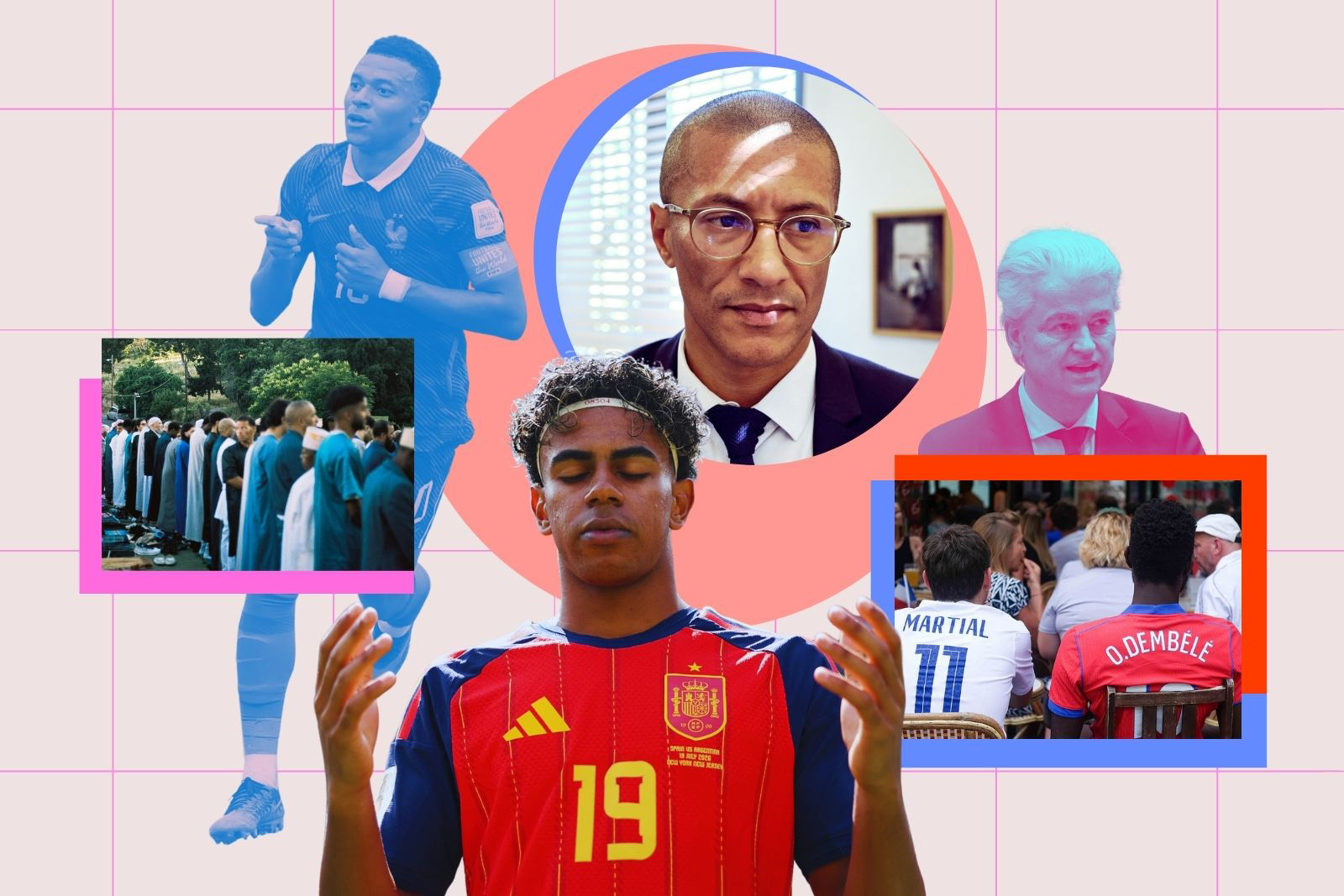
This is, broadly, the mood of the day. Still in Belleville, Kevin is hanging out with his friend Walid, proudly wearing the jersey of Ousmane Dembélé, one of several Muslims in the French squad. But that doesn’t seem to matter to the people who speak to Hyphen. They are proud to be represented by this team regardless of its makeup.
It’s a sentiment shared by Trari, who sees a real disconnect between what the France team represents and the political reality of the country. This contradiction became clear when interior minister Bruno Retailleau, known for his tough stance on immigration, declared on TV: “We’re not French by soil, French by blood, but French by heart,” in response to racist remarks made by a Paraguayan senator about the French captain Kylian Mbappé.
Mbappé has recently taken a public stand against the far right in France — an unusual move in a country where the mixing of football with politics is so discouraged. Both Emmanuel Macron and French Football Federation (FFF) president Philippe Diallo have said the two should be kept separate.
“You can feel that the new generation of the France team is much more careful about expressing their opinions, unlike previous generations,” Trari says.
It is safer, particularly for Muslim players, to keep a low profile. After Karim Benzema, a former national team player and practising Muslim, posted support for Gaza’s civilians on X on 15 October 2023, France’s then interior minister Gérald Darmanin baselessly accused him of having “notorious ties to the Muslim Brotherhood”, prompting Benzema to sue for defamation. Darmanin’s office cited Benzema’s past refusal to sing the Marseillaise and his social media activity as evidence of a drift toward extremism. The claim sparked a political storm: one senator called for his Ballon d’Or and citizenship to be revoked.
Since 2006, the FFF has banned “ostensible” religious signs for national players, a rule upheld by the Council of State in 2023. In March 2024, the FFF refused to make any adaptations for Ramadan, instructing all national squads to postpone fasting rather than adjust schedules.
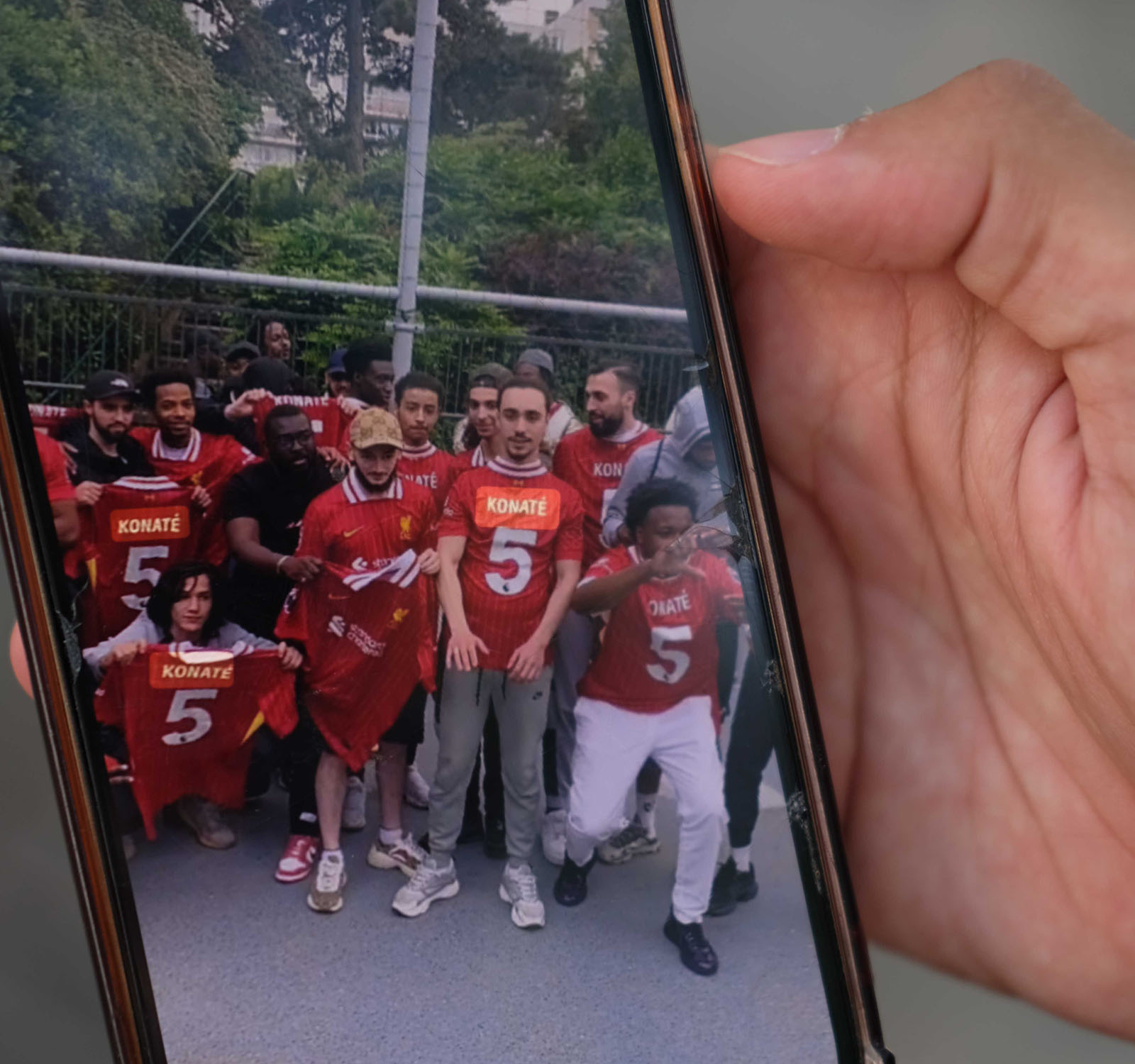
Yet there are still Muslim French international players who manage to bring people together without sparking Islamophobic discourse, including Ngolo Kanté and Ibrahima Konaté. Akram, 17, proudly shows us a photograph on his phone in which he is wearing a Konaté shirt. The teenager has just left the mosque in Rue Jean-Pierre Timbaud, a street lined with Muslim-owned shops, cafes and pan-Asian restaurants. For him, Konaté, who comes from this neighbourhood, is something of a role model. He shows that “even if you have a religion that’s seen as difficult, you can still make it,” Akram says, adding that what matters most isn’t displaying your religion on a football pitch but being together.
And that is broadly France’s modus operandi, at least in principle: not seeing differences, in the name of laïcité (secularism). “Laïcité is used however people want in France,” smiles Farhat, 68, who speaks to us while having coffee with his friend Naoufel in the hours before France’s World Cup defeat. “It’s not with a goal scored by a Muslim player that we’re going to fight the far right,” he reckons. Still, the men — both of whom have Tunisian roots — think winning the World Cup could annoy Marine Le Pen’s National Rally party.
Trari is less optimistic. Even if the French team offers a nice image of representation, she thinks, “they’re not going to bring more tolerance towards Muslims. We’ll have three months of euphoria before hearing the same rhetoric on CNews again” — the same far-right TV channel that, a few weeks ago, was celebrating the “re-Christianisation” of the French team through its Catholic players. As Farhat says, in France, laïcité is used however people want.