
Three Luton schoolgirls become self-published novelists: ‘You can do it’
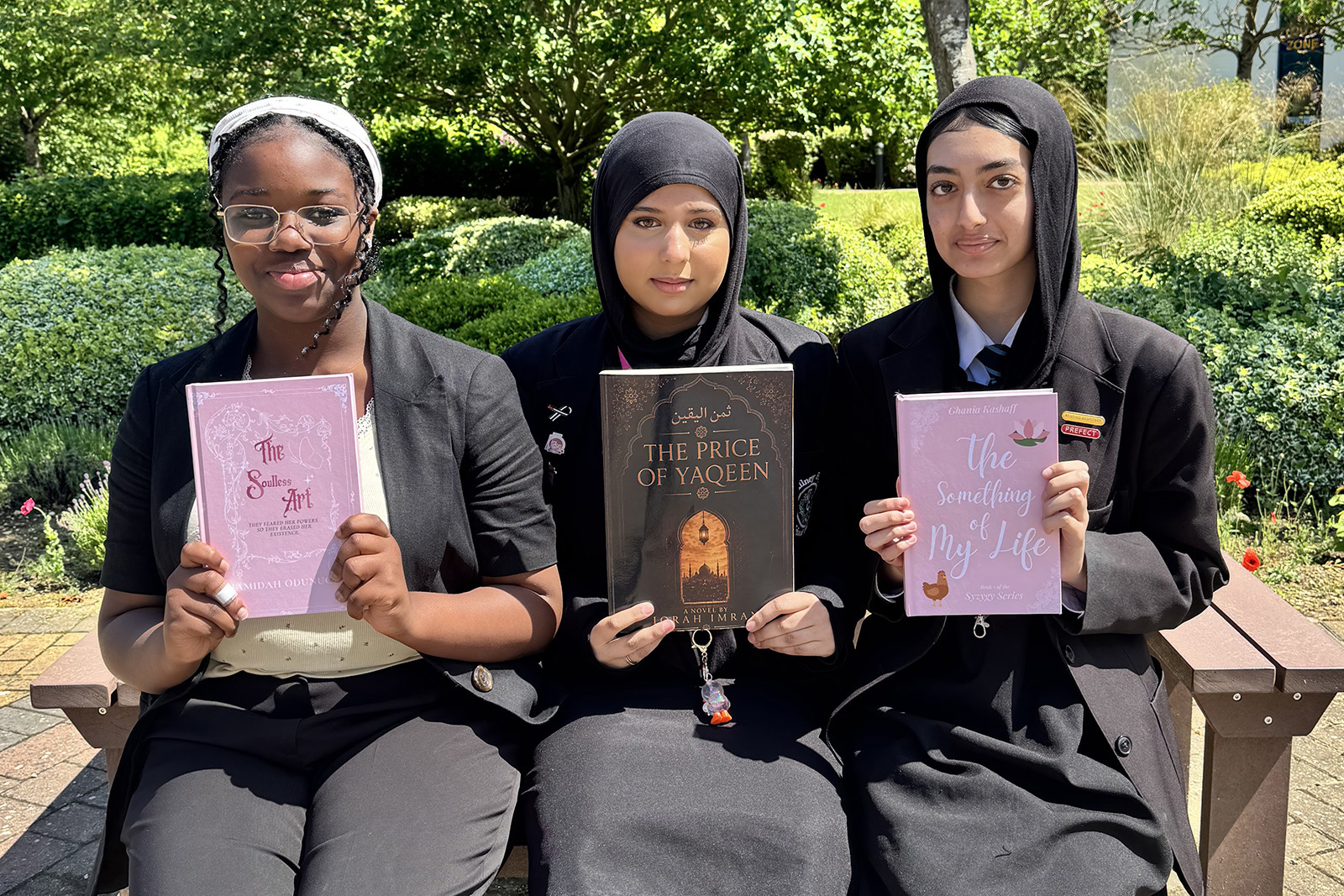
Hamidah Odunuga, Ghania Kashaff and Iqrah Imaan Imran from Challney High School for Girls say they want to show other Muslim girls what’s possible

Three Year 10 students at a secondary school in Luton have written and published their own novels — while juggling schoolwork and exams.
Hamidah Odunuga, 14, Ghania Kashaff, 14, and Iqrah Imaan Imran, 15, students at Challney High School for Girls, have self-published books in the fantasy, coming-of-age fiction and psychological mystery genres.
Headteacher Sheba George described the achievement as “remarkable” and said that the school was “incredibly proud”. “Our mission is to develop influential women of the future,” she said. “Ghania, Iqrah and Hamidah are examples of girls that show that they’re already there.”
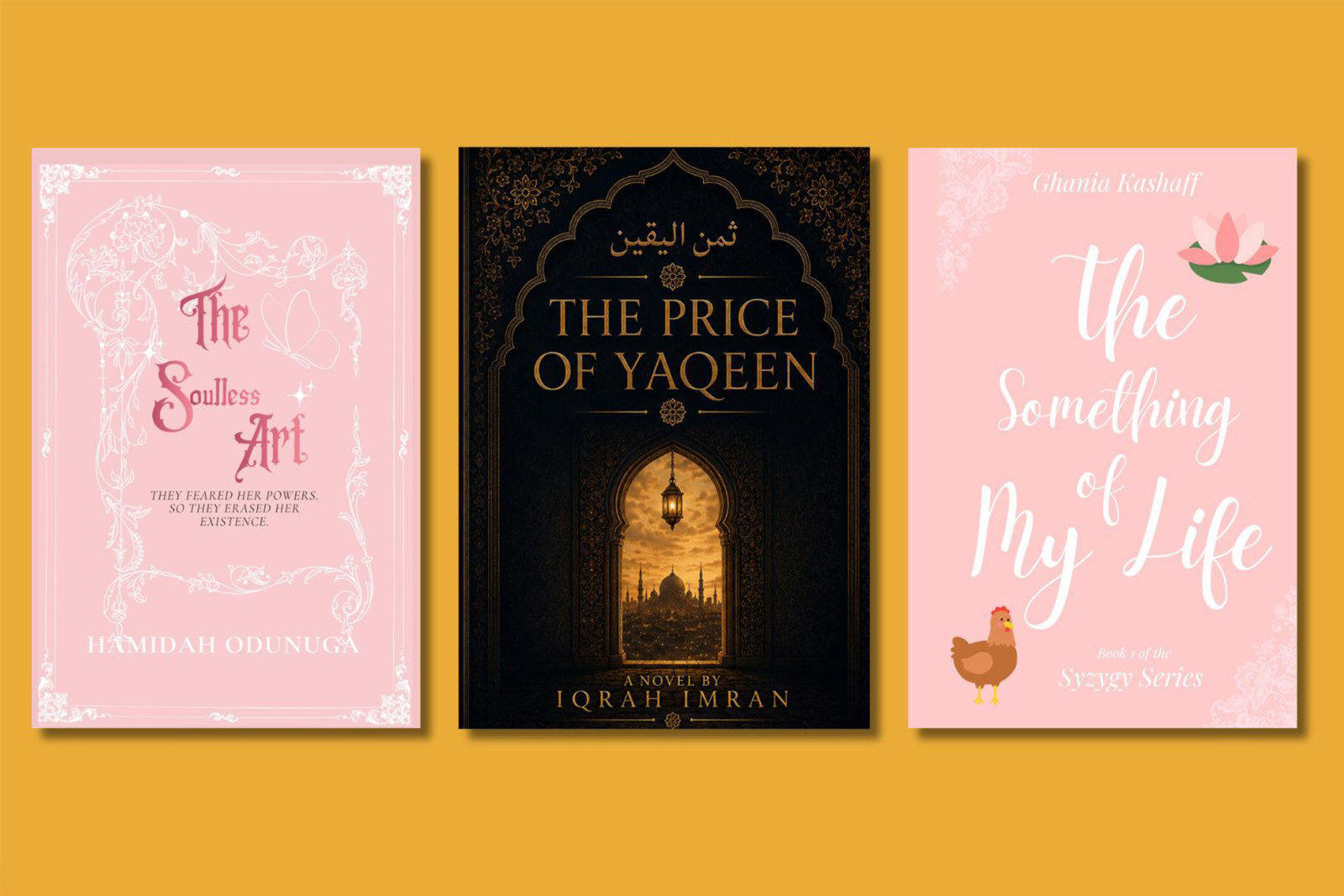
Odunuga’s fantasy, The Soulless Art, is set in the fictional kingdom of Seorya. It follows Mireya, a forbidden soulshifter seeking revenge after infiltrating her enemies’ fortress before her plans are complicated when the kingdom’s heir discovers her secret and falls in love with her.
Kashaff, who wrote The Something of My Life — the first book in her Syzygy Saga trilogy — said she had always enjoyed writing but only realised self-publishing was something she could do after seeing another teenage author share their experience online.
“I’ve liked reading and writing since I was young and I’ve always been writing books but it’s been more of a hobby until I realised I can actually make something out of it,” she said.
After researching self-publishing, she spent seven months writing her novel, which she describes as a “comfort book”. The story centres on two close families whose lives are thrown into turmoil after a hidden secret about one of the main characters comes to light, forcing them to confront difficult family relationships and rebuild fractured bonds.
“It was a bit challenging getting my thoughts into an actual story because I had so many ideas coming at me at once and I didn’t understand how to format it in a way that was understandable. It took me a while,” said Kashaff. “I was kind of doing it as I went along, storing random ideas in my notes until I could come back and form them into an actual book.”
Kashaff said publishing her first novel had made planning future books much simpler.
“It took me two months to write the second one because I was able to work through my thoughts so much easier,” she said of her next book in the series, which is yet to be released.
Imran’s The Price of Yaqeen is a psychological literary novel exploring memory, identity and the instability of truth through the story of a British Muslim girl who discovers a series of mysterious files linked to another girl.
She said she had always loved psychological thrillers and wanted to combine her favourite genre with greater representation for Muslim and South Asian characters.
“I based a lot of the main character’s storyline off of her religion and culture,” Imran said. “She is Muslim and she is from a South Asian background, which to me is very important.
“Growing up I never saw that representation in many books or films. If I ever did see it, it was always very stereotypical. It was like they couldn’t ever be more than how society viewed them. I wanted her to be a character that is more than her culture or her religion, but still keeps it a part of her.”
Imran said she was initially worried readers might not engage with a story centred around religion and culture, but ultimately decided to publish it anyway.
“I was quite scared because my book is very cultural,” she said. “With themes of religion, I was scared of how people would react. I didn’t know if people would even bother looking at my book because of the theme. But I decided to just ignore that and publish it to represent me as a person.”
Kashaff said she hoped the students would inspire other teenagers, particularly young Muslim girls, to pursue their own ideas. “There’s probably lots of other young Muslim girls who have written books but they haven’t really thought about publishing,” she said.
“Maybe they know they can but they feel like nobody would support them, or they feel that because of their religion and their culture being a theme in their book it would put readers off. We’re showing that it’s possible, no matter what your book is, to have a voice and find a way to put your ideas out there.”
School governor Rehana Faisal said she did not want to frame the students’ success through the familiar narrative of Muslim women “breaking stereotypes”, arguing instead that Muslim women and girls exist beyond that, and that schools should create environments that encourage young people to believe in themselves.
“Our role as educators is to create the conditions where the young women in our care are able to really fulfil their potential,” she said. “I hope that what it shows is that if you want something, you can do it.”
All three books are available on Amazon.