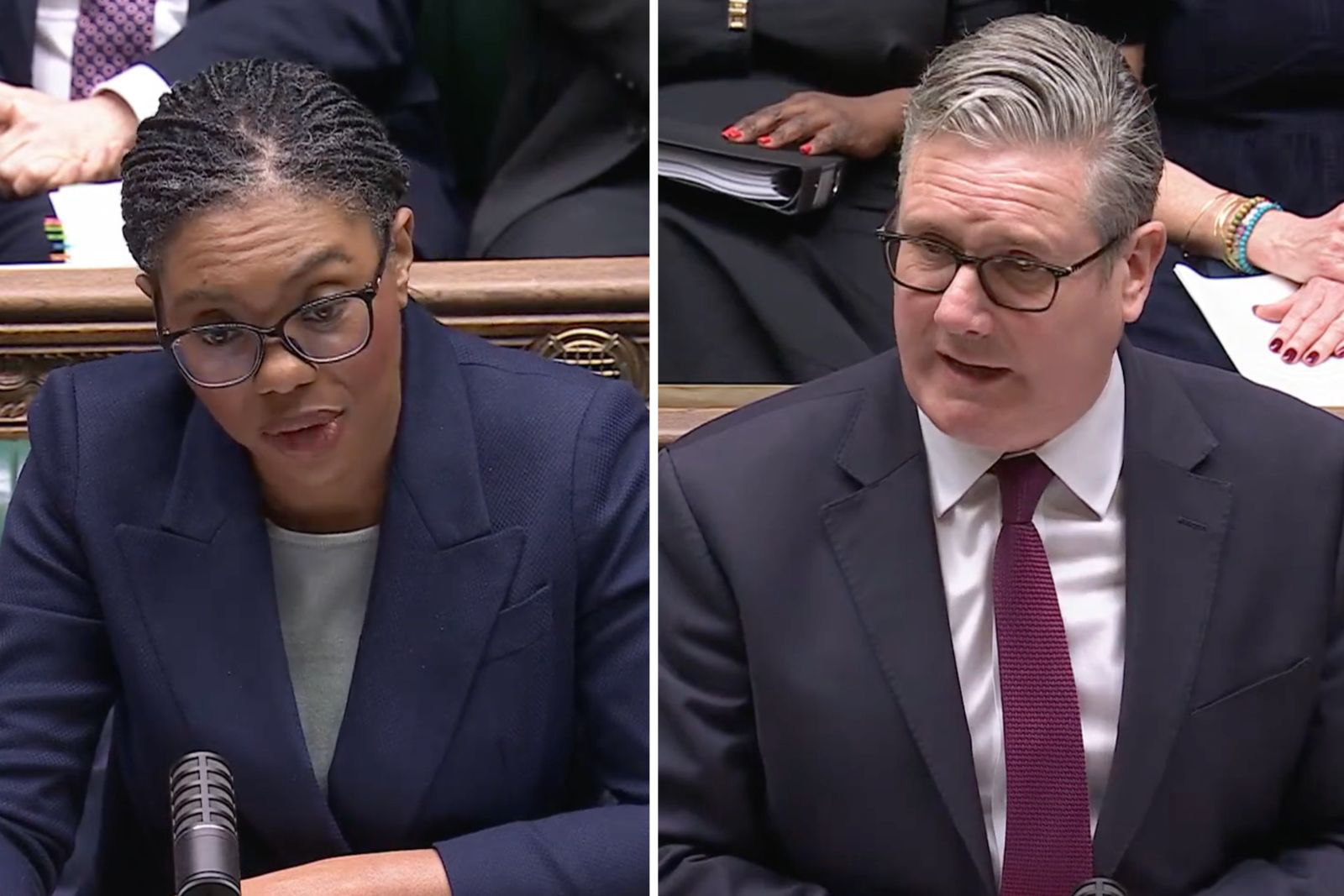

Starmer survived Badenoch’s attack — but that doesn’t mean he’s safe
The PM’s allies are bullish after defeating a Tory motion against him. For other Labour MPs the question is when, not if, Starmer will be toppled

He won the vote and survived the day on Tuesday yet, speaking to Labour MPs in the hours that followed, there was barely a trace of relief — only the quiet, grinding awareness that Keir Starmer has again burned through more political capital, which is fast running out.
The motion brought by Kemi Badenoch seeking a privileges committee inquiry into whether the prime minister misled the House of Commons over the appointment of Peter Mandelson as US ambassador was defeated by 335 votes to 223. This is a comfortable enough margin on paper but behind it sits a story of cabinet ministers ringing around MPs, Gordon Brown being called upon to steady nerves and Scottish MPs who were pulled from the campaign trail to bolster the payroll vote.
Related content

No 10 characterised Badenoch’s move as “a desperate political stunt the week before the May elections” and, privately, plenty of Labour MPs I spoke to agreed that was true — handing the Tories a symbolic scalp days before voters go to the polls would have been an act of extraordinary self-harm. But the fragility beneath the headline win is hard to miss.
Fourteen Labour MPs voted with the Conservatives, almost all of whom belong to the party’s long-established Socialist Campaign Group — the left-leaning caucus whose backing was key to Jeremy Corbyn’s successful leadership bid. As of Tuesday evening, none had faced disciplinary action. For some, that restraint reflects a prime minister who doesn’t want another civil war on his hands. For others, it looks uncomfortably like weakness — remember there was a time the government was happy to take the whip away for much less (such as when a handful of MPs voted to scrap the two-child benefit cap in 2024). One soft-left MP put it to me with a clarity that was difficult to argue with: “His days are numbered but it will be us [Labour MPs] who decide the timing, not the Tories pushing a political stunt.”
There was also a notable divergence between what Labour MPs were willing to say publicly and what they told me privately. Those most vocal in their criticism, particularly on the left, have called for greater transparency around the Mandelson appointment from the outset. But some centrist MPs, who supported the government in the lobby, have confided in me that they share those concerns — they just weren’t prepared to hand Badenoch a political gift.
What makes this harder for Downing Street is that the Mandelson story shows no sign of running out of road. Every time a witness appears before a parliamentary select committee, the questions multiply. This week it was Morgan McSweeney, the prime minister’s former chief of staff and former Foreign, Commonwealth and Development Office permanent secretary Philip Barton who gave evidence to Emily Thornberry’s foreign affairs committee. Last week it was Olly Robbins. Each appearance, rather than drawing a line, has only seemed to deepen the sense that something about this appointment was handled in a way that can’t quite be squared. A second tranche of Mandelson-related documents is not expected to materialise until the Commons returns in mid-May but any more bombshells could further destabilise a government that is already under huge amounts of pressure.
Then there are the local elections. They arrive next week, and the mood among Labour insiders is not one of confidence. If results come in badly, the conversations that are already happening in private will move rather closer to the surface.
Several MPs I spoke to this week were insistent that there is real, active organising going on among those considering alternatives to Starmer’s leadership. Images of private conversations between Angela Rayner and Andy Burnham, two figures whose political futures are being keenly watched by the Labour left, have not gone unnoticed at Westminster. Rayner’s allies, for their part, told me they were confident the HMRC investigation hanging over her would reach a conclusion soon — an investigation whose continuation has kept her options limited.
The Telegraph reported this week that Starmer privately offered Rayner a return to the cabinet when the two met earlier this month. Conversations between them did take place, and Starmer has been making public overtures in Rayner’s direction for some time. It is unclear whether an offer was tabled or what the response to that offer was. A return for Rayner would mean a cabinet reshuffle — rumours of which have been swirling around Westminster for some time. Whether Starmer could execute such a thing from a position of weakness is far from certain. But the chatter is intensifying.
Related content
Starmer’s team have been clear that he intends to fight on. They routinely make the argument that he delivered a large majority and intends to honour that mandate. His allies have made it clear to me that they believe that removing him would not be straightforward and that he would not go easily if there was an attempt. But some of his MPs use a different phrase for that argument: out of touch.
One minister I spoke to said Starmer was now in the “the last chance saloon”: that if the locals don’t go as badly as suggested, that if a reshuffle energises him and if there’s a sense of purpose and strategy, then perhaps things can turn around. But it will require an almighty change of fortune to quieten down his critics. He won Tuesday’s vote and survives another week. But each time the Mandelson saga resurfaces, each new document that is published, each select committee session that raises fresh doubts about what was known and why decisions were made, his authority seeps a little further away.
“More political capital expended,” as one Labour figure told me. How much is there left?
Shehab Khan is an award-winning presenter and political correspondent for ITV News.