
Faith leaders urge Andy Burnham to go further on climate resilience
Imams and rabbis unite to call for better preparation for extreme weather as a result of climate change: ‘We live on the same planet’

Faith leaders have called on the government to do more to prepare communities for increasingly extreme weather in the wake of a devastating summer of record-breaking heat, wildfires and drought.
“This should not be treated as a party political issue, but as a shared moral responsibility to safeguard our common home for present and future generations,” Qari Asim, senior imam at Makkah Mosque in Leeds, told Hyphen.
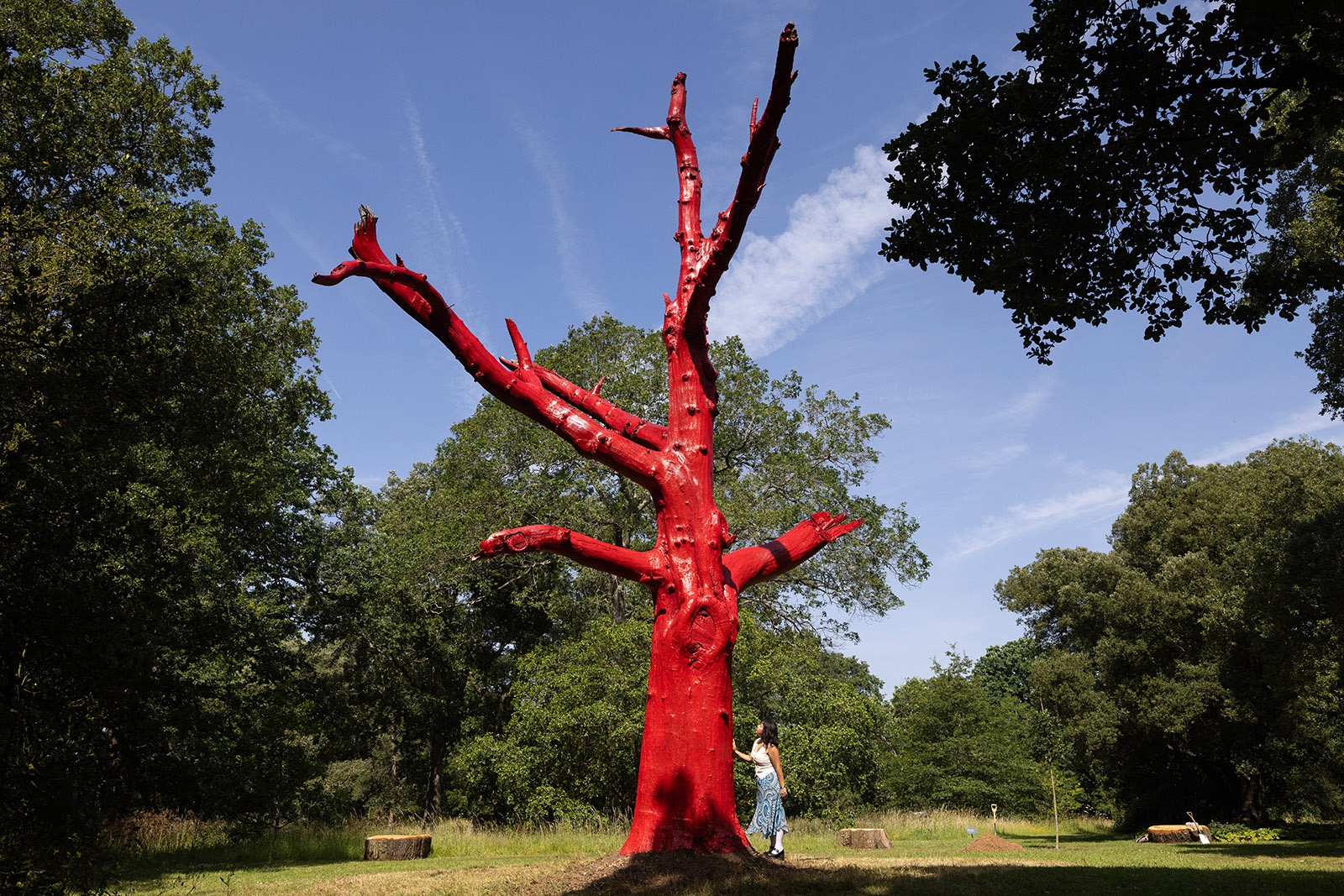
The Met Office has provisionally recorded summer 2026 as the UK’s hottest on record, with the highest temperature recorded at Kew Gardens: 38.1C on 13 August. England experienced its driest July on record, while in late August, 71% of the country was classified as in drought. The conditions also increased the risk of wildfires, with the Environment Agency reporting an “unprecedented number” around the country.
For Asim, the response to extreme weather is rooted in Islamic teachings about stewardship. He said the heat and wildfires were a reminder of “our shared responsibility to care for one another and the world that’s entrusted to us”.
At Makkah Mosque, that responsibility has included encouraging worshippers to walk or share transport rather than drive, reduce water waste and think about what they consume. The mosque has also held sessions for young people about extreme heat and wildfires.
But Kamran Shehzad, a climate action and sustainability lead at Birmingham-based Bahu Trust, said a multi-layered approach was needed, with more help from governments, including investment in housing in densely populated communities.
“It’s about local authorities investing in housing to provide more sustainable, climate-resilient housing,” he said.
He also called for heat-health and wildfire warnings to be shared in different languages with community groups and through social media.
He called for stronger measures to reduce carbon emissions and accelerate the transition to clean, affordable energy, alongside investment in “heat-resilient homes, schools, hospitals and transport in public spaces”.
Shehzad pointed to wildfires in the West Midlands, including people having to evacuate their homes near Stourbridge, as well as surface-level flooding caused by heavy rainfall. “We need to look at the source of why we’re going through this and what we need to do to equip our emergency services,” he said.
He emphasised the need for more home retrofitting, including insulation, ventilation, solar panels and air-source heat pumps. He highlighted a £7 million programme in Balsall Heath, Birmingham, that retrofitted almost 700 homes, arguing that similar investment should be expanded, alongside greater investment in the NHS, infrastructure and community preparedness.
“They need to be funded and prepared to deal with these things,” he said.
For Mark Goldsmith, senior rabbi of Edgware and Hendon Reform Synagogue, extreme heat is already affecting his community.
His synagogue has about 3,500 members, and Goldsmith said the community sees more deaths during hot summers than at other times of the year, particularly among older members.
The synagogue building itself has no air conditioning, making extreme heat difficult to manage during summer services. Goldsmith said the government should help communal buildings prepare to act as refuges during periods of extreme weather.
“That might be helping us to get solar panels so that we could power air conditioning without making an even greater impact on the environment,” he said.
The synagogue has previously opened its doors during periods of extreme heat and cold, offering those struggling at home a more comfortable place to spend time.
Goldsmith is part of EcoJudaism, a movement encouraging Jewish communities to respond to the climate crisis. He said environmental responsibility was deeply rooted in Jewish teaching, particularly the responsibility to protect the world for future generations and care for those with fewer resources.
“One of the things I think that all faiths share is that we care not just about our generation, but future generations, and we should care not only about ourselves and our own people, but all people around the world,” he said.
“Clearly, anything which creates extreme weather events is going to have a very deep effect, especially on those who are less economically strong.”
Elisheva Salamo, rabbi for the York Liberal Jewish community, said faith communities should be “concerned and vocal” about environmental issues.
Related content
“We need to learn more about our world and be conscious of the fragility of the environment and the needs of other people,” she said.
She also highlighted the specific risks faced by older people during periods of extreme heat.
“We need to really think about our elders. They’re often living in housing that isn’t necessarily the best ventilated. They can’t get out as easily,” she said.
Both Jewish and Muslim leaders said places of worship could play a greater role in helping communities respond to extreme weather.
Asim called for community buildings to be made available as “cool safe spaces” with drinking water, and for faith communities to be included in local emergency planning before crises occur.
Shehzad is developing a toolkit looking at how religious buildings could be used as climate resilience centres.
For Goldsmith, cooperation between faith communities is critical given the scale of the climate crisis. “We live on the same planet as Muslims, Christians, Hindus, Buddhists, etc — therefore, this is an area where interfaith cooperation is critical,” he said. “Sometimes I think as religious people we don’t realise what power we have together.”