
Bradford neighbours at wits’ end over factory’s foul stench and ash clouds
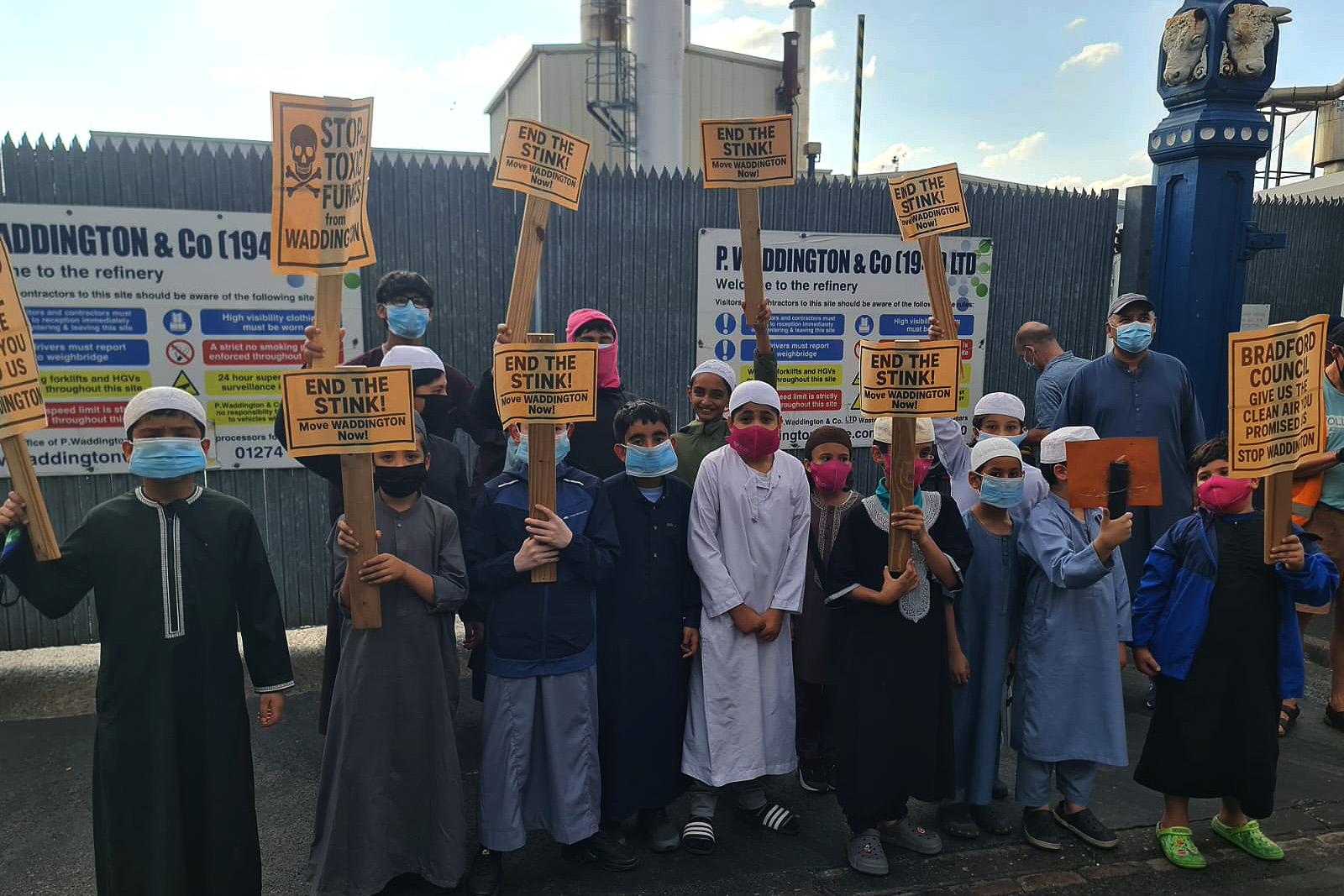
People near the P Waddington animal carcass processing plant paid for their own analysis of ash deposits nearby — and say the council must step in

Bradford residents have discovered potentially dangerous chemicals in the dust settling in their businesses and gardens outside an animal carcass processing facility, less than a mile from the city centre.
Now they say the council should step in and revoke the environmental permit that allows the P Waddington plant to operate.
Rahan Khan, who runs a car bodyshop business across the street from the factory, said he first noticed a sticky yellow dust falling onto his freshly painted cars about four years ago. After failing to gain support from the council or the processing plant, he decided to pay out of his own pocket for laboratory testing of the ash, first in 2024 and then again in July.
The results showed a high content of ammonium iron sulfate, a corrosive substance that may cause irritation upon contact.
“Sometimes it looks like it is snowing,” said Khan.
“Seventeen years ago, when I started the business, it was not that bad. The smell was neither here nor there. Now, it is unbearable. Sometimes, I have to spit the stench out of my mouth. Customers hate it because they know the work is good from me, but they don’t want to visit me because they’re scared of the factory.”
The plant has been processing animal by-products in Bradford since 1998. It was about five years ago, Khan said, that the foul odour produced at the site intensified and the ash began to appear — around the time that it was sold to another company, JG Pears, in 2020.
Since then, he said, footfall at his business has dropped. “Only the people who know me, who got referred to me, still come,” he said. “They know my work is good and they won’t get the same quality anywhere else but they can’t stand the smell. They drop off the keys and run.”
Hyphen showed the lab results to Ana-Catarina Pinho-Gomes, an air pollution expert and clinical lecturer in public health medicine at University College London.
“The presence of the ash is very concerning,” she said. “If the ash is settling on those cars, it is very likely getting into people’s airways. That’s where it will cause inflammation and long-term adverse consequences, like cardiovascular diseases.”
She added that the ash could be especially dangerous for children. “Children are smaller so the same amount of ashes will be a lot more concentrated for them,” she said. “The evidence has shown that exposure to ash like this can cause adverse effects on their neurological development because the brain is still maturing.”
P Waddington is one of eight processing plants in Britain authorised to deal with the most high-risk materials, including the carcasses of animals carrying dangerous infectious diseases. It is just a few hundred yards from Eastbrook, a residential neighbourhood that is home to one of Bradford’s largest Muslim populations.
Ummer Daraz runs a structural engineering consultancy near the plant. He also used to live nearby, but moved away two years ago as he was unable to bear the smell. He still runs a campaign for the council to investigate its air pollution and health impacts.
“What Waddington does is an important service,” he said. “When there is an outbreak of a disease or when the weather gets really hot, like now, and a lot of animals die, we do need a safe way to dispose of the bodies.” But, he added, the service should not be performed at the expense of Bradford residents’ respiratory and mental health.
“I have no doubt that the stuff coming out of those chimneys is bad for people’s physical and mental health,” he said.
After years of petitions and protests, Bradford Council announced in February that it would carry out odour and public health assessments, setting itself a deadline of this summer. However, the council could not confirm to Hyphen whether the assessments had been completed or if the results would be made publicly available. A spokesperson said: “We are carrying out our own independent tests related to emissions and air quality. These have to be carried out stringently over time. If necessary, once the tests have been completed, we will take any action we can to ensure air quality meets legal standards.”
‘Sickening’
Meanwhile, the odour is affecting not only Khan’s business but also his health.
“When I am at work, I can’t drink water, I can’t eat,” he said. “It’s too sickening. I have lost 6lb in the past year because I don’t eat or drink. I have lost my appetite.
“It is not just a smell in the air. It seems to coat the back of the throat and leaves a lingering taste in the mouth. It clings to clothing and hair. It has the character of decomposing animal matter mixed with heated or burnt fat, offal and a sulphurous, sickly-sweet undertone. When the weather is hot, it is like being surrounded by a cloud of stale, decomposing organic material.”
Although neither the council nor JG Pears have carried out assessments of the air and odour outside the processing plant, annual tests have been carried out within the P Waddington premises by air quality consultants commissioned by the company.
The documents were obtained by Daraz via freedom of information requests made to Bradford Council and shared with Hyphen. They show that levels of hydrogen sulphide, a foul smelling and highly toxic chemical, measured within the processing plant’s regenerative thermal oxidiser (RTO) — an industrial device used to control pollution — increased roughly 280 times between 2021 and 2023.
Hyphen showed the documents to Pinho-Gomes, who expressed concern about the rising level of hydrogen sulphate as well as the presence of acrolein — “a potent respiratory irritant” identified in the RTO.
“None of these documents establishes what concentrations of chemicals people around P Waddington actually breathe, or whether regulatory and health thresholds are exceeded,” she said. “However, considering the reports, it is likely that this is the case, but not certain.
Related content

“Although the air pollutants are released in high concentrations, they get diluted in the air, and so it is not certain what the levels that reach people are and those are the values that will have an impact on their health and well-being. It is something that the council should investigate to see what the air is like in people’s houses and gardens. The ash found by the car bodyshop owner does suggest that things are reaching people and that makes it more concerning.”
While the residents wait for the council to take action, Pinho-Gomes suggested that they wear face masks, especially when the odour becomes strong.
“I know wearing face masks is not necessarily pleasant but I think it is worth it to preserve health,” she said.
“The smell is a concern in itself. It’s aerosol, it’s very tiny — closing your windows and doors won’t stop it and people can’t stay indoors all the time. The company should sort out the smell because people have a right to a healthy and pleasant environment in the home.”
Hyphen approached JG Pears for comment. A PR firm working with the company responded with a statement that said the factory “takes the concerns raised by the local community seriously” but was “unable to comment on specific details of the environmental samples and tests conducted by members of the local community”. “Accurate sampling and robust testing are challenging in an urban industrial area with multiple potential sources of various compounds,” the statement added.
“For environmental testing to provide reliable and meaningful results, it needs to be undertaken within the appropriate regulatory framework and using a robust and scientifically recognised methodology. Therefore, any concerns should be addressed to relevant elected officials and regulatory officers at Bradford Council who are best placed to determine the appropriate next steps.”