
Tamikrest’s electrifying take on desert blues
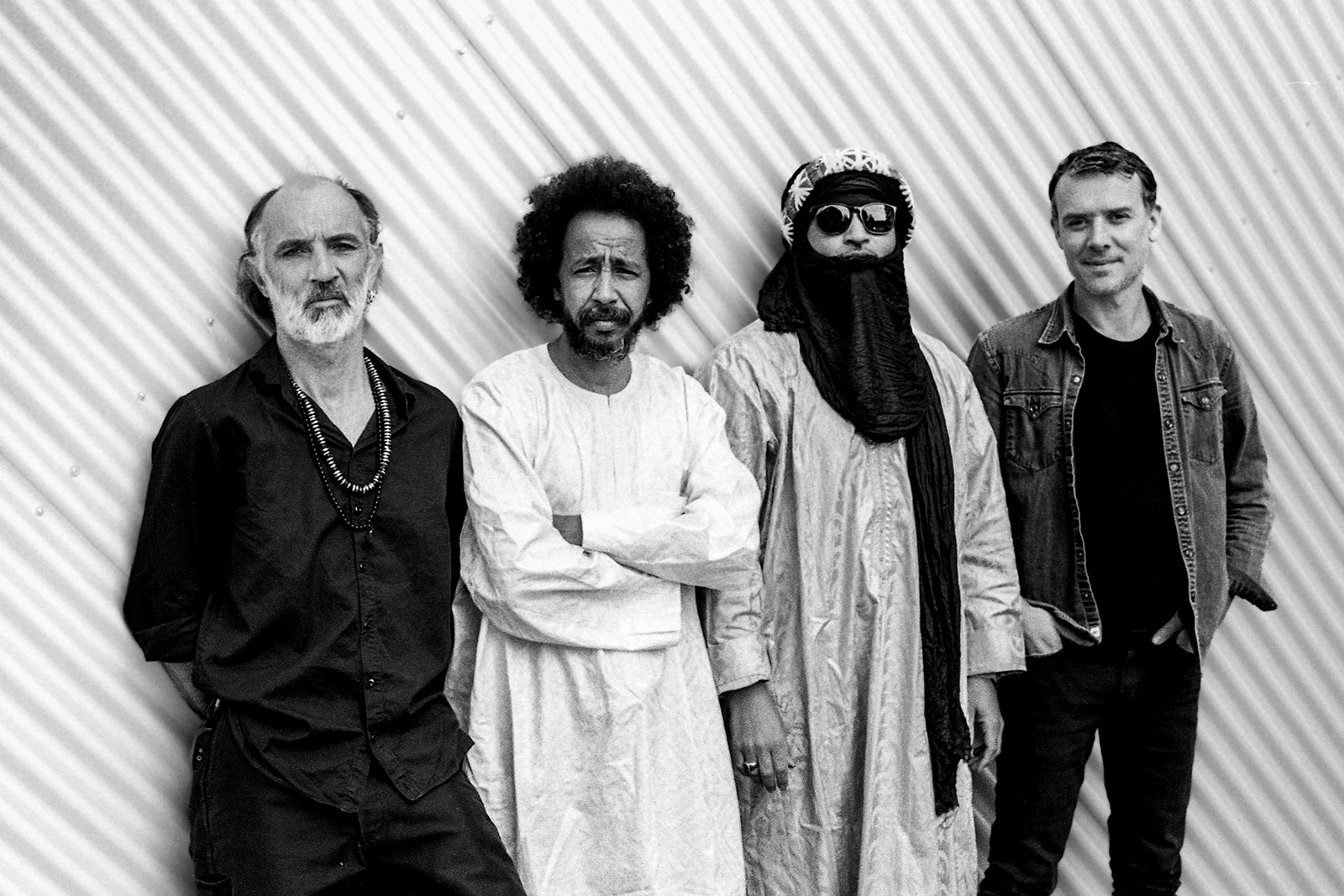
On their new album, Assikel, the Tuareg guitar band blends traditional folk rhythms, psychedelic guitar lines and a powerful political message

For the past 20 years, Tamikrest have been a band without a home. Founded in Tinzawaten, near the Mali-Algeria border, in 2006 by musicians Ousmane Ag Mossa and Cheikh Ag Tiglia, the group has spent two decades making desert blues music that laments the refugee status of the Tuareg people.
“I’m a great traveller and am always on the move but Algeria is the country where I now spend the most time,” Mossa says. “Back home, in northern Mali, which I call Azawad, the situation remains chaotic. Insecurity reigns, the central government clings to power and democracy is nonexistent, since elections are held in shambles.
Related content

“The region is under the control of a junta protected by paramilitary organisations like the Wagner Group and the Africa Corps, while jihadist groups roam the desert. It’s chaos for the nomads — our music is one of the only ways for the world to hear our voice.”
Although the Tuareg are a nomadic people who typically inhabit the Sahara desert, the region’s increasingly complex politics have often placed their shepherding tribes in violent situations. Clashes between Tuareg forces and the armies of Mali and Niger have been frequent since the 1960s, while most recently Russian mercenaries have been enlisted by the Malian government to suppress Islamist influence in the north, with Tuareg communities often caught in the crossfire. It is now estimated that up to 300,000 Tuareg and local people have been displaced by the conflict.
Following in the footsteps of other internationally successful bands such as Tinariwen and Imarhan, Tamikrest have developed an electrifying sound that blends clattering Tuareg folk rhythms and closely stacked vocal harmonies with psychedelic electric guitar lines.
Featuring French bassist Paul Salvagnac and percussionist Cédric Maurel alongside Mossa and Tiglia, the quartet’s infectious, often trance-like songs have brought them to stages across Europe and the US, yet their message remains deeply rooted in their longing for a homeland. On Assikel, their seventh and latest album, Tamikrest place that message of unity for their people front and centre, across eight captivating tracks.
The opening Adagh Oyantid sets the tone as a plaintive finger-picked guitar line weaves gentle melody through Mossa’s husky singing in the Tamasheq language of the need for the Tuareg to unite under one flag. The rollicking, hand-percussion-heavy Ayitma and Imanin, with its driving, funk-laced groove, offer a similar call to action.
Recorded to tape, which limited the band’s number of live takes to only a handful per song, the album has an energetic immediacy and a tension that is amplified by their music’s message.
“Recording to tape reminded us of the cassette recordings Tuareg musicians made in the 80s and it allowed us to rediscover a bit of that original Tuareg sound — that raw grain and warmth. It’s the authentic feel we’ve always wanted,” Mossa says.
“I also talk a lot about the daily life of the Tuareg people and our problems on the album. I address our community and encourage us to continue fighting to preserve our identity. My ultimate goal is to see my people live in freedom and dignity. I fervently hope that we can take back control of this destiny, live our traditional way of life and continue practising our ancestral culture on our land, the desert.”
As much as it looks with hope to the future, Assikel is a record that harks back to Tamikrest’s beginnings. On two songs, the tender duet Ellilal with Ibrahim Ag Alhabib, the founder of Tinariwen, and the acoustic strumming of Adounia, written by original Tinariwen member Mohammed “Japonais” Ag Itlale, the group pay tribute to their biggest influence.
While it took until the early 2000s for Tinariwen to become the first Tuareg group to gain international fame, they had long been known at home as a lively wedding band. It was their bootleg cassettes that first caught Mossa’s ears as a young man hoping to make it as a guitarist and songwriter.
“I listened to a lot of music by Ibrahim,” Mossa says. “I greatly admire his guitar playing and his lyrics, which powerfully depict the situation of the Tuareg people. I also had the opportunity to meet Mohammed Ag Itlale in late 2002 or early 2003 when he visited my village.
“I was just starting to play guitar, without really knowing how to tune it or how to read music. He was my first teacher. He taught me the basics of music theory and it’s thanks to him that I took my first steps. For me, he remains the greatest poet of the Tuareg community.”
While Tinariwen have recently released their tenth album, Hoggar, following the death of Itlale in 2021, younger artists such as Imarhan and Mdou Moctar are also touring in support of new records, proving that the international audience for Tuareg music is as strong as ever. President Donald Trump’s banning of people from 75 countries, including Mali and Niger, from entering the US, has, however, severely limited their reach. It’s a fraught situation that Tamikrest ultimately believe makes their presence even more important.

“The foundation of this music is live, playing for people in real time and improvising,” Salvagnac says. “We can’t tour in the US, but we still have to play the maximum number of concerts for people to keep spreading this culture. People want to hear from the Tuareg tradition and we want to keep going in search of new sounds and experiences, to find new ideas for ourselves.”
Embarking on a European tour from May and landing in the UK for several dates in June, beginning in Glasgow before heading to Leeds, Bristol and London, Tamikrest will have the chance to give their audiences a taste of their version of Tuareg culture. While for Mossa, the struggle to return home peacefully to northern Mali continues.
“Many politicians see the area as a place to exploit, to sell to multinationals that could build factories or uranium mines that would destroy our environment,” he says. “We will fight to our last breath so that this desert remains for our children, as it has always been. It will never be a commodity to be sold.”
Assikel is out on 15 May via Glitterbeat Records. Tamikrest begin their UK tour in Glasgow on 8 June.