
‘I will always fight against fascism’: Zineb Sedira on her Tate Britain commission
In her largest UK commission, the artist pays tribute to the legacy of radical 1960s-70s African cinema and the central role Algeria played as a revolutionary hub

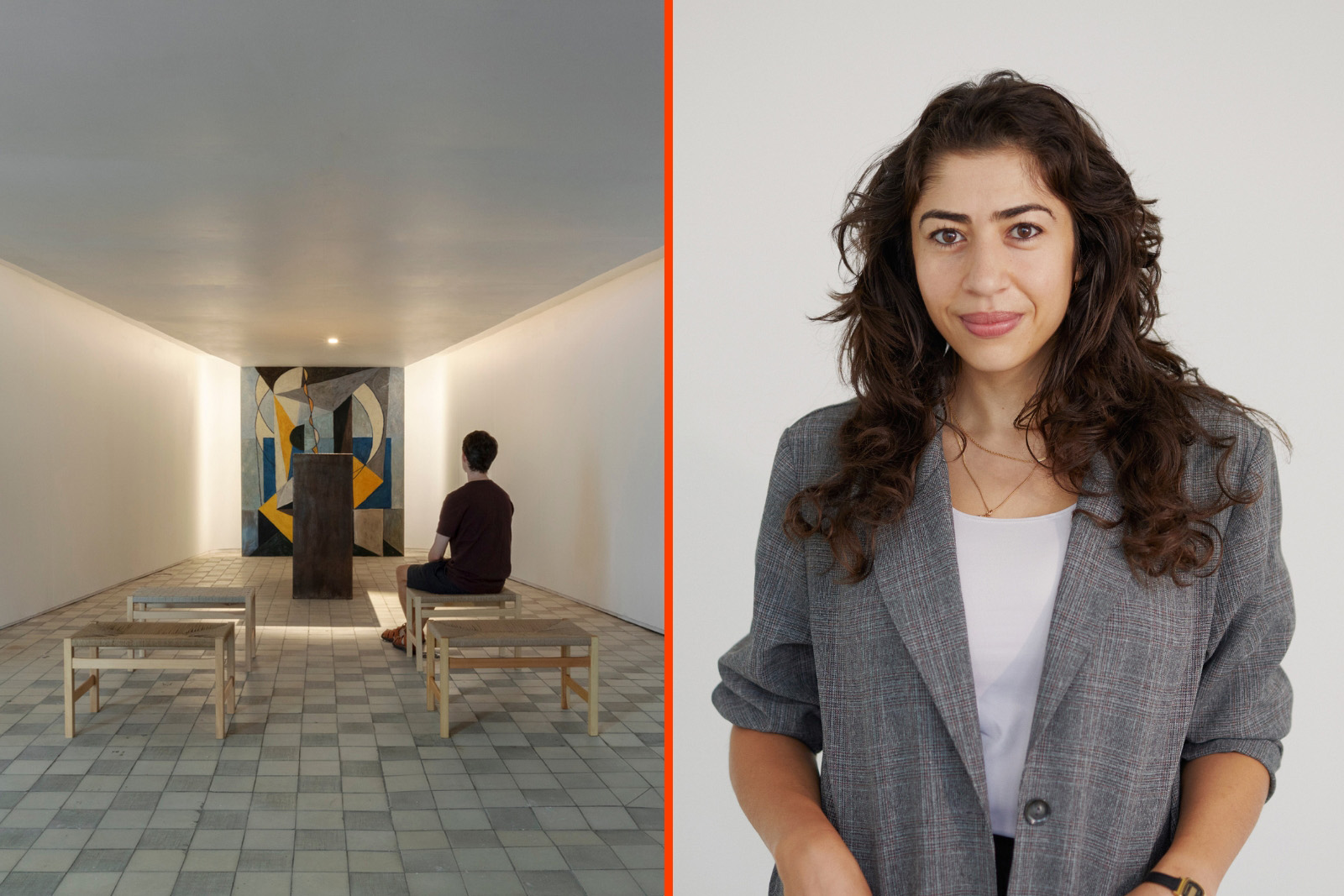
The artist Zineb Sedira was born in France in 1963, a year after Algeria’s war of liberation concluded. Her parents had left Algeria by boat in the early 60s and, as a young girl in Paris towards the end of that decade and in the early 70s, Sedira would often accompany her father to cafes frequented by members of the city’s Algerian community. These were sites of debate and organisation, where a nascent diaspora could gather and discuss from afar the developments taking place in their home country.
“There was a lot of political conversation about the new state and then there was the coup d’etat with [Houari] Boumediene in 1965,” Sedira tells me. “I was only two or three years old then, but all those things, I’m sure, seeped into me.”
This year, Sedira was selected for the Tate Britain commission, awarded annually since 2000 for a site-specific work in the museum’s 300-ft-long neoclassical Duveen Galleries. The installation, When Words Fall Silent, Cinema Speaks… is her largest in the UK to date and pays tribute to the legacy of radical 1960s and 1970s African cinema, highlighting the central role that Algeria played as a revolutionary hub.
In 1965, the country’s postcolonial government established the Cinémathèque Algérienne, a public institution dedicated to preserving and disseminating Algerian films, as well as to showcase international cinema.
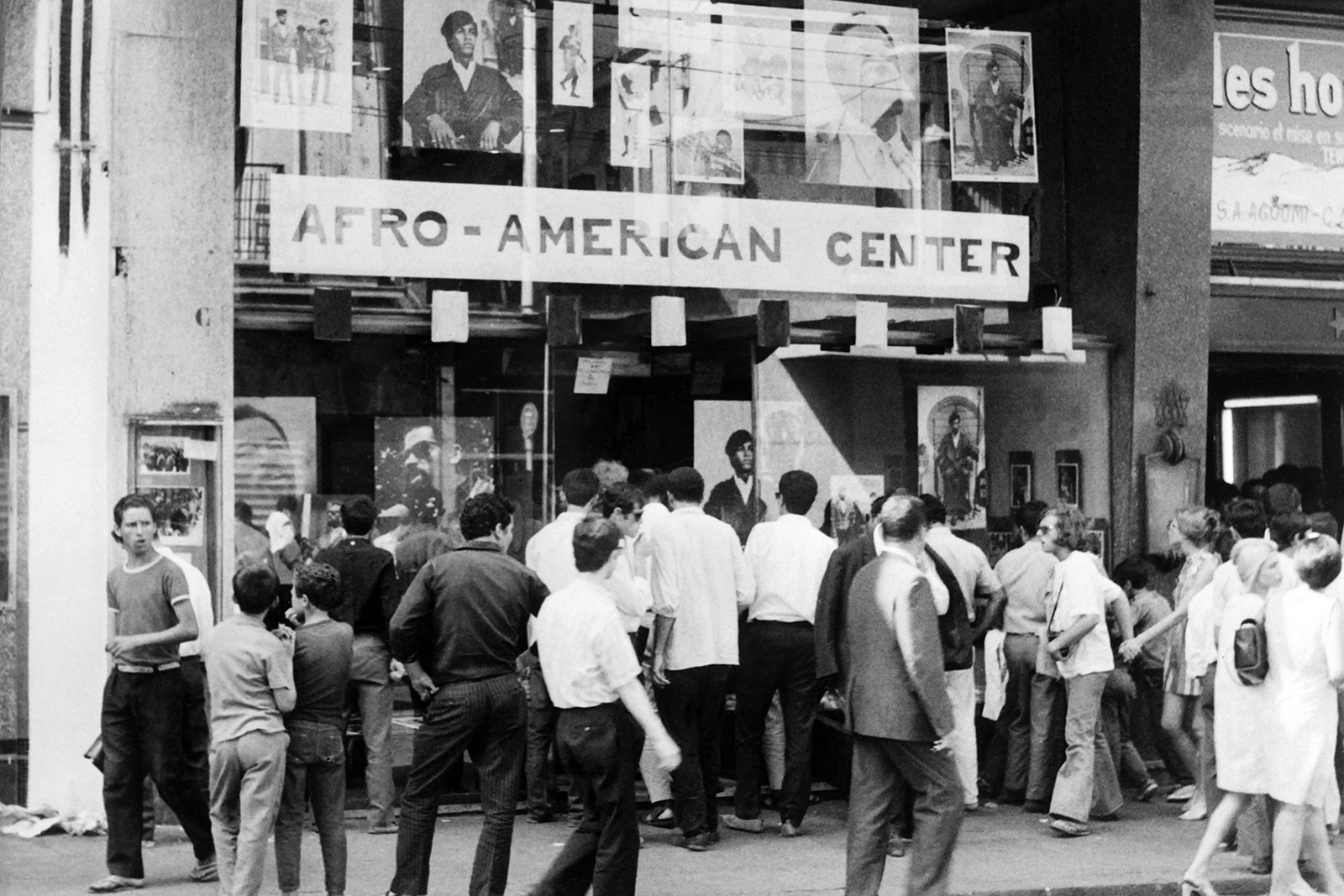
The space played host to several pioneering film-makers — from Ousmane Sembène to Jean-Luc Godard — while the Algerian state poured money into the local film industry. At the Pan-African Festival of 1969, Algiers became a nucleus for the spirit of decolonisation sweeping the continent, attracting delegations and liberation movements from across Africa and around the world: Palestine, Spain, Ireland, the US’s Black Panther Party.
“All of the countries that were facing fascism and imperialism,” Sedira says. “It was a visionary moment that has been lost.”
This is a history that remains, for the most part, uncanonised in Anglophone narratives, which frequently exclude north Africa from the broader tradition of African cinema, Sedira argues. “It really drives me mad, this kind of essentialism. African cinema comprises the north of Africa and the south, so for me it was trying to get rid of this kind of cleavage, which was created, actually, during colonial times,” she says.
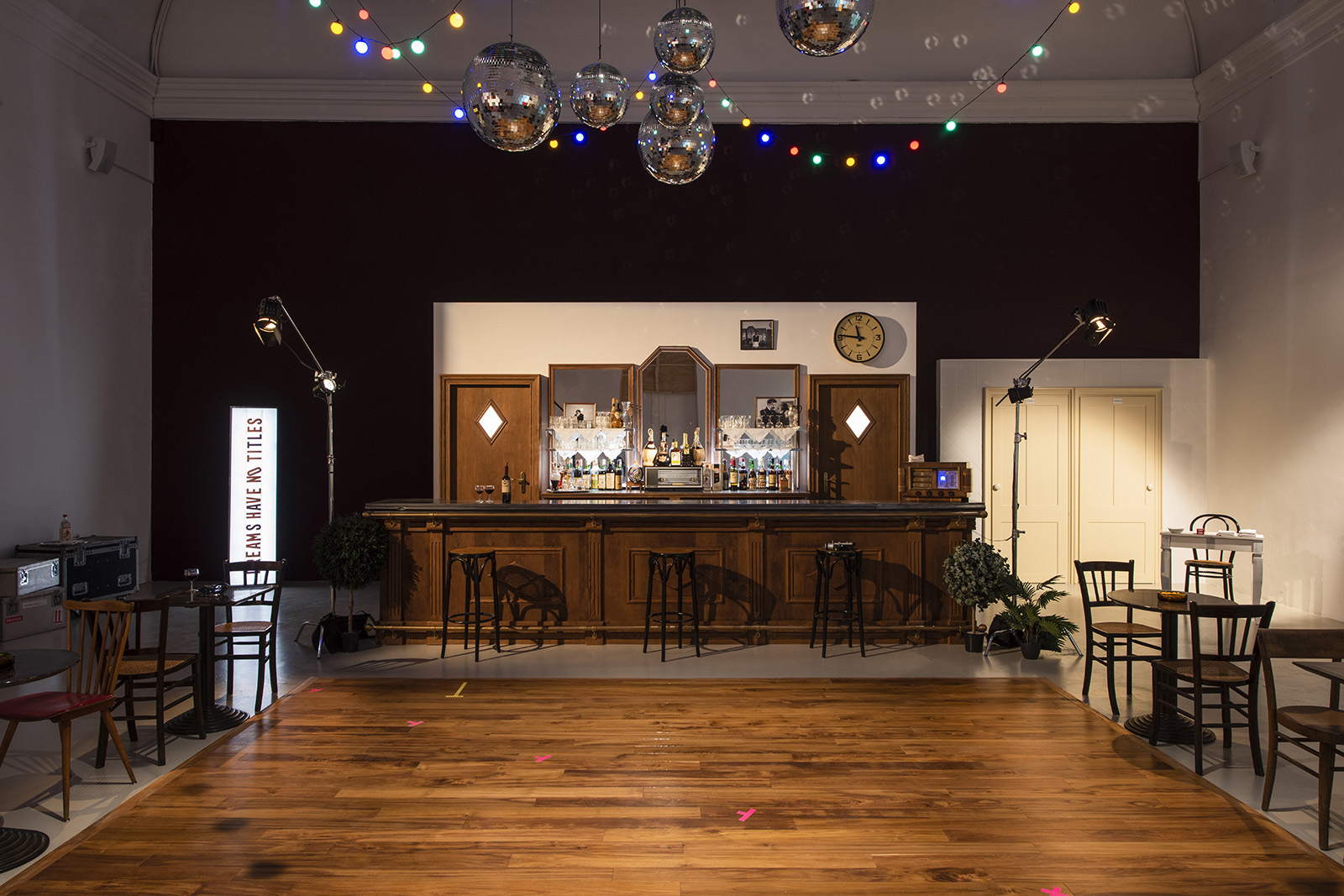
Spanning film, photography, performance and installation, Sedira’s work has often returned to this heyday of activist film-making and the cultural fervour it engendered. Representing France at the 2022 Venice Biennale as the first artist of Algerian descent, Sedira’s installation, Dreams Have No Titles, featured a recreation of a set design from Gillo Pontecorvo’s The Battle of Algiers, which was banned in France upon its 1966 release.
Living in London since 1986, Sedira describes herself as British, French, Algerian, Muslim, Arab, Berber, African, Middle Eastern, Maghrebi, a “Brixton girl”, and an archive and flea market enthusiast. “I’m a bit of a hoarder,” she confesses.
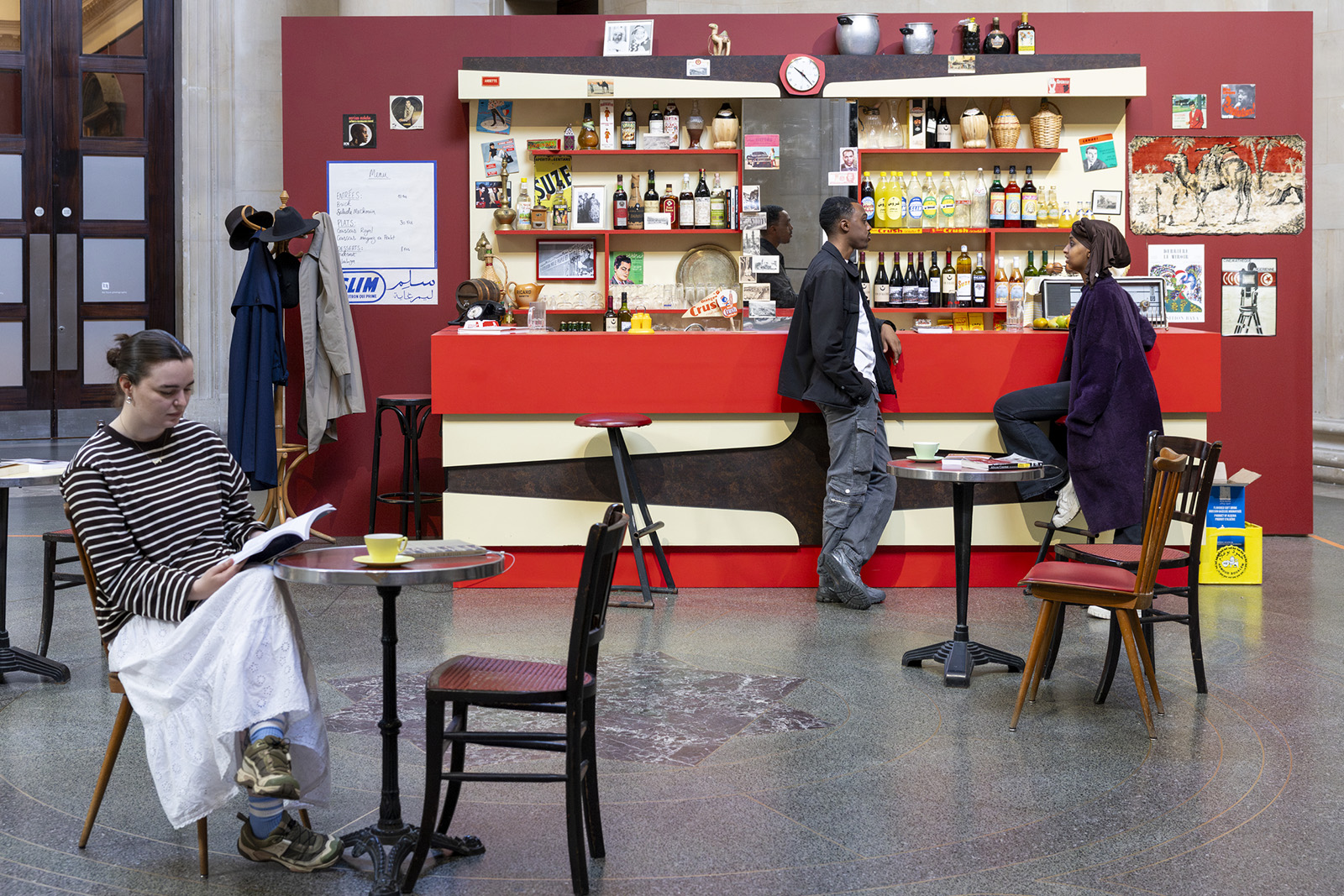
In the Duveen Galleries, she has recreated the Parisian cafes of her childhood. Her father, who died two years ago, would often take her to cafes on his days off from work. She was captivated by the Scopitone machines, forerunners of video jukeboxes that played short music films shot on 16mm. In this installation, a Scopitone plays parts of Agnès Varda’s 1963 photomontage Salut Les Cubains interwoven with archival footage, set to Afro-Cuban music.
Behind the bar: bottles of fizzy Selecto, a commemorative Algerian stamp celebrating the centenary of Frantz Fanon’s birth, a Cuban bank note displaying Che Guevara’s face. On the tables, inviting audiences to participate within a kind of set, are contemporary books on African cinema.
She tells me that she wishes she had experienced some element of the era that forms the focus of much of her recent work, a longing that she is hesitant to call nostalgia. “I wish I was an adult in Paris in the 60s. I would have probably known people from La Nouvelle Vague,” she says. “In France I would go to the cinema with my dad… but he didn’t even know that the Algerians were making so many films.”
If not nostalgia, perhaps When Words Fall Silent presents a reimagining in the subjunctive: of what was, and could still be. “I started this project before the genocide of Gaza,” Sedira tells me. “But it reminds us that what happened in the 60s and that very strong global political consciousness we had at the time should come back now.”
The installation’s contemporary resonances are manifold, she explains, citing the strengthening of political solidarities in support of Palestine, forged around the world in the way that the global movement against the Vietnam war was mobilised then. For her, cinema remains a potential tool of resistance.
“It’s about telling a story that people cannot or won’t see if it comes through TV or the news,” she says. “We’re still fighting. I will always fight against fascism, whatever type of fascism it is.”
At the heart of this new work was a desire to archive narratives that were at risk of quickly fading. Confronted by the reality that many of the figures instrumental to the development of post-independence Algerian film-making have passed away, Sedira set out to collect oral histories from those still alive: Boudjemaâ Karèche, who served as the director of the Cinémathèque Algérienne from 1978 to 2003, and film critic and historian Ahmed Bedjaoui.
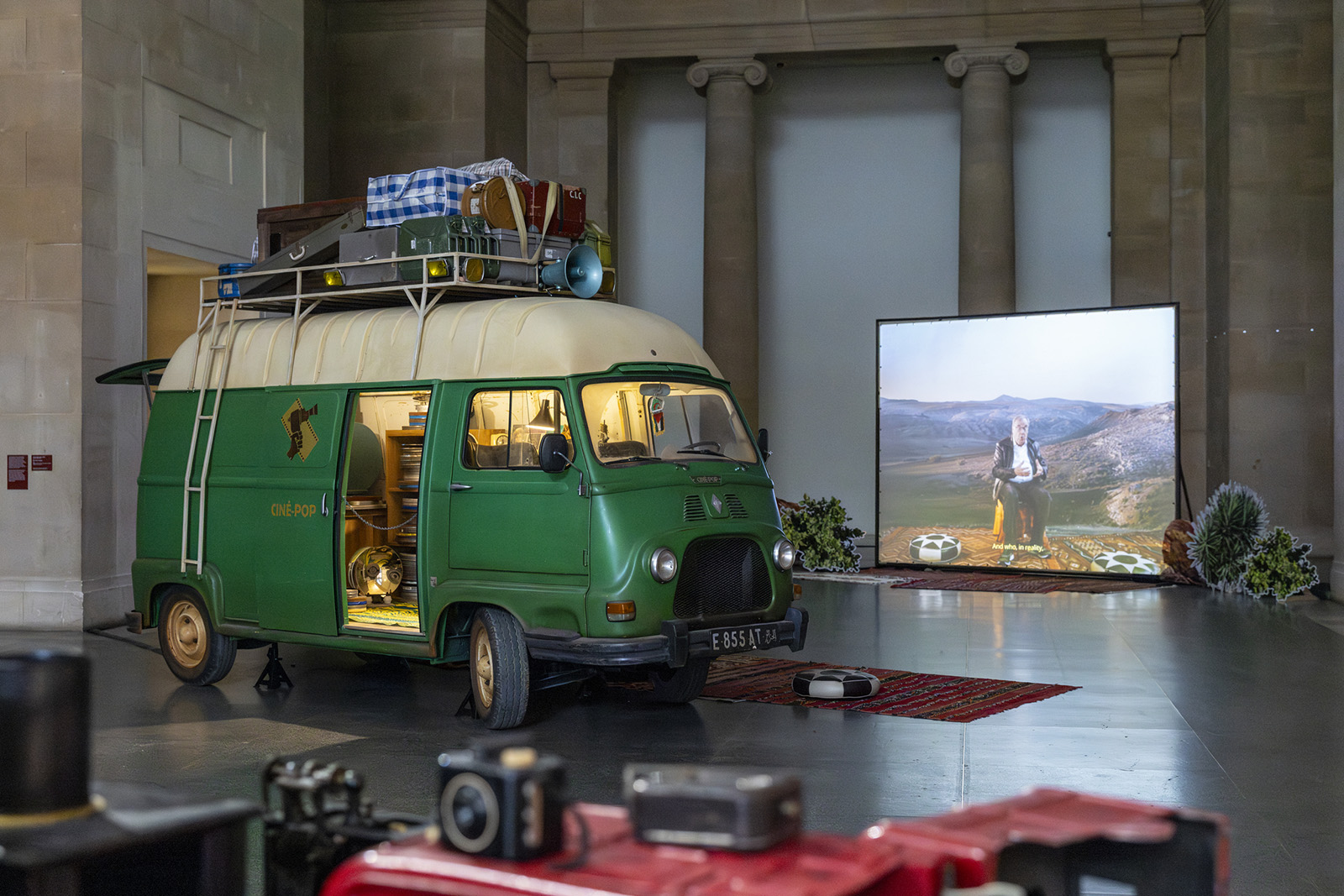
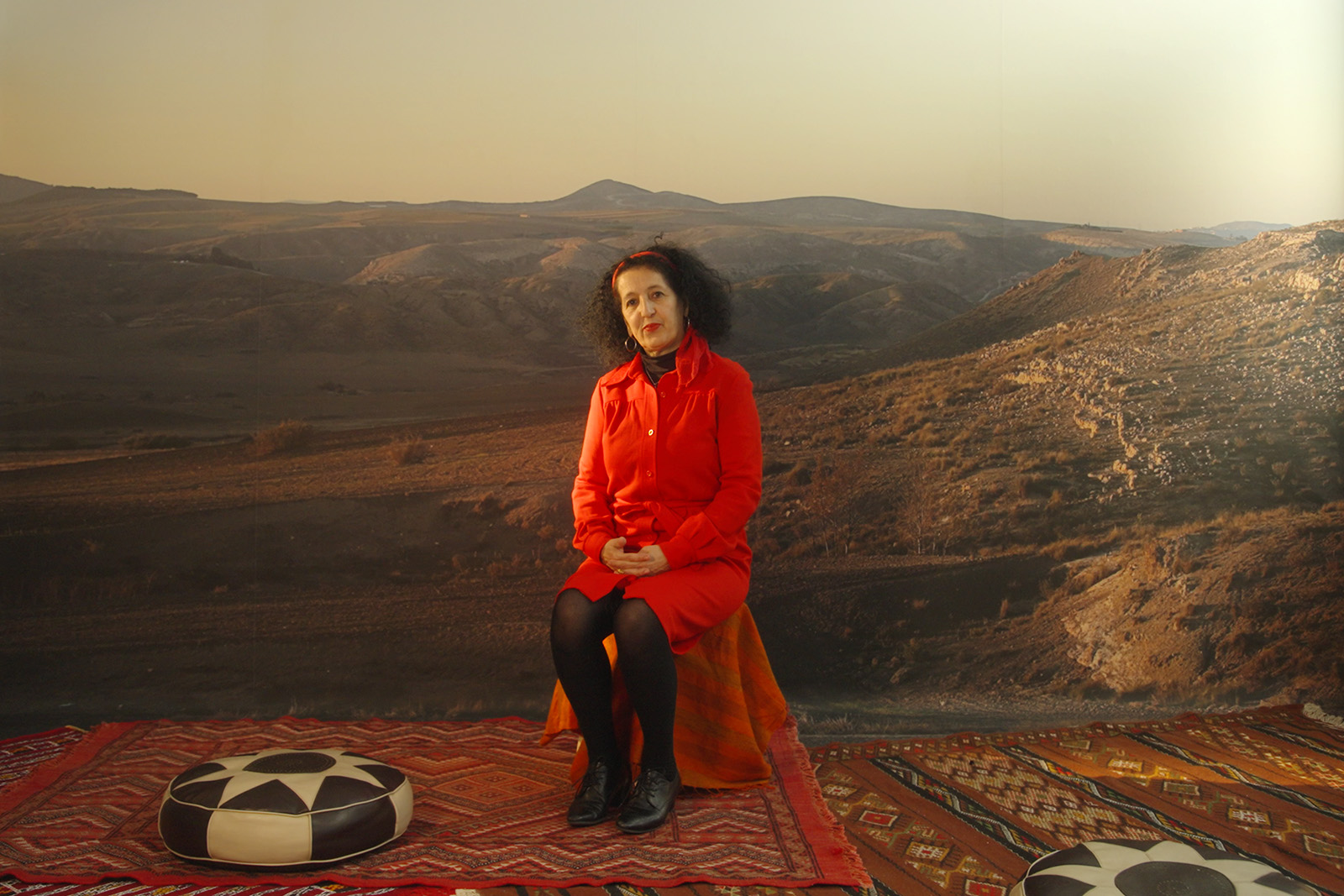
In the Duveen’s final space, a 1960s van gestures at the history of the French army’s Ciné-Pop mobile projection units: vehicles distributing propaganda films in Algeria before they were reappropriated by the independent state to show anti-colonial films to rural audiences. In the gallery, the Ciné-Pop van projects Sedira’s interview with Bedjaoi, who recalls the early, feverish days of Algerian cinema.
In the footage, the historian sits in front of a backdrop displaying an image Sedira photographed of her father’s land. This is familiar ground for the artist, whose earlier, autobiographical works have frequently engaged with the waters, terrains and borders of her parents’ birthplace.
“I felt like I should, as always, bring a bit of the family into the project,” she says. “And for me, the metaphor is that the land was always a father, like the sea was a mother.”
Zineb Sedira’s When Words Fall Silent, Cinema Speaks… is at Tate Britain until 17 January 2027, entry free.