
Muslims in Havering fear for their future after neighbours back Reform
The east London borough is home to 16,000 Muslims — and is now controlled by Nigel Farage’s party, which has made its feelings about Islam clear

Muslims in Havering say they are worried about their future in the east London borough after thousands of their neighbours backed Reform UK in this month’s local elections.
They are also apprehensive about the consequences of the new Reform-led council for mosque-building projects, with members of the area’s substantial Muslim population currently forced to meet and pray in an outhouse with restrictive opening hours.
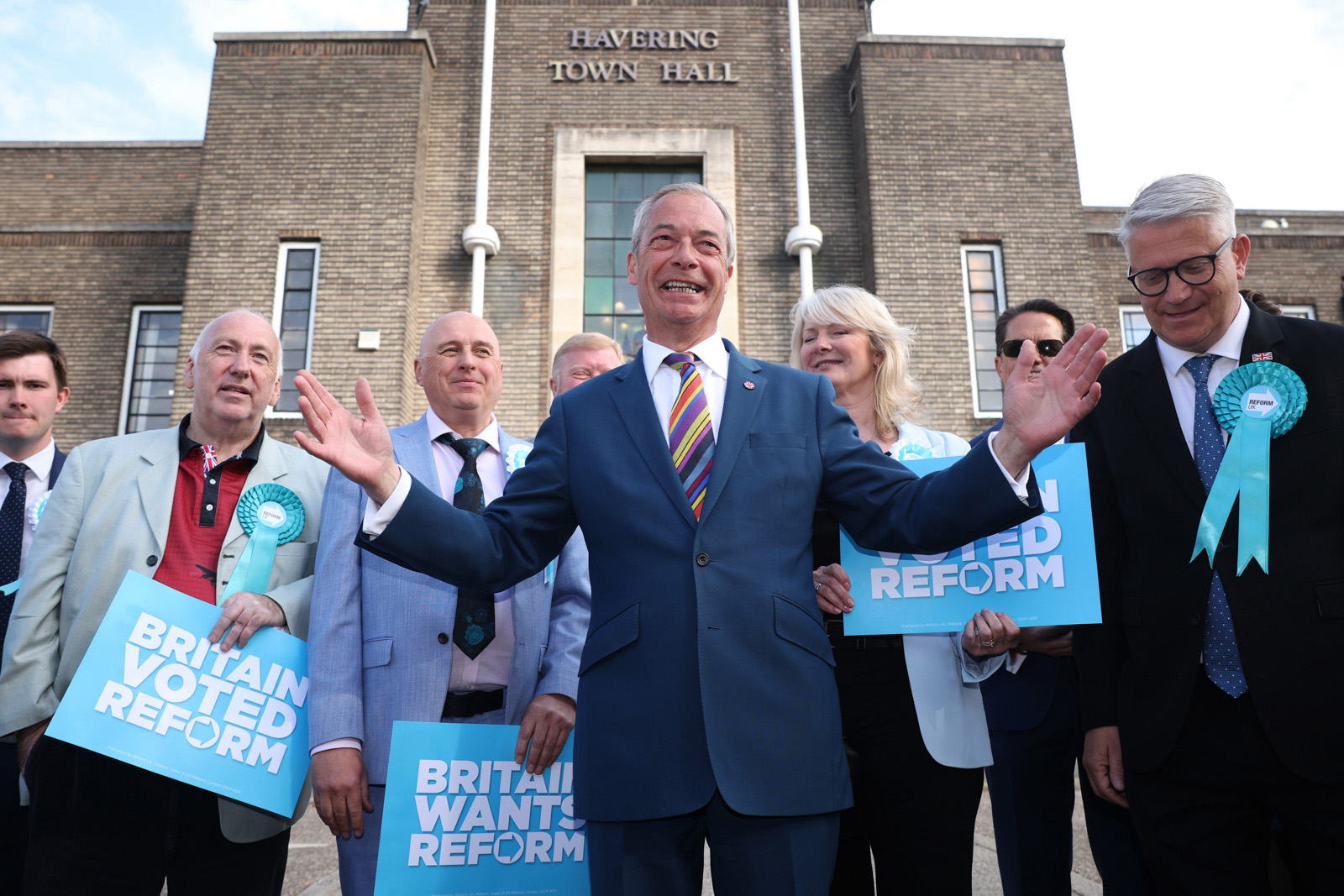
The rightwing populist political party, led by Nigel Farage, made huge gains earlier this month, winning 1,454 council seats across England, Wales and Scotland. In Havering, 39 Reform councillors were elected, giving the party overall control of the council that had previously — and unusually for the area — been run by the local Residents’ Association. One of the areas’ MPs, Andrew Rosindell, defected from the Conservative Party to Reform earlier this year.
Rauf Ahmad moved to Romford, the borough’s largest town, in 2018. Since 2021, Ahmad has been a volunteer at a local charity, the Al-Ahad Foundation, which organises Jummah, Eid and taraweeh prayers at North Romford Community Centre. The centre can accommodate 500 people for Friday prayers, and up to 1,500 worshippers on Eid.
Related content
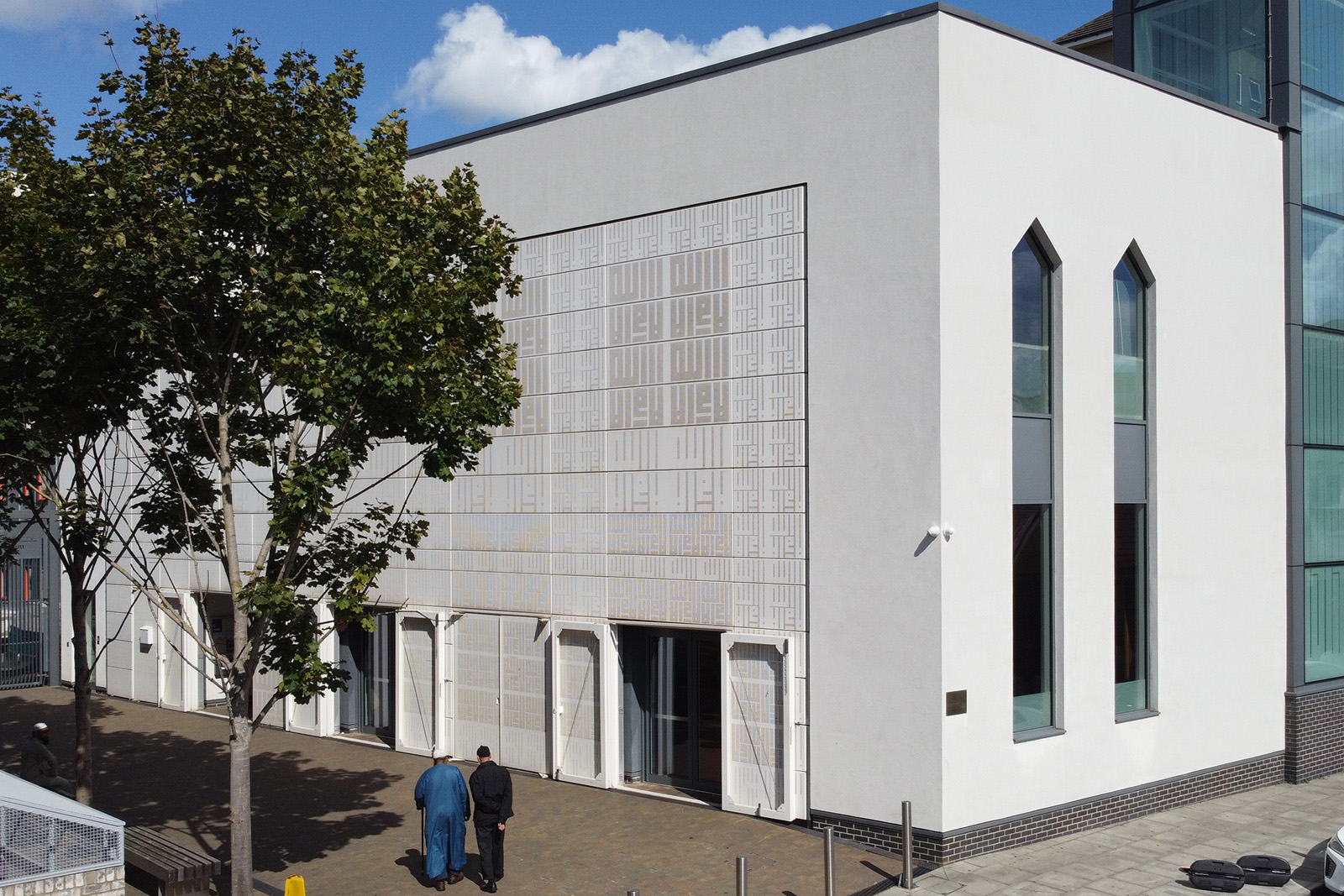
Ahmad said Muslims in the area were in desperate need of a dedicated mosque. There are around 16,000 Muslims in Havering, making up 6% of the borough’s population, but this figure rises above 13% in wards around Romford itself such as Rush Green & Crowlands according to 2021 census data. “There is nowhere for the local Muslim community to offer their daily prayers,” said Ahmad. “There is no madrasa for our children.”
Currently, the only mosque in his local area is Collier Row Mosque, which has space for just 40 worshippers. As it is in a residential area, it is also under strict restrictions and can only open on Monday to Friday from noon to 7.30pm, and from noon to 5.30pm on weekends and bank holidays. This means that fajr, isha and maghreb prayers cannot be held there for most of the year.
“We were told previously that instead of buying something and then applying for planning permission, which could or could not be approved, it’s best to identify a place and speak to the council about the chances of getting planning permission for a place of worship,” Ahmad said.
Ahmad now fears that Reform — which is currently investigating one of its own councillors in Solihull for saying that all mosques should be closed down, and whose home affairs spokesperson, Zia Yusuf, made headlines earlier this year for pledging to ban churches from being turned into mosques — will make this process more difficult or could even try to block it.
The borough’s largest mosque, Havering Islamic Centre, did not respond to requests to speak for this article, but has been fighting its own planning battle this year. Its application to move to a permanent town-centre site remained undecided when the council changed hands and has already faced stiff objection from neighbours.
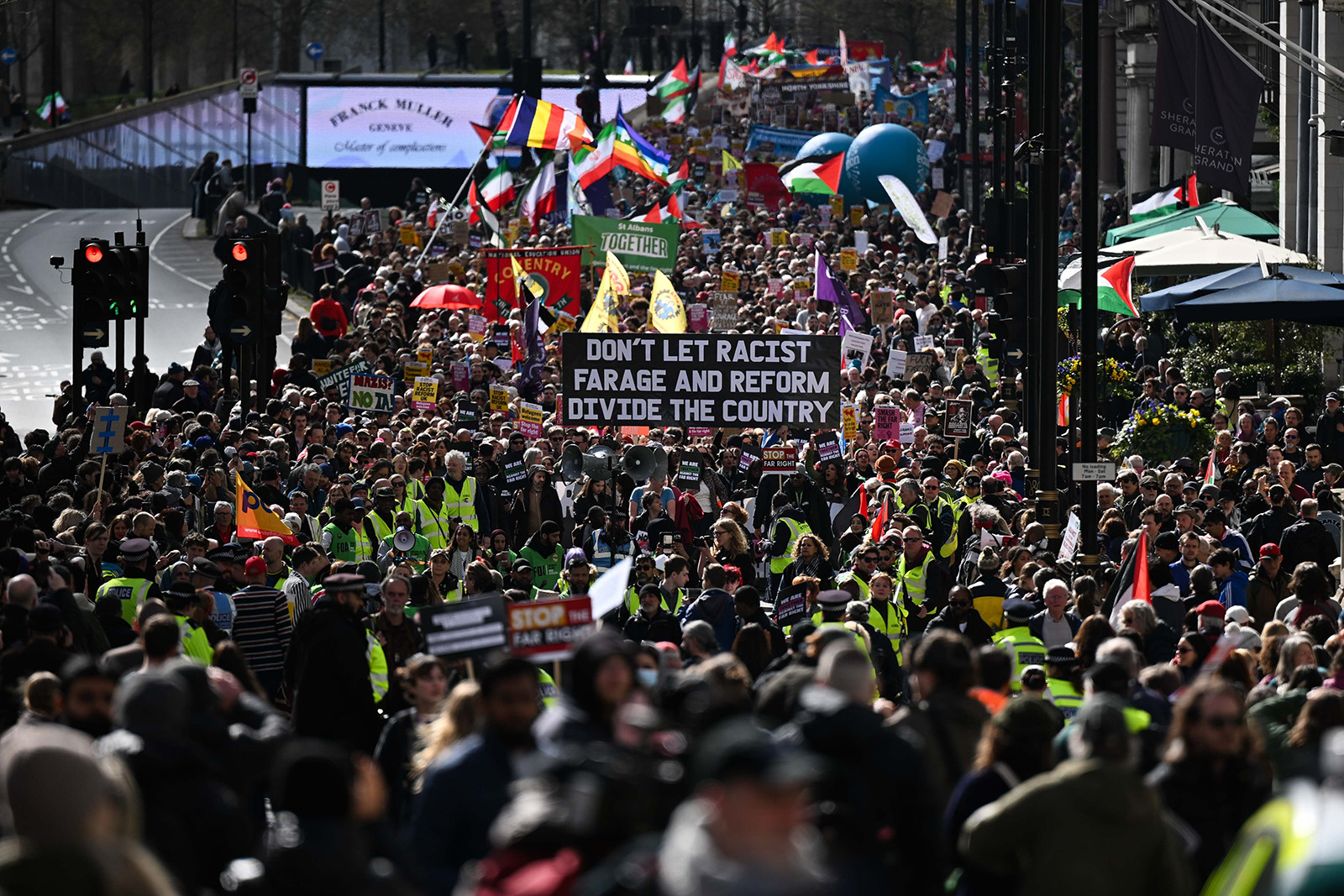
Miriam Qureshi, 36, is a mother of four who moved to Emerson Park with her family in December 2025. Qureshi, who wears the hijab, said the results of the election had left her feeling anxious about the possibility of being racially abused in her neighbourhood by voters for a party that has made little secret of its disdain of Islam. This fear has been compounded by two racist incidents elsewhere on the Tube network and by the far-right “Unite the Kingdom” rally in central London earlier this month. She has also stopped travelling from her local station, Emerson Park, instead going to work via Gidea Park, where she says she feels more comfortable as it is a busier station with more staff.
During one incident last week, a drunk man addressed her in a packed carriage, telling her that she should “go back on the boats” and that “everyone needs to go home now”. “I felt scared, it was so uncomfortable, but I just had to stay quiet,” Qureshi said.
In another incident a young boy, encouraged by his mother and grandmother while sitting next to Qureshi, repeatedly said: “We need to send them back on the boats.”
“It made me so sad to hear,” she said. “I was born in this country. I’ve worked since I was 15 years old. I bought a home here because I love this country, and you’re telling me I should move out, and to go where? I felt so deflated. It made me think, should I actually be here?”
She said that since Reform’s win, her family had changed some of their normal activities, such as visiting their local park and Hornchurch High Street, where she had seen people staring at her hijab.
“It’s very scary to think people are going to use this to benefit this ideology against migrants and people of colour. My son used to go out on his bike around the area. Would I allow him to do that right now? No, I don’t think so.
“I don’t know who could be around, so I would prefer to be out of the area than go there.”
Qureshi said the events of the past few weeks had also encouraged her to get self-defence classes so she could confidently stand up for herself during future incidents.
In addition, she has changed the way she ties her hijab. Instead of the traditional scarf style, she has started wearing it in a turban wrap, in the hope that it draws less attention to her.
Most of the Muslims we spoke to in Havering asked to withhold their real names out of fear of backlash. Bilal* moved to the borough from Tower Hamlets in 2023. He stood as a candidate in the local election but was unsuccessful.
He said he believes people in the area voted for Reform based on the party’s stance on immigration, even though local councils have no say over national immigration policy.
“The white working-class people of this area fear an influx of Muslims moving into this area and changing the demography. They have this unfounded fear that we are taking over and Reform played on that fear.”
Among Muslims in his area, Bilal said there is a “general atmosphere of fear”.
“It will embolden people even more to be racist towards Muslims,” he said, though he added that he had already experienced racial abuse in Havering before Reform’s win.
“I’ve never faced racial abuse until I moved to this area,” he said. “People here are very direct about it. I didn’t realise racism was still alive.”
During a visit to Romford on Wednesday, Hyphen met the owner of a local beauty business. Saffa, not her real name, wears a hijab and has lived in the area for eight years.
She highlighted that Havering is home to two girls’ schools and Edullect Academy, an Islamic school. “A lot of Muslim parents have taken the decision to move to this area because of these schools.”
Though she has not faced any racism while running her business aside from ignorant comments from time to time, she is anxious about how Reform’s win could affect Muslim-run businesses in the future. “It’s definitely been a shock. I feel worried about what’s to come,” she said.
Saffa recalled that members of Patriotic Alternative, a far-right protest group, had previously campaigned against Aklu Plaza, a Bengali-owned shopping centre that opened in 2021. It has since closed down.
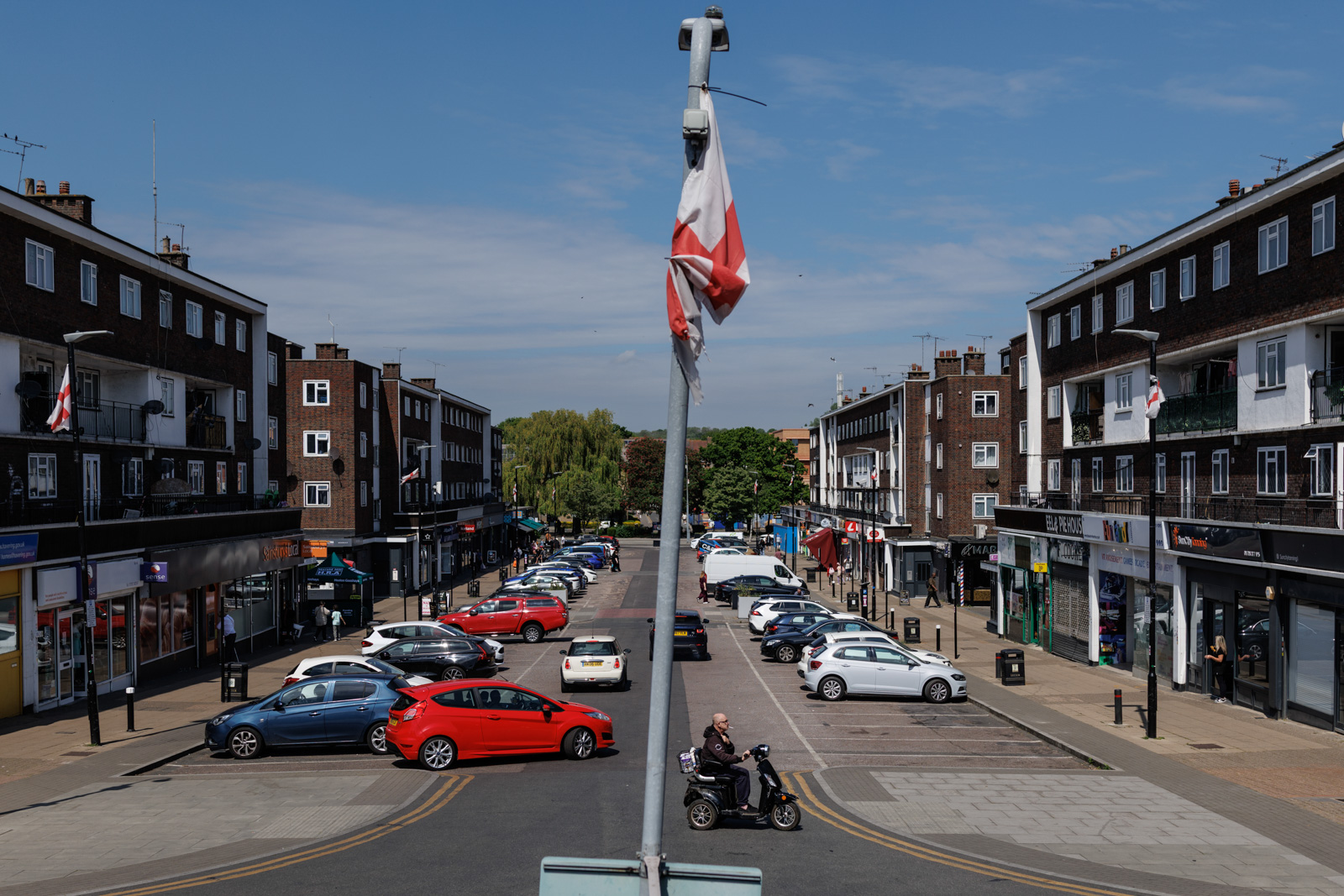
Amna*, 27, has lived in Rainham — a heavy industrial area with a small, village-like town centre — since 2017. Amna said a lot of England flags had been put up in the town, which borders the Thames in the southernmost part of the borough, in the past 18 months, particularly in areas where there are more ethnic minorities.
Despite the flags, she was surprised to see Reform win.
“In the last five years, Havering has gotten very diverse in a good way,” she said. “A lot of Muslims have moved here, a lot of Bengali people and Pakistanis. It’s really interesting that in parallel to that, Reform have been voted in.
“It doesn’t take a lot of people to put up some flags, but it made me realise that maybe the neighbourhood I’m living in isn’t as welcoming as I thought.
Related content
“The more that immigrants are moving into Havering, the less welcoming people are about it. I think they have a fear of losing their British values and heritage, and it’s making them extreme.”
Sohail*, 30, has lived in the borough since 2019. Asked if he was worried about Reform’s success in the area, he said he had mixed feelings.
“I think a lot of these people are ordinary, decent people who aren’t happy with the status quo and are looking to vent their frustrations,” he said of the party’s voters.
“But I am worried about what this means for the women in my family who wear the hijab, because some Reform supporters have expressed racist and extreme views about Muslims.”
He said it had also made him reconsider whether he would stay in the borough long-term.
“I’m looking to potentially start a family in the next few years. So I’m mindful about whether this is still the right area for me to do that,” he said.
*Names have been changed