
Attenborough at 100: how millions were able to see and appreciate the wider world
As the BBC marks Sir David Attenborough’s 100th birthday with Making Life on Earth, Leila Latif reflects that aside from astonishing longevity, his impact often comes down to getting people to care enough to look

There’s a moment in Making Life on Earth: Attenborough’s Greatest Adventure where the now 100-year-old Sir David Attenborough — the most beloved and reassuring voice in television — nearly loses everything.
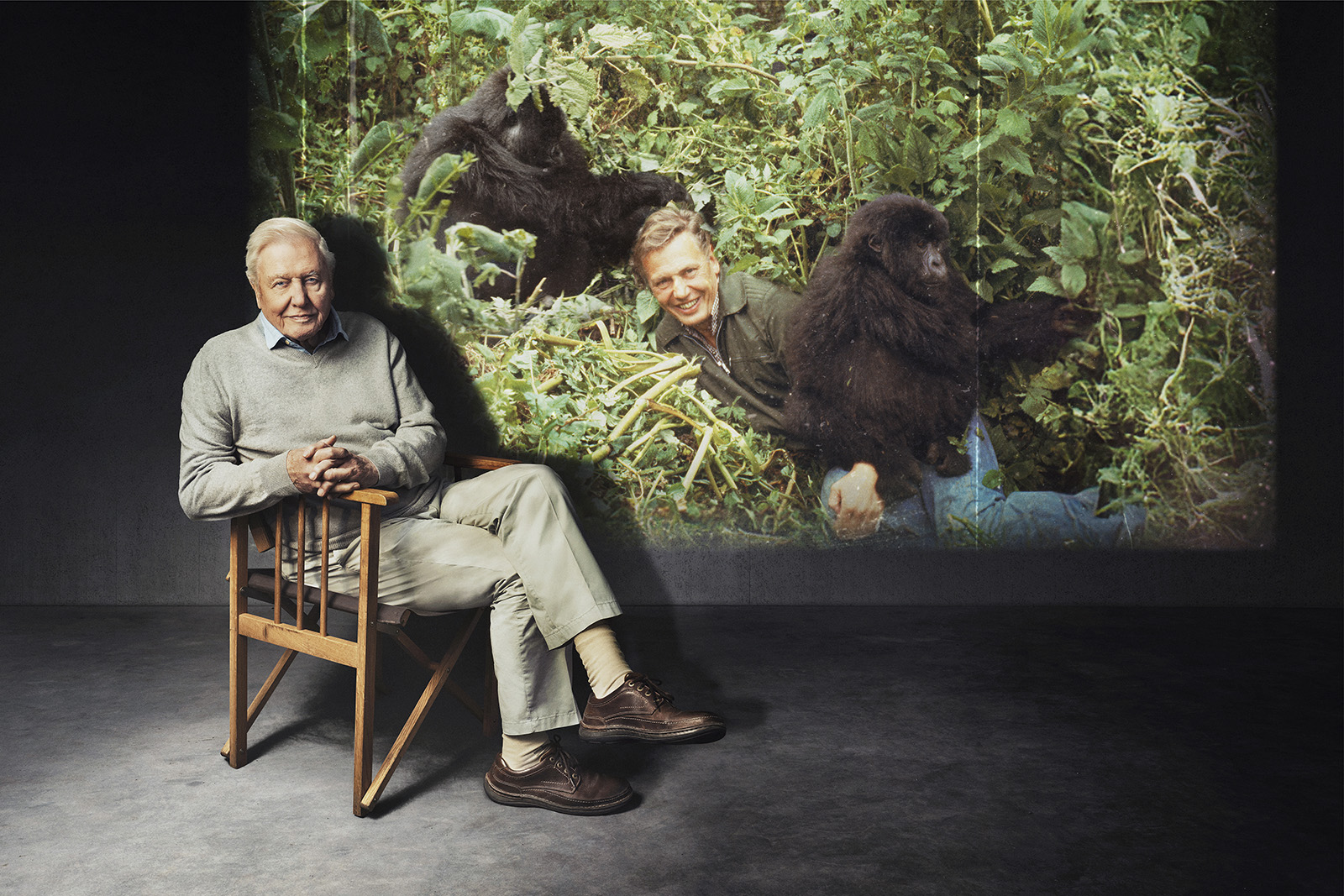
It’s 1978. Young Attenborough is leaving Rwanda with footage he knows is gold: that now-iconic encounter with mountain gorillas. Gun-wielding soldiers stop his vehicle and questions start flying, accusing the broadcaster of political interference. For a night, it’s not clear whether he, or the footage, will ever make it home.
Panic is not exactly what we’re used to with Attenborough. Because, for most of us, he exists somewhere between cosy and authoritative, the voice that drifted through Sunday evenings, school classrooms. And, if you grew up in a Muslim or diasporic household like my own, in living rooms where the TV was often considered an acceptable 24/7 hum. Somehow, everyone would be completely absorbed when the veteran naturalist’s voice came through the speakers.
Attenborough wasn’t ever just background noise. He was how millions were able to see and appreciate the wider world. Not only in showing new forms of life, but in presenting new landscapes and how our existences are inextricably bound to one another.
In a world where imperialism and ransacking the planet’s resources for profit had become normalised, Attenborough asked us to look again at what extraordinary value these far-off lands and creatures had, and why they should be treasured.
That’s what makes Making Life on Earth such a pleasure to watch. Airing on BBC One and streaming on iPlayer, it looks back at Life on Earth (1979), the series that not only made Attenborough a household name but truly changed television. Thirteen episodes, more than 100 locations, three years of filming — and an opening episode about algae. Imagine pitching that now.
But people watched. Life on Earth drew audiences of more than 15 million in the UK alone, and was eventually broadcast in more than 100 countries, reaching hundreds of millions more. The natural world became appointment viewing and decades later, series such as Planet Earth and Blue Planet II would pull in similarly vast audiences, the latter drawing more than 14 million viewers in the UK for its launch episode alone, unheard of in the age of streaming.
And it isn’t hard to see why Attenborough sitting quietly among mountain gorillas, or narrating as an iguana escapes a horde of snakes, still feels more gripping and moving than most things ever broadcast.
That global reach feels inevitable in hindsight, but prior to Attenborough, popular British television didn’t always look outward. Attenborough trusted that audiences had a wider interest. For some of us, that curiosity hit differently, because the places he was travelling through — Rwanda, Iraq, the Comoros — weren’t always so distant to us. They were places our families knew or came from. Seeing them framed through wonder rather than crisis carried weight and inspiration.
Wildlife presenter Hamza Yassin, often cited as one of Attenborough’s natural successors, moved to the UK from Sudan at the age of eight and remembers that feeling clearly. Watching Attenborough as a child, he recalls The Life of Birds as a turning point: “I didn’t understand a word he was saying, but the pictures were unbelievable.”
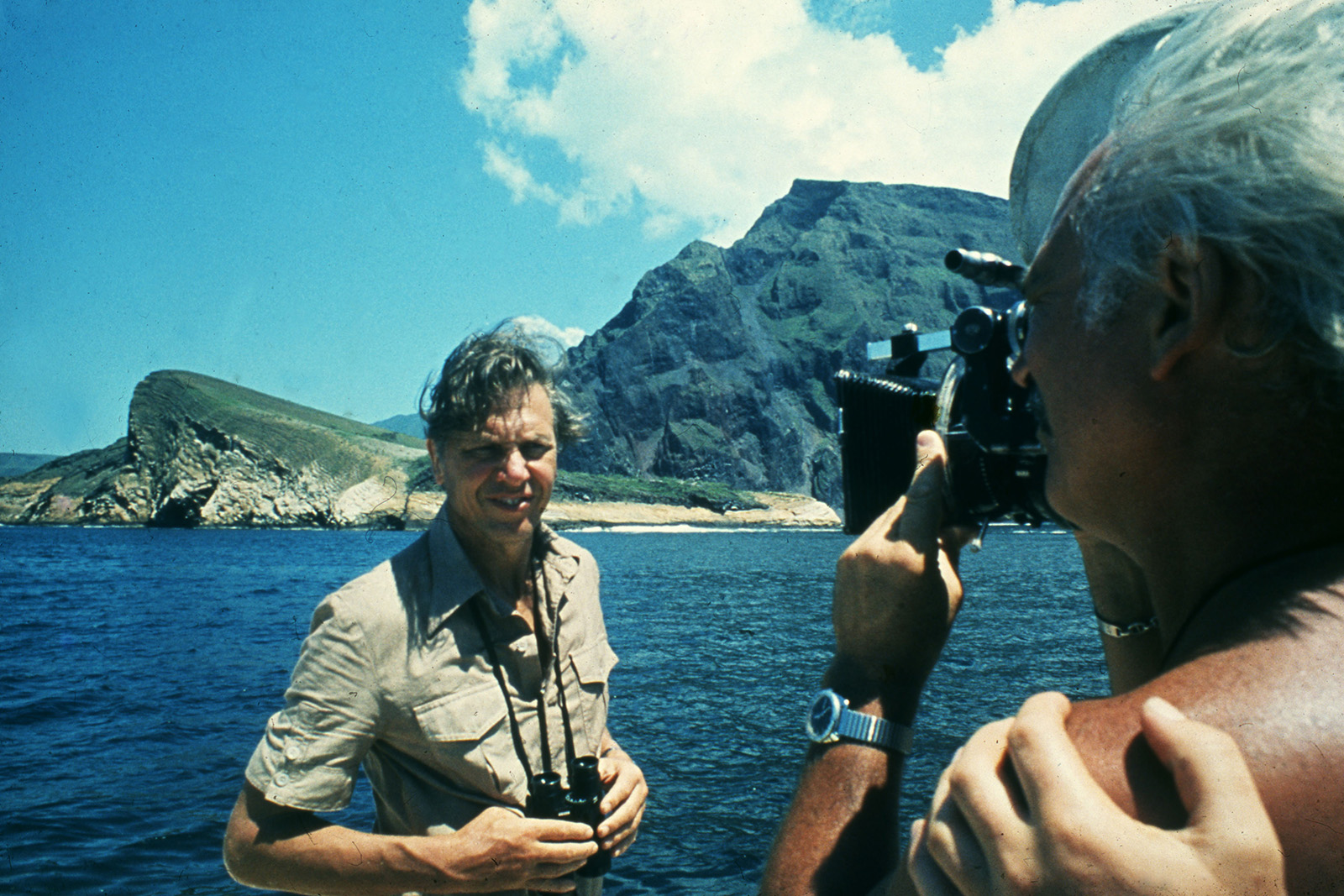
Attenborough’s gift has always been making you look properly. Whether it’s a gorilla gently inspecting his face, a lyrebird mimicking the sound of a chainsaw, or a blind baby rhino wandering up to him for attention, there’s a delight that cuts through everything else. He’s not performing awe; he’s inviting you into his own.
Making Life on Earth leans into that spirit. There are the expected stories of near-misses and logistical nightmares, equipment failures and unpredictable animals. What stands out is how much of it depended on faith. This was an analogue world: film had to be sent back to the UK before anyone knew if it had worked. That willingness to trust the process and the audience is a reminder that curiosity, once sparked, doesn’t need to be rushed.
The centenary celebrations might look like a retrospective, but they’re just as much about the present. Over the decades, he’s remained a constant presence, from the deep oceans of Blue Planet II to the quieter, closer observations of Secret Garden, which concluded on Sunday. The technology has changed, the climate crisis has soared and the urgency has sharpened, but the instinct is the same: show people the world clearly enough, and they might care about it.
The celebrations around his 100th birthday feel less like a send-off and more like a victory lap for a broadcasting career spanning more than 70 years and dozens of landmark series, enough to shape not just a genre, but how we see the world itself.
That influence carries forward, too. Yassin, now nearing bona fide national treasure territory in a field that has largely been populated by privileged white men, has been clear about what Attenborough represents to him. “It’s an absolute honour to have my name mentioned in the same sentence as Sir David… No one will ever replace Sir David,” he said in a 2023 interview.
But Yassin also talks about what comes next. “Sir David sparked that interest in me, and if I can, I’ll take on that baton and run with it as far as I can, then hopefully pass it to someone else.”
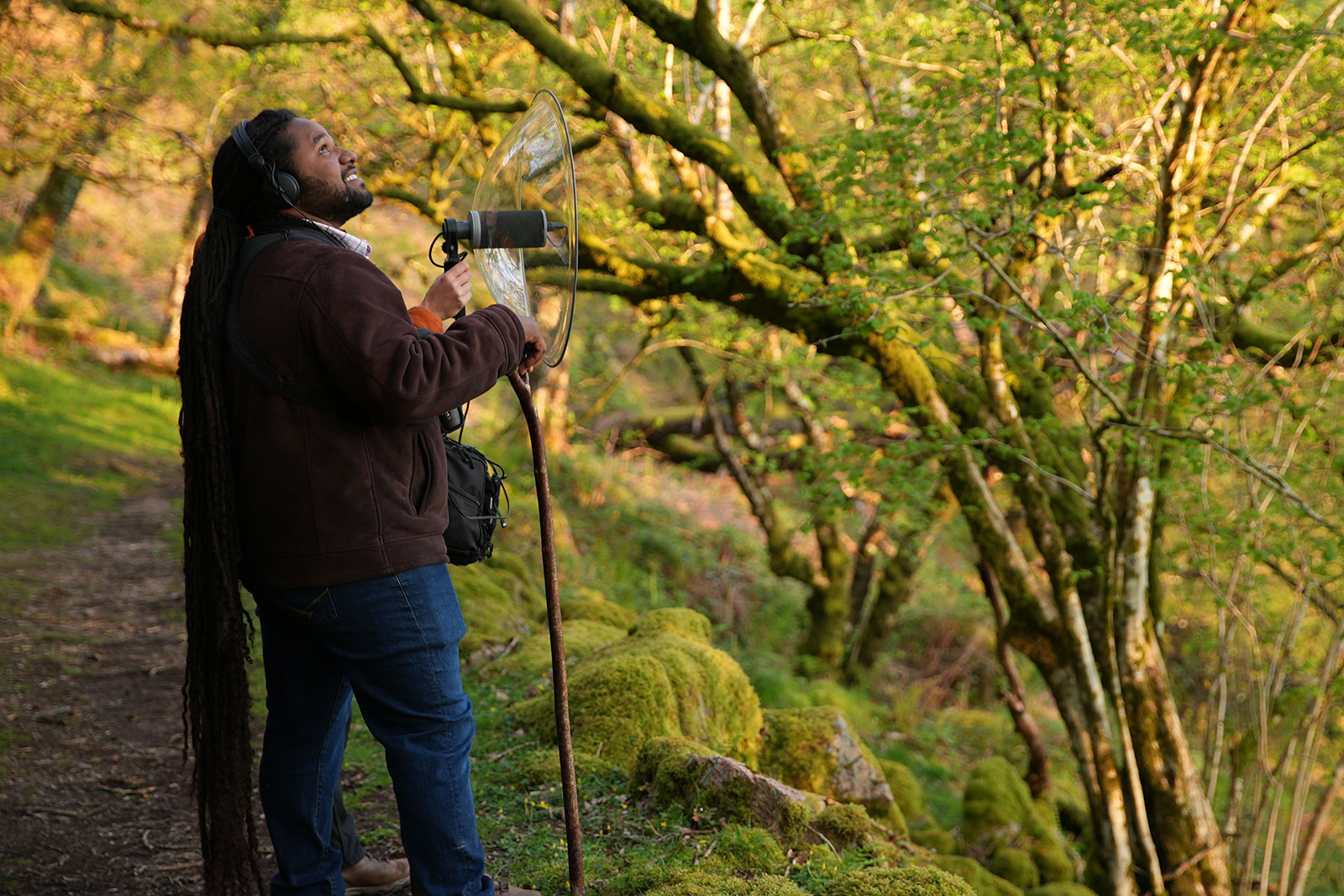
And, crucially, who that “someone else” might be. As he puts it: “If we can educate the next generation, they’ll be our next leaders… I would much rather that children could name me five different trees rather than the five Kardashians.”
Attenborough himself has always framed it just as simply. “If working apart we are a force powerful enough to destabilise our planet, surely working together we are powerful enough to save it,” he said at COP26 climate summit.
And while some have criticised Attenborough for alerting his audience to climate change too late, and that his emphasis on overpopulation is overly simplistic, his contribution to the larger discourse has continually borne fruit. For all the scale of his work, global travel and decades on screen, the impact often comes down to something smaller: just getting people to care enough to look.
This centenary is a celebration, but it’s also an excuse to afford yourself an hour or two to view life through Attenborough’s lens. The voice is still there. The curiosity is still there. And, if you’re paying attention, so is that feeling that every living creature has the ability to surprise, delight and inspire you.
Making Life on Earth: Attenborough’s Greatest Adventure is available to watch on iPlayer.