
Andy Serkis’s Animal Farm softens the blow of Orwell’s satire
Despite some sacrifices of the novel’s bite, this animated adaptation contains clear echoes of a contemporary political landscape in which belonging is conditional

Few works by George Orwell have proved as persistently relevant as Animal Farm, a book that has never quite fallen out of step with the world it critiques. Conceived as a satirical allegory for the 1917 Russian Revolution and the rise of Stalinism, Orwell’s novella has long functioned as both a literary staple and a warning: once seized, power rarely redistributes itself as promised.
In Andy Serkis’s long-gestating animated musical adaptation, that warning is reframed for a different political moment, one less concerned with Soviet political infighting than with the looser, more pervasive forces of corporate greed, populist rhetoric and the erosion of collective responsibility.
Related content
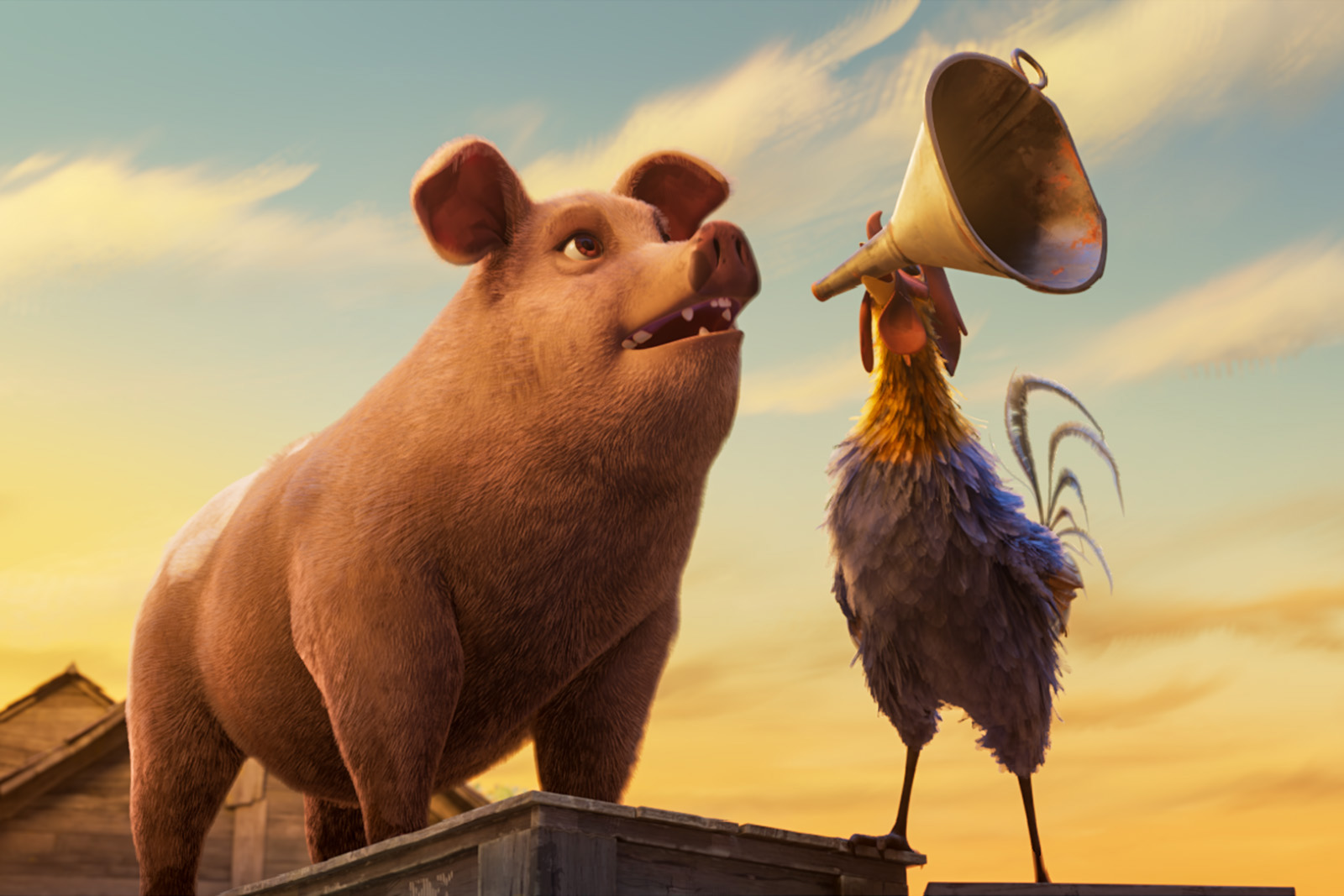
That recalibration is immediately apparent. Where Orwell was precise, Serkis is expansive. The pigs’ rise no longer maps neatly onto 20th-century history, but instead gestures toward a broader culture of opportunism and consolidation. Napoleon, voiced with disarming affability by Seth Rogen, feels less like a direct Stalin analogue and more like a composite of contemporary strongmen: charismatic, grievance-driven and adept at recasting self-interest as collective good. It’s a canny update, even if it comes at a cost. Where Orwell’s satire bit with cold clarity, this version prefers to soften the blow.
And yet, for all its gentler edges and forgettable songs, Animal Farm remains a vital story about who gets to belong, and who is quietly pushed out. The animals’ rebellion begins, as ever, with the promise of equality. They overthrow their neglectful owner and establish a system built on shared labour and mutual respect. But as Napoleon consolidates power, that promise is gradually rewritten. Language shifts. Rules bend. Hierarchies reassert themselves. The familiar maxim “all animals are equal” becoming “all animals are equal but some are more equal than others”, remains devastating.
By reframing the story through the eyes of the young piglet Lucky (voiced by Gaten Matarazzo of Stranger Things), the film places particular emphasis on how these systems take hold. Lucky is taught to read, to question, to imagine something fairer, only to find himself pulled toward Napoleon’s rhetoric of belonging. The appeal is seductively simple: protection, identity, a place within the fold. The trade-off, less visible but no less real, is exclusion.
There are clear echoes here of a contemporary political landscape in which belonging is increasingly conditional. The film’s emphasis on species-based hierarchy, on the idea that some animals are inherently more deserving of power, safety or voice, mirrors the rhetoric that has accompanied the rise of far-right movements across Europe and beyond. In these narratives, equality becomes negotiable, and the line between “us” and “them” is drawn ever more sharply.
For audiences within the Muslim diaspora, those dynamics may feel particularly familiar. In recent years, Muslim communities in countries where they form a minority have frequently been framed through a narrowing lens, positioned as a problem to be managed rather than a population to be understood. Serkis’s Animal Farm does not explicitly engage with Islamophobia, but its depiction of how easily difference can be weaponised resonates nonetheless. The film understands, as Orwell did, that dehumanisation rarely arrives fully formed. It emerges gradually, normalised through language, repetition and the quiet slow creeping acceptance of inequality.
Couching these ideas within a family-friendly framework is both the greatest compromise and most interesting element of this adaptation. The animation is lush and inviting, bathed in a warm, honeyed glow that renders the farm almost idyllic. The character design skews distinctly towards the cuddly, smoothing over some of the story’s inherent brutality.
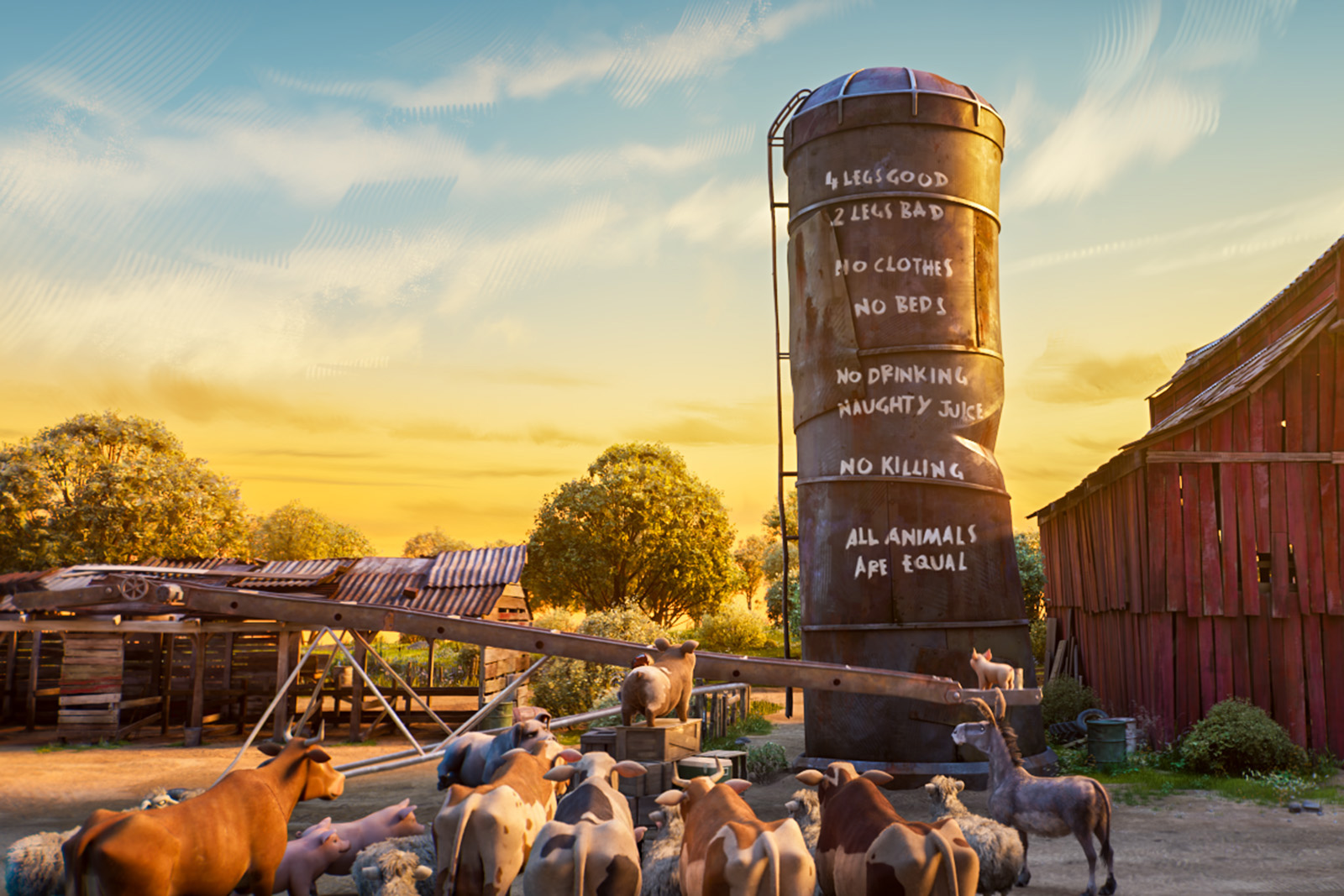
At times, the tonal dissonance is striking. Orwell’s grim parable sits uneasily within such comforting aesthetics. And yet, this very accessibility opens up a different kind of possibility. By filtering its themes through a younger protagonist and a more hopeful lens, Animal Farm becomes not just a cautionary tale, but an entry point for younger viewers. For some, it may be a first encounter with the mechanics of injustice and with the ways in which ideals can be co-opted. Its relative optimism offers a counterpoint to Orwell’s more fatalistic conclusion.
Related content
The casting reinforces the film’s contemporary framing. Alongside a roster of recognisable voices, the inclusion of Iman Vellani, best known for her breakout role in the Disney+ show Ms. Marvel and her turn in the blockbuster The Marvels, is significant. As one of the few young Muslim female actors working at this level of visibility in Hollywood, her continued presence in major projects speaks to a slow shift in who gets to occupy space within mainstream storytelling. In a film so preoccupied with hierarchy and inclusion, that visibility feels pointed.
This is not the most incisive version of Animal Farm. In rounding off the sharper edges of Orwell’s satire, Serkis sacrifices some of its bite. But to dismiss the film on those grounds alone would be to overlook what it does achieve. In translating a complex political allegory into a form accessible to younger audiences, it ensures that the conversation continues, even if it does so in a gentler register.
Each generation reshapes Animal Farm to reflect its own anxieties. In 2026, they are less about distant revolutions than about the structures of power operating in plain sight. Serkis’s adaptation may not observe as acutely or as deeply as Orwell’s original, but it still knows where to look.
Animal Farm is out in US cinemas from 1 May, and will be released in the UK later this year.