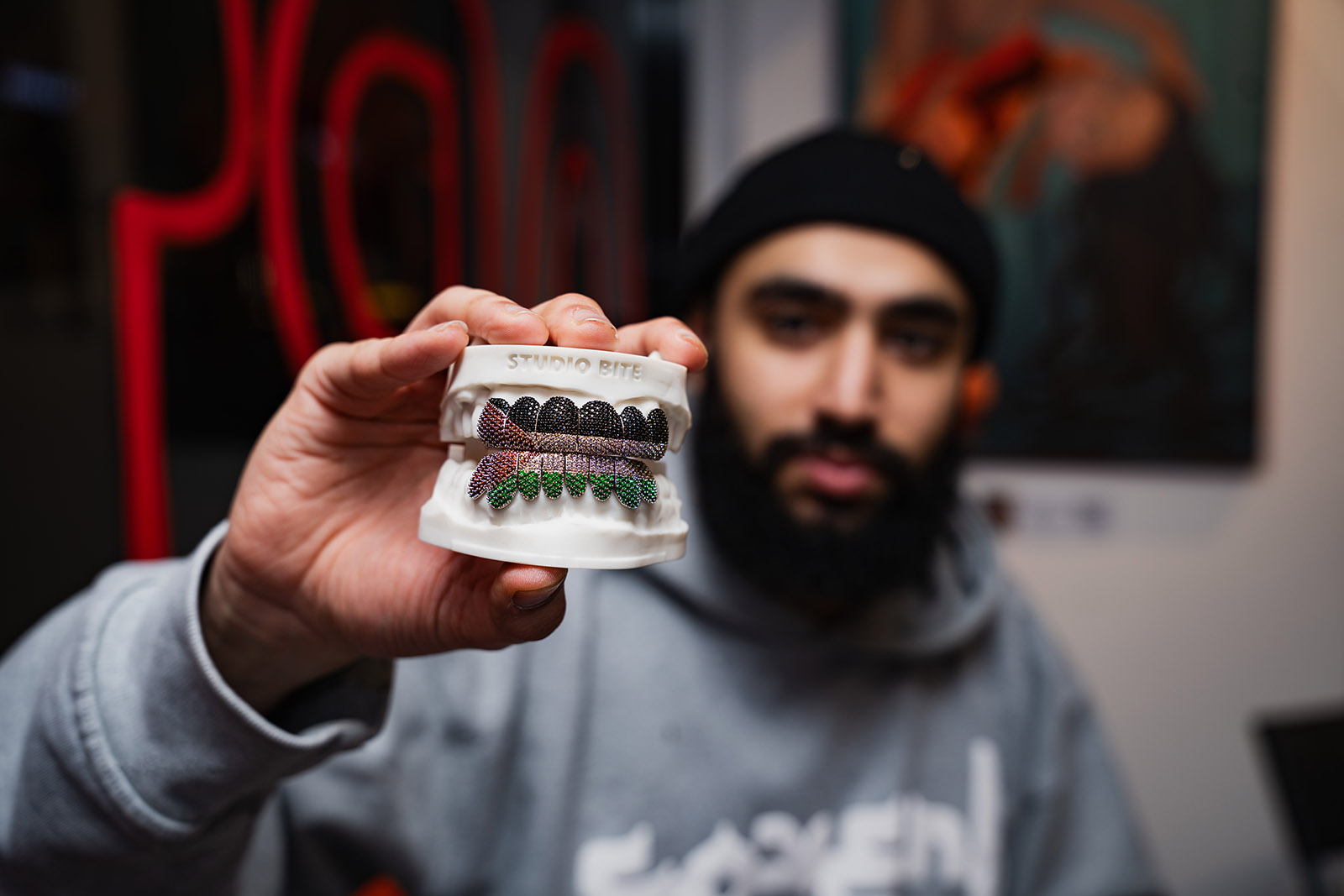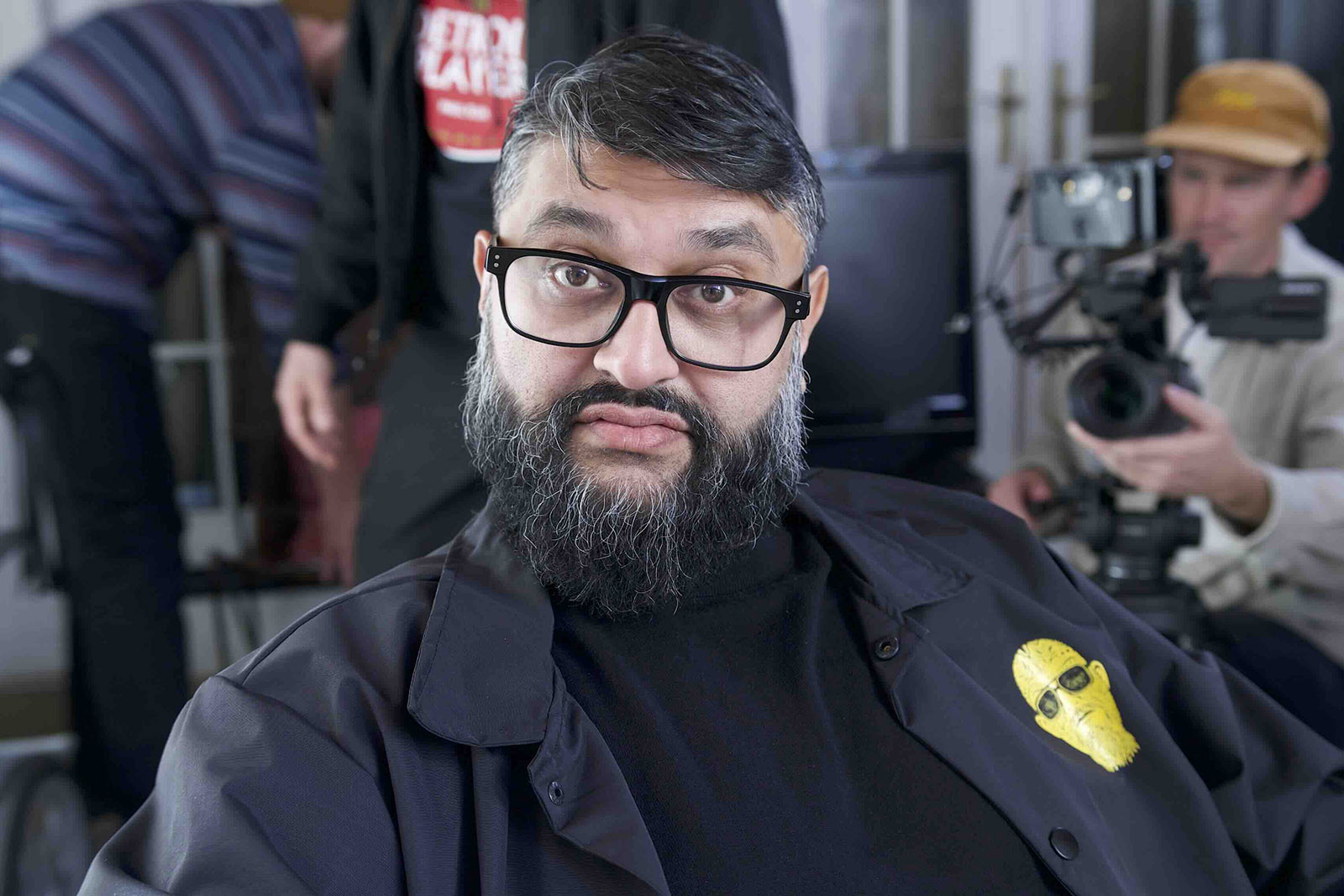

Smash Bengali: ‘I’ve realised that someone like me could be completely loved by the mainstream’
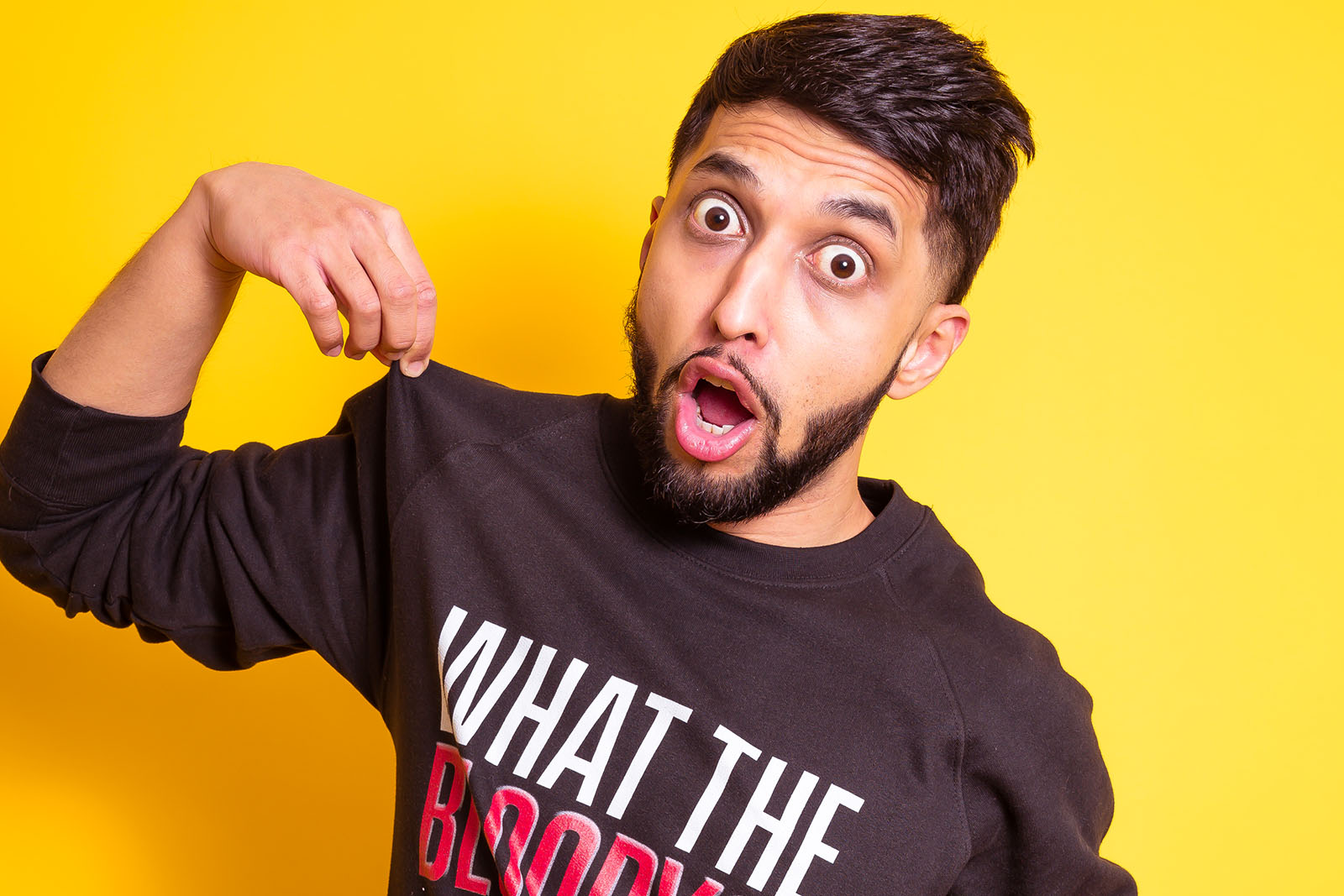
The award-winning comedian on fame, representation and why unorthodox career choices can be the secret to a happy life
You’d think that someone with a first-class degree in electrical engineering and a full-time position at a prestigious company would consider themselves set up for life.
But for Hashu Mohammed — better known as Smash Bengali — that wasn’t enough. Seven years ago, the award-winning comedian and radio presenter gave it all up to take his chances as a performer.
As his stage name suggests, Mohammed’s Bengali identity sits at the heart of his work.
“Growing up, I always felt that the British Bengali experience wasn’t visible to the outside world,” he says.
Related content
In 2017, while working for car manufacturer Jaguar, Mohammed launched a YouTube channel offering humorous takes on everyday British-Bangladeshi life.
“I felt I had to keep my experiences to myself — my friends couldn’t relate to them. Later, I wanted to talk about it, but in a comedic way, and the space where I felt safest was in my bedroom with a camera. That was where I was able to build my confidence.”
What started off as a hobby quickly gained traction, eventually leading to a string of high-profile opportunities.
They included competing in the Channel 4 reality show The Circle and presenting on the BBC Asian Network and Radio 1. Now, Mohammed is planning his first feature film.
With almost 100,000 followers on Instagram, around 40,000 subscribers on YouTube and a 132,000-strong audience on TikTok, his transition to the mainstream was simply a matter of time. But as Mohammed’s profile has grown, so have the risks that come with it.
In 2019, soon after he had accepted voluntary redundancy to focus on his creative work, a contact convinced him to invest in a recording studio. The venture never materialised and Mohammed lost thousands of pounds.
“I thought to myself, I’ve got a platform, he’s got a platform, all these people are associated with him. He’s British-Bangladeshi. I’m British-Bangladeshi. He’s Muslim,” he says. “There’s no way this guy is going to stab me in the back. He even spoke to my mum on the phone and gave her his word. Afterwards, I’d wake up in the middle of the night having panic attacks. It was the lowest I’ve been in my life.”
During that dark period a new opportunity arrived. A producer at The Circle got in touch and in 2021 Mohammed went on to take part in the show’s third season, finishing fourth.
In the show, contestants are placed in separate apartments in a block of flats and can only communicate with one another through an internal messaging system, either as themselves or another character. They are then rated by each other and eliminated, according to the scores.
Mohammed decided to adopt the persona of a 63-year-old Bangladeshi uncle. His choice proved a massive hit. He started trending on Twitter and was later approached by Marvel and Disney to create Instagram content.
“It changed me,” he says of the experience. “It made me realise that someone like me could be completely loved by the mainstream. People accepted me for who I am.”
Mohammed’s creative spark was ignited back in 2003, when, at the age of 11, he spent a year in Bangladesh. There, he began writing and drawing comic stories, basing his characters on the people he met. After returning home to Birmingham, he took a drama course at school, but that was as far as it went.
“I held back on pursuing my dreams while I was in education because I felt like it was a distraction and would take me away from my academic goals,” he says. “The skills required to be a YouTuber didn’t really go hand in hand with my degree and I didn’t want to jeopardise my grades in any way. I was obsessed with wanting to make my parents proud.”
To this day, his family remains paramount. Despite his busy schedule, Mohammed — the youngest of four siblings and now a husband and father with two young boys — still occasionally helps out at the restaurant his father has run for decades.
While the business is a source of family pride, it also holds more troubling memories. It’s where he witnessed racism as a child, when customers abused his father and ran off without paying the bill. He also recalls rocks being thrown at the windows of their home.
Those experiences led Mohammed to downplay his Bengali culture while growing up.
“Our cultural identity is on a spectrum,” he says. “On one side, you have British values and on the other are your Asian values. There is an overlap. I think every British South Asian goes on this journey. There’ll be a part of you that says: ‘Let me be as British as possible so that I can appease people who aren’t Asian.’ I definitely did that.”
In his latest project, Mohammed, winner of the 2022 TV and radio personality of the year at the British Bangladeshi Fashion Awards and best comedian in The Mainstream’s 2025 Ones To Watch Awards, wants to take a light-hearted look at love, marriage and dating among young British Muslims.
The movie, Get Khan Home, which he has developed the concept for and will take the lead role in, tells the story of a Muslim British Asian man who inadvertently enlists the help of a well-known Bollywood hero in his quest to find a wife.
Related content
Mohammed has brought together several notable names for the project, including director Gurjant Singh, award-winning BBC screenwriter Omar Parvez, and actors Duaa Karim (Man Like Mobeen) and Priyasasha Kumari (Waterloo Road). The plan for the film will be presented at Wolverhampton Film Festival on 2 May, where he is hoping to secure funding.
Despite his growing success, Mohammed remains humble and maintains that had it not been for social media, it’s unlikely he would have made it this far.
“If these platforms didn’t exist, I wouldn’t have taken that step,” he says. “I saw other people doing it and thought, why not? There are many kids who come from conservative families like mine. They can’t take those initial steps, such as studying drama, but they can upload a video on social media and that’s their path into chasing what they want to be.”
For now, he is just happy to prove to his community that unconventional career choices are not at odds with its values.
“I’ve been able to get married, to have children, to put food on the table. Thanks to Allah, I’ve figured it out,” he says. “It’s about giving confidence to my community that it’s OK to be doing what I’m doing.”