
Berlin election results show German capital isn’t so progressive after all
The Left won a historic victory, but the far-right AfD nearly doubled its vote. The new ruling party must turn election promises into material change

The election results in Berlin are in, and they don’t look good. I may be someone who always sees the glass as half empty – a defence mechanism and a way to survive in Germany. But the numbers that popped up on my screens on Sunday raised one big question: is Berlin really as progressive as it always makes itself out to be?
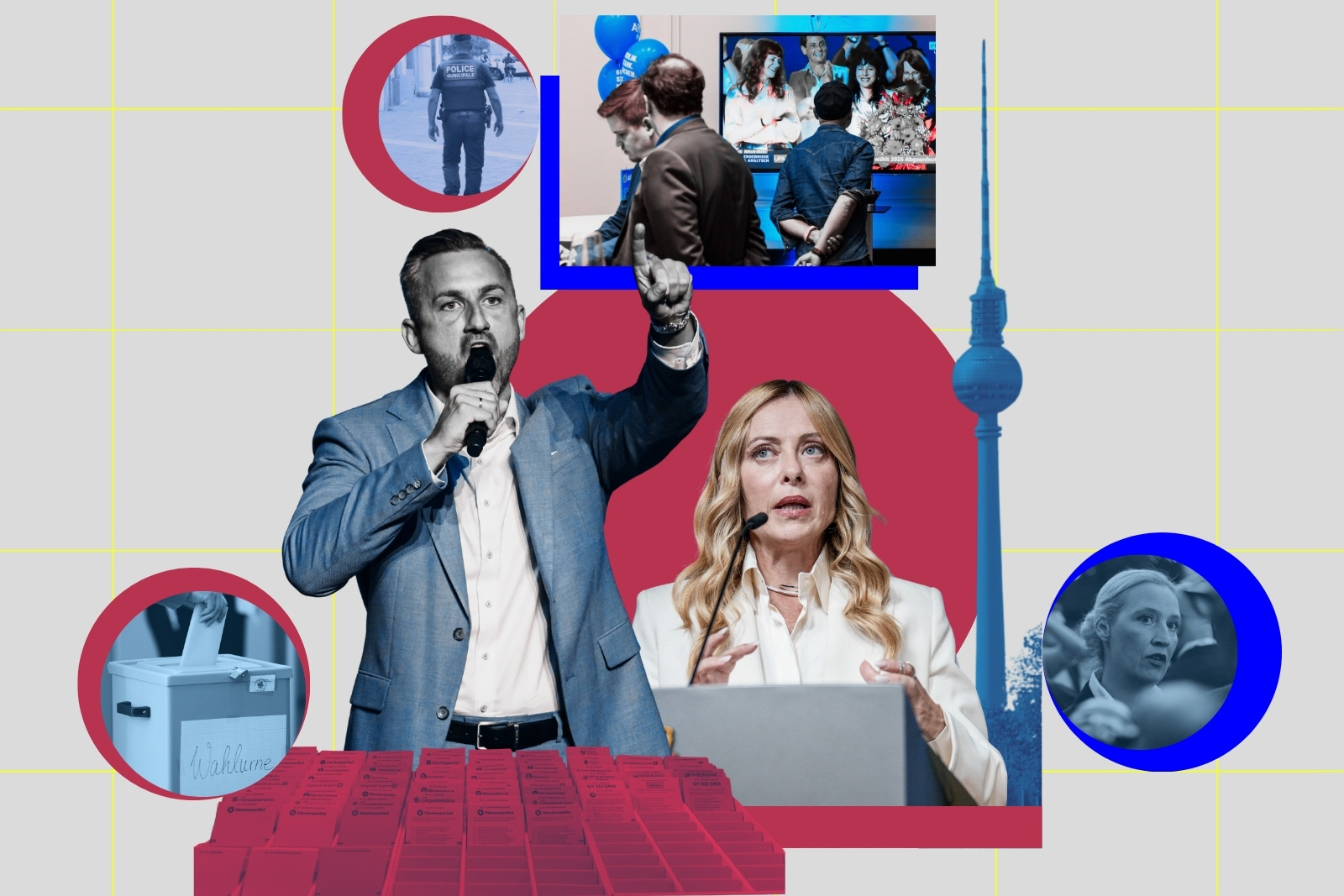
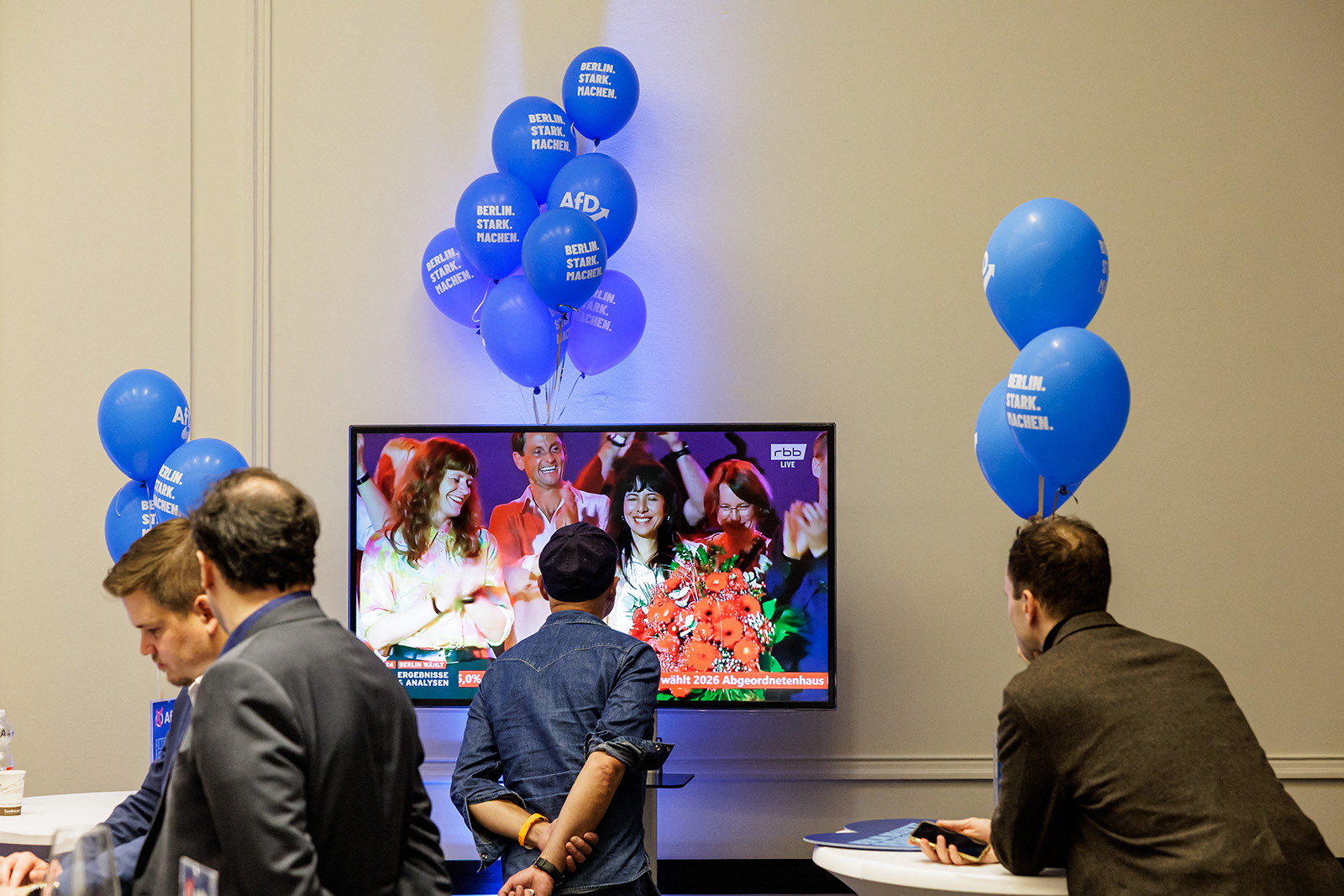
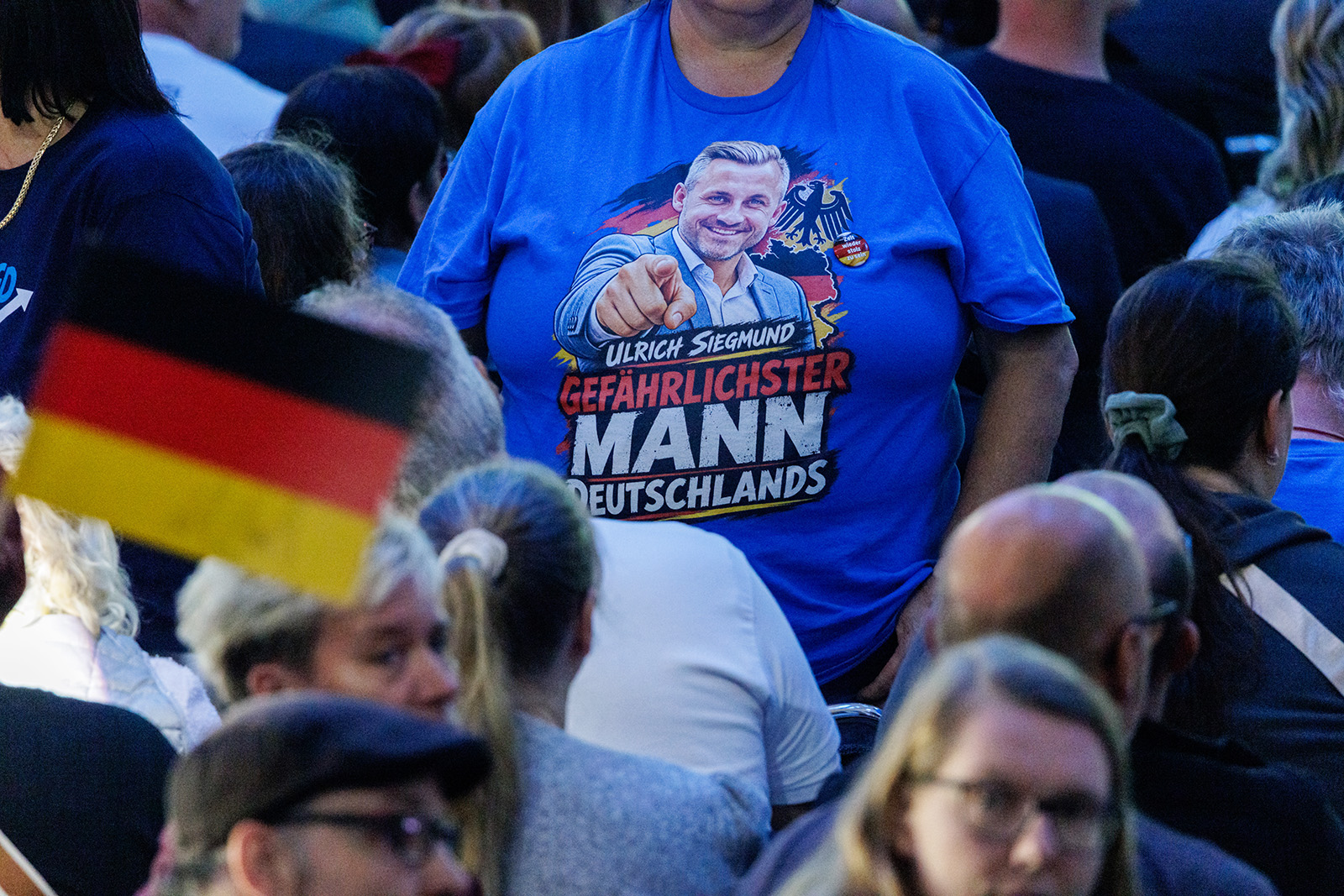
The Left won its first Berlin state election with 25.7% of the vote, while the far-right AfD nearly doubled its share to 16.3%. The Left’s historic victory should not obscure the other result: nearly one in six Berliners who voted on Sunday chose an extremist party. The Left now has an opportunity to prove that Berlin’s progressive politics can materially improve people’s lives. If it fails, the AfD will be waiting to exploit the disappointment.
Related content
During the recent election campaign in the German capital, one name kept popping up: Zohran Mamdani. Every candidate desperately wanted to become the German Mamdani: young, optimistic, perpetually smiling, popular and, above all, able to win over voters. Especially on social media, parties across the spectrum set out to replicate the “Mamdani effect” in Berlin, often with limited success. Green Party candidate Werner Graf — who according to polls was not widely known among the public — lip-synced to rap in his Instagram posts, eliciting cringe even among his own supporters. Inside the Berlin parliament, several Green staffers told me that they intended to vote for The Left instead.
The Left’s social media campaign consisted largely of fast-cut TikToks featuring candidate Elif Eralp speaking in German and Turkish while holding the microphone with her fingertips, appearing to emulate an influencer about to announce a discount code for the newest vegan doughnut shop in Kreuzberg.
The underlying problem is that Germans — regardless of their family background — invariably come across as stiff. This is tied to the German language and the country’s political culture, which leave little room for the kind of effortless charm that Mamdani was able to embody in his campaign to become mayor of New York. However, Eralp could become Berlin’s first mayor of Turkish descent, and the first to deliver key socialist promises to Berliners: affordable housing, solidarity with the poor and the protection of minority rights.
Eralp now has to turn those promises into tangible improvements in people’s lives, backed by a clear communications strategy. Otherwise, the AfD will exploit the resulting disappointment to further entrench its racist agenda. Berlin has long served as a screen on which conservatives and the far right project their fears about migration, Muslims and left-wing politics. What happens under its next government will therefore matter far beyond the city.
The failures of the parties in the political centre show what happens when presentation substitutes for delivery.
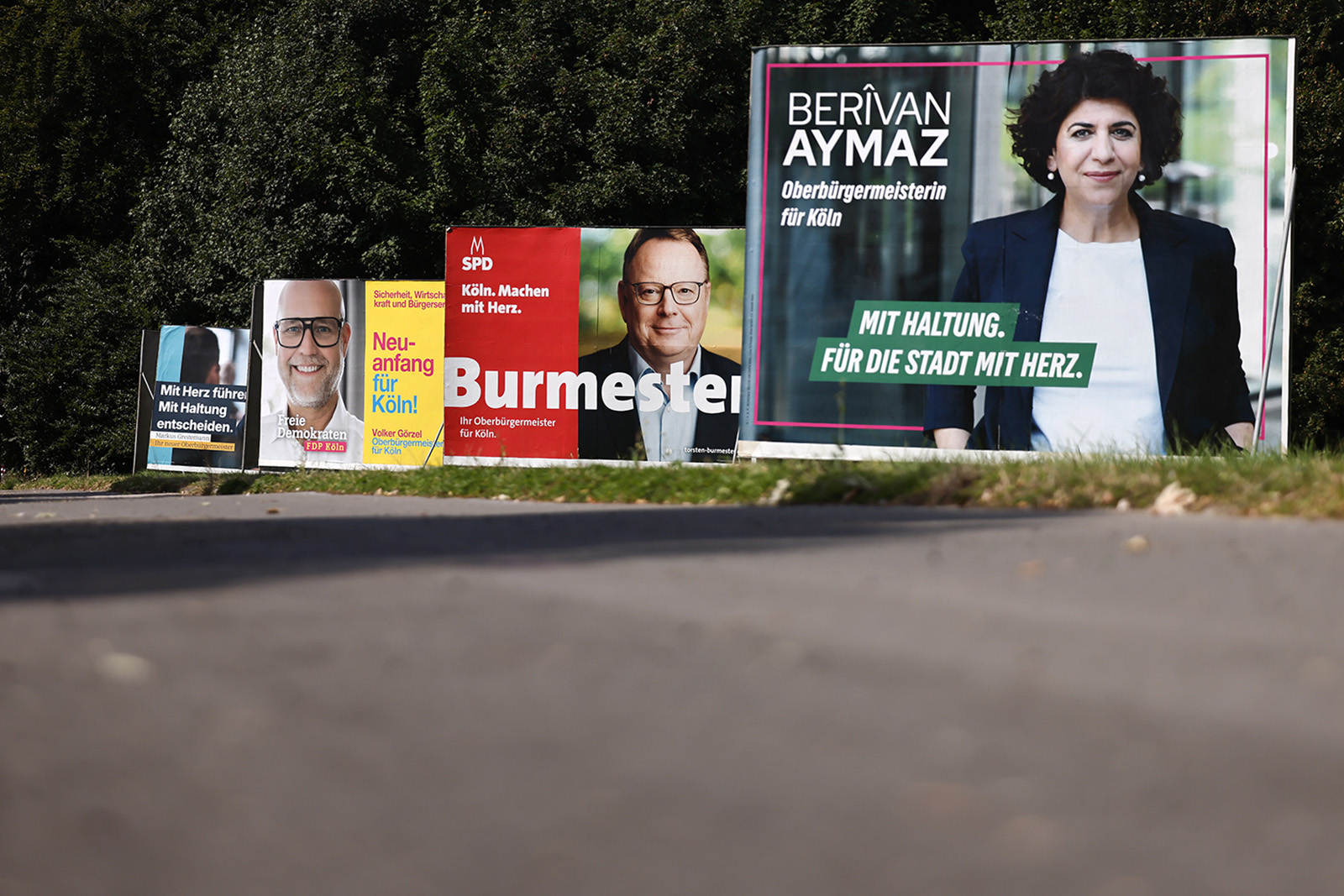
The candidates from the ruling Social Democrats (SPD) and the conservative CDU opted for cheeky slogans on city billboards. SPD candidate Steffen Krach used the phrase “Ich schwöre!” (“I swear!”); the party tried to win people over using the sociolect of disenfranchised young Berliners, many of them from Muslim backgrounds. The same SPD fought against allowing Muslim women wearing headscarves to work in schools or courts and allowed social infrastructure — especially youth clubs and social work services in disadvantaged neighbourhoods — to fall into disrepair. Unsurprisingly, the party’s efforts led to its worst result in its modern Berlin history: just 12.1% of the vote.
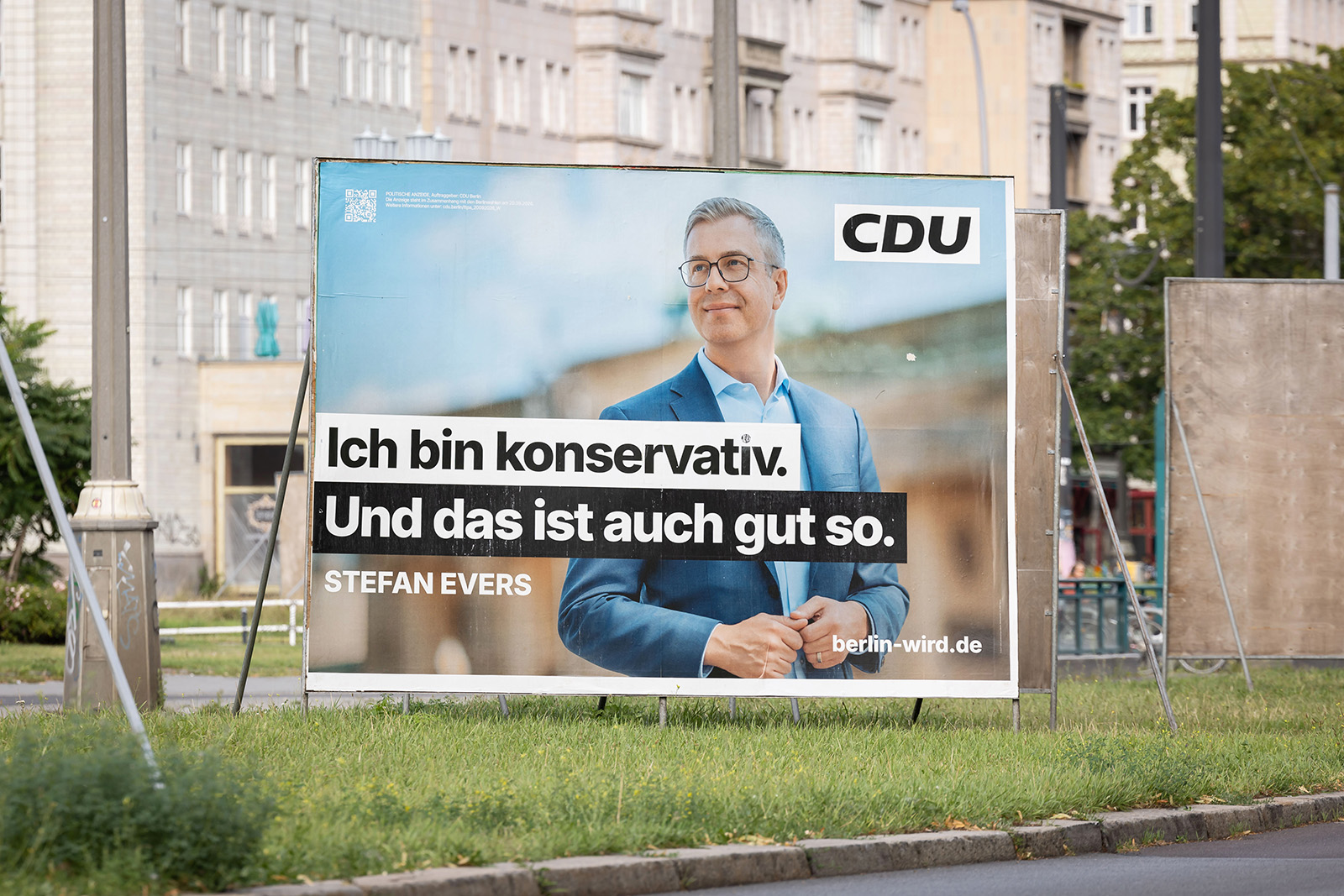
CDU candidate Stefan Evers styled himself as the “new broom” who would sweep away the mistakes of his predecessor, Kai Wegner. Wegner was forced to step down after trying to conceal a tennis match he played during a severe blackout, while claiming to be managing the crisis full-time. Wegner had overseen a crackdown on pro-Palestinian protests, while his administration became embroiled in a scandal over the irregular distribution of funds intended to fight antisemitism, but it was the tennis that ended his mayoralty.
For his campaign, Evers adapted a legendary phrase by former SPD mayor Klaus Wowereit. On the city’s biggest billboards, Wowereit’s “I’m gay, and that’s a good thing” became “I’m conservative. And that’s a good thing”. Voters disagreed. The CDU slipped from a 28.2% vote share in 2023 to just 18.8%, lost 60,000 votes to the AfD and may now lose City Hall if no other party agrees to govern with it. On the same day, the party failed to secure enough votes to win any seats in another German legislature.
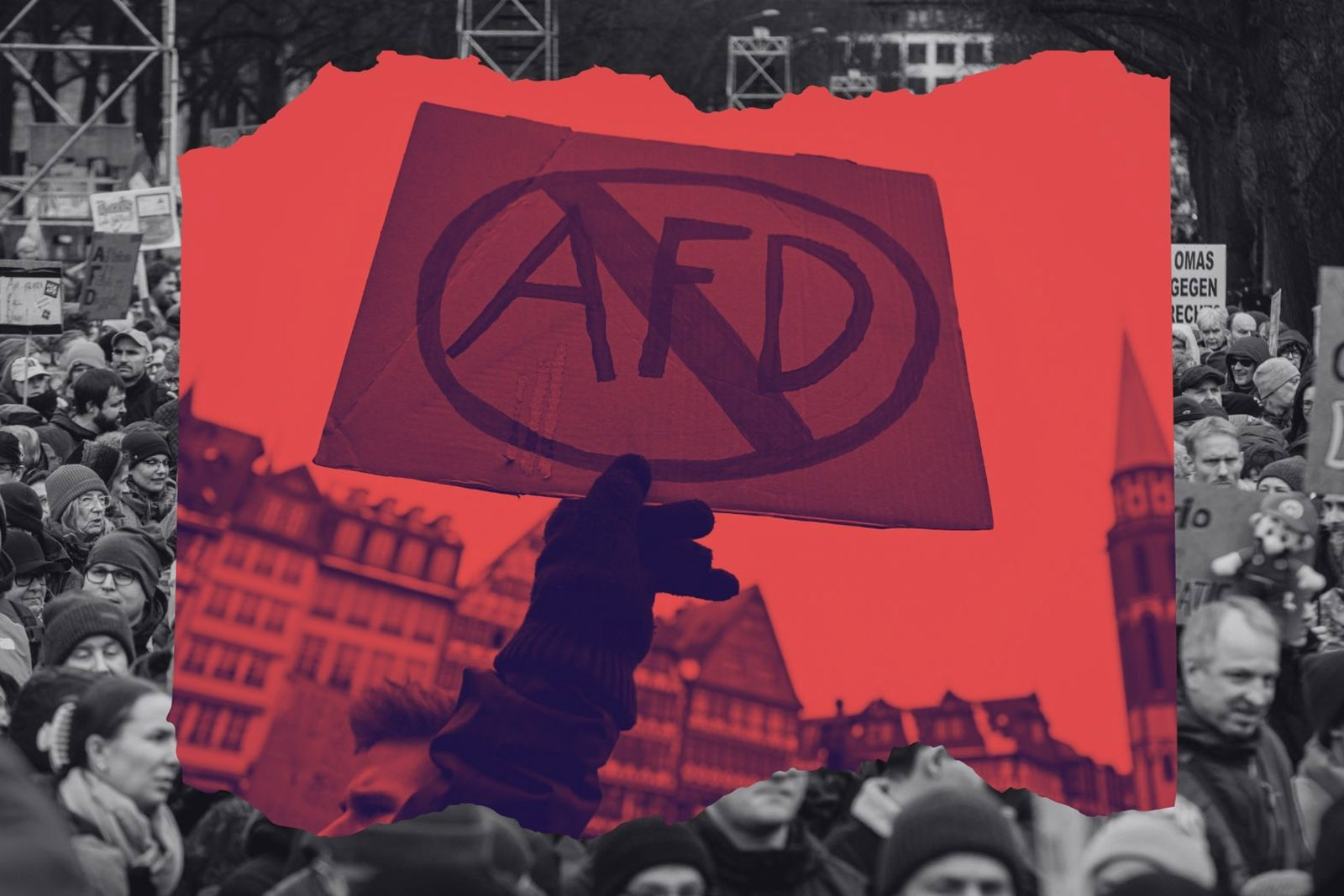
In the northern, predominantly rural state of Mecklenburg-Western Pomerania, just a quick train ride from Berlin, the AfD became the strongest political force, winning 38.2%. It succeeded in destroying the conservatives, who tried to copy the far-right party’s hate-speech agenda: the CDU slumped from 13.3% to just 4.9%, below the 5% threshold for securing state parliament seats. The AfD aims to shrink the conservatives at the very least to the role of vote providers for a majority. AfD leaders recently visited Austria, where a big win for the far right is expected in the 2029 general election, to study precisely this strategy as employed by the country’s far-right FPÖ.
Related content
Back to last Sunday: in a dramatic final sprint, SPD candidate Manuela Schwesig narrowed the gap and finished second in Mecklenburg-Western Pomerania. Crucially, her party won enough seats to form a possible coalition with The Left and the Greens, keeping the AfD out of power despite its 38.2% vote share. After the AfD came within reach of governing Saxony-Anhalt two weeks ago, this is now considered a success: any governing option that does not include the far-right party is treated as a victory.
Despite receiving the worst result in its modern Berlin history, the SPD now finds itself in the position of kingmaker, helping to decide whether the capital gets its first mayor from The Left or another conservative administration.
Berlin has simultaneously experienced its own version of “Paris Syndrome” – the shock suffered by tourists whose dream-like image of the French capital, shaped by shows such as Emily in Paris, collides with its urine-soaked, rubbish-strewn reality. Berlin has plenty of those corners too, alongside a long-cultivated image of being impeccably left-wing, inclusive, progressive and cosmopolitan: a city where freedom reigns and you can be whoever you want to be. Yet the extremist AfD increased its vote share from 9.1% to 16.3% in a city it views as infested by a left-wing milieu. Maybe Berlin is just not quite as cosmopolitan as it often pretends to be. The Left has won the chance to close the gap between that progressive self-image and the city’s political reality. Whether it succeeds may determine how much stronger the AfD becomes next time.