7 black holes in public data about Muslims
Policymakers know very little about Muslims’ experiences in healthcare, justice and education. That’s a problem when it comes to tackling inequality

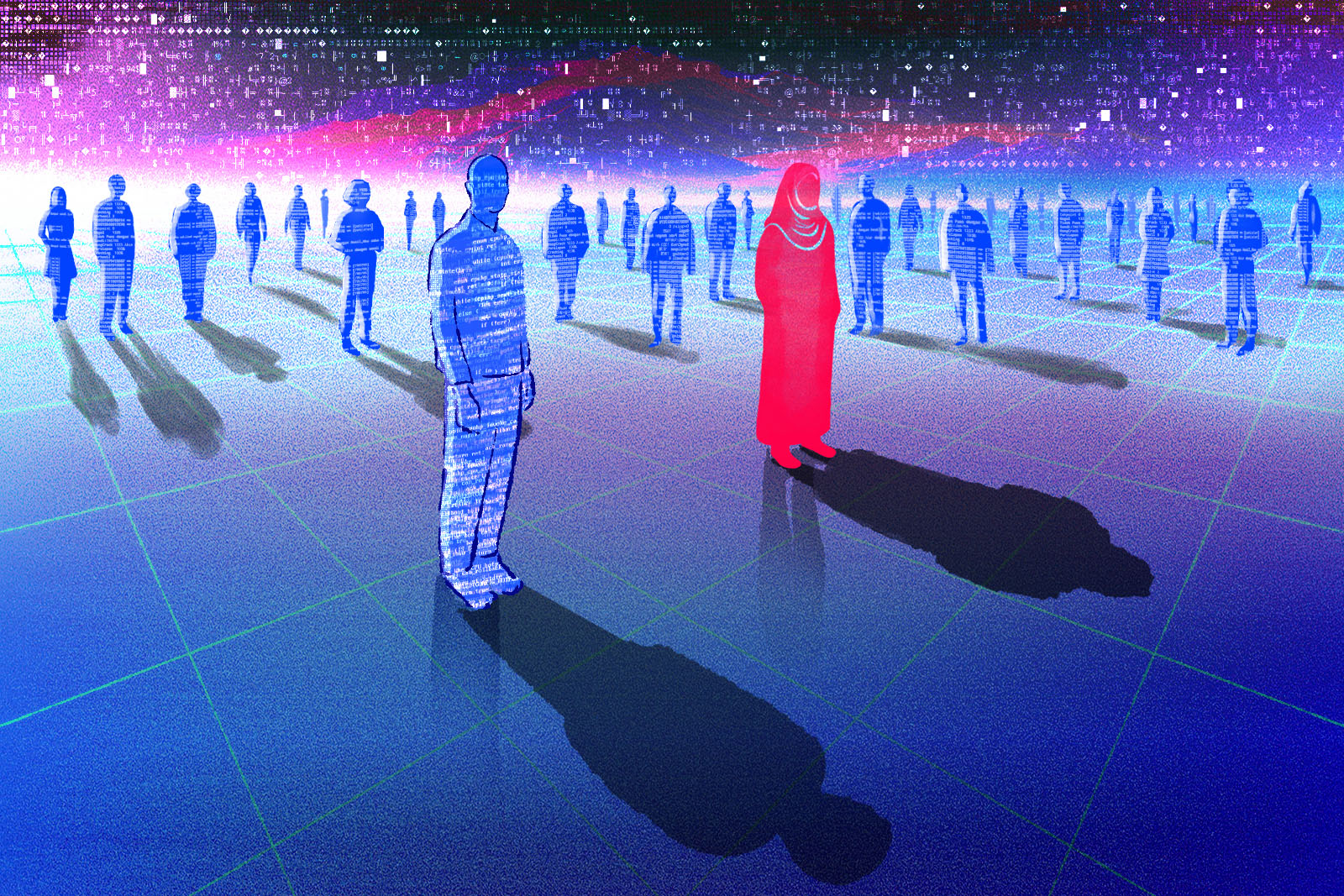
Gaping deserts in the UK’s data on faith communities mean there is a risk the UK is overlooking their needs and falling behind on community cohesion, MPs have warned.
Faith communities are affected by policy decisions in specific ways. The two-child benefit cap, for instance, particularly hit larger families, who were disproportionately from religious communities (Black Christian, Orthodox Jewish and Muslim).
Yet in key areas, policymakers are blind to how people from different faith backgrounds are affected by their decisions, instead relying on data on ethnicity and economic status that is often a poor proxy for religion.
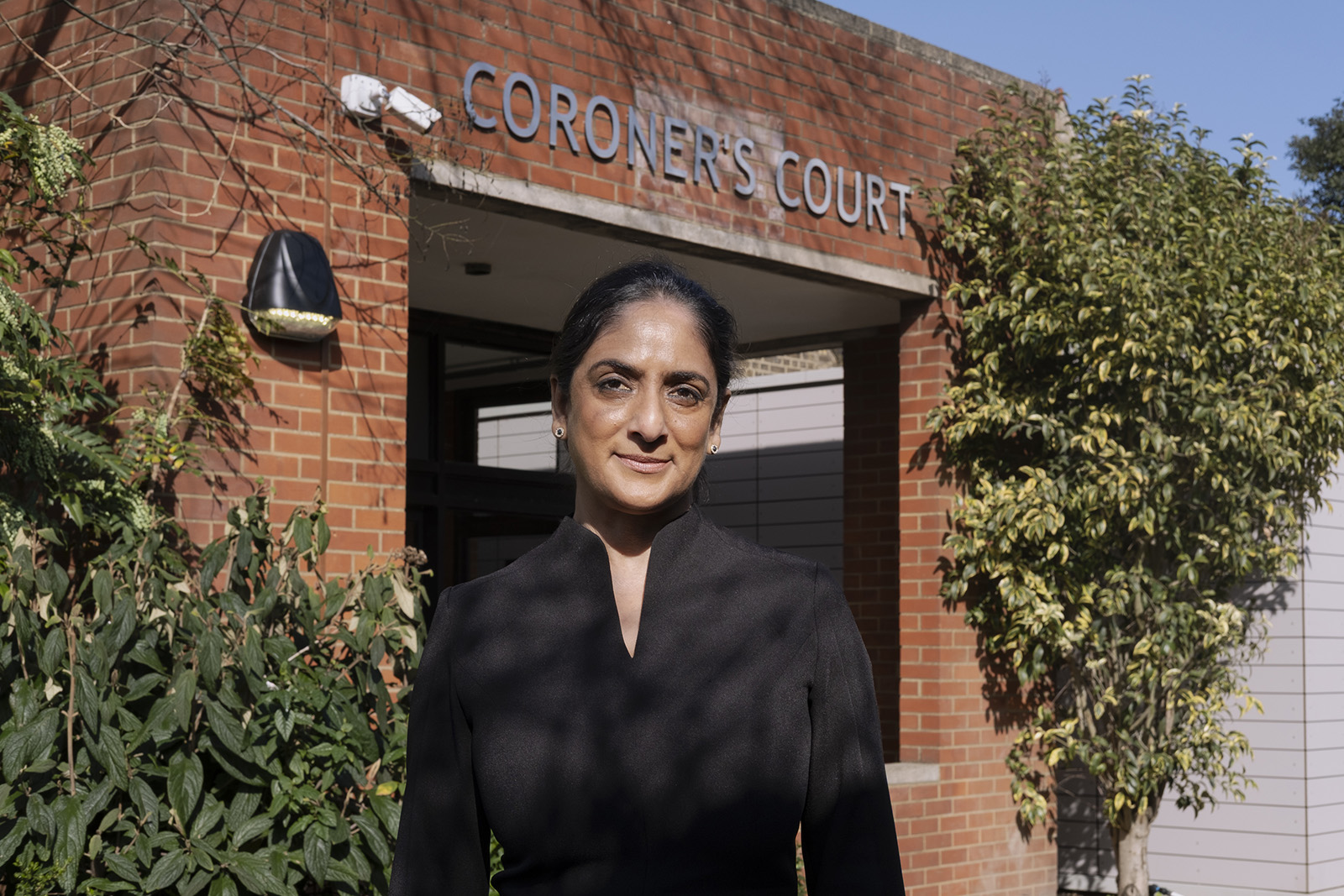
“Accurate data is the backbone of any sensible public policy planning — that should be pretty obvious to anyone working in the field,” said Afzal Khan, vice chair of the all-party parliamentary group (APPG) for British Muslims and the Labour MP for Manchester Rusholme. “To ignore faith shows that we are really overlooking how important a factor it is in understanding and creating policy that considers people’s cultural norms and needs.”
Zoe Franklin MP, the Liberal Democrat MP for Guildford and chair of the APPG on faith and community, added that understanding specific challenges faced by faith communities was “particularly important in this current climate and as we seek to improve community cohesion across our nation”.
Here’s what we don’t know about Muslims and why it matters.
1. Healthcare
The quality of data the NHS collects on faith communities is poor. We don’t know how many Muslims seek medical care, and for what, meaning issues could be missed. Nor is there data on patient experiences by faith.
There is better data on ethnicity, from which we know that certain minority ethnic groups are more likely to develop particular health conditions. For example, diabetes tends to be more prevalent in South Asian and Black communities — and healthcare practice is changed in response to this evidence.
Services can use ethnicity to guesstimate needs in faith communities, presuming that South Asian is a reasonable proxy for Muslim, for example. But faith is important even within groups that share a common ethnicity. Work on organ donation rates and attitudes towards organ donation has found that South Asian Hindus and Sikhs are more likely to consent to organ donation than South Asian Muslims (although all lag behind the UK average). This may be partly explained by differing beliefs about what happens to the body after death.
Surveys of NHS staff indicate that 5.8% are Muslim. Information is collected at NHS trust level on workforce issues such as harassment and representation at levels of seniority, but the NHS staff survey collects national data on the experiences of harassment only by gender and ethnicity, making it harder to differentiate racist harassment from, for example, Islamophobic harassment.
“Looking only through the lens of race is unhelpful,” said Dr Naomi Thompson, a reader in youth and community work at Goldsmiths, University of London. “We know that there are racially minoritised groups that experience that intersection of religion and race.”
2. Hate crime prosecutions
While there is data collected and published on hate crimes reported by people from different faith groups, you might be surprised to hear that there’s none about the outcomes of those reports. In other words, we don’t know what proportion lead to a charge or conviction, which could mask issues with achieving justice for particular types of hate crime.
This matters because there was a 3% increase in religious hate crimes in 2024-25, even as hate crimes related to disability, sexuality and transgender identity fell. Of the 122,389 hate crimes recorded in 2024-25, 7,164 related to faith, of which most (4,478) were Islamophobic, followed by antisemitic hate crimes (2,873).
“Our recent report for the British Muslim Trust shows that 54% of Muslims experienced prejudice in the last year and one in seven among mainstream society supports the deportation of Muslims,” said Avaes Mohammed, researcher at the thinktank British Future. “These alarming survey findings urgently need cross-referencing with actual faith-specific data regarding discrimination in the workplace, the criminal justice system, etc, to fully understand and challenge Muslim-specific hate. The lack of it is a serious impediment to achieving a safe, secure and confident Britain for all.”
3. Education
There are “substantial differences in degree attainment by students’ religion or belief”, according to data published in 2020. While 76.3% of students received a first or upper second (2:1) degree, that figure fell to 64.9% for Muslim students.
But understanding these disparities is difficult because of gaps in data covering students’ earlier lives. The Office for Students says that “disparities between the attainment of pupils start in primary school [and] their effects are complex and lasting”. Yet there is no national dataset on educational attainment by faith group at, for instance, GCSE or A-level, making it harder to see on a macro scale when disparities emerge or what may be driving them.
Nor is there a national dataset for school exclusions by faith, although some schools collect this information themselves. High rates of exclusion are linked to poor performance in education and employment and are a risk factor for entering the criminal justice system. There is better data collected on ethnicity, which shows that Black boys and boys from Gypsy and Traveller backgrounds are more likely to be excluded from school.
4. Criminal justice
We know that 18.2% of prisoners are Muslim — higher than the general population — but no faith data is collected on those who are arrested or convicted of crime. Nor does the youth justice system publish data on faith, though there is some information available about the religion of young people in youth custody, which shows that 33% identify as Muslim.
Anyone who is stopped, searched, arrested and charged under the 2000 Terrorism Act can expect to have their faith recorded. This has informed debate on the UK’s Prevent programme, including whether there should be greater focus on terrorism inspired by extreme right-wing ideology.
Other “stop and searches”, however, do not record the faith of those stopped, although they do record ethnicity, which is how we know that Black men are four times more likely to be stopped and searched. People from Asian backgrounds are also more likely to be stopped and searched than white British people. The lack of faith data means, for instance, that we don’t know whether people who are visibly Muslim within a particular ethnic group are more likely to be targeted by police.
5. Employment and housing
Beyond the census, whose results are published every 10 years, we don’t have statistics on employment or housing by faith. The last snapshot from 2021 found that Muslims were more likely to live in overcrowded homes and in social housing than other faith groups, and were less likely to own their own home. Muslims had the lowest rate of employment, which was because of a combination of higher numbers of Muslim students, unpaid carers and homemakers.
Without more up-to-date statistics, it is hard to gauge the impact, positive or negative, of public policy on housing and employment — for example, changes to carer’s allowance, the proposed introduction of social housing targets for councils or the strengthening of housing protections through the Renters’ Rights Act.

6. Pay gaps
During the recent consultation on whether large employers should be made to report ethnicity and disability pay gaps among their workforces, faith groups — including the Muslim Council of Britain — lobbied for the proposed new law to include faith pay gaps. It could have forced big companies to publish details of the average pay received by Muslims compared with other faith groups.
The government rejected this ask, even though it accepted that greater transparency about barriers to pay and progression for different groups can “provide employers with valuable insights into their own workforces and foster improved workplace cultures”.
7. Holidays
The UK collects and publishes an array of data on how many Britons travel abroad, how, where, when and why — but none on the faith of holidaymakers.
Holidays are traditionally seen as a measure for consumer confidence and spending, and spending on them has fallen owing to global economic instability. Understanding who is taking holidays and where they are going could give policymakers better insight into how the cost of living crisis is affecting different communities and how they are adjusting their spending to cope.