
The best skincare ingredients for black and brown skin

Brands are less likely to carry out extensive testing on darker skin, but as a South Asian woman, I know my skin reacts to ingredients in different ways. I asked experts for their tips

It’s taken me almost a decade to figure out which skincare works and doesn’t work for me. While there are endless products on an ever-growing market, the reality is that skincare brands are less likely to carry out extensive testing on darker skin. As a South Asian woman, I know that my skin has different characteristics and reacts to ingredients in distinct ways, so I have to pay careful attention to the ingredients in the products I use.
One of the main afflictions that generally affects Black and Brown people more than white people falls under the category of hyperpigmentation. It means that when someone of darker skin suffers from acne or rosacea, their skin is more likely to scar.
Related content
“Darker skin has pigment cells that react harder when something upsets the skin, so any injury, spot or irritation triggers more hyperpigmentation than it would on fairer skin,” says Dr Dr Memee Ahmad, a GP and founder of the SkinCouture Clinic in London.
Dr Yvonne Abimbola, a doctor who specialises in the dermatology of ethnic skin, says melasma, where patches of discolouration can be seen on the cheeks and forehead, is especially common in the skin of Asian people. “It’s a more serious type of hyperpigmentation because it is a lot more stubborn, and can be quite difficult to treat depending on where in the skin the melasma is.”
Ahmad says that there is also a key difference between how black and brown skin ages. Darker skin has more melanin than white skin, which protects collagen from sun damage and delays the appearance of wrinkles. “The trade-off is that this same pigment reacts more to UV, blue light and heat, so patchiness, dullness and uneven texture become the real signs of ageing instead.”
Here are the best skincare ingredients for black and brown skin types to tackle hyperpigmentation and signs of ageing.
SPF
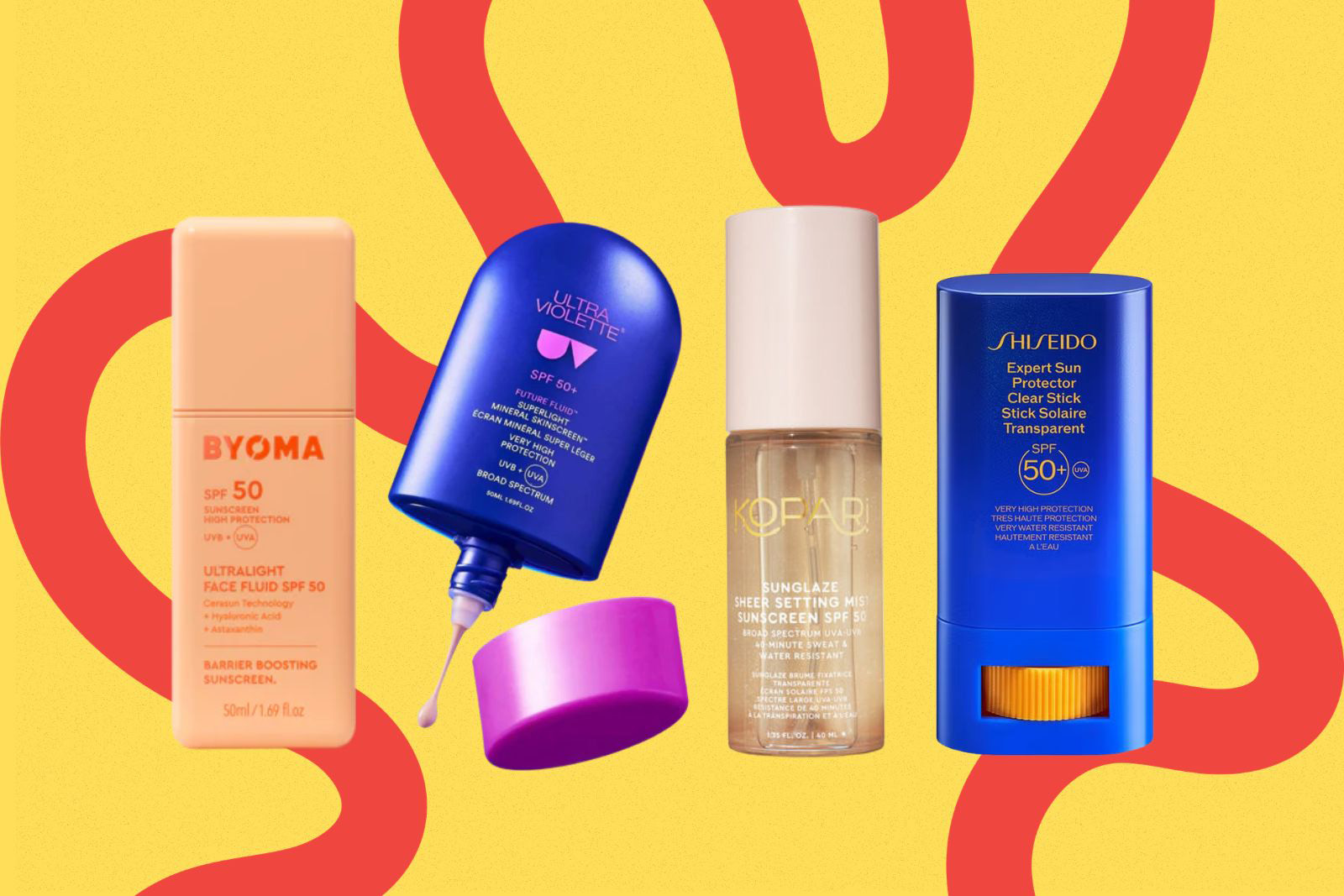
Experts say the primary treatment for hyperpigmentation is prevention, which is by wearing sunscreen every day. For darker skintones, look for a mineral SPF that is formulated with iron oxide or zinc oxide.
“A lot of clear sunscreens do a good job against UV rays but barely touch visible light, and we now know visible light can trigger melasma in darker skin. A sunscreen with iron oxide in it — that’s what gives tinted sunscreens their colour — cuts melasma severity by 75%, compared to 60% for a plain UV-only sunscreen,” Ahmad says.
In the past, these filters left a chalky appearance on the skin, but there are now many more products on the market that don’t leave darker skin looking ashy.
“They still contain some of these filters, but don’t leave that chalky cast. There are particular sunscreens that are actually zinc-based that I recommend to patients.” Ahmad points to Dr Vanita Rattan’s Zincable, Heliocare’s 360 Gel Oil-Free, and LA Roche Posay’s UV Air Serum Sunscreen.
Vitamin C
Abimbola also recommends wearing vitamin C under sunscreen, an antioxidant that gently brightens the skin and helps protect it against everyday damage from pollutants.
Look for creams or serums that list L-ascorbic acid as an ingredient, which is the purest form of vitamin C. “The bottle should also be opaque. You shouldn’t be able to see through it. You want it to stay stable, so it doesn’t want sunlight,” she says.
Azelaic acid
For anyone experiencing inflammation such as acne or rosacea, both Ahmad and Abimbola place azelaic acid among some of their favourite ingredients that help minimise flare-ups. Some serums or creams include azelaic acid, such as Dermatica’s Azelaic Acid 20% Cream.
Alpha arbutin
This ingredient, which can be found in some serums, helps fade dark spots and even out the skin tone by slowing down how much pigment your skin makes. While you can find this in products over the counter, Abimbola says that for more stubborn pigmentation, it’s better to see a GP who can prescribe a product containing arbutin at a higher concentration.
Ahmad recommends it more as a “supporting player for sensitive skin rather than a frontline treatment on its own”.
Retinoids
Retinoids are a group of ingredients derived from vitamin A. They work by increasing skin cell turnover and boosting collagen production. They can be extremely effective for tackling acne and signs of ageing such as fine lines and dark spots. The different types of retinoids include retinols, which are moderately potent, and retinals, which are the most potent option available over the counter. Tretinoin is the most potent overall.
Related content

But Abimbola warns that retinoids can irritate the skin before helping it. “That irritation itself can cause more dark marks in reactive skin, so it’s important to start with a small amount and build up slowly.”
She recommends Medik8’s Crystal Retinal serum, which comes in a number of different concentrations so you can start with a lower concentration and work your way up as your skin adjusts to it.
Tretinoin must be prescribed by a dermatologist. While it helps fade pigmentation, it also helps tackle acne by increasing skin cell turnover and improves skin texture by fading fine lines. Ahmad says studies on darker skin have found tretinoin to be highly effective at repairing and reversing damage.
Peptides
Peptides are short-chain amino acids that act like messengers between skin cells. They are an increasingly popular ingredient in skincare serums as they have been shown to tackle signs of ageing, by improving skin elasticity and firmness.
For daily use, Ahmad recommends a serum that contains a copper peptide, GHK-Cu, for those concerned with texture and uneven skin tone rather than fine lines.
“In an early head-to-head study, GHK-Cu increased collagen production in 70% of women treated over four weeks, compared with 50% for vitamin C and 40% for retinoic acid, and it does this while calming inflammation and supporting the skin barrier rather than provoking it, which is exactly what you want in reactive skin,” Ahmad says.