
Muslim soldiers in Germany are finally getting Muslim chaplains
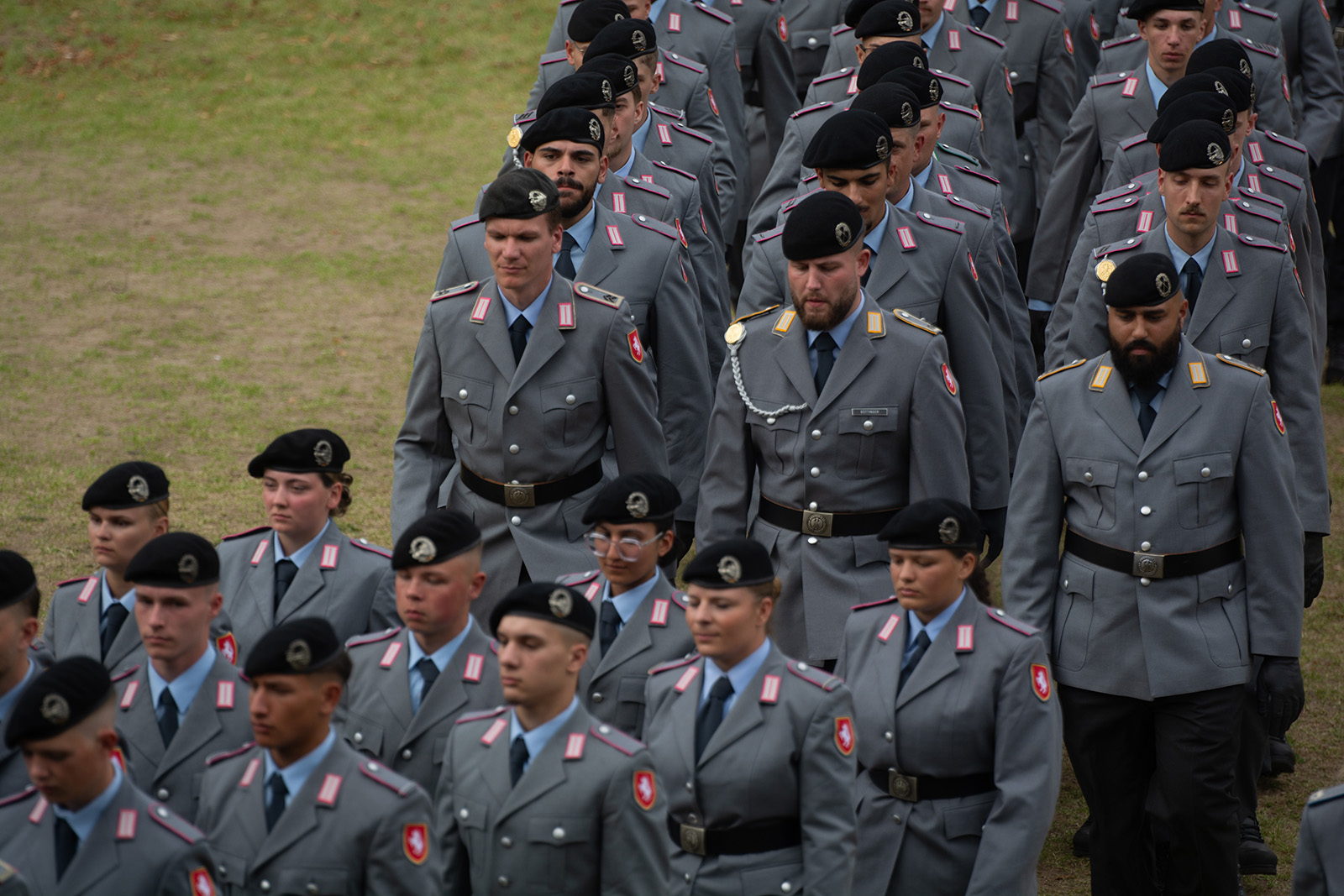
Germany’s ambition to build Europe’s strongest army is forcing it to adapt to a more religiously diverse society. What took it so long?

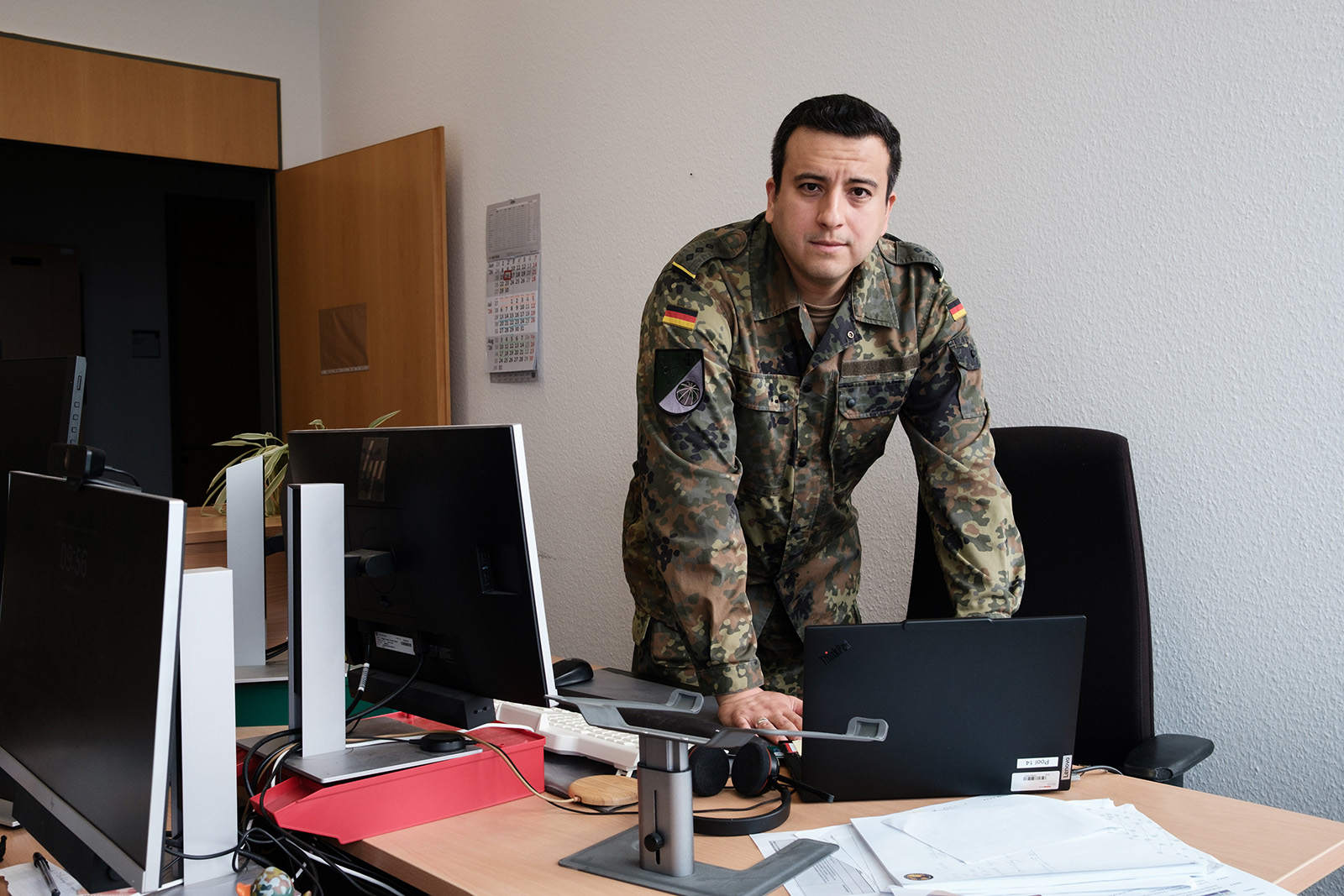
Captain Halil has spent ten years serving in the German armed forces, rising to the rank of captain. Having trained as an officer and studied political science, the 36-year-old now serves as an operations officer in the Cyber and Information Domain Service and regularly lectures on what it means to be Muslim in the Bundeswehr.
For Halil, his faith and military service are closely connected.
“Ensuring security and taking responsibility for our community is a deeply Islamic stance,” he says. “Military service is also service to society, and thus a form of worship.”
But throughout his career, one thing has bothered him. Protestant, Catholic and Jewish colleagues have long had access to military chaplains representing their faiths. The Bundeswehr’s estimated 3,000 Muslim soldiers have not.

“I have been confronted with this question since day one, since joining the Bundeswehr,” he tells Hyphen.
Now, with Halil approaching the end of his service, that is finally about to change.
By the end of 2026, Germany’s defence ministry hopes to appoint its first Muslim military chaplains, offering Muslim soldiers access to religious guidance from someone who shares their faith and marking a long-awaited recognition of Muslims within one of the country’s most important public institutions.
The delay stems partly from the way Germany organises relations between religion and the state.
Following the constitutional separation of church and state after the first world war, pastoral care in the armed forces has traditionally been provided through formal agreements between the government and recognised religious bodies. The state’s agreement with the Catholic church dates from the 1930s, while the Protestant military chaplaincy was established in 1957. An agreement with the Central Council of Jews in Germany followed in 2019.
Islam proved more complicated. Rather than being represented by a single national institution, Germany’s Muslims belong to dozens of organisations, associations and communities, leaving the government without one body with which it could sign a comparable agreement.
The defence ministry has now found a way around that obstacle: instead of establishing Muslim chaplaincy through a formal state treaty, it will contract chaplains directly.
The demand is there. According to colonel Thorsten Weber, head of military chaplaincy at the defence ministry, a majority of Muslim soldiers surveyed said they would prefer pastoral care that reflects their own beliefs.
Military chaplains fulfil far more than ceremonial duties. Soldiers can turn to them during personal crises, after bereavements, before deployments and when wrestling with difficult ethical or theological questions.
“In case I die in action, it is important for me that my body will be handled with dignity,” Weber says.
Halil says he has never had a problem opening up to Protestant, Catholic or Jewish chaplains.
“It was all about trust,” he says.
But there are conversations, particularly around Islamic theology and practice, where he believes a Muslim chaplain could offer something different.
Not everyone believes the defence ministry’s solution goes far enough.
German-Turkish Islamic scholar Cemil Şahinöz argues that externally contracted chaplains risk becoming “second-class chaplains”, without the institutional security enjoyed by their Christian and Jewish counterparts.
“You have a contract here today and next year you’ll think again whether we’ll use the contract or not,” he says. “There is no security at all.”
Şahinöz believes genuine equality would require Muslim chaplaincy to become institutionally embedded within the Bundeswehr rather than remaining a contractual service.
Weber acknowledges that the new arrangement is an experiment.
“It is pioneering work,” he says. “We will have to see whether it works, where shortcomings remain, and how we are going to address them.”
If it succeeds, he says, the model could eventually be extended to other religious communities, including Hindus and Buddhists.
With the call for tenders now open, the ministry hopes to have at least one Muslim chaplain under contract by the end of the year, with training to follow.
The breakthrough has come not through resolving the longstanding question of who can represent Germany’s diverse Muslim population, but by circumventing it. And the timing coincides with another transformation: the Bundeswehr is seeking to expand its ranks and attract recruits from a German population in which Muslims now account for around 6.6%.
“The Ministry of Defence has only acted now because the legal and organisational requirements first had to be created,” Şahinöz says. The current reform of the Bundeswehr, he adds, means young Muslim people also need to be reached.
Despite his concerns about the contractual model, Şahinöz believes that has forced the institution to confront the issue.
“The fact is that people say, OK, if we also want more Muslim soldiers, we really have to address this issue directly now,” he says.
Related content
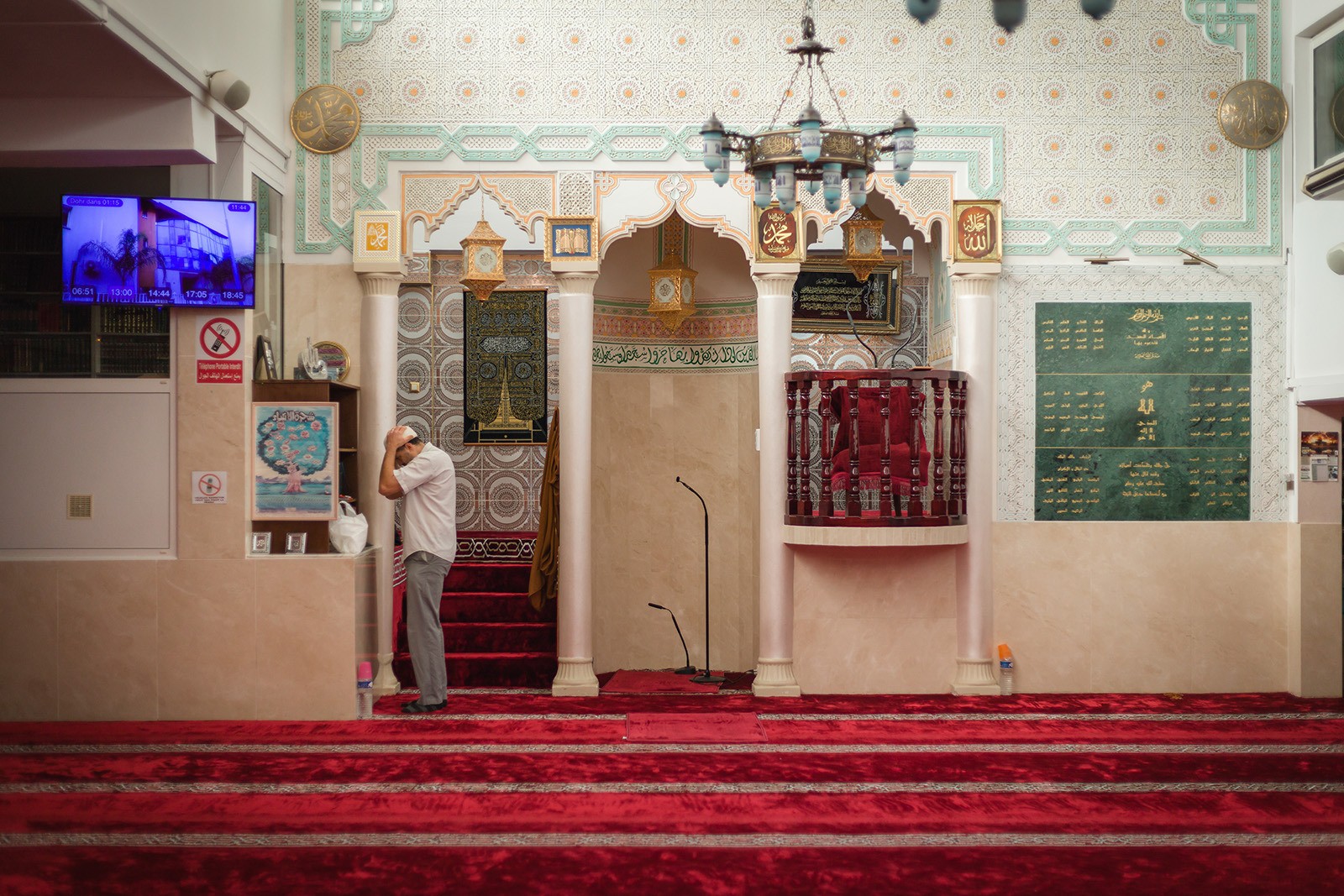
The implications could extend beyond the armed forces. Germany’s prison system, hospitals and federal police have also struggled to provide Muslim pastoral care within the country’s constitutional framework.
Federal Police commissioner Uli Grötsch wrote in his 2024-25 annual report that he would follow the Bundeswehr’s introduction of Muslim pastoral care to see what lessons could be applied to the federal police.
For the Bundeswehr itself, the change comes as Germany seeks to expand its armed forces substantially over the coming decade. Weber argues that becoming more representative of German society could help attract recruits. He also believes attitudes among Muslims towards military service have shifted.
“People of Muslim faith more often say that the constitutional values of the Federal Republic of Germany are worth fighting for,” he says.
For Halil, however, the significance is more personal.
He has spoken to Muslim veterans from previous generations who, he says, did not believe they would see concrete steps towards establishing Muslim military chaplaincy.
Halil’s own service ends in 2029. After a decade spent wondering why Muslim soldiers did not have the same pastoral provision as their Protestant, Catholic and Jewish colleagues, he may finally have the chance to speak to a Muslim chaplain before he leaves.
“It is a first step,” he says.